Monthly Archives: April 2012

Feeling the love in Yanacancha.

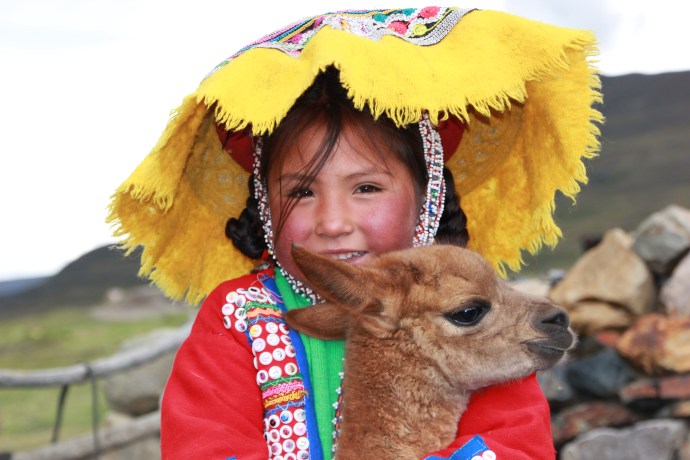
Spending the night with somebody new is always kind of tricky, what with the awkward getting-to-know-you bits. So the day we Heifer folks went to Yanacancha (an hour from Marcopata, Peru) to spend the night in the community, we were lucky to kick things off with a guaranteed ice-breaker: an alpaca mating session at the home of Juan Yanac and Santusa Mamami.

Boy, howdy that did the trick! Despite ensuing cold, wind and rain, nothing could dampen our enthusiasm for this seductively adorable town and its inhabitants.

Our exploration of Heifer’s Alpaca Bio-Diversity Project in High Andean Communities began with this X-rated “empadre” that represents a spectacular leap forward in a real life-and-death matter: the health and well-being of the Alpaca of Yanacancha.
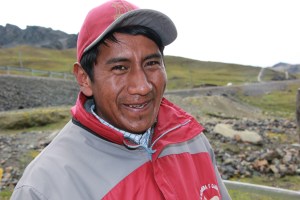
Mr. Commitment: Claudio Pacco.

At an altitude of 14,000+ feet, alpacas are the one and only lifeline of high Andean communities; nothing but a few varieties of potatoes grow here, and precious few animals can survive the cold, wet, wild weather and raggedy thin air. But alpacas, members of the camelid family, can survive and even thrive here, given the right attention – and that guarantees food and income-producing fiber for families that live on the razor’s edge of poverty and malnutrition.

And that is where Claudio Pacco, the Heifer/AMADARES vet/tech comes in. During the first year of this Heifer project, Claudio has visited every one of the 22 communities involved, identifying alpacas house by house, and beginning monthly Heifer workshops to share better breeding and husbandry methods with the breeders.

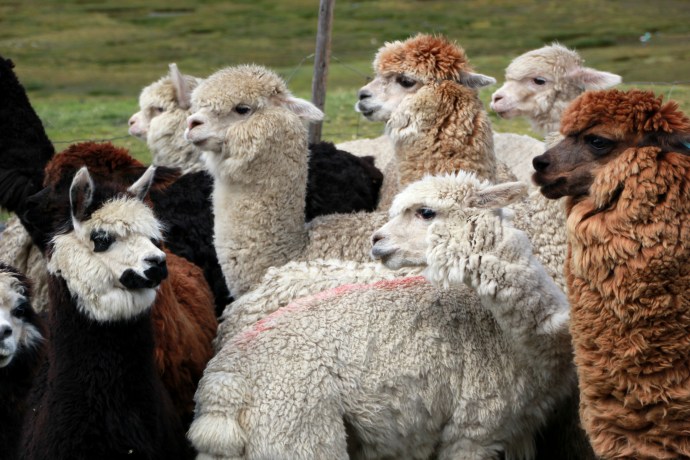
It’s a complex process, raising good alpacas. The end goal is a healthy animal that will produce fiber that is insanely thick, incredibly fine, and of a uniform color. After years of purging non-white animals from their stock, breeders are using 22 gorgeous Heifer stallions here to bring back black, brown, golden, and butterscotch hues to their herds. But the challenges go far beyond color.

Baby alpacas are born in January in the wet season, so they can easily find pasture, but the next three months are marked by extreme cold, constant wet, and vicious hail. The babies are fragile and can easily develop bacterial diarrhea that will spread through a herd in days and wipe out an entire generation. So much is at risk that from December (before the babies are born) until March, Claudio teaches the breeders to maintain daily contact with the grazing mothers and babies, making sure they are in good health, or quickly receive antibiotics before they can infect others.
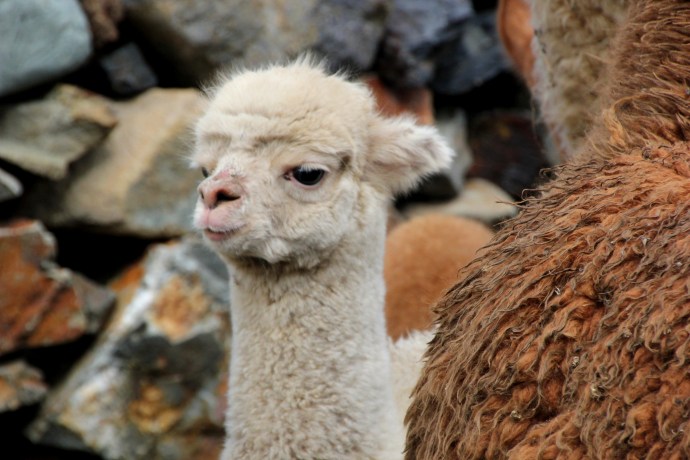
Baby dearest...

In the intensive Heifer workshops, breeders are given vet kits with meds; sturdy 6-foot high nets that keep the babies safe from foxes and puma; a variety of good, nutritious seeds to cultivate fertile pastures; and trainings to harvest rainwater and bring water from the glaciers so the alpaca will never go thirsty.

Virginia Huaman, 17, promoter & aspiring vet.

The result? Last January, 60 alpaca babies in this community died (the equivalent of a $60,000 loss). This year, just twelve months into the Heifer program, only 15 died—a 75% reduction. And next year, Claudio believes the losses will be far less – with the help of 18 “promoters” like Virginia and Gabrielle, who are being trained to spread the trainings and mentor others. These unpaid volunteers, 8 of them women, follow Claudio around on his individual visits, learn everything they can from him, and then pass the knowledge on to other breeders in the community.
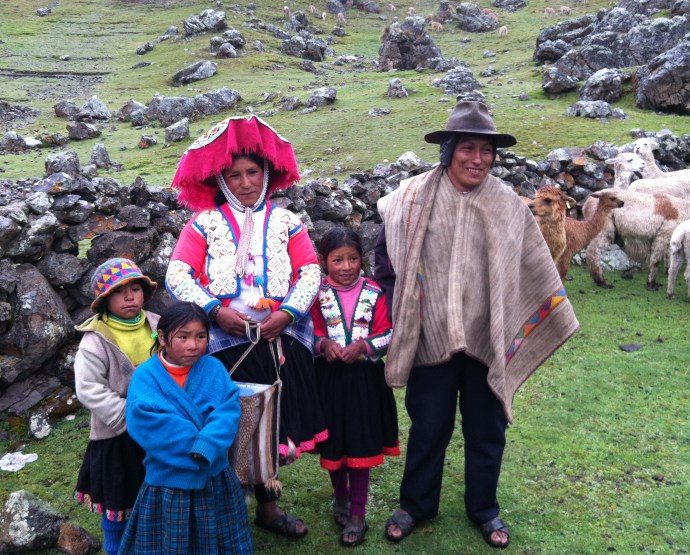
Gabrielle Quispe and her family (notice the bare feet in 40 degree rain)!

Gabrielle and Remauldo Quispe have so enthusiastically adopted the Heifer trainings that in their herd of 80 alpaca, Gabrielle didn’t lose a single baby this year. With only a third-grade education, Gabrielle is intent upon her children becoming professionals and wants to use her thriving alpaca herd and her beautiful handicrafts (where does she find the time??) to support their education. (I’m still hacked off that I didn’t buy her gorgeous work.)
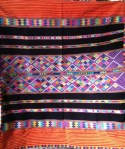
Why didn't I buy this??

Soup's on ...

By the time dusk fell, we were so cold, wet and altitude-challenged, (while all the villagers were walking around unfazed, in bare sandaled feet) we piled into the kitchen to warm up. Chef Johnny worked his magic in the kitchen with local women and made a gorgeous soup, while we drank tea and showed the children photos of themselves, which delighted them to no end.

After a singing/storytelling/dance fest, we went off to bed in the house of one of the villagers and I wore every piece of clothing I had on: 4 shirts, 2 pairs of pants and leggings, 3 pairs of socks, a down vest, hat and scarf–and I was still cold under about 20 pounds of wool blankets. But miraculously, I slept… only to wake at 5:30 a.m. to dogs barking, roosters crowing, alpacas being led out to pasture, and the smell of fires started for breakfast.
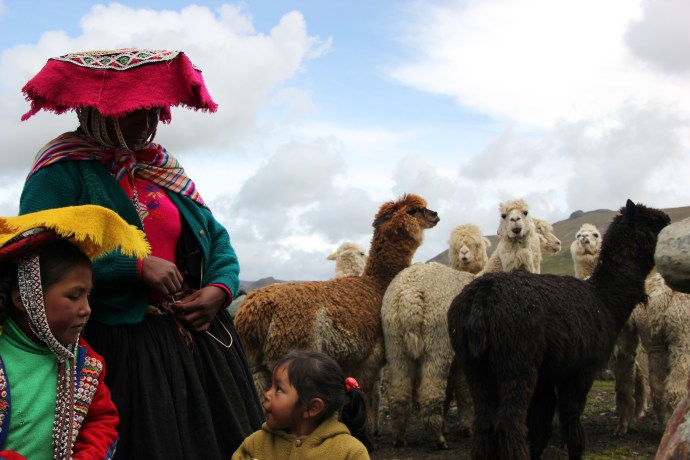
There is nothing that makes you realize how removed most Americans are from the earth, animals, plants, and weather than to spend 2 days in a village in a developing country. You walk away with a whole new level of respect for the dignity, creativity, and incredible work ethic of these people– and for the luxuries of  hot water, flush toilets and yes, heat.
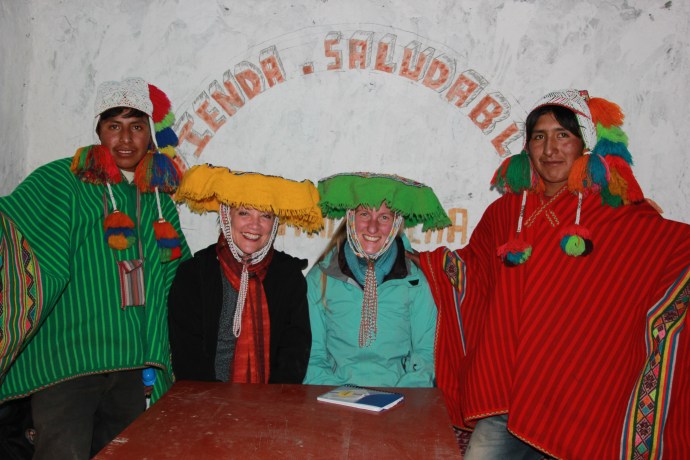
(And this is with nothing to drink....)

But the truth is, I’ll never forget that beautiful night. And the truth that our Yanacancha was never, ever lacking in warmth.

Categories: Animals, Heifer International, Peru, Photography, Travel | Tags: , , , , , , , , , , , , , | 34 Comments

What I ate in Peru.

Serving size may vary.

I feel like a bit of a fraud writing any kind of travel food post, since I am anything but an adventurous eater (my favorite foods as a child were hot dogs and baked beans, to give you a brief synopsis of my limitations). But I’ll try to cover all the bases with an enthusiastic description of what I loved to eat, and lots of photos of what I didn’t eat, with full apologies to Anthony Bourdain for my timid palate.

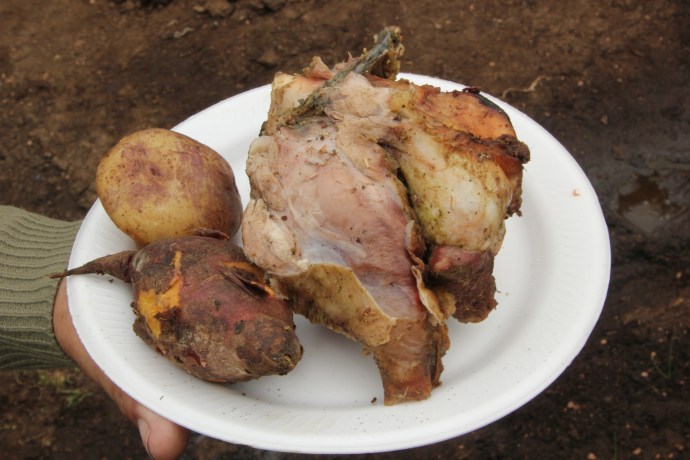
Pachamanca: slow, stone-roasted potatoes & llama, which I actually tasted & liked! Kinda…

Peruvian cuisine is based around native animals (alpaca, llama, beef, fish and cuy.. yep, it’s guinea pig) & potatoes. Peruvians love their starch, and since potatoes originated here (not in my beloved Ireland, mates) and there are 3000 varieties in every conceivable flavor, texture and color, I was totally at home on the veg side of the table. Beautiful fava beans, carrots, cauliflower, beets, green beans, creamy avocado, and/or some type of yummy slaw were usually served alongside the potatoes and so, no matter what the “main” course, I was in hog-less heaven.

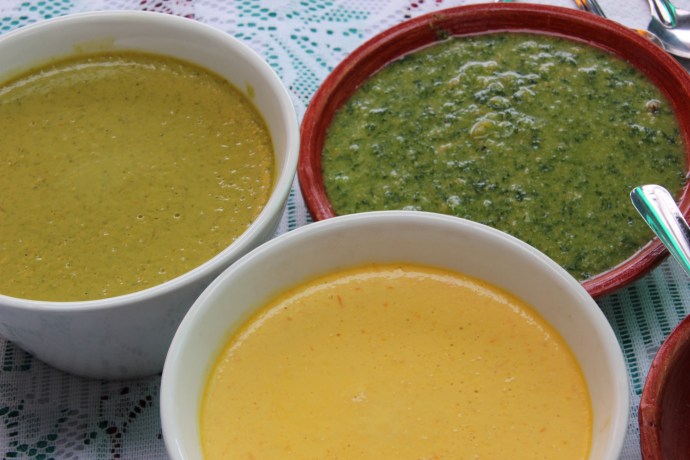
Oh, and just to make the potato/veg thing really sing, Peruvians make the most luscious sauces to dip/slather on your potatoes: green herb, racy red radish, guacamole, and my fave: a golden mustardy/mayo concoction that I wanted to pour over my entire plate.

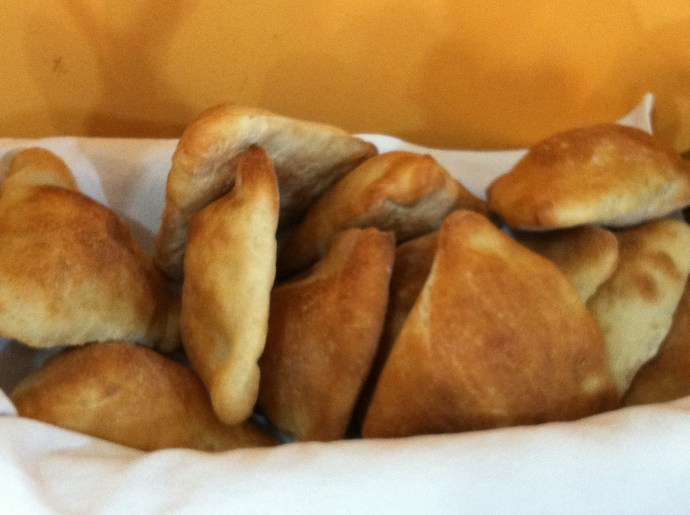
The last time I was in Peru, my friend Judith fell in love with lomo saltado – a Peruvian stir-fry featuring chicken or beef, peppers, tomatoes, rice and French fries, and I was dying to have a platter of carbs in her honor. But since we were mostly at really high altitudes, where your appetite evaporates even faster than your breath, we ate a lot of soup. Delicious chicken soup, pasta soup, noodle soup and vegetable soup ..which luckily is my favorite food ever, particularly when paired with their airy, triangular bread.Some of the traditional dishes that I didn’t exactly eat (but tasted!!) were pachamanca shown above (and that sweet potato was the best I’ve ever had) and the dreaded cuy. Cuy is low-cholesterol, high protein and quite nutritious–and Peruvians adore it– but I couldn’t get past the little paws on the plate. Sorry …

Instead, I usually opted for the trucha frite — fried trout — which is ubiquitous in Peru, from roadside stands to upscale restaurants. Ceviche (lime-marinated raw seafood that is amazing) is also hugely popular but since we spent almost no time on the coast, we didn’t see a lot of it.

The acid test for any cuisine, in my humble opinion, is the coffee and in Peru (as in most coffee-producing countries), it wasn’t too hot. Literally. They brew the coffee really, really strong, then set it out in a pitcher and suggest you add hot water from a thermos.  I like my coffee scalding, so I only achieved partial coffee satisfaction. As for alcoholic beverages, the pisco sour is quite tasty, made from Peru’s own unique pisco liqueur (don’t confuse it with the Chileans’ copycat version or they will get really crabby). Cusquena, my beer of choice, was delicious – but the bottles were a big commitment. Like 42 ounces. And that’s a Big Gulp.

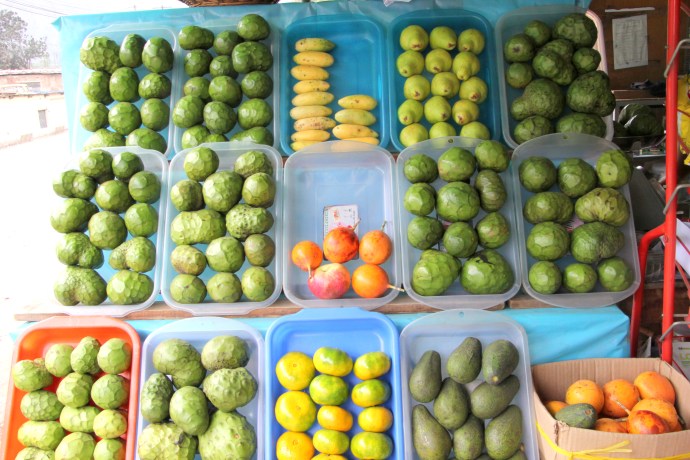
My big surprise was the fruits. Sure, the usual suspects: cantaloupe, pineapple, mango, watermelon were fine, but I really loved the granadia, tumbo, and chirimoya which we bought at roadside stands and devoured in the car — totally unique in their sour, sweet and musty tastes and fun to eat, too.

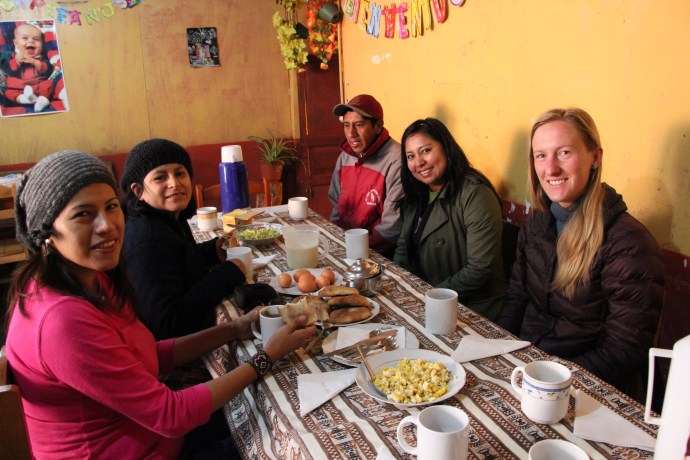
Breakfast of Heifer champions: Rosaluz, Madeline, Claudio, Lidia & Kristen.

So what do I miss the most? The sauces! And the way everybody always sat down at meals together and shared the food with grace and gusto. That was really delicious.

Categories: Food, Heifer International, Peru, Photography, Travel | Tags: , , , , , , , , , , , , | 34 Comments

Edith Piaf in the Andes

As we drove up and up, from Cusco to Marcapata through the Ausangate Range of the Andes, the air got markedly thinner, and the scenery got wilder and more spectacular. There were five of us in the truck: me; Lidia, the adorable Director of Heifer Cusco; Rosaluz, my Heifer translator; Carlitos, our jovial driver; and Kristen, an enthusiastic American volunteer working in the Cusco office. As we blasted Edith Piaf on the CD player (in complete & wonderful incongruity), they tried to explain to me the intricacies of Heifer’s Alpaca Bio-Diversity in High Andean Communities program. I was trying hard to follow, but I kept getting distracted by the amazing views of llamas, alpacas, glaciers and peaks out the window….and La Vie en Rose.

Beautiful and pristine, this part of the Central Highlands is inhabited almost exclusively by llama and alpaca herding communities in one of the few remaining pastoralist societies in the world. The wet season runs from October – May, when the pastures soak up water like a sponge, and fluffballs of grazing alpacas dot the hillsides. In the dry season, May- October, life gets a lot more challenging, as pastures shrivel and the grazing is sparse. It’s a never-ending struggle for survival, and the 22 Andean communities in Heifer’s program are far-flung, small indigenous villages that are almost exclusively dependent on the alpaca for income, meat and sustenance.

 The Highlanders’ hard-wrung existence is further threatened by climate change, with disappearing glaciers leading to scarcity of water and diminished pasture; food insecurity (only potatoes grow at this rarefied altitude and 45% of children under 5 are malnourished), and the low quality of the alpaca herds.

In past years, white alpaca fur was by far the most valuable, so breeders began to kill their brown, black and tan alpacas. Before you could say “genetic disaster,” the 22 natural shades of alpaca became 90% white, and in-breeding caused a multitude of weaknesses in the animals.

Pretty blue eyes, but that's not a good sign in alpacas.

So Heifer is making an investment in these 4,333 alpaca-raising families to help them not only survive, but thrive. Working in partnership with AMADARES, a local NGO, Heifer is providing robust bulls in non-white alpaca colors, seeds and materials, as well as funding 2 veterinarian/technicians. In monthly workshops in each community, the techs teach the breeders better methods of reproduction, animal care, pasture maintenance, shearing, categorizing the fiber, and making alpaca handicrafts.

The alpaca rainbow coalition -- how beautiful!!

We met Claudio Pacco, one of the vet/techs, when we finally reached Marcopata at dusk, a sweet little town huddled in a valley between two giant mountains. Claudio lives in Puno and drives 9 hours every month to Marcopata to begin a 20-day stint where he rises daily at 4:30 a.m. to ride his motorcycle (brrrrrr!) to the remote villages so he can get there before 6 a.m. when the alpacas are put out to pasture.

Claudio at work, with a storm coming in.

Claudio is 31 and both his parents and grandparents were alpaca breeders, so he feels it was his destiny to be a vet. “I have a very inner feeling about alpacas,” he tells me shyly, “and I love working with them, even though they have lots of problems.”

Alpacas do have lots of problems – which I’ll be telling you about at length in my next post – but lack of love from Claudio isn’t one of them. I’ve rarely met anyone whom I felt was more committed, gentle and self-effacing (he wouldn’t even translate comments that praised him) – although I worried that he was never going to get married with a killer schedule like he’s keeping.

As we all walked back to our rustic hotel that night, getting ready for a big trip to the communities the next day, I looked up at the Ausangate Range and remembered that in Andean culture, the mountains are considered gods (“apu”), as protector and creator of the people, and source of water. Those sacred beliefs have held fast for six centuries — but now that gold has been found in the Ausangate, the mountains themselves are at risk of being torn apart, as well as the way of life of the alpaca farmers. The Heifer/ADAMARES teachings and trainings in community organization, empowerment, and building a sustainable economy are laying some great groundwork for a different outcome. Let’s just hope it’s in time for the next generation!

She's got her lasso and she's ready to go!

And just in case you’re longing for a bit of La Vie en Rose, here ya go!

http://www.youtube.com/watch?v=0NdmIpHKfgk&feature=related

Categories: Agriculture, Animals, Heifer International, Peru, Photography, Travel | Tags: , , , , , , , , , , , , , , | 28 Comments

My Cinderella story

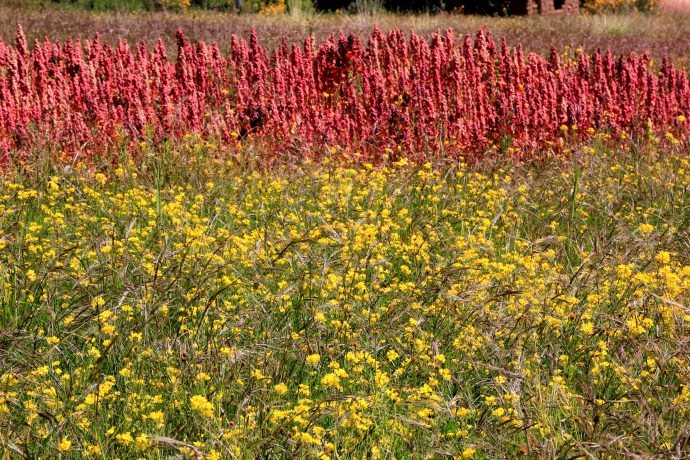
Quinoa and wild turnip, blowing in the Chillcapata wind.

At the end of the beautiful day I spent in Chillcapata, Peru visiting families who’d received animals and trainings through the FEED program of Heifer International... after I’d stuffed myself at the delicious lunch the community had prepared and gone nuts over all the adorable babies… one of the moms, Carmen Calle, asked me to be the godmother of her daughter Leidy.

Which meant I would be responsible for cutting off the long, black braids Leidy had been growing since birth – a rite of passage when Peruvian children reach the age of 6 or 7.

Although I’d been dazzled all afternoon by Leidy’s adorable grin, I was shocked and chagrined at this turn of events, although everybody else in the room seemed pretty much delighted at the idea. I asked Rosaluz Salazar, my Heifer translator, if this was culturally appropriate and what I was committing myself to (like the Catholic sanctity of the child’s soul), and she assured me it was fine, it was a ritual honor, I could snip and go.

So, armed with a scissors and surrounded by dozens of witnesses, I cut through Leidy’s thick black braids – and voila! she was my god-daughter.

Actually, Leidy’s my fourth god-daughter, since I’m the proud (though intermittently present) godmother of three other gorgeous girls: Marie, Maura and Lottie. I fully understand (through the ministrations of my own incredible godmother, Edythe Mendolia) that my responsibilities are to never miss birthdays or Christmas, and to give lavish presents whenever possible.

After the haircut ...what a beautiful girl!

I hope I never let Leidy down in that department. As the fairy godmother, I wouldn’t have it any other way.

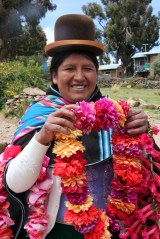
p.s. Just a thought for Passover/Easter: Why not give real eggs (via a real chicken!) to a family like Leidy’s?  Click here for a Chick … and here’s a Chillcapata bouquet of thanks!!

Categories: Children, Passover & Easter, Peru, Photography, Travel | Tags: , , , , , , | 21 Comments

Showered with flowers…

As I walked up the steep road leading to Chillcapata, a rural community outside Puno, Peru something told me I was  going to fall madly in love with the place. First clue: there was a gigantic, beautifully bedecked flower arch to greet me. A cheery welcoming committee was assigned to shower me in flower petals and love-bomb me with hugs. And of course, I got my very own Peruvian garland.

As we headed up the hill to the pretty green house of Maria & Primo Mamami to see Heifer’s FEED program in action, I could easily see why Chillcapata is known as the Garden of Puno; flowers were growing everywhere, while in the distance indigo-blue Lake Titicaca twinkled in the sunlight and llamas pranced in the grass.

Inside her cheerful bright kitchen, Maria proudly showed us her new Ecological Refrigerator (cooled only by a bowl of water), her tidy pantry, her energy stove (uses half the fuel and is vented), and told us about the changes she’d learned to make in her home, and how that had changed her life.

Sounds a bit trite, doesn’t it? Some new shelves, a place to keep things cool and to store utensils and pots, a new roof with translucent panels to bring in light, and an energy stove. But here’s the thing: it makes all the difference in the world to the health, nutrition, and dignity of your family to have a place to cook that is safe and healthy, and a regimen to keep your household clean, hygienic and neat. In fact, I’d argue a tidy house is the first step in gaining control of your life, and feeling competent and valuable. (However, I am a total Type A, or as Lulu calls me, Little Miss OCD.)

Maria's old kitchen

But take a look at the “before” kitchen photo, where the smoke from cooking brought Maria to tears every meal. The family suffered from lung problems and often ate on the floor, where guinea pigs also lived, scratched and ran (they need to be inside and warm to survive). And the rest of the house was just as disorganized and overwhelmed.

Through FEED, Heifer brought the women of Chillcapata a list of simple ideas to improve their lives (no animals in the house/a bed for every child/a biogarden to improve nutrition), offered training workshops, then sent a few emissaries like Maria to other communities to see the ideas in action.

A new hand-made sink

The women came back motivated true believers, and set to work to transform their own homes, and pass their learning on to others. Luckily, these are can-do people who are incredibly clever at building things, working cooperatively, and getting ‘er done.

The Incan ancient tradition of ayni, like an Amish barn-raising where everyone pitches in to cooperatively help each other, is still very much part of Chillcapata culture. Maria’s kitchen was one of the first finished, and quickly, other women signed on to improve their homes.

Julia and Celso Apaza got the materials they needed from Heifer to start kitchen construction, and the couple worked day and night to change every room in the house. “It was like a dream for us,” she told me, “because before I felt ashamed of my house. It was a mess, and I never wanted to welcome visitors. But now my doors are wide open and I even have a bench for my visitors to sit on.”

Julia's old house is now just for guinea pigs.

For two years when they were really struggling, Julia, her husband, their guinea pigs, and four sons lived in one small room and clearly, the memory still haunts her. Like many children of the Highlands, her four sons were sent to Lima to try to make a living at age 12. Three of those boys died of malnutrition and lung disease after working in a wood factory.

Now Julia is a promoter of the Healthy Homes program (which is also supported by Walmart’s Global Women’s Economic Empowerment Initiative) and she proudly keeps the poster on her wall to work her way religiously through every step of the program…and believe me, I’m quite sure she will make it.

“I am very happy because now the young children don’t think about going to Lima anymore; they want to stay here with their parents.”

Driving back to Puno in the long, beautiful light of late afternoon, I thought about these people’s ultimate dream: to make Chillcapata the next New Thing in authentic adventure travel and share with tourists the stunning beauty of their little town. Passing on the gift …It’s contagious!

Categories: Heifer International, Peru, Photography, Travel | Tags: , , , , , , , , , , , | 35 Comments

Blog at WordPress.com.