China

Not exactly a Tiger Mom.

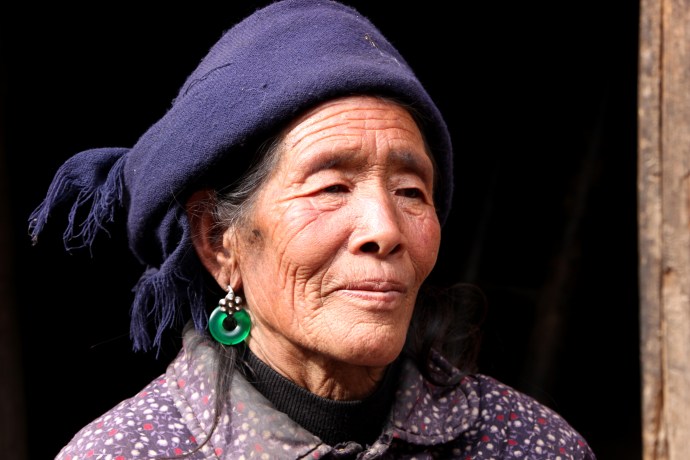
Jisu Erxi is 70 years old, poor, and living with her husband Leer Wujia and her three grandchildren in Gudu community, Zhaojue County, Sichuan Province. She’s missing some teeth and there’s no doubt that the years have not been easy on her. Her eldest son is in jail, having left behind his two children with Jisu & Leer when they were infants. Her second son married a nice girl from the village but he is a migrant worker miles away. And when Jisu’s youngest son disappeared, his wife fled the drug-filled marriage, leaving another baby behind for Jisu & Leer to raise.
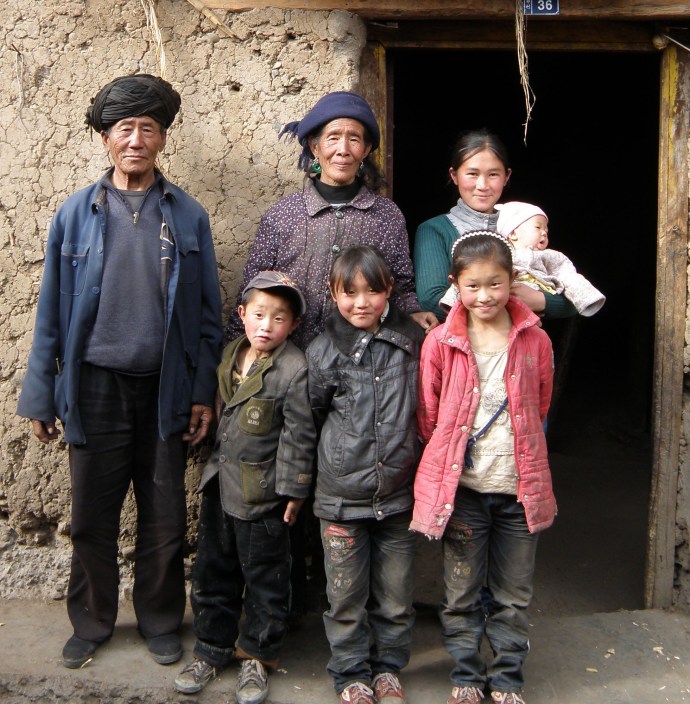
The Wujias definitely don’t follow writer Amy Chua’s Tiger Mom rules for perfect Chinese mothers: (1) schoolwork always comes first; (2) an A-minus is a bad grade; (3) your children must be two years ahead of their classmates in math; (4) you must never compliment your children in public; (5) if your child ever disagrees with a teacher or coach, you must always take the side of the teacher or coach; (6) the only activities your children should be permitted to do are those in which they can eventually win a medal; and (7) that medal must be gold.

But whatever Jisu lacks in forcing her own children to achieve, she more than makes up for in kindness: the entire time she was telling us the sad story of her children’s failures, she was stroking, caressing and hugging the grandchildren they left behind. Her diligence, caring and hard work is what brought her to the attention of Abi Shiha, leader of the Gudu Women’s Self Help Group.
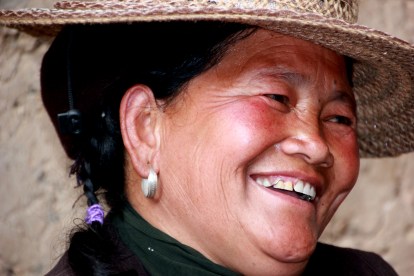
The irrepressible Abi Shiha

“These women lead really harsh lives,” says the relatively affluent Abi, “but they were working so hard, I felt like I should help them find new channels to succeed.”

And those new channels led to Heifer and some really great pigs.

Established in March 2009 with the help of Heifer International, the Self-Help Groups Project consists of about 80 female-headed families in Zhaojue County who agreed to participate in livestock trainings, group savings accounts (each woman contributes $1/month and from that fund any member can borrow), and in community- and income-building activities like hog-breeding and community clean-ups that teach group responsibility and achievement (Tiger Mom maxims).

Everywhere you look, it’s women doing the work.

It’s step-by-step learning for women whose daily lives are a struggle against deprivation and despair.
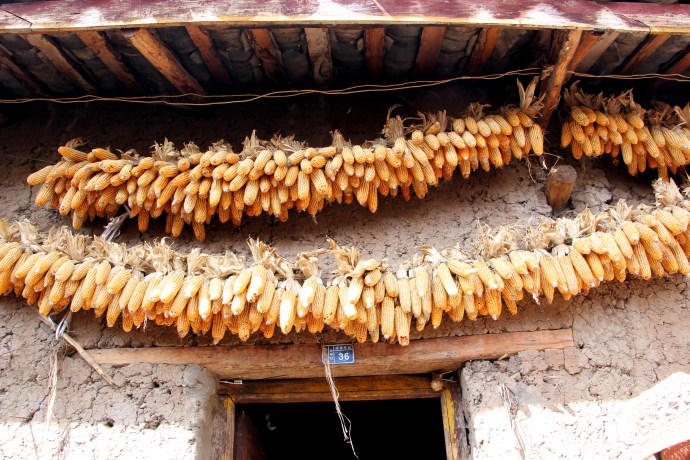
A stockpile against hunger of beautiful maize.

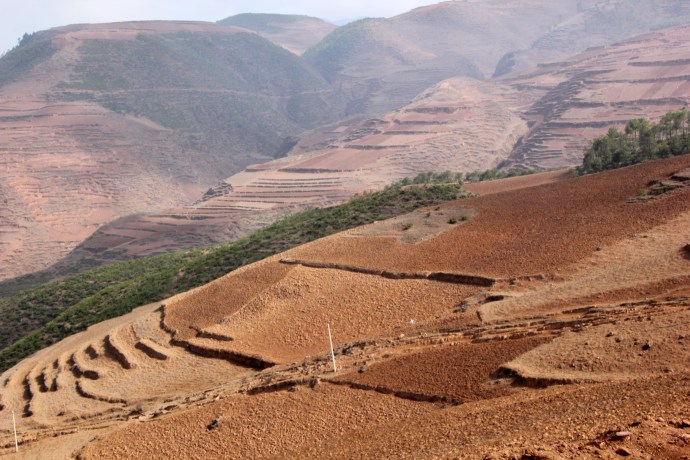
Zhaojue is an outlier community: peri-urban, beset by AIDS and drug abuse, and predominantly female, as the vast majority of males have left for work in the cities. Typical income is less than $300/year and there is very little land to farm. But with the gift of Heifer pigs, the women’s income increased more than 3,000 RMB in a year, and some families increased 10,000. (Abi & her husband raised these prize winners:)

Gudu women  have learned to be self-reliant, help each other, and establish hygienic habits in their houses and the community, even petitioning the government to build clean, healthy biogas stoves. They also adopted Heifer’s Farmer Field School trainings to plant pasture for their animals and vegetables for their children, and by November 5, half the women had Passed on the Gift of animals to another 80 needy families– a full six months’ ahead of schedule.

As we sat in the yard talking & admiring Jisu’s 3 Heifer sows, 1 fattening pig and 9 piglets, the grandchildren, who were rather withdrawn at first, reverted to their feisty adorable selves. They are all in school now (the better township school Jisu proudly told us) and they finally have enough food to eat and clothes to wear. “Before, we had nothing to sell so we couldn’t even buy shoes,” she explains. “But now we have pigs.”

The promise of a new generation: Jisu’s daughter-in-law and youngest grandchild.

And in Zhaojue, pigs are better than tigers any day.
Categories: Animals, China, Heifer International, Hunger, Photography, Travel, Women | Tags: , , , , , , , , , , , , , | 33 Comments

High (but not dry) in Yi Country, China.

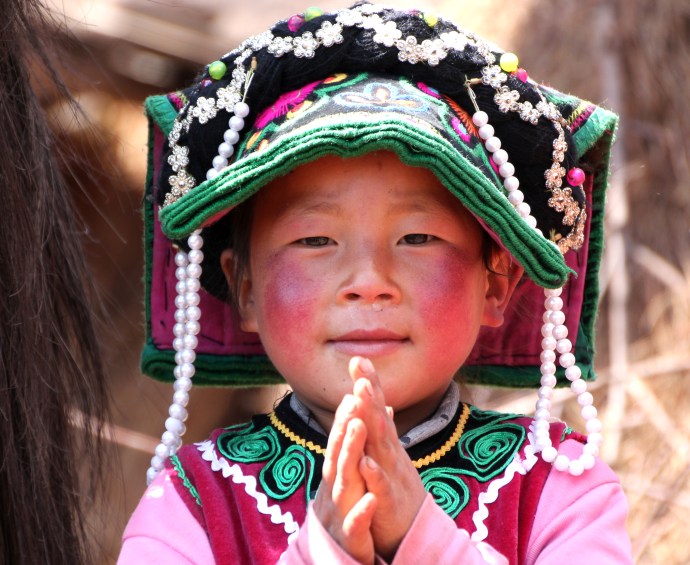
Dala Amo and Waxi Town, high in the mountains of southwestern Sichuan province, aren’t necessarily the kind of place you associate with China. The ethnic Yi people who live here are dark-skinned and exotic-looking, with fantastical costumes right out of Witches of Eastwick. They love to drink beer and liquor; raise (and eat) buckwheat, potatoes and sheep; and drape themselves in gorgeous necklaces, earrings and ornaments. Needless to say, they’re my kind of people!

But the Yi people are also some of the poorest in China. Their remote and isolated environment is infertile and dry as a bone, their towns often have no running water, and education in the mountain schools is half-hearted and spotty, without teachers they can depend on to show up.

So Heifer China has implemented projects in Dala Amo and Waxi Town, helping 55 families in the higher Dala Amo to breed sheep, and 120 families in Waxi to breed calves, to replace yak-raising that has been prohibited because of the environmental damage those animals cause. (Yaks eat the entire grass plant when they graze, including the root, so they destroy the vegetation that protects the mountains from catastrophic mudslides.) Cows and sheep that can be kept in pens and fed forage crops are far better for the environment.

But since this is Heifer, people don’t just receive animals, they also get the trainings to ensure they can raise, breed, feed, and keep the animals, their families, and their community robust and healthy. Since the project’s inception in 2010, women like Qubi Buxi in Dala Amo have reaped the rewards of these trainings, fueled by her own inexorable enthusiasm.

The remarkable Qubi Buxi

She and her husband Jikemuxia are poor but motivated, married for 30 years, with 5 daughters and 1 son. (Ethnic groups in China are not bound by the 1-child restriction but can have three…or however many children until they get a son). Qubi received 8 sheep through the program and now has 26; and with the funds she earned from selling sheep, she has bought two cows and 5 pigs; and paid the university tuition for two of her children.

The happy couple & their herd (his rainproof Mick Jagger coat is made of palm leaves).

Qubi is delighted with her sheep and says her herd is healthy because she learned from Heifer to grow a variety of forage for their feed: grass, radish leaf, bamboo leaves and oats. She can use the sheep wool to make the thick, warm ubiquitous capes seen everywhere, kill the goat for meat, or sell the best specimens for about 1100 RMB (almost $200) each. She also uses the manure to grow the few crops that thrive at this altitude (why am I always going to thin-air places??): radishes, potatoes and oh yeah, potatoes.

Down below in Waxi Town, the 120 families who were given cows are having a somewhat more difficult time of it. Moke Xiaoming received two female cows and they are doing well, but of the 240 cows gifted, 34 have died in this pilot project. Yaks thrive in cold, wet, windy places but cows are not native to the area, and the people aren’t used to raising them. Even the Heifer vet techs in the area have not been able to save all the animals – but Heifer is confident they can help Waxi inhabitants make a success of the switch from yaks to cows – and generate community activism through the self-help groups that manage the project.

Dala Amo’s village leader, Enzhalani, describes the progress of the villages in stark terms: eighteen years ago, when he was first elected, no one in the village had shoes and without a road, it was a 6-hour walk to the market. But today, people can afford to eat two meals a day and the children look relatively healthy (if dirty) –maybe because the people still use indoor, fire-pits that smoke up the entire house – in direct contrast to most Heifer programs where clean-burning, vented hand-made energy stoves are the norm.

Sheep soup on the boil for lunch, on a very smoky inside fire (notice the tire base).

In China, Heifer always partners with a government agency to implement projects (it’s required)… but that contact has had the beneficial side effect of the communities learning to advocate for themselves, interact with officials, and petition authorities for services. In 2010, two roads were built linking to the outside world (increasing incomes ten-fold) and the day we visited, more electricity was coming to Dala Amo, with water projects being planned as well.

Life is not easy in Yi villages, but one of the things I loved to see was the Heifer respect for traditional culture, children being raised to know the dances, language and songs of their people, and farmers given a chance to succeed on their own land. As we lifted one final shot glass of beer in the last of about 25 toasts (I felt like I was auditioning for Hangover 3), I was giddy with the sweetness of the people, their hope for the future, and the merry faces of the children, all dressed up and so excited for the festivities (that would be my arrival).

Can you find the Westerner in this picture?

I really hope all those cows make it!

Categories: Animals, China, Farming, Heifer International, Photography, Travel, Women | Tags: , , , , , , , , , , , , , , | 20 Comments

First Impressions of China …

A lot of how you first experience China probably depends on how you feel about China before you go there.

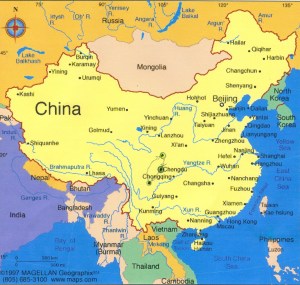
Where I went in China (Sichuan province).

For instance, if you think of China as the majestic, longest- lasting civilization in the world–one  that invented paper, gunpowder, kites, ice cream and toilet paper (hard to say which I value the most)— you’re going to be pretty darn impressed with all the rich history and present-day achievements you see. But if you are pretty sure that with 1 billion people, a land mass only slightly smaller than America (I was totally sure it was twice our size) and an economy growing at breakneck speed, China will be taking over the world in our lifetime – and not in a fun, let’s-break-the-bank European way but in a we-are-all-striving-together-to-suffer-and-achieve way – then you’re less likely to be enamored of the culture. Although I have to say, there wasn’t a whole lot of culture on display where I was in Chengdu. Mostly it was just gray skies, lots of smoking and spitting, a million high-rise buildings, and noodles galore. (But I wasn’t in the groovy old-world part of Chengdu with all the pandas, etc. so maybe I just missed the boat.. or the junk.)

Yup, this is pretty much my memory of Chengdu.

Once you get out into the countryside, though, China is awfully pretty.

The people are adorable, friendly and fascinating. The roads are great. Everywhere you look, you see building and new bridges and tons of billboards offering tons of stuff for sale and people who seem to be coping with the stress of living in this highly competitive, highly regulated country pretty well.

I have no idea what this means, but you gotta love a headline that uses the word "protagonist" right?

And make no mistake: China is regulated. You can’t get on WordPress, any Western blog sites, Facebook, twitter or YouTube in China. And my month-long quest to get a visa to visit Tibet came to naught, as they don’t seem to want to let Westerners in to visit that cheerful, beautiful Buddhist country. It’s astonishing how restrictions like this chafe and bind when you’re used to being able to go anywhere you please and criticize, make fun of, and badger your government (go, Jon Stewart!).

Despite the general affluence of China (there are more thousand-dollar handbags slung over skinny girls’ shoulders here than in New York), I also witnessed some of the worst poverty I’ve even seen.

I heard last night on CNN that the Chinese economy has slowed down to a roaring 8%, although China is still producing more millionaires a day than anywhere else on the planet. But there is a world of difference between people in the cities and people in the countryside – as well as a huge income gap between the haves and the have-nots. Which makes the work that Heiferis doing to improve the lives of rural, agrarian Chinese so vitally important. The people I was with were gentle, thoughtful, grateful and sweet– of course! they were Heifer folks, working in conjunction with some really helpful and committed people from the Chinese government– but I have to say, the overall charm quotient in Chinese cities is pretty low. By the time I got to Nepal and a beautiful monk smiled directly my face, I almost dropped over in surprise, I was so accustomed to the anonymous stare of the urban Chinese.

But looking back, all I can remember (as usual) are the children.

And what’s not to love there?

Categories: Children, China, Heifer International, Photography, Poverty, Travel | Tags: , , , , , , , , , | 31 Comments

Blog at WordPress.com.