Food

A Mother in Haiti.

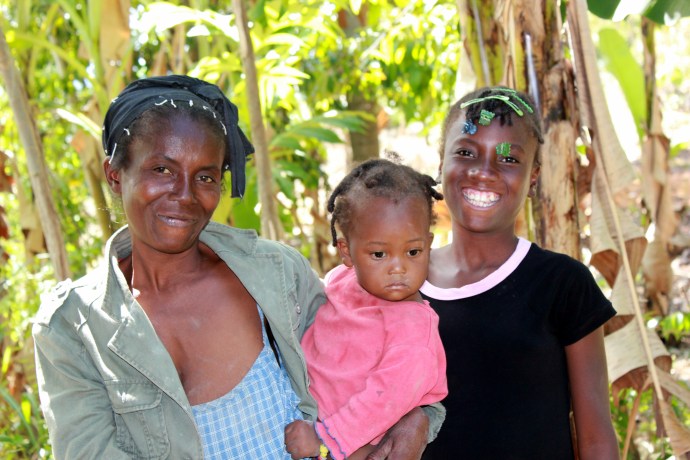
Madame Elliasain Wilson, Andrener & Cynthia

The first time I met the Wilson family of Degand, Haiti I was in a kind of rapture. We’d just seen the new Goat Breeding Center that Heifer International had built to help the town support its school, and met some gorgeous people living on small farms in this town overlooking the infinite blue sea. Madame Wilson’s daughter Cynthia dragged me by the hand to see their new goats, given by Heifer, who were all happily pregnant, and I took this photo of a family that seemed to have a good future ahead.

The Wilson family: Robinson, Madame Wilson, Cynthia, Andrener, Davidson & Monsieur Wilson (Makinley is hiding)

When I went back a week later to talk and visit at length, the truth of their difficult circumstances made me squirm, to think I’d been so oblivious to their real situation.

Elliasain and her husband have five children: Robinson, 23; Cynthia, 12; Davidson, 11; Makinley, 3; and Andrener, 1. In the terrible earthquake of January 12, 2010 (that Haitians called bagay la “that thing!”), their big stone house collapsed, trapping Makinley inside and crushing all their earthly goods: beds, clothes, dishes, cookware. Miraculously, when they were able to pull the heavy stones away, baby Makinley was without a scratch – just scared to pieces.

Where the Wilson home used to stand.

Despite that joy, the Wilsons’ loss was immense: also crushed were their pigs, goats and chickens – which is money in the bank to rural farm families – and their cistern, in this town where the nearest water is 4 kilometers away. Luckily, Heifer built a new cistern almost next door for four families, including the Wilsons.
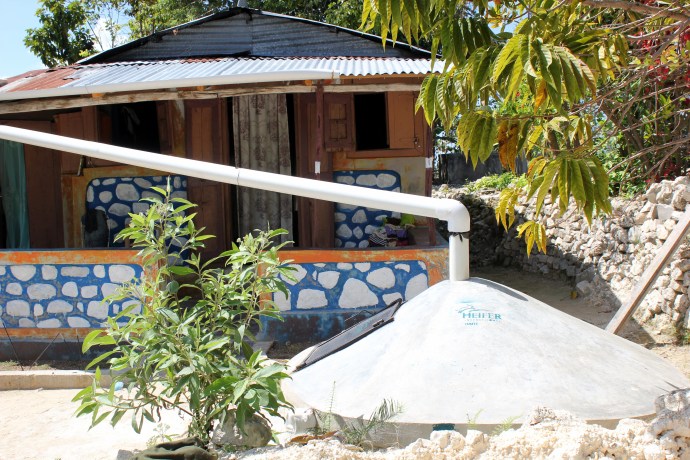
The Heifer cistern that the Wilsons share at a nearby house painted with Georgia O'Keefe clouds.

But surrounded by banana, mango, coconut, cherry, avocado and jackfruit trees, the Wilson family often does not have enough to eat because the trees haven’t produced much fruit after the four hurricanes of 2008 and the quake of 2010.

The first day I met Elliasain, her eyes were bright and she was buoyed by her husband’s enthusiasm, the goats, and her children. The day I went back, she seemed exhausted, hungry and dull-eyed. I cursed myself for having left my protein bars in the hotel, and wondered how she could possibly breast-feed little Andrener, being so clearly hungry herself. And I thought how exhausting it must be to have to work so hard to merely survive.

Madame Wilson, Andrener & Makinley, the lucky survivor.

Then I thought about all the women across Haiti, trying to make a life for themselves and their children. If only they were able to practice birth control (80% of Haitians are Catholic – like me — so yeah, thanks, Pope Benedict, for the holy ban on contraceptives in this country the size of Vermont that has more than 10 times Vermont’s population.) If only the homeless families were given the materials to rebuild and once again live in a proper home. If only women in Haiti weren’t so overworked and undereducated (most girls receive only two years’ schooling), perhaps they’d have a chance to secure a better future for themselves and their families.
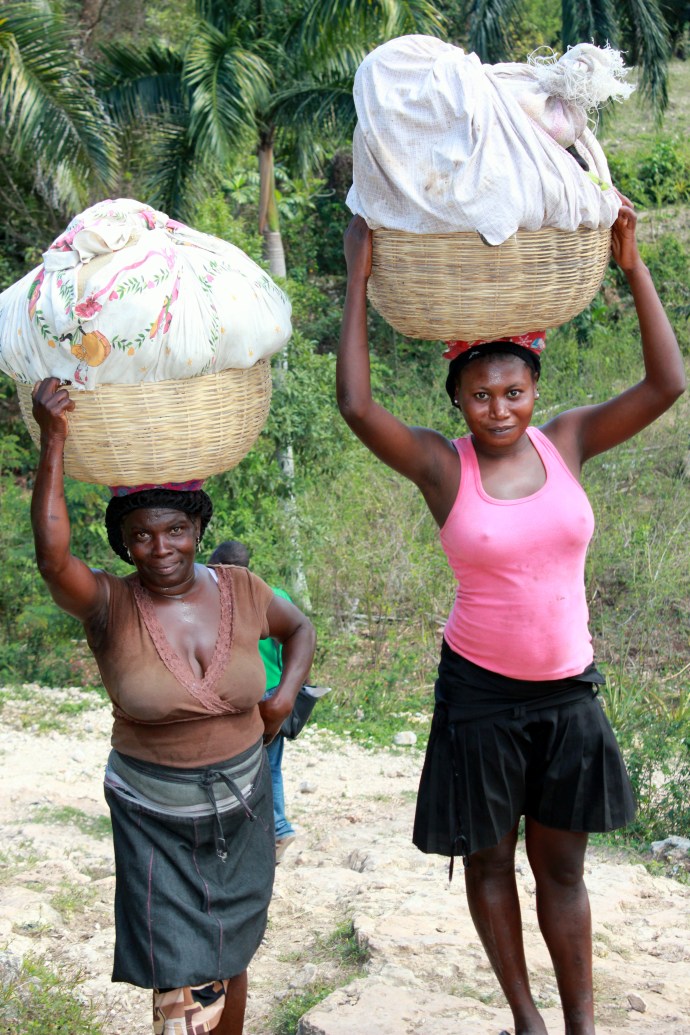
An uphill climb (with a load of bananas) is an everyday affair for the women of Degand.

I was feeling pretty low when I left the Wilson’s residence, but then I met Monsieur Wilson on the road back to the village.
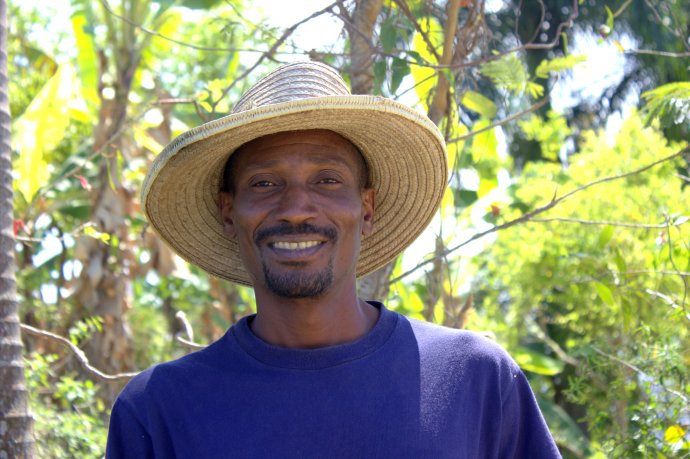
I showed him the photos I’d taken of his wife and children and he was so excited, proud and happy, I could see he was anything but beaten. He had Heifer goats that were having babies. He had wood to build a new house, and his village had the Heifer Goat Breeding Center to support a school. He was standing tall.

And that made me remember this beautiful sign at the house painted with clouds that expresses the fierce independence, sense of community and astonishing spirit of the Haitian people, especially its women.
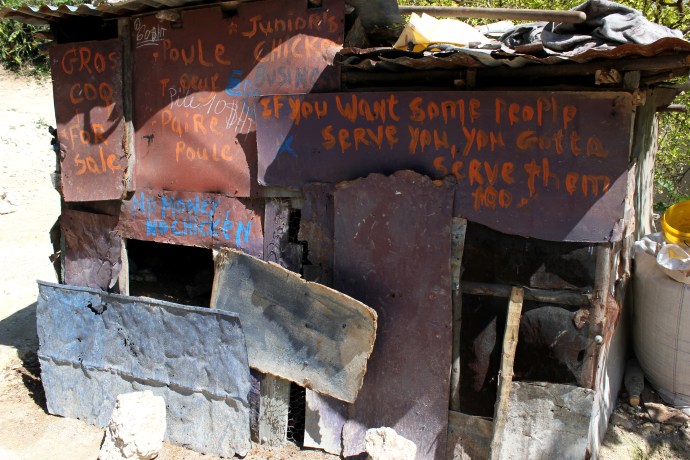
If you want some people serve you, you gotta serve them too.

The people of Haiti will survive. And if we serve, they may even thrive.


Categories: Animals, Food, Haiti, Heifer International, Hunger, Women | Tags: , , , , , , , , | 31 Comments

What I ate in Haiti.

Fresh whole fried tilapia from Lake Peligre .. caught that morning!

Actually, maybe we should start with what I drank in Haiti because that’s certainly where I always start (and end). I’m not even sure it’s appropriate to talk about food & drink on a blog about ending hunger and poverty with Heifer International but enough people seem to be curious about what I’m consuming that I’m indulging myself in this post. (Please feel free to tell me you think I’m a shallow bore if you feel like it.)

Alcohol is not hard to find in Haiti but it is expensive (really expensive – like $12 for a gin & tonic at a hotel). Ordering wine is a total crapshoot– tried it once and it was SO not worth it– so you’re probably well-advised to stick to beer.

The real Real Thing.

Prestige was yummy (and I don’t even like beer) at a mere $3/bottle (as opposed to the exorbitant $4.50 they were charging for Coca-Cola). However, the Coke was fantastic because it’s made with cane sugar syrup instead of the high-fructose corn stuff … and believe me, it makes a difference.

Coffee was thick, black & superb everywhere (my personal heaven). Fruit juices were equally amazing … absolutely fresh, and in flavors like mango, watermelon, papaya and grapefruit (to which Haitians add heaping spoonfuls of sugar, but I liked it tart enough to make you pucker).

Haitian grapefruit

If you like the food you are served on your first day in Haiti, you’re a lucky duck – because you’re likely to get that same dish at least once a day for the rest of your stay.

Here’s what it will consist of: a meat or fish (leg and thigh of chicken, beef, lambi– or conch, goat, or a whole tilapia fried with its head and tail still on) ; plantains fried in whatever; a few tomato slices that are no better than our grocery store models; and local rice (if you’re unlucky) with black beans.

Yeah, it's local.

Rice is ubiquitous in Haiti –which makes it all the more sad that we’ve just about killed off the rice industry  in the country with dirt-cheap imports from Arkansas that cost about ½ what the Haitian farmers can produce it for in their own fields. Unfortunately, local rice, even though I was trying super hard to like it, is not nearly as delicious as the imported kind  – (and I’ve never found a starch I didn’t like).

The creole sauce that is served on virtually everything is delicious; and the faux-kimchee ferociously hot cabbage slaw is similarly gorgeous – crunchy, fresh and so piquant I’m pretty sure no bacteria could survive in there so I ate a lot of it.

Every once in a while when I got desperate for something different, I’d opt for spaghetti bolognese which was always on the menu, but I was ashamed of myself in the morning.

Cashews and nuts are everywhere in the north; and in the south you can find fudge, just like at the Jersey Shore … but no, Snooki, it’s actually totally different.

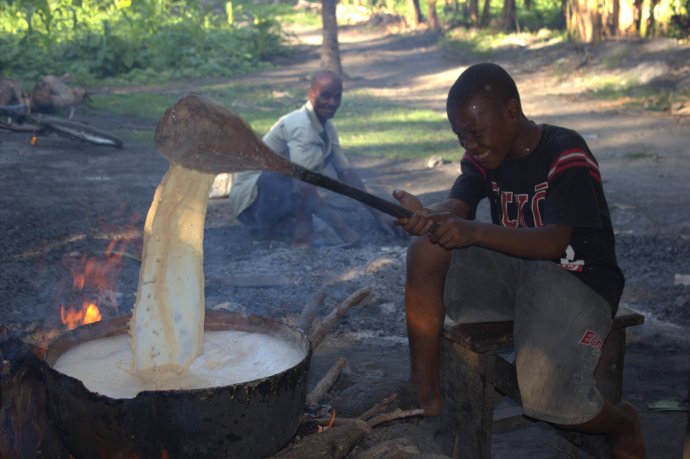
Making douce macoss fudge

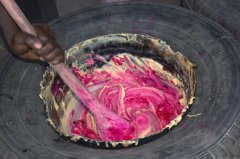
Making fudge (Note the tire/holder!)

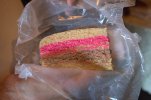
Haitian fudge is striped with pink, like taffy, and made with what I am sure is child labor — but it tastes more like halvah in that sandy/sweet way than the chocolatey-buttery fudge of my childhood.

Speaking of sweets, there aren’t many in Haiti. The only chocolate fix I got was hitting my M&M stash hidden in my suitcase. Desserts were completely resistible, because I’m lactose-intolerant and can’t have ice cream, so that made it easy to say no.

Most importantly, despite the fact that Haitians have the lowest caloric intake in the Americas and 25-40% of Haitian children suffer from chronic malnutrition, we were never served a single meal but with total graciousness and generosity.

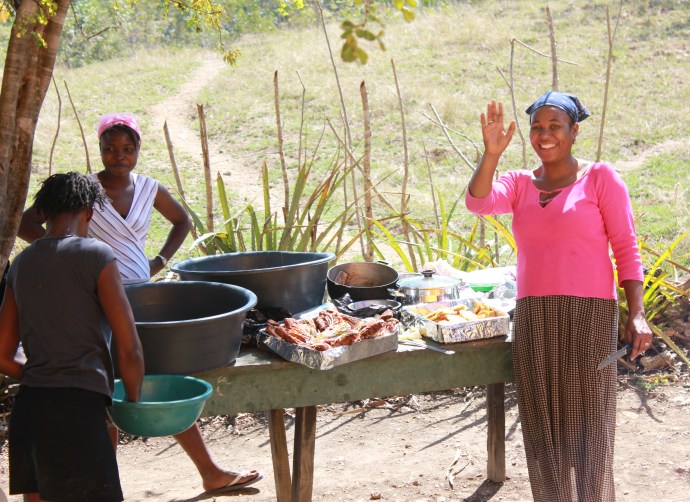
Making our gorgeous fish lunch in Lake Peligre.

By the time I left Haiti, I was sad to go but ready for a giant salad, a frosty cocktail, and a bar of chocolate.

Which oddly enough, didn’t taste as good as I thought they would.

I kinda missed Prestige.

Categories: Food, Haiti, Heifer International, Hunger, Photography, Travel | Tags: , , , , , , , , , , , , , , , , , | 54 Comments

Blog at WordPress.com.