Heifer International

Showered with flowers…

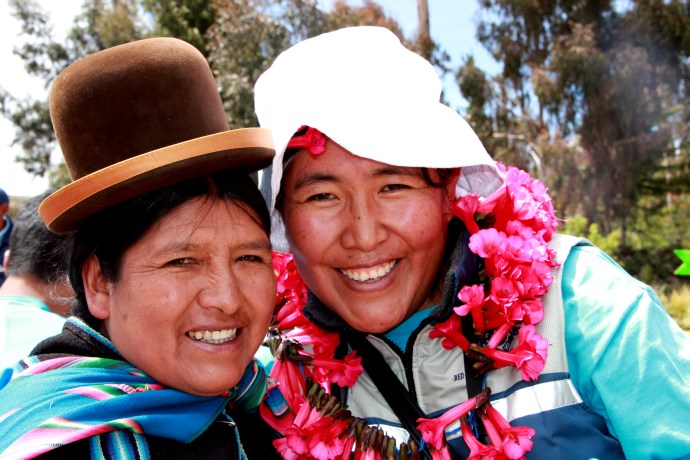
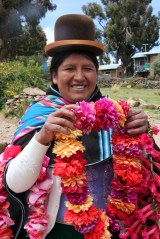
As I walked up the steep road leading to Chillcapata, a rural community outside Puno, Peru something told me I was  going to fall madly in love with the place. First clue: there was a gigantic, beautifully bedecked flower arch to greet me. A cheery welcoming committee was assigned to shower me in flower petals and love-bomb me with hugs. And of course, I got my very own Peruvian garland.

As we headed up the hill to the pretty green house of Maria & Primo Mamami to see Heifer’s FEED program in action, I could easily see why Chillcapata is known as the Garden of Puno; flowers were growing everywhere, while in the distance indigo-blue Lake Titicaca twinkled in the sunlight and llamas pranced in the grass.

Inside her cheerful bright kitchen, Maria proudly showed us her new Ecological Refrigerator (cooled only by a bowl of water), her tidy pantry, her energy stove (uses half the fuel and is vented), and told us about the changes she’d learned to make in her home, and how that had changed her life.

Sounds a bit trite, doesn’t it? Some new shelves, a place to keep things cool and to store utensils and pots, a new roof with translucent panels to bring in light, and an energy stove. But here’s the thing: it makes all the difference in the world to the health, nutrition, and dignity of your family to have a place to cook that is safe and healthy, and a regimen to keep your household clean, hygienic and neat. In fact, I’d argue a tidy house is the first step in gaining control of your life, and feeling competent and valuable. (However, I am a total Type A, or as Lulu calls me, Little Miss OCD.)

Maria's old kitchen

But take a look at the “before” kitchen photo, where the smoke from cooking brought Maria to tears every meal. The family suffered from lung problems and often ate on the floor, where guinea pigs also lived, scratched and ran (they need to be inside and warm to survive). And the rest of the house was just as disorganized and overwhelmed.

Through FEED, Heifer brought the women of Chillcapata a list of simple ideas to improve their lives (no animals in the house/a bed for every child/a biogarden to improve nutrition), offered training workshops, then sent a few emissaries like Maria to other communities to see the ideas in action.

A new hand-made sink

The women came back motivated true believers, and set to work to transform their own homes, and pass their learning on to others. Luckily, these are can-do people who are incredibly clever at building things, working cooperatively, and getting ‘er done.

The Incan ancient tradition of ayni, like an Amish barn-raising where everyone pitches in to cooperatively help each other, is still very much part of Chillcapata culture. Maria’s kitchen was one of the first finished, and quickly, other women signed on to improve their homes.

Julia and Celso Apaza got the materials they needed from Heifer to start kitchen construction, and the couple worked day and night to change every room in the house. “It was like a dream for us,” she told me, “because before I felt ashamed of my house. It was a mess, and I never wanted to welcome visitors. But now my doors are wide open and I even have a bench for my visitors to sit on.”

Julia's old house is now just for guinea pigs.

For two years when they were really struggling, Julia, her husband, their guinea pigs, and four sons lived in one small room and clearly, the memory still haunts her. Like many children of the Highlands, her four sons were sent to Lima to try to make a living at age 12. Three of those boys died of malnutrition and lung disease after working in a wood factory.

Now Julia is a promoter of the Healthy Homes program (which is also supported by Walmart’s Global Women’s Economic Empowerment Initiative) and she proudly keeps the poster on her wall to work her way religiously through every step of the program…and believe me, I’m quite sure she will make it.

“I am very happy because now the young children don’t think about going to Lima anymore; they want to stay here with their parents.”

Driving back to Puno in the long, beautiful light of late afternoon, I thought about these people’s ultimate dream: to make Chillcapata the next New Thing in authentic adventure travel and share with tourists the stunning beauty of their little town. Passing on the gift …It’s contagious!
Categories: Heifer International, Peru, Photography, Travel | Tags: , , , , , , , , , , , | 35 Comments

Just sitting around knitting (and changing the world).

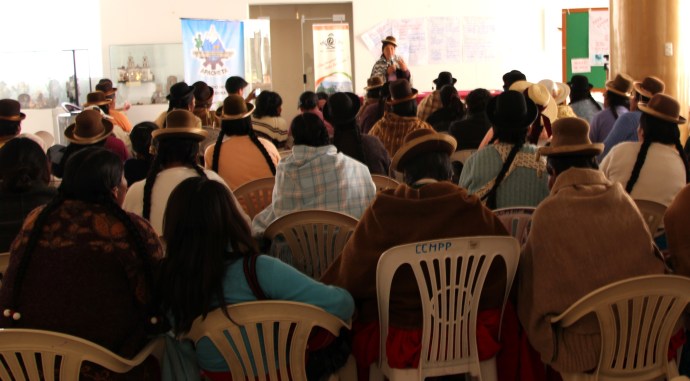
I hate meetings. In fact, I’ve pretty much developed a career around avoiding them. So I was somewhat dismayed when my introduction to Heifer Peru came in the form of a women’s meeting in Puno – a city about 14,000 feet above sea level in the south Central Highlands near beautiful Lake Titicaca.

The view outside...

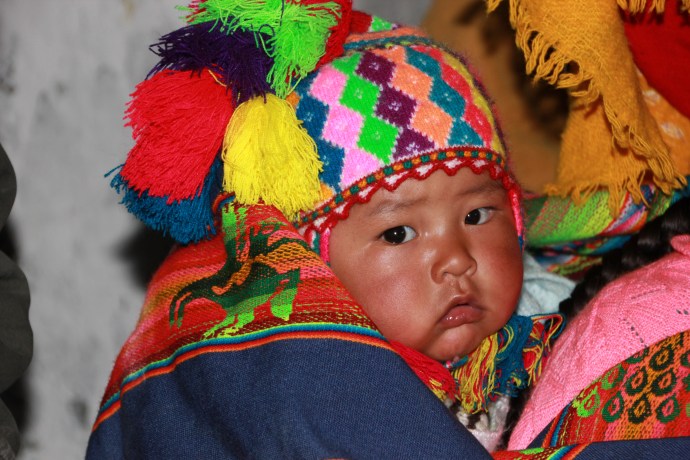
Luckily, this meeting was like no women’s networking session I’d ever attended. For one thing, everyone had the same hairdo. The room was a sea of long black braids, topped by outrageously insouciant hats, tilted just so.

The view inside...

Instead of power pantsuits and hire-me heels, these women were decked out in abundantly colorful, multi-tiered skirts, intricately embroidered vests and spangled blazers. And while listening intently, almost every woman was simultaneously knitting or crocheting– hence getting a lot accomplished. I loved it!

The softest alpaca goods -- so beautiful!

The women were there to celebrate Heifer’s FEED project, in existence for 4 years with a mission to improve food security, nutrition and income, and encourage women in eight Puno rural communities to produce and collectively sell their handicrafts.

Like many of Heifer Peru’s projects, the FEED program is aligned with a local organization called APACHETA, The Center of Andean Development (obviously, Peruvians are as acronym-crazed as we are). While Heifer guides, funds and monitors APACHETA’s activities with 700 Peruvian women and their families, the leader of that organization is Cleida Incacutipa, a formidable 6-foot tall woman who used to work for Heifer but is now boots-on-the-ground in APACHETA’s drive to improve the lives of Puno women in ways both simple and complex.

Candida Canaza & the incomparable Cleida Incacutipa

The “simple” part is giving women the animals and the trainings to improve their families’ nutrition and income – teaching them how to grow more potatoes, breed the animals for income, and produce more high-quality handicrafts. More complex is developing leadership capabilities in these women farmers, training them to advocate for themselves in their households, neighborhoods, and local governments. To say Cleida has a gift for this kind of work is an understatement: she knows every woman’s name and personal history, she’s hugely dedicated, and she believes passionately in their capacity to achieve.

Three local leaders: Lidia Quiroz, Felipina Apaza & Elisabeth Ticona ...power to spare!

In a world where women are often not allowed to attend or speak in their local village meetings (not to mention their own households), Heifer’s gender equity sessions represent nothing less than a quiet revolution. From dealing with domestic violence to organizing a Congress of Female Farmers to running for local office, these women graduates of the gender workshops are taking the empowerment ball and running with it – especially the three fabulous rabble-rousers I sat down and talked to, while their friends were busy displaying their award-winning handicrafts on hilariously Caucasian manikins.

The women spoke again and again of the life-altering discovery that “I have a voice.” Once they truly embraced that, it was natural to begin to ask for things for themselves: workshops and looms to improve their community handicrafts, municipal help to support their entrepreneurial efforts, and always, in the Heifer way, offering to share knowledge and decision-making with other women to lift them up, too.

“In the past we were asleep,” says impish Felipina. “And then we woke up. We are new women now.” 

At the end of the long afternoon, I woke up to the shopping opportunities at hand, bought some beautiful hats, and got hugged about a million times around the neck. It was just about my favorite meeting ever.

Categories: Heifer International, Peru, Photography, Poverty, Travel, Women | Tags: , , , , , , , , , , , , , | 30 Comments

Bienvenidos a Peru!

Heading across Lake Titicaca

First, a bit of a disclaimer: this is your unapologetically turistica introduction to the beautiful land of Peru!

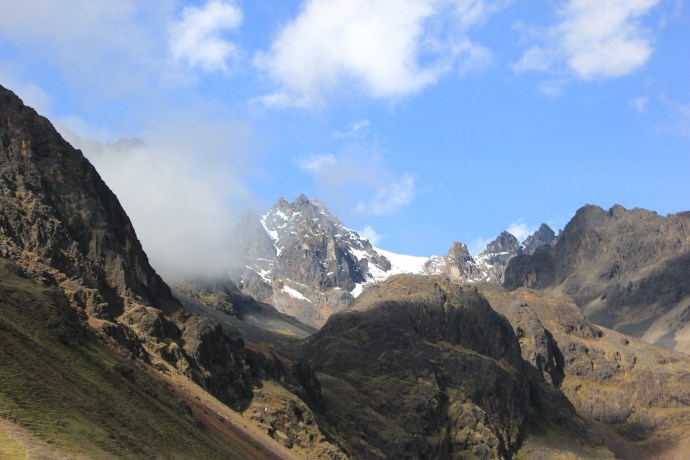
Right now I don’t quite have the perspective or internet bandwidth to post about all the deeply moving stories I’ve experienced so far in this amazing country. So I’m just going to give you the view from 15,000 feet .. which is approximately how high I am today in Pasco City, the highest city in Peru. (And yes, that is the sound of my heart pounding, trying to pump oxygen to my brain.)

Peru is severely beautiful .. with miles of ocean shoreline and the Andes (sierra) and the jungle (selva). It’s bordered by Ecuador, Colombia, Brazil, Bolivia, and Chile and is packed with silver, gold, copper and zinc – making it well-nigh irresistible to mining interests that never saw a mountain they didn’t want to level.

Although the country’s economy has improved dramatically over the past decade, the indigenous people in the Highlands (where Heifer does most of its work) are still overwhelmingly poor, ferociously independent, and definitely know how to rock a hat.  

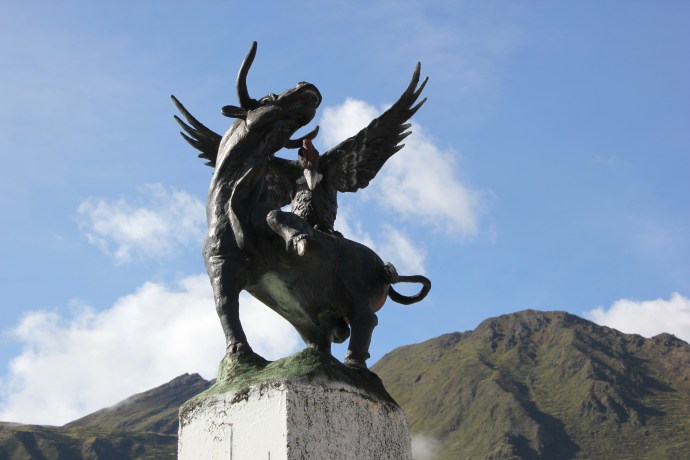
In the center of Marcopata, we saw a statue that pretty much captures the Highland spirit. The bull represents the Spaniards who colonized Peru. The condor tied to its back is the indigenous people, who claw and fight to be released from bondage – literally drawing blood.

These proud descendants of the Inca Empire are going to need every shred of that irrepressible spirit today to resist the triple threat of mining companies, urbanization, and climate change. Almost one-third of the country’s 30 million inhabitants now lives in Lima, yet you know it must kill something inside these proud people to leave their mountains and ancient traditions to descend to the arid pull of the city.

Heifer’s projects are mostly in the high central plateau, where it is developing programs that support the Highlanders’ traditional pursuits of raising alpaca and llama, growing potatoes, and making handicrafts – working with communities to make these pursuits economically viable, entrepreneurial, and sustainable.

Which means that more children can grow up with a future in the countryside they love, and preserve the land and traditions that are under siege. 

I can’t wait to share those stories… just as soon as I can breathe properly again. It’s gonna be epic!

Categories: Agriculture, Animals, Heifer International, Hunger, Peru, Photography, Poverty, Travel | Tags: , , , , , , , , , , , , , , | 20 Comments

My admittedly tardy International Women’s Day Post! (Haiti Version 2.0)

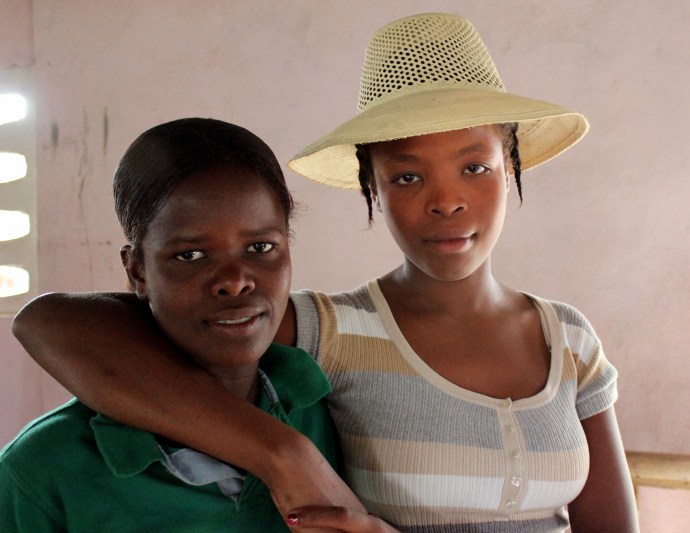
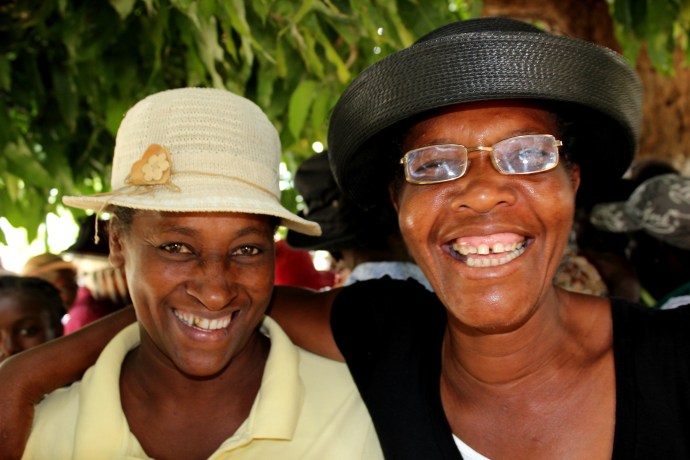
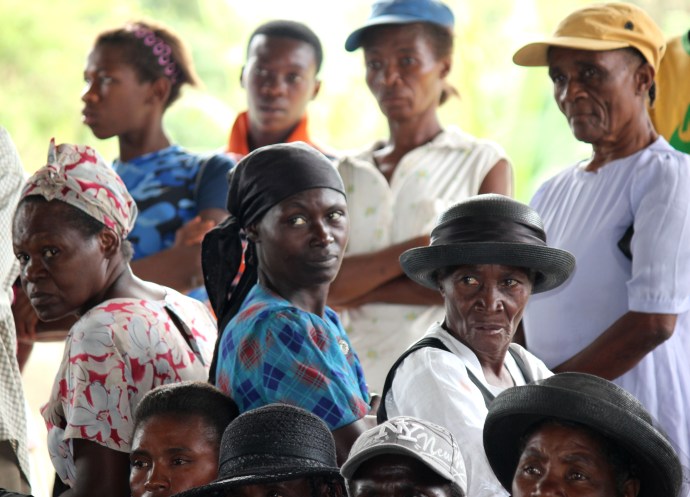
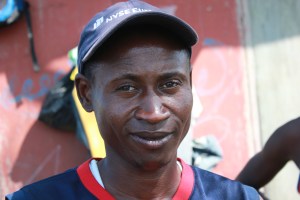
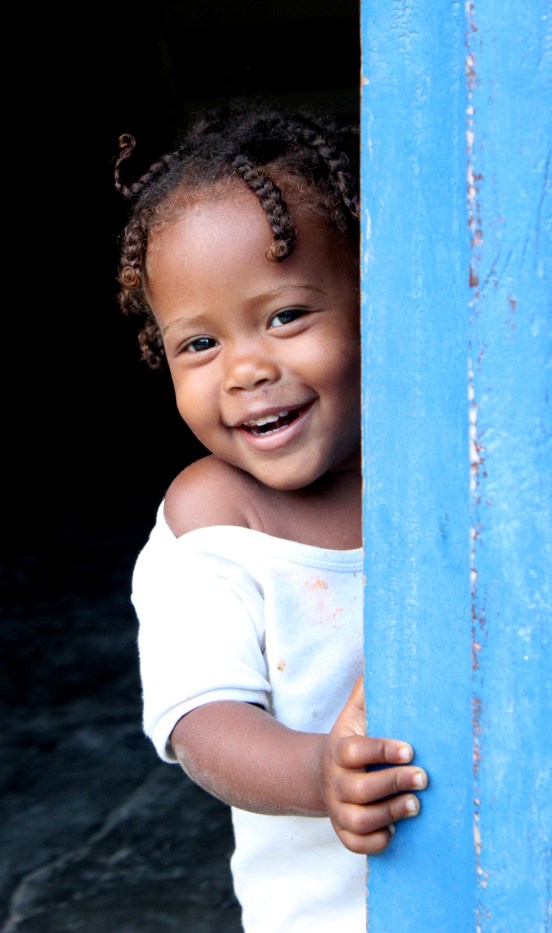
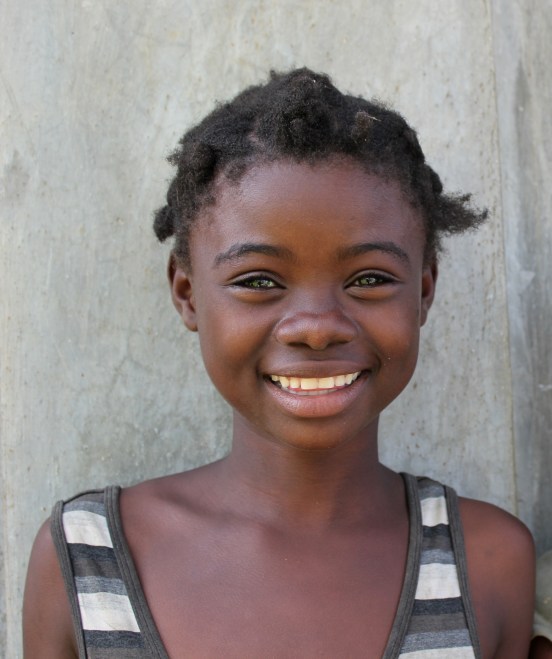
I completely missed International Women’s Day on March 8th this year, and I’m feeling a little guilty about that. So I’m going to do one post at the end of each one of my trips, comprised of photos of the beautiful women I met in that country.

The women of Haiti were a constant source of inspiration to me: strong, brave, incredibly hard-working, and courageous in ways I cannot fathom. And despite their hard lives, full of joy.

But to be honest, I’m blown away by the women in every country I visit. On this planet there are 650 million smallholder farmers who produce 70% of all the food we eat. And the majority of those farmers are women.

When we help women farmers, we’re simply being smart –because with tools, training and technology, they will do what women always do: they’ll feed us, take care of us, and provide.

If I loved Heifer International for nothing else, it would be for its tireless, inventive, and unwavering commitment to empowering women farmers around the world to grow more, earn more, learn more, and achieve security for themselves and their families.

I’m seriously tickled pink to be a tiny part of this important work, and I can’t believe that I have the privilege of introducing you to these remarkable women (and there’s a story behind each one of these photos).

Happy International Women’s Day!! (let’s pretend it’s today).

And yes, I am in Peru now, and to prove it, here’s a little taste of things to come (it’s a female so it fits the theme).

Categories: Agriculture, Animals, Haiti, Heifer International, Peru, Women | Tags: , , , , , , | 26 Comments

A rough draft of my last day in Haiti…

My last day in the countryside of Haiti was one of the best, because I spent the whole day in the company of Ewaldy. (Well, to be honest, the start of the day was a bit rocky when we had to use a twisted wire hanger & a wad of Ewaldy’s bubblegum to pry open the car door after I cleverly locked the keys in the Heifer truck.)

Ewaldy Estil is the Northern Regional Coordinator and has been working for Heifer International since June 2000. As he puts it, it’s not a job, it’s his life mission. When he’s not running Heifer projects (and even when he is) he belts out gospel and reggae music (you should hear his awesome original “Passing on the Gift” song!) and despite the fact that he travels nonstop and keeps ridiculously long hours, he never stops smiling.

Ewaldy and I were driving from the town of Hinche in the Central Plateau up to Cap Haitien through some beautiful farmland, on the way to the small town of Milot where I was going to watch a Heifer training session in action.

Paul Dieudem, Heifer trainer

When we drove into Milot, the men of the village were under a tree listening to Paul Dieulem, a farmer from nearby DonDon that Heifer has trained and hired to take Milot farmers through the arduous process of turning a team of 2 cows into draft animals. It’s a 20-day course that covers everything from raising forage crops for feed to making yokes; learning to tie the animals together; teaching the animals to move in tandem and follow commands; training them to carry a load by dragging a big log behind them; and perfecting the strenuous work of plowing with that team. (I felt like I was re-reading Little House on the Prairie!)

At the end of 20 days, each farmer will have a team of cattle that can do the work of 20 men –and part of the income they raise plowing other people’s fields will repay the cost of the cattle (about $1000 per cow) to pass on the gift to other farmers in the community. I watched them practice yoking, and I can tell you, it’s no small endeavor to tie two 800-pound animals together! When one farmer asked why they had to repay the gift of cows, Ewaldy had a spirited conversation about Heifer’s philosophy of no free hand-outs & community responsibility that had the whole group laughing and arguing and shouting the other farmer down. (I was secretly waiting for Ewaldy to break into song.)

Heifer has also been working in Milot to train women in food processing, so they can earn an income making jelly and liqueurs from the passion fruit, grapefruit and sour oranges that grow in abundance here. At first I was slightly shocked that making liqueur would qualify as an enterprise, until I remembered that Denver’s favorite mayor and now Governor of Colorado John Hickenlooper started as a microbrewer of artisanal beer, so I’m thinking this is just the first step on the road to women taking political office in Haiti!

Madame Laurent Pauline has been one of the most successful small entrepreneurs, and she now sells about 30 small bottles of liqueur every week for 50 Haitian gourds (@$1.22) apiece. (Passion fruit is the most popular flavor because it’s considered a bit of an aphrodisiac, as Pauline laughingly relates.) This income helps her send her five children to school, while her husband is learning to work with the draft animals to earn more money.

Nothing left for me!

Twenty women of Milot were trained by Heifer and have built a network of licensed food processors who are planning to establish a revolving fund for micro-loans to help other women get the trainings and start their own businesses. I’m sure that there is a lot of potential for growth as Pauline definitely has the gift of salesmanship and plans to make her own labels, expand her line to include coffee & cacao liqueurs, and sell, sell, sell. I was dying to taste her product, but as it was Carnaval celebration week, she was plumb sold-out. (By the way, Haitians do not drink frequently, and at the size and potency of the bottles Pauline sells, there’s not much chance of serious inebriation.)

By the time we reached Cap Haitien that night, I was eager to sleep in a real hotel (our Hinche hotel had left a bit to be desired) and to release Ewaldy from the chore of driving me around so he could get back to his wife and two little children. I was flying back to Port-au-Prince the next day, and then heading home to Atlanta, and I was feeling sad to be leaving Haiti.

All these beautiful people and places – how could I stop wondering what would happen to them?

Micheraina from Maniche is on my mind...

Then I realized that they were in good hands with Ewaldy and crew. And I would be coming back (I will, no matter what!). And that as much as I’ve loved Haiti, I’ll probably love Peru just as dearly. (I’m leaving tonight!)

So.. the journey continues. I hope you’ll come along!

The oddly placed bathroom cabinet in one of the more interesting hotels we stayed in... always an adventure!

Categories: Haiti, Heifer International, Hunger, Photography, Travel, Women | Tags: , , , , , , , , , , , , | 22 Comments

Blog at WordPress.com.