Agriculture

A Fiber Primer for Yarnheads.

Although I used to embroider and do crewelwork in a past life, I have never been known to Stitch without Bitching, and nobody has ever accused me of having any real talent in fiber handicrafts. However, I do know art when I see it, and the day I spent with Heifer at Ocongate, Peru in the presence of the Six Stars of Bacchanta weavers was nothing short of magical (quite possibly because there was a lot of shopping involved).

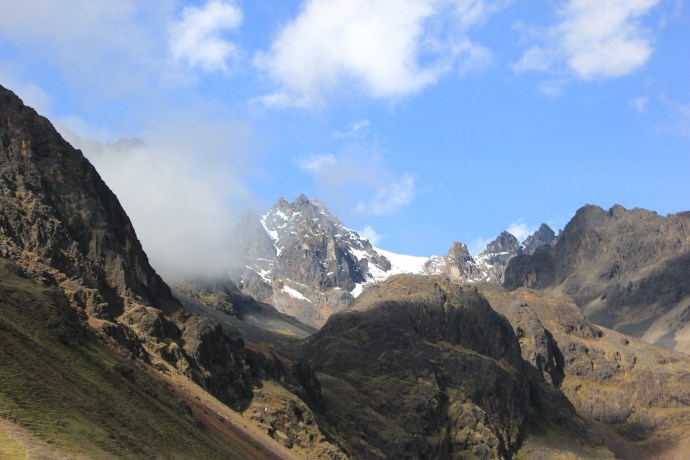
The Six Stars setting in the Ausangate Andean Range... not bad, right?

This Heifer/AEDES project is part of Heifer’s Cusco umbrella project to help 4,333 families in 22 Highlands communities close the value chain of breeding alpacas: raising, shearing, spinning, and weaving the precious fiber… then going all the way to the final step of producing knit goods that will maximize their income. After all, when the Highland families do all the hard work of producing the fiber, wouldn’t it be great if they got the major income that comes from making stuff from that fiber??
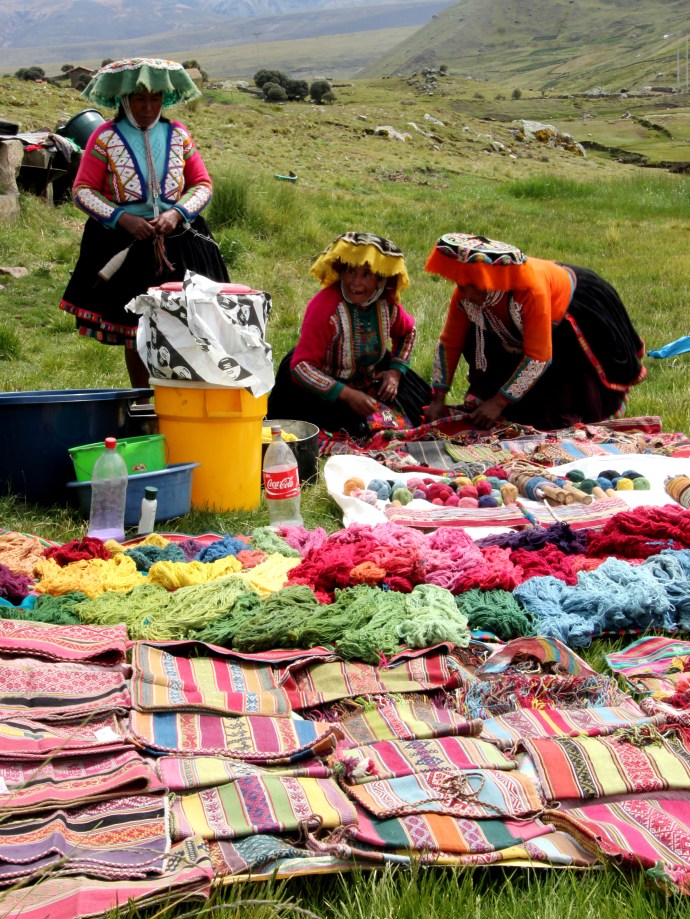
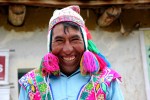
Master weaver Francisco

To that end, Heifer and its local NGO partner AEDES are helping the 120-member Six Stars organization, with the super-charismatic Francisco at the helm, to learn advanced methods to clean, dye, categorize, create and execute uniformly beautiful designs that can then be sold in local and regional markets (like in nearby, tourist-laden Cusco) at a highly profitable price point.

The women demonstrated “phusca” (Quechua for spinning), which the Highlands women do incessantly, walking around with balls of alpaca fluff that they relentlessly twist and refine to convert fleece into thread.

There are 31 different categorizations of alpaca fiber, from thickest to most desirable thinnest (31) and with Heifer trainings, Six Stars participants have become adept at both breeding their animals to produce fibers of a higher category, and learning to knit with these super-fine fibers.

Up close & personal with an alpaca's fleece --unbelievably thick & luscious!

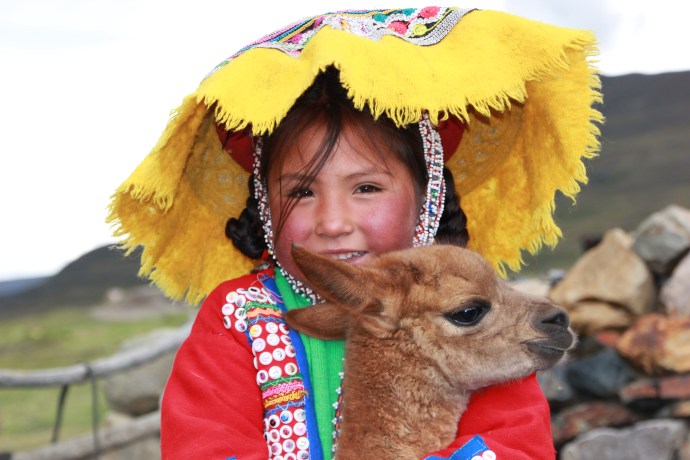
Butterscotch beauty

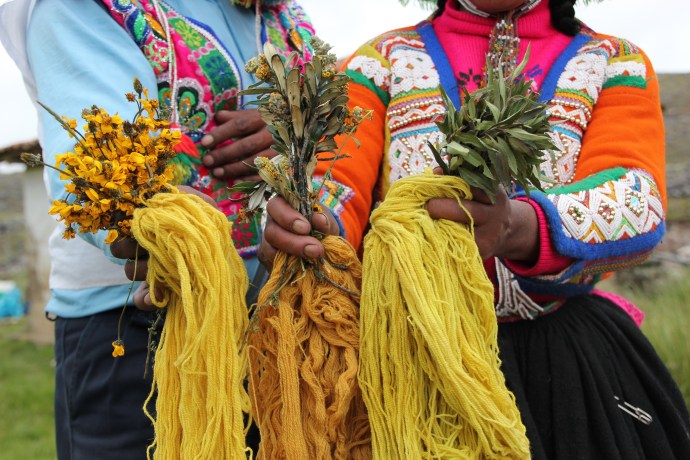
Natural alpaca fiber in all hues, particularly blacks and browns, are hugely in vogue –particularly the darker colors (and Heifer is providing those alpacas for breeding). But for the sheep’s wool that is used in many other handicrafts, natural dyes are all the rage. Victoria showed us the flowers and herbs that produce the yellows, purples and blues for their wool weavings, as well as the scales from insects who live in cactus (!!) and produce a rich,vibrant red.
Alpaca fieltros..cute!

Felting (rolling tight little balls made from the short neck hairs of the hirsute alpaca) makes use of every bit of the precious fiber, and is used in necklaces, earrings and bracelets with a modern whimsical twist. But one of Francisco’s favorite claims is that Six Stars is bringing back ancient and forgotten Incan designs, with its plethora of birds, spiders, chicanas (the Incan cross) and condors that revere the past.

In the future, however, it’s all about these trainings empowering the Highlands people to stand up for their own food sovereignty, land security, and the right to the profits from their incredible hard work. One of the oddities of Peruvian commerce is that every organization needs to be legally registered with the government in order to be recognized, enabled to work with other organizations, and to sell its wares. Heifer has helped Six Stars to register (a lengthy and expensive process) so now the group can work with the Ministry of Tourism, export its beautiful fibers, and participate in the trade economy.

Softer than soft ...super-premium baby alpaca fur is the most valuable of all.

What can I say but … coming soon, to a store near you!

Categories: Agriculture, Animals, Heifer International, Peru, Photography, Travel | Tags: , , , , , , , , , , , , , , , , , | 36 Comments

Edith Piaf in the Andes

As we drove up and up, from Cusco to Marcapata through the Ausangate Range of the Andes, the air got markedly thinner, and the scenery got wilder and more spectacular. There were five of us in the truck: me; Lidia, the adorable Director of Heifer Cusco; Rosaluz, my Heifer translator; Carlitos, our jovial driver; and Kristen, an enthusiastic American volunteer working in the Cusco office. As we blasted Edith Piaf on the CD player (in complete & wonderful incongruity), they tried to explain to me the intricacies of Heifer’s Alpaca Bio-Diversity in High Andean Communities program. I was trying hard to follow, but I kept getting distracted by the amazing views of llamas, alpacas, glaciers and peaks out the window….and La Vie en Rose.

Beautiful and pristine, this part of the Central Highlands is inhabited almost exclusively by llama and alpaca herding communities in one of the few remaining pastoralist societies in the world. The wet season runs from October – May, when the pastures soak up water like a sponge, and fluffballs of grazing alpacas dot the hillsides. In the dry season, May- October, life gets a lot more challenging, as pastures shrivel and the grazing is sparse. It’s a never-ending struggle for survival, and the 22 Andean communities in Heifer’s program are far-flung, small indigenous villages that are almost exclusively dependent on the alpaca for income, meat and sustenance.

 The Highlanders’ hard-wrung existence is further threatened by climate change, with disappearing glaciers leading to scarcity of water and diminished pasture; food insecurity (only potatoes grow at this rarefied altitude and 45% of children under 5 are malnourished), and the low quality of the alpaca herds.

In past years, white alpaca fur was by far the most valuable, so breeders began to kill their brown, black and tan alpacas. Before you could say “genetic disaster,” the 22 natural shades of alpaca became 90% white, and in-breeding caused a multitude of weaknesses in the animals.

Pretty blue eyes, but that's not a good sign in alpacas.

So Heifer is making an investment in these 4,333 alpaca-raising families to help them not only survive, but thrive. Working in partnership with AMADARES, a local NGO, Heifer is providing robust bulls in non-white alpaca colors, seeds and materials, as well as funding 2 veterinarian/technicians. In monthly workshops in each community, the techs teach the breeders better methods of reproduction, animal care, pasture maintenance, shearing, categorizing the fiber, and making alpaca handicrafts.

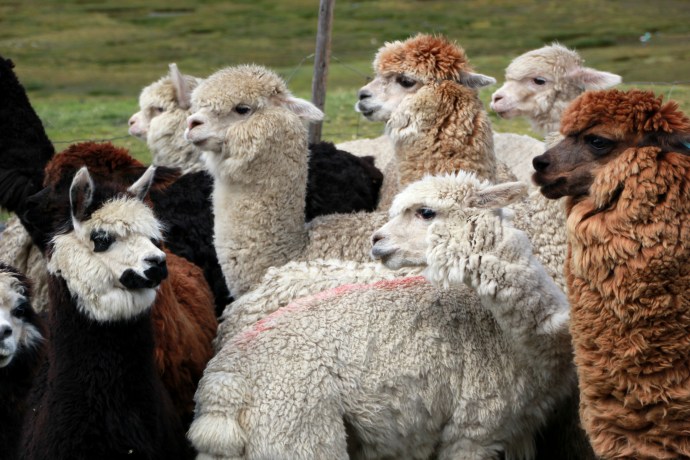
The alpaca rainbow coalition -- how beautiful!!

We met Claudio Pacco, one of the vet/techs, when we finally reached Marcopata at dusk, a sweet little town huddled in a valley between two giant mountains. Claudio lives in Puno and drives 9 hours every month to Marcopata to begin a 20-day stint where he rises daily at 4:30 a.m. to ride his motorcycle (brrrrrr!) to the remote villages so he can get there before 6 a.m. when the alpacas are put out to pasture.

Claudio at work, with a storm coming in.

Claudio is 31 and both his parents and grandparents were alpaca breeders, so he feels it was his destiny to be a vet. “I have a very inner feeling about alpacas,” he tells me shyly, “and I love working with them, even though they have lots of problems.”

Alpacas do have lots of problems – which I’ll be telling you about at length in my next post – but lack of love from Claudio isn’t one of them. I’ve rarely met anyone whom I felt was more committed, gentle and self-effacing (he wouldn’t even translate comments that praised him) – although I worried that he was never going to get married with a killer schedule like he’s keeping.

As we all walked back to our rustic hotel that night, getting ready for a big trip to the communities the next day, I looked up at the Ausangate Range and remembered that in Andean culture, the mountains are considered gods (“apu”), as protector and creator of the people, and source of water. Those sacred beliefs have held fast for six centuries — but now that gold has been found in the Ausangate, the mountains themselves are at risk of being torn apart, as well as the way of life of the alpaca farmers. The Heifer/ADAMARES teachings and trainings in community organization, empowerment, and building a sustainable economy are laying some great groundwork for a different outcome. Let’s just hope it’s in time for the next generation!

She's got her lasso and she's ready to go!

And just in case you’re longing for a bit of La Vie en Rose, here ya go!

http://www.youtube.com/watch?v=0NdmIpHKfgk&feature=related

Categories: Agriculture, Animals, Heifer International, Peru, Photography, Travel | Tags: , , , , , , , , , , , , , , | 28 Comments

Bienvenidos a Peru!

Heading across Lake Titicaca

First, a bit of a disclaimer: this is your unapologetically turistica introduction to the beautiful land of Peru!

Right now I don’t quite have the perspective or internet bandwidth to post about all the deeply moving stories I’ve experienced so far in this amazing country. So I’m just going to give you the view from 15,000 feet .. which is approximately how high I am today in Pasco City, the highest city in Peru. (And yes, that is the sound of my heart pounding, trying to pump oxygen to my brain.)

Peru is severely beautiful .. with miles of ocean shoreline and the Andes (sierra) and the jungle (selva). It’s bordered by Ecuador, Colombia, Brazil, Bolivia, and Chile and is packed with silver, gold, copper and zinc – making it well-nigh irresistible to mining interests that never saw a mountain they didn’t want to level.

Although the country’s economy has improved dramatically over the past decade, the indigenous people in the Highlands (where Heifer does most of its work) are still overwhelmingly poor, ferociously independent, and definitely know how to rock a hat.  

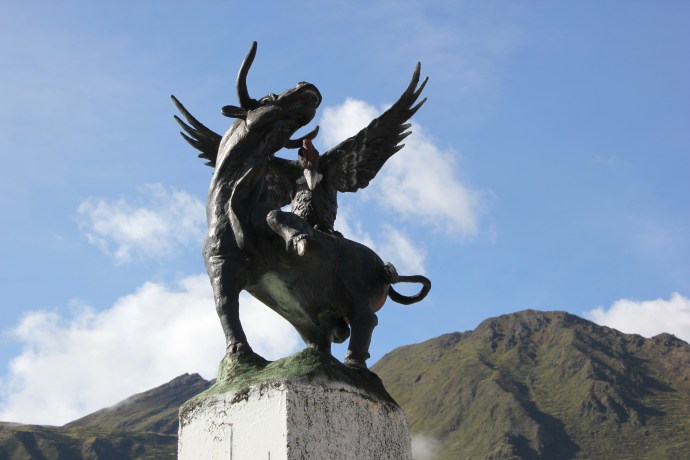
In the center of Marcopata, we saw a statue that pretty much captures the Highland spirit. The bull represents the Spaniards who colonized Peru. The condor tied to its back is the indigenous people, who claw and fight to be released from bondage – literally drawing blood.

These proud descendants of the Inca Empire are going to need every shred of that irrepressible spirit today to resist the triple threat of mining companies, urbanization, and climate change. Almost one-third of the country’s 30 million inhabitants now lives in Lima, yet you know it must kill something inside these proud people to leave their mountains and ancient traditions to descend to the arid pull of the city.

Heifer’s projects are mostly in the high central plateau, where it is developing programs that support the Highlanders’ traditional pursuits of raising alpaca and llama, growing potatoes, and making handicrafts – working with communities to make these pursuits economically viable, entrepreneurial, and sustainable.

Which means that more children can grow up with a future in the countryside they love, and preserve the land and traditions that are under siege. 

I can’t wait to share those stories… just as soon as I can breathe properly again. It’s gonna be epic!

Categories: Agriculture, Animals, Heifer International, Hunger, Peru, Photography, Poverty, Travel | Tags: , , , , , , , , , , , , , , | 20 Comments

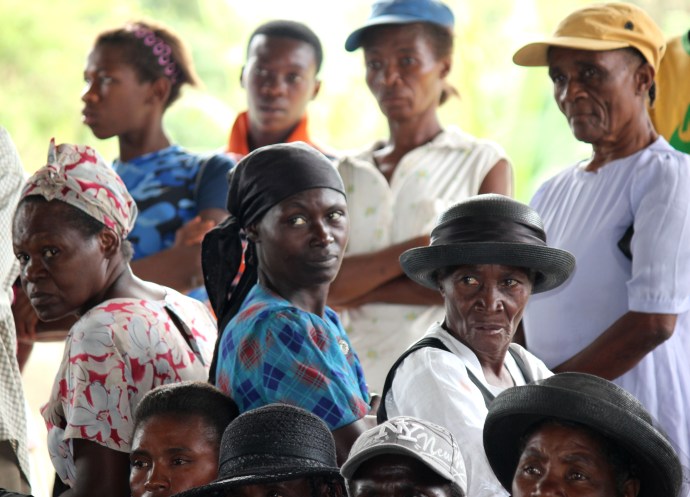
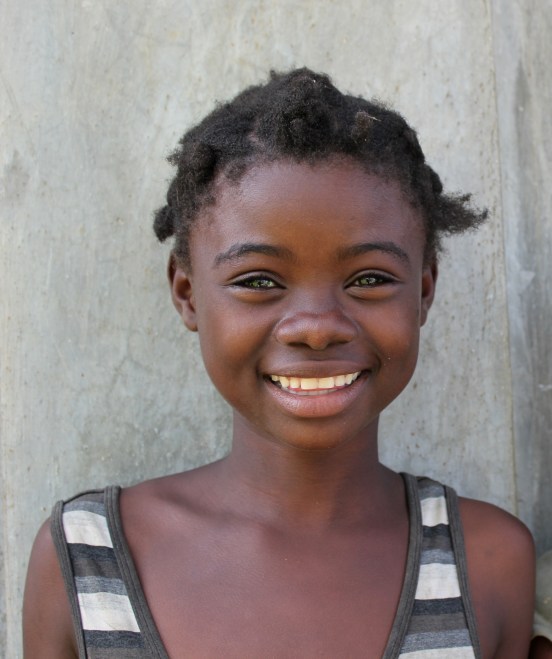
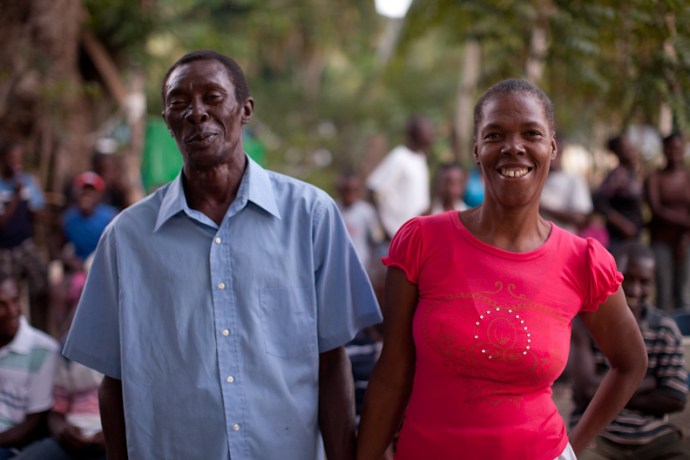
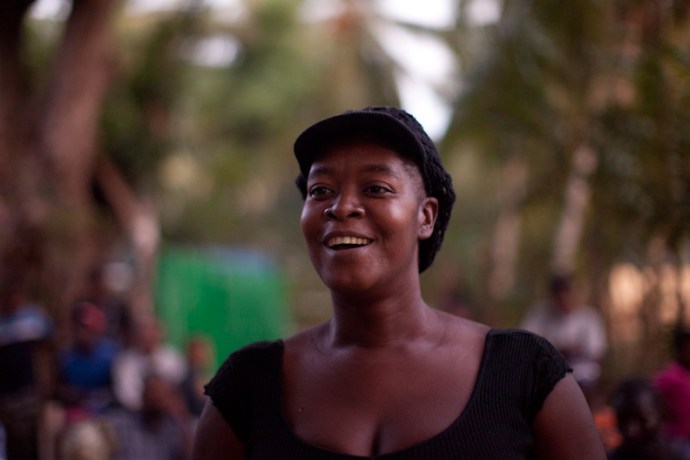
My admittedly tardy International Women’s Day Post! (Haiti Version 2.0)

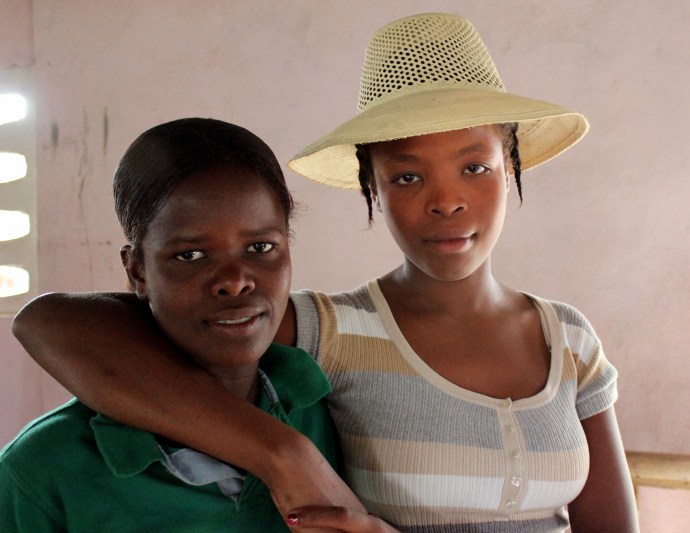
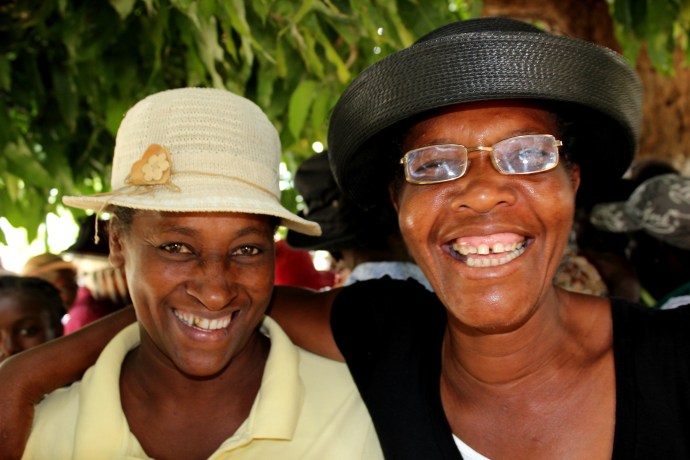
I completely missed International Women’s Day on March 8th this year, and I’m feeling a little guilty about that. So I’m going to do one post at the end of each one of my trips, comprised of photos of the beautiful women I met in that country.

The women of Haiti were a constant source of inspiration to me: strong, brave, incredibly hard-working, and courageous in ways I cannot fathom. And despite their hard lives, full of joy.

But to be honest, I’m blown away by the women in every country I visit. On this planet there are 650 million smallholder farmers who produce 70% of all the food we eat. And the majority of those farmers are women.

When we help women farmers, we’re simply being smart –because with tools, training and technology, they will do what women always do: they’ll feed us, take care of us, and provide.

If I loved Heifer International for nothing else, it would be for its tireless, inventive, and unwavering commitment to empowering women farmers around the world to grow more, earn more, learn more, and achieve security for themselves and their families.

I’m seriously tickled pink to be a tiny part of this important work, and I can’t believe that I have the privilege of introducing you to these remarkable women (and there’s a story behind each one of these photos).

Happy International Women’s Day!! (let’s pretend it’s today).

And yes, I am in Peru now, and to prove it, here’s a little taste of things to come (it’s a female so it fits the theme).

Categories: Agriculture, Animals, Haiti, Heifer International, Peru, Women | Tags: , , , , , , | 26 Comments

Cows, fudge & women in Haiti.

Our Heifer International trip to Petit Goave got off to a petit late start, because we overstayed at the town of Degand. Which meant by the time we pulled into the lush rural community of Petit Goave, the sun was getting low in the sky and we faced one last hurdle: a watery crossing.

Heave-ho!

Sona Chambers, ace Atlanta fundraiser and bon vivant, was in the front seat and cautioned Hervil Cherubin, Haiti Country Manger/driver extraordinaire, that the four-wheel drive wasn’t in gear. Dave Anderson, crackerjack international photographer and videographer, and I were in the back, minding our own business but secretly hoping for some action. We got our wish, as the minute we plowed hub-deep into the mud, it was pretty clear we were stuck solid. Pierre Ferrari, Heifer CEO in the car behind us, plunged in to the rescue and we were expeditiously pushed out by six farmers with a lot of muscle.

Dirty, muddy and happy, we traipsed into lovely Petit Goave where the community awaited us.  By now the light was seriously fading and the Heifer folks wanted to get us back on the road before nightfall. But since we were the late ones, we unanimously decided that all the beneficiaries should have a chance to speak, just as planned. And so they did.

Petit Goave is a beautiful place, blessed with plentiful water reminding me, once again, that water means life. This corner of Haiti, with its tradition of dairy cows, is also famous for the fudge (douce macoss in Creole) that I wrote about in my last post.With a candy industry nearby, the more milk Petit Goave farmers can produce, the more income they can generate from fudge-makers.

To take advantage of that opportunity, over the years, Heifer has given this community the gift of 50 cows & 2 bulls; 5,000 plantain plants; 600 buckets of bean seeds; 150 buckets of corn seed and 12,000 forage plants to feed the animals—as well as emergency food supplies after the earthquake. These gifts, which have been passed on to other families and thus multiplied, have made a profound difference in the life of the community, as we were reminded of by the people who stood to greet us.

How great does Emmanuel Jean's wife Jacque look after 9 children? (Dave Anderson photo)

Eddy Exantus, with 6 children, was able to send all of his kids  (not just the boys) to school with income from selling milk. Francois Revel, a bachelor, used his milk income to finish high school, then was trained by Heifer as a vet agent – giving him additional income while he keeps the community animals healthy. Emmanuel Jean has 9 children and been able to send them all to school, thanks to the milk money earned with his Heifer cow. And finally, a woman stepped up: Margareth Doscar, President of the Petit Goave Women’s Group and a single mother of 4.

Margareth Doscar photo by Dave Anderson.

Kimberly and I snapped to attention as she thanked us and wished us courage, then asked for more training in food processing and micro-loans to finance small businesses of the 45 women entrepreneurs in Petit Goave.

Kimberly, by Dave Anderson

As the light of female solidarity dawned on us (and the sun set for real) Kimberly asked for the wives of the men who’d spoken to come up & be recognized….and before you could say “Gloria Steinem,” there was huge laughter, people excitedly pushing shy wives and mothers to the front, and tales of romance, kids, and 30-year marriages in the air.

I struggled to take notes in the pitch-black and people held up cell phones to illuminate faces, while Pierre talked Kimberly (also shy) into addressing the women, who crowded around her in quiet thoughtfulness.

Petit Goave women. (Dave Anderson photo)

“Women have always been the backbone of society, and we know how hard you are working, and how difficult these times have been for you,” she said, as Hervil translated into Creole. “I want you to know that the women in America and all over the world care about you, we support you, and we haven’t forgotten you and your families.”

In the dark we could hear lowing and bellowing of the 50 beautiful cows that had been tied up in the clearing. A quarter moon rose over the horizon. As we walked back to the trucks, surrounded by the talking, laughing people of Petit Goave, it was a Heifer moment. One you’d never forget.

Categories: Agriculture, Animals, Haiti, Heifer International, Photography, Travel, Women | Tags: , , , , , , , , , , , , , , | 18 Comments

Blog at WordPress.com.