
 On my first day in Haiti, I made the not-so-brilliant deduction that traveling with Heifer CEO Pierre Ferrari and his adorable wife Kimberly Youngblood; Heifer VP/Director of the Americas Oscar Castaneda; and Heifer Haiti Country Manager Hervil Cherubin, put me in a whole new league.

A band? Just for me??
Instead of sidling into town relatively unnoticed (except for being blindingly white), I was now part of fancy celebrations and major attention. Like our first stop: the opening of Heifer’s big new Goat Breeding Center in Montrouis (pronounced Mont-wee) on the beautiful northern coast of Haiti, which represents the first step in Heifer’s $18.7 million plan to ignite Haiti’s rural economic recovery.
When you’re trying to make some developmental headway in the confounding conundrum that is Haiti, the prospect can be so daunting, it’s hard to know where to start. But often, the most obvious place is staring you right in the face. And that is exactly where Heifer International is putting its stake in the ground: with the basic development tools of animals, food, and farms through its new REACH program (Rural Entrepreneurs for Agricultural Cooperation in Haiti). When you look at the numbers, it makes all the sense in the world. Out of about one million small farms in Haiti, 85% raise poultry, 65% have goats, 55% cattle, and 35% pigs. Yet, those efforts are not coordinated, the stock is poor, and markets are far-flung and inaccessible to farmers.

MST, Tet Kole & Heifer -- Heads Together!
So Heifer partnered with Tèt Kole Ti Peyizan Ayisyen (Heads Together Small Producers of Haiti), the oldest peasant group in Haiti born covertly in 1970 during the Duvalier dictatorship, and with MST Landless Workers’ Movement of Brazil, to build this 270- square meter, 180-goat breeding center and 10,000-chick poultry center, along with a water-capturing system from a source 5.5 kilometers away.

The Neutra House/Chicken Breeding Center
The centers are beautiful (built with recycled pallets!) but the really gorgeous thing is what they represent for the future: A better breed of goats and chickens that can incrementally improve livestock bloodlines. The coordinated training of Community Animal Health workers who can teach other farmers to grow forage crops, fruit trees, compost, and breed their animals in the healthiest, most productive way. And the development of value chains to bring farmers together to establish new markets and increase their incomes by 100%.
Heifer’s ambitious plan is to select the most successful and entrepreneurial farmers (at least 30% of them women) from these training programs and provide them with the animals and business acumen to start 100 goat and 50 pig breeding centers throughout Haiti, with an ultimate reach of improving the lives of 20,250 farming households. Now that’s reproduction at its finest!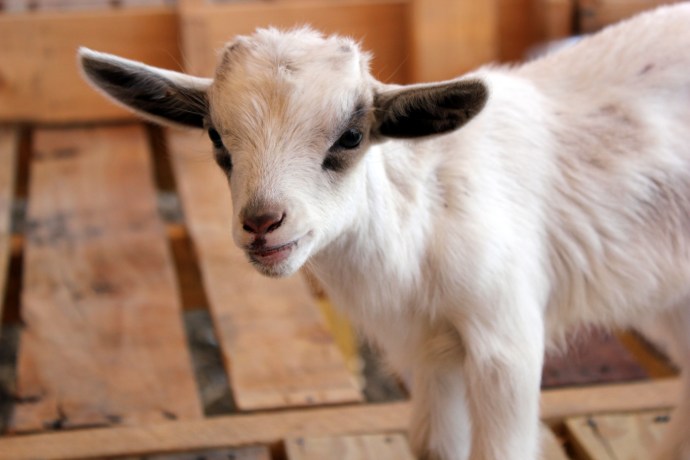 Still, there’s a long way to go before Haiti comes anywhere close to being able to feed itself. Even before the $31 million of agricultural damage in the 2010 quake, and the 70% loss of its crops in the 2008 hurricane season, Haiti was importing 51% of its food, at a crushing expense to its 9 million people. Heifer needs to raise $13 million to make this program a reality, and then there are five years of hard rowing ahead.
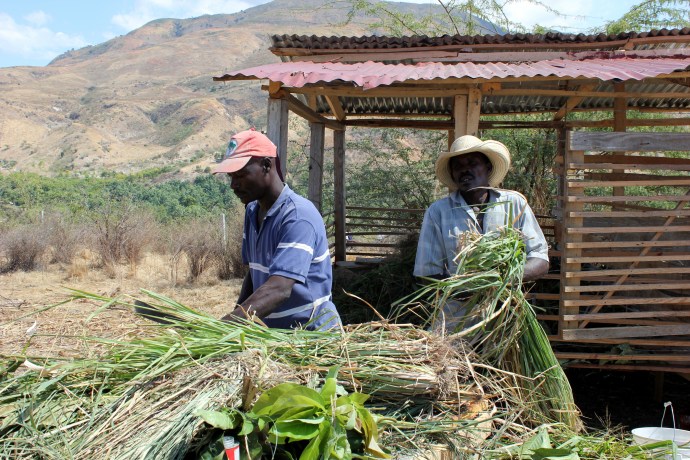
Even feeding animals is a challenge in Haiti.
But to paraphrase Robert Frost & the Nine Inch Nails, the only way out is through.
As I was standing on the top of the Montrouis cliff overlooking the ocean, listening to the wind and hearing the bleating of goats, imagining the magic of water soon transforming dry grasses into crops, that prospect didn’t seem so bleak.

Women from Montrouis
Not really bleak at all.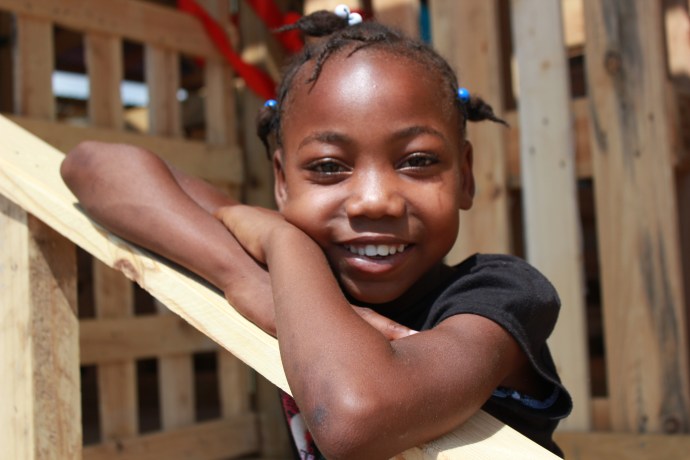






 Heifer 12 x 12