Hunger

Poverty, slimed.

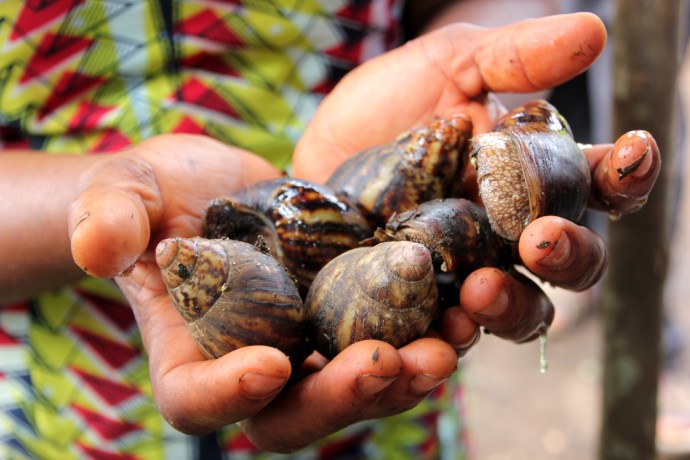
What could be a more perfect creation than a snail? Oh sure, they look kind of creepy, what with their long grasping tongues and rapacious need for water … and nobody would agree with that more than the Nkongsamba farmers in Groupe d’Initiative Commune (GIC) Placanamec, who started raising snails in this Heifer-sponsored project in 2010.
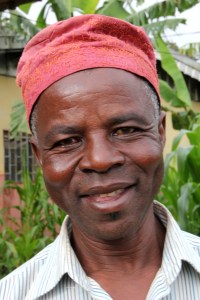
Daniel Nikanche, snail convert

“At first, we thought snails were from nasty, dark places in the forest and we didn’t want anything to do with them,” explained Daniel Nkanche, president of the GIC group. He’s right: snails live in the humid forests around Nkongsamba, Cameroon and are creatures of the night. In fact, they have been so voraciously hunted after dark, despite dangers of snake bites and violence, snails are endangered here in the wild.
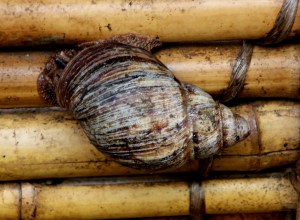
But another group of farmers told the GIC Placanamec folks how rich the snails were in protein, minerals and iron; how good they were for children and for healing all kinds of maladies; and how delicious they tasted when cooked (escargot!). The group was also persuaded by the price snails fetch in the local market: $12 for a 15-liter bucket that would be snatched up immediately by eager buyers. So they applied to Heifer, whose staff was eager to protect the snails in the wild and foster an income-producing, nutrition-enhancing livestock program in this poor crossroads town where AIDS, prostitution and poverty has afflicted the population.
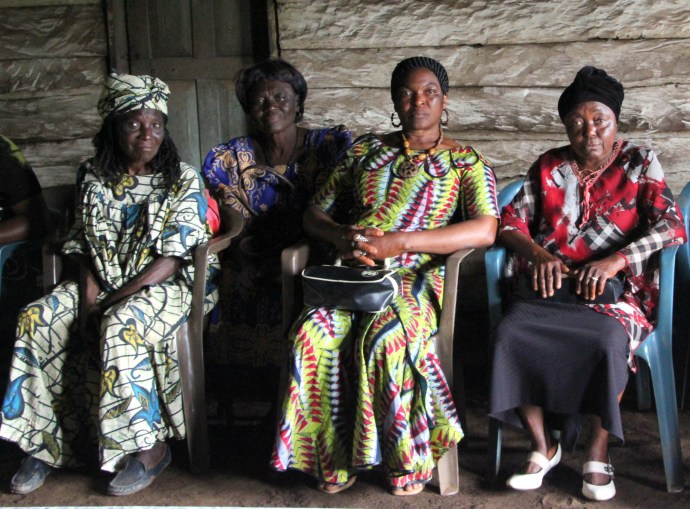
Slowly but surely, the Placanamec farmers (90% of them women) began to learn the intricacies of raising good snails.

First, you need to build a bamboo and wood hutch with available materials — that takes a few hours. You need good clean soil; paw-paw and sweet potato leaves for the snails to eat; forage for them to burrow and lay their eggs in; fresh clean water morning and evening to give the snails energy and happiness; and some kind of barricade (like a water moat) to keep out predators like millipedes, mice, rats and red ants.

Adults, babies & eggs

Then you sit back and let them eat, drink and reproduce. Snails are hermaphrodites, meaning the sistas/brothas are doing it for themselves, laying 5-9 eggs at a time, beginning when they are about 4 months old. Most species of snails will generally lay about 32 eggs in their lifetime, and the babies dig their way out of their shells and begin to grow in a week, fattened on a diet of ripe bananas and leaves. The snails are generally eaten after they’ve finished laying their eggs, at about 6 months to a year, when they are 150 grams or more.
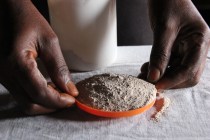
But that’s just the tip of the follicle. In addition to the delicious meat they eat roasted or parboiled, the GIC folks use every single part of the snail to profit the family. The shells are ground up and eaten for the calcium to alleviate aches and joint pains, or applied to wounds to heal them faster. The waste parts of the snails are dried, ground, and used to feed chickens. And the slime … well, it’s collected into a skin serum that the women swear makes skin look younger, fresher and wrinkle-free.
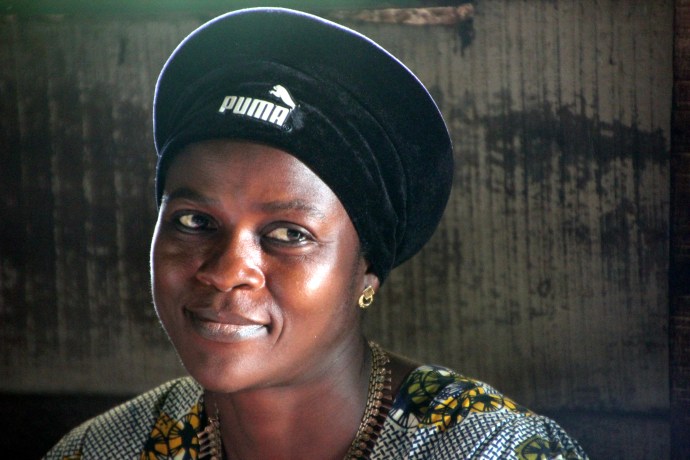
My Heifer Cameroon guides snorted that no Western woman would use this product and I had to laugh. “Honey, American women would drink the stuff if they thought their skin would look like Marie’s.”

Marie Ediang, champion snail raiser & skin serum wizard.

And truly, the women’s skin here looked amazing! But maybe it was just the increased nutrition and financial security the snails offer? The families are now eating about 300 snails a month, and with their snail sales, families are able to pay children’s school fees, repair a roof, afford a cell phone, or connect electricity so “my house shines in the night!” one woman claimed proudly.

As we drove away, the Heifer staff were enumerating some of the issues still facing this pilot snail project: there has been some stealing from the hutches, and farmers are not quite meeting high demand in the market. But all I could think was snails =better nutrition for the family (kids love them so much, they’ll sneak into the cages to help themselves) + increased income (especially for women) in a country where malnutrition hovers around 30% and women make less than $1/day.

And then there’s the age-defying slime.
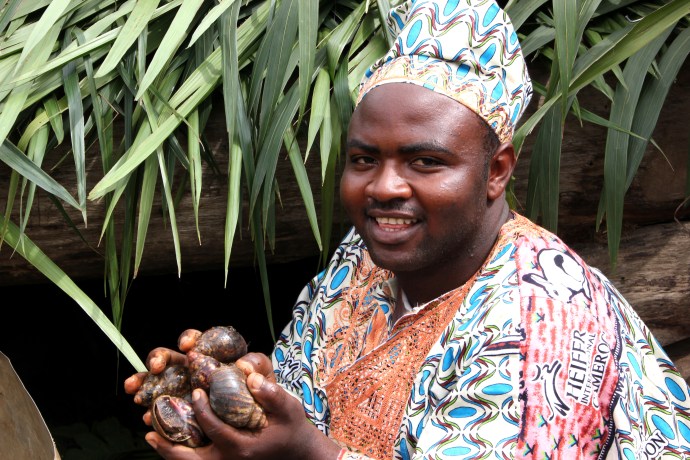
Snails anyone?

Quite frankly, I was ready to dive into the nearest shell myself.
Categories: Africa, Animals, Cameroon, Heifer International, Hunger, Photography, Poverty, Travel | Tags: , , , , , , , , , , , | 28 Comments

Bienvenue Cameroon!

When I was heading off to Cameroon the most common question I was asked was: “Ummm, where is that?” Cleverly, I’d logged on to Wikipedia where I found this helpful diagram… so now you know!

Cameroon is not a place many people have been, but that doesn’t make it any less fascinating (and to my mind, more so). In fact, this country of 20 million people in a landmass the size of California is a kind of mini-Africa, with every climate represented within its borders: coast, desert, mountains, rainforest and savanna– as well as pretty much all the problems and challenges that beset the continent (and that we Westerners had a big hand in creating).

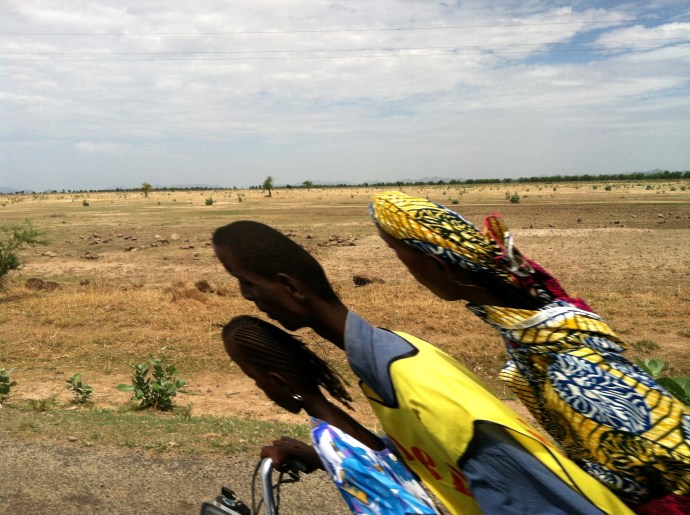
The extremely dry, extremely beautiful Nord.

In the Far North (or “L’extreme Nord” as the French poetically put it) the land is in the Sahel, the 100- to 600-mile wide swath that stretches across Africa and lies between the Sahara to the north, and the savanna grasslands to the south. This is the poorest part of Cameroon, the least educated, the hottest, the driest and oddly, the most populous, with a population that’s exploded 37% in the last 12 years.

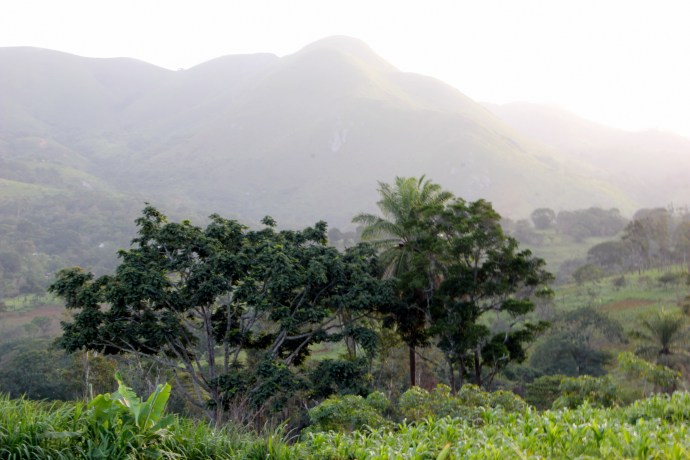
In the south, the land is wet, fertile, and home to equatorial rainforests, rich plantations of timber, bananas, cocoa and rubber, coastal ports, and Cameroon’s biggest trade center in Douala and the capital city of Yaounde. Though the South is primarily Christian and the North has many Muslims, there is religious harmony in Cameroon and a long (though repressive and corrupt) history of political stability since Cameroon gained independence, after 45 years of colonialism, from France and Britain in 1961 – a year I actually remember.

It’s a young country, and although the poverty index is heart-breakingly high (the average income is $538/year – but only $220 in the Far North), the people are filled with energy and purpose. At 6 a.m., the streets are packed with folks of all ages going to work and school, and the place is jumping – no matter where you are.

And naturally, the people of Cameroon are gorgeous.

I wasn’t expecting to love Cameroon – or to get to see so much of it, but luckily we missed our plane the first day (totally not my fault), and so I ended up seeing far more of the country than was originally planned. I found myself mesmerized by both the lush South and the sere Far North, grieved by the wretched poverty I witnessed, and captivated by some of the strangest Heifer livestock projects I’ve ever seen.

It was a beautiful, wild ride – can’t wait to take you there!  

Oh … and I’m a little bit tired of doing all the work on this blog (tee hee!) so here’s my latest offer: You write me one question that you really want answered about Cameroon (or about my biggest travel challenge, or my shoe size, or my worst hotel experience) and I’ll do a whole Readers’ Twenty Questions post with all my responses. Game on!

Categories: Africa, Cameroon, Heifer International, Hunger, Photography, Poverty, Travel | Tags: , , , , , , , , , , | 48 Comments

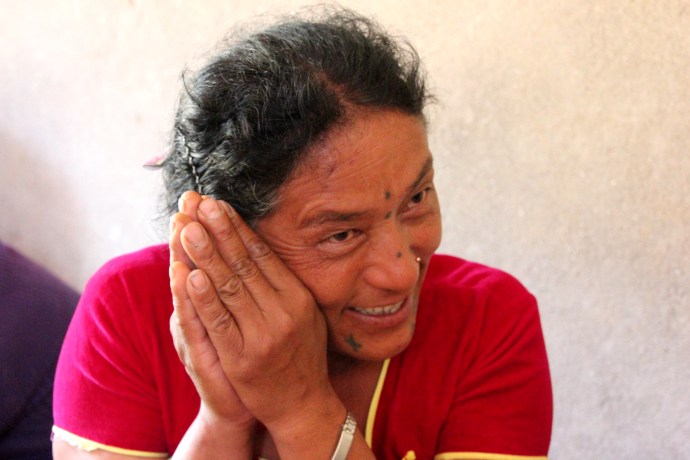
A new Namaste.

In my farewell post for Nepal, I thought I’d bow to the adage that actions speak louder than words. And the most common action in Nepal is the lovely Namaste (described in a whole bunch of words below).

When I was visiting the amazing women in Lamatol Village, Chitwan, President Nani Maiya Lama of the Self Help Women’s Group & Cooperative cut to the heart of the matter by describing what the Heifer trainings and animals had done for her.

“I used to be so shy and afraid to talk, I couldn’t even look at someone when I’d Namaste,” Nani said.

“But now that I can read a book, sign my name and earn my own income, I’ve got a new Namaste.”

For all the beautiful women (and men) of Nepal, here’s one final Namaste.

Categories: Animals, Heifer International, Hunger, Nepal, Photography, Poverty, Travel, Women | Tags: , , , , , | 11 Comments

Divine peaks & intransigent Maoists… or “Welcome to Nepal!”

As I was flying from Chengdu, China to Kathmandu, Nepal – over the most spectacular vistas you will ever see from the window of a plane (8 of the 10 highest peaks in the world are in Nepal and they’re on glorious display), you might have thought I would be in a paroxysm of delight. And I was … sort of.

The only Tibetan I met.

But I was also plenty cranky because we were flying over Tibet – where I was supposed to be going for three spectacular days, if my visa had not been rejected by the Chinese government. Yes, after I’d spend $200 to assure that my passport, Chinese visa, 30-day in advance Tibet visa application, confirmed flights, carefully crafted bio (in which I assiduously tried to avoid using the word “writer”) and thorough retinue of places I wished to travel was in order, China flipped me the bird.

Now, the fact that you even need a separate visa to go to Tibet, which China is obsessive about referring to as its own territory, adds salt to the wound of having to pay $500+ for a stupid Chinese visa … it’s like paying an arm and a leg for a USA visa, then having to pay extra to visit Montana (which would be totally worth it, btw). In any case, I was bitter about my aborted visit to Tibet when I could SEE IT from the plane… in fact, we landed in Lhasa and spent an hour in its militaristic little terminal.

The Lhasa Airport (all I saw of Tibet)

To make my bitterness even more acute, my adjusted plans to visit additional Heifer projects in Nepal (after my last-minute rejection in Tibet) were jettisoned by threatened Maoist strikes throughout that country. So yeah, I was experiencing a little Global PMS (Post-Maoist Sh#$%t).

But then I got to Kathmandu and the sheer, delightful energy of the place blew my crankiness straight away.

This dusty, frenetic city of 1 million people is wall-to-wall shopping, drinking, eating, building, bargains, music, stupas, shrines, westernized food, trekkers, scarily fit Europeans, aging hippies, buskers, players, monks and prayer wheels.

The eyes of the Buddha are upon you.

Nepal was a surprise to me on many levels – probably because I assumed I knew quite a bit about the country (so many people I know have been there) but in truth, I was clueless.

I thought Nepal was mostly Buddhist; it’s actually 90% Hindu, with an ingrained caste system that is rigid and unforgiving, particularly for women.

I also thought Nepal was a monarchy; but the King and his family were assassinated in 2001, and a Maoist revolution succeeded in 2006 (hence the strikes that truncated my project visits). This small landlocked country, sandwiched between the titans of India and China, is the only Asian nation never to be colonized and knows well how to walk the delicate line between diplomacy and independence.

Nepal’s 3 regions: Terai lowlands, Hill Country & Mountains — and what mountains!

Not to sound too tourist guide-y, but Nepal is a land of contrasts, from the rice paddies of Chitwan to the nosebleed peaks of Annapurna and Everest– and a country of constant surprises.

The swastika is a Hindu symbol for prosperity, and the Star of David stands for knowledge – but what a juxtaposition to see on a home’s entrance gate!

I knew Nepal’s 26 million people were poor, but I didn’t realize that 40% of children under five are underweight and likely to be stunted in growth.

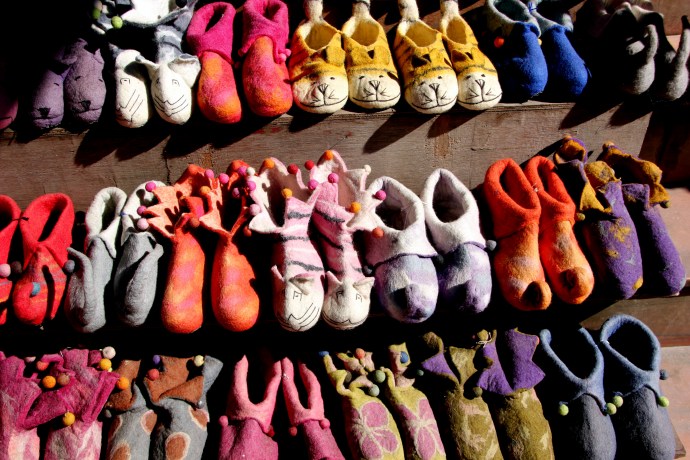
And I didn’t realize there would be so many adorable things to buy, but for once I’d have no appetite for shopping.

I was happy to be in Nepal, and a bit sad to be alone in my sweet room at Kathmandu Guest House.But mostly, I just needed to go see some Heifer projects and people… the cure for all crankiness.

(But that’s tomorrow’s story.)

Categories: Children, Heifer International, Hunger, Nepal, Photography, Poverty, Travel, Women | Tags: , , , , , , , , , , , , , | 28 Comments

Not exactly a Tiger Mom.

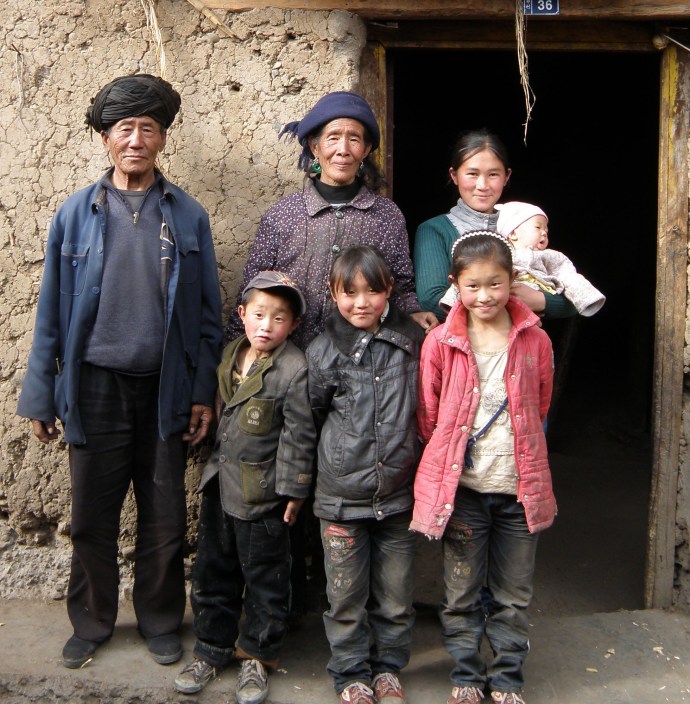
Jisu Erxi is 70 years old, poor, and living with her husband Leer Wujia and her three grandchildren in Gudu community, Zhaojue County, Sichuan Province. She’s missing some teeth and there’s no doubt that the years have not been easy on her. Her eldest son is in jail, having left behind his two children with Jisu & Leer when they were infants. Her second son married a nice girl from the village but he is a migrant worker miles away. And when Jisu’s youngest son disappeared, his wife fled the drug-filled marriage, leaving another baby behind for Jisu & Leer to raise.

The Wujias definitely don’t follow writer Amy Chua’s Tiger Mom rules for perfect Chinese mothers: (1) schoolwork always comes first; (2) an A-minus is a bad grade; (3) your children must be two years ahead of their classmates in math; (4) you must never compliment your children in public; (5) if your child ever disagrees with a teacher or coach, you must always take the side of the teacher or coach; (6) the only activities your children should be permitted to do are those in which they can eventually win a medal; and (7) that medal must be gold.

But whatever Jisu lacks in forcing her own children to achieve, she more than makes up for in kindness: the entire time she was telling us the sad story of her children’s failures, she was stroking, caressing and hugging the grandchildren they left behind. Her diligence, caring and hard work is what brought her to the attention of Abi Shiha, leader of the Gudu Women’s Self Help Group.

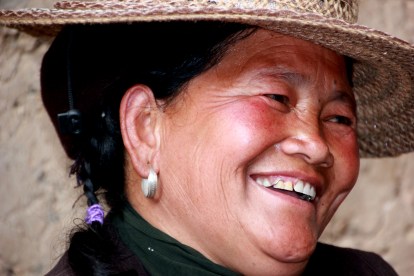
The irrepressible Abi Shiha

“These women lead really harsh lives,” says the relatively affluent Abi, “but they were working so hard, I felt like I should help them find new channels to succeed.”

And those new channels led to Heifer and some really great pigs.

Established in March 2009 with the help of Heifer International, the Self-Help Groups Project consists of about 80 female-headed families in Zhaojue County who agreed to participate in livestock trainings, group savings accounts (each woman contributes $1/month and from that fund any member can borrow), and in community- and income-building activities like hog-breeding and community clean-ups that teach group responsibility and achievement (Tiger Mom maxims).

Everywhere you look, it’s women doing the work.

It’s step-by-step learning for women whose daily lives are a struggle against deprivation and despair.

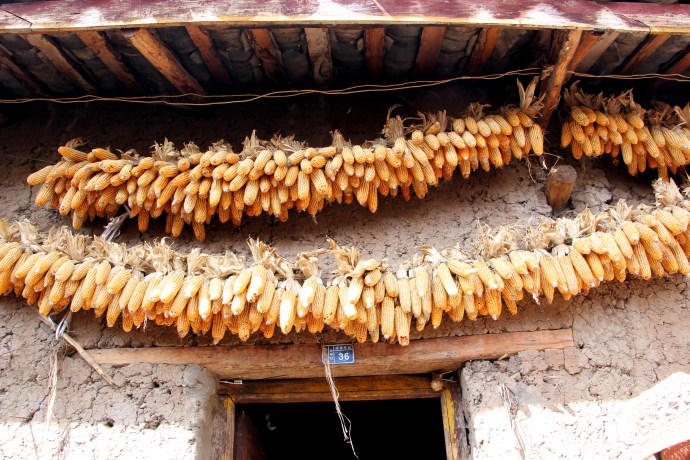
A stockpile against hunger of beautiful maize.

Zhaojue is an outlier community: peri-urban, beset by AIDS and drug abuse, and predominantly female, as the vast majority of males have left for work in the cities. Typical income is less than $300/year and there is very little land to farm. But with the gift of Heifer pigs, the women’s income increased more than 3,000 RMB in a year, and some families increased 10,000. (Abi & her husband raised these prize winners:)

Gudu women  have learned to be self-reliant, help each other, and establish hygienic habits in their houses and the community, even petitioning the government to build clean, healthy biogas stoves. They also adopted Heifer’s Farmer Field School trainings to plant pasture for their animals and vegetables for their children, and by November 5, half the women had Passed on the Gift of animals to another 80 needy families– a full six months’ ahead of schedule.

As we sat in the yard talking & admiring Jisu’s 3 Heifer sows, 1 fattening pig and 9 piglets, the grandchildren, who were rather withdrawn at first, reverted to their feisty adorable selves. They are all in school now (the better township school Jisu proudly told us) and they finally have enough food to eat and clothes to wear. “Before, we had nothing to sell so we couldn’t even buy shoes,” she explains. “But now we have pigs.”

The promise of a new generation: Jisu’s daughter-in-law and youngest grandchild.

And in Zhaojue, pigs are better than tigers any day.

Categories: Animals, China, Heifer International, Hunger, Photography, Travel, Women | Tags: , , , , , , , , , , , , , | 33 Comments

Blog at WordPress.com.