Travel

I’ve got friends in high places.

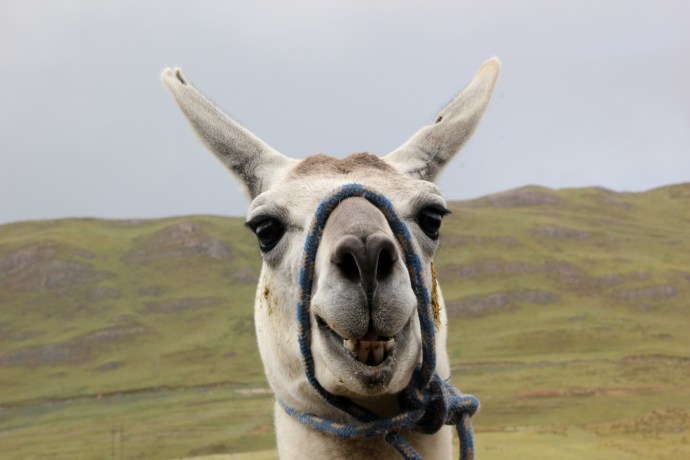
Up until now, I’ve spent a lot of time swooning over the alpaca, while paying precious little attention to its camelid cousin, the llama. So in my last blog about Peru (boo hoo!) I’m aiming to rectify the matter.

The llama doesn’t get much respect in many places in Peru– it’s the shaggy, blue-collar cousin of everybody’s favorite cuddle-bug, the alpaca, and the irresistible, Audrey Hepburn-channeling vicuna.

How can you compete with the ever-elegant vicuna?

But in reality, the llama is a working class hero – capable of carrying 35 kilograms of potatoes on its back, trudging long distances without breaking a sweat or requiring too much water, reproducing without drama, and providing tons of meat when it’s required to make the ultimate sacrifice.

To see the best llamas the world has to offer, we traveled to one of the worst cities I’ve ever seen: Pasco, Peru. Heifer’s charismatic country director, Alfredo Garcia, insisted I go to Cerro de Pasco (at 14,200 feet, one of the highest cities in the world) because he wanted me to see firsthand the destruction that mining has wrought …and boy, did I. The irony is that the countryside around Pasco is staggeringly beautiful, reminding me of nothing so much as Paradise Valley, Montana. 

Glorious Iscaycocha, which is Quechua for “land of two lakes.”

Yet when you enter Pasco City, you understand the meaning of “Something evil this way comes.” The mine isn’t near the city, it has consumed the heart of the city in a huge, gaping hole oozing rusty rainbows of effluents pooling into foul, oil-slicked ponds, billows of suspicious fumes, and enormous, variegated hills of toxic mine tailings. It’s a monstrous cavity in the maw of the drab, gray, cold city.

Cerro is the mining company plumbing for riches here in copper, zinc, gold and silver, and it employs most of Pasco City’s residents. It’s hard to imagine anyone choosing to live here or, god forbid, raise children in this toxic waste dump, but my Heifer translator Rosaluz Salazar assured me that having a job in the mines is a coveted position in Peru, something that kids from the countryside aspire to.

From here to the unimaginable mines?

Which makes the work Heifer is doing, supporting the tradition of raising llamas in 800 families in 13 agricultural communities around Pasco so critically important. We visited Iscaycocha, a community of 60 people who are part of this Heifer/FODESA project to celebrate a community greenhouse, witness a Passing on the Gift ceremony, and adore some spectacular llamas.
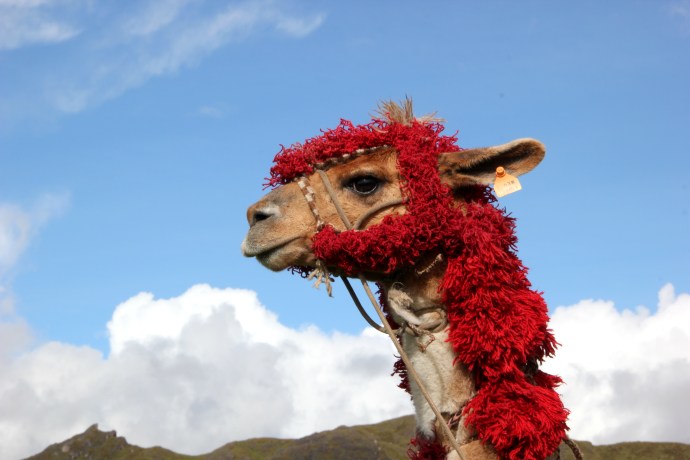
Don’t hate me because I’m beautiful … hate me for all my many, many awards.

The day was chilly and looked like rain, but when we walked into the 1-year old greenhouse it was toasty warm as Luis Basilio Ramirez and his wife Yaqueline Mesa greeted us. The greenhouse was built by members of the community, with Heifer providing materials and FODESA (a local NGO that’s been working here for 17 years) giving technical advice. It was placed at the Ramirez house because its proximity to the road means all the families can easily come for the robust harvests, and because Yaqueline, crippled in a car accident three years ago, was seriously depressed and needed something to grow. That’s just the kind of close-knit, caring communities that Heifer tends to create (“The projects teach us brotherhood,” one participant said simply.) 
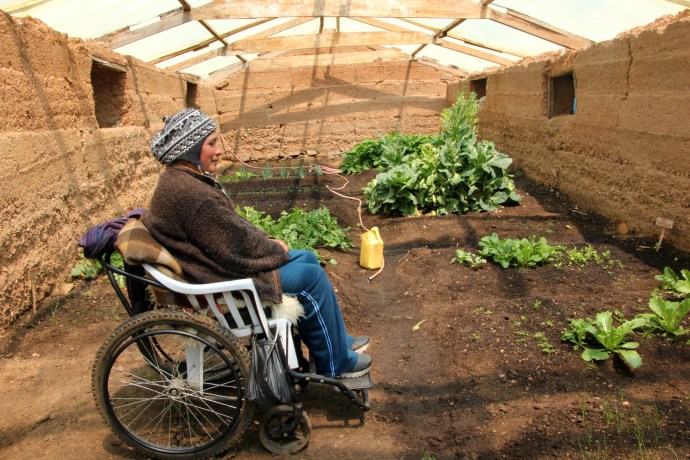
Yaqueline Mesa Ramirez in the community greenhouse.

Now Yaqueline waters, plants, and oversees the organic garden that provides lettuce, tomatoes, beets, cauliflower, carrots, coriander, cilantro, cabbage, radishes and fava beans to family & neighbors who literally have never had vegetables in their diets before. (At 14,000 feet, there is no growing season without a greenhouse.) And those vegetables taste particularly beautiful with the llama meat that Heifer has helped these breeders to produce, promote, market and sell.

Fresh, nutritious fava beans .. yummmm!

For years, llama meat (like llamas themselves) was considered dirty, and vastly inferior to alpaca. But these prime breeders of Pasco are producing such high-protein, low cholesterol, super-clean meat with their award-winning llamas, they have quadrupled its price– and their business plan (written with a Heifer advisor) is to market their llama meat regionally and nationally, with specialties like llama burgers, llama sausage and llama hot dogs winning over dubious hearts & stomachs.
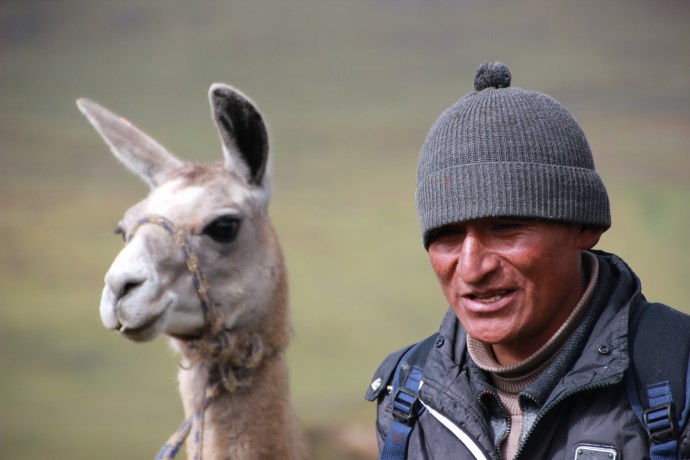
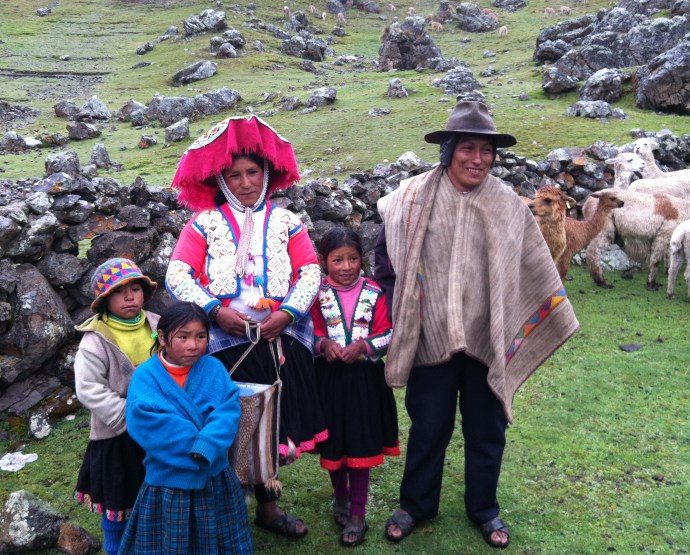
Do the best breeders come to resemble their llamas?

As we watched a third generation of really spectacular Heifer llamas being passed on from one Iscaycocha family to another, the sun came out, candy was thrown to celebrate, and the mining and environmental degradation of nearby Pasco City felt a million miles away. Where God willing, it will stay.

A gift for giving…

Goodbye for now, beautiful Peru!

Categories: Agriculture, Animals, Heifer International, Hunger, Peru, Photography, Travel | Tags: , , , , , , , , , , , , , , , , , , | 27 Comments

Guinea pigs … not just for breakfast anymore.

If you’re going to eat guinea pigs (and in Peru, you’re going to) you’re going to have to raise guinea pigs. Which plenty of Peruvians do, in their kitchens, in their sheds, in a random, atomized way.

To an agro-ecologist like David Rocca, who coordinates Heifers “Good Living” IMAGEN (a local NGO) project in Puchyara, Peru, this represents a huge missed opportunity. To his mind, cuy equals the possibility of a commercial venture on a scale that can lift an entire community out of poverty. David is one of the unbelievably committed people working with local communities in partnership with Heifer, (like Cleida and Claudio from my previous Peru posts) who have the vision, plans, expectations, personal relationships with families, and follow-through to make real change happen. And it does take vision to look at a guinea pig and see the cash rolling in.

David Rocca & Sebastian Huillca

But here’s how it happens: When David started to work with Sebastian and Elena Huillca (and their three children), the family had 2 donkeys, 4 cows, 1 horse, a passel of guinea pigs in a rough shed, and a piece of land one hour ‘s walk away. The house was a mess and the yard was worse. In Heifer workshops, the family learned a few new habits that literally changed their life. They established a Healthy Homeand gave each child his/her own room.

Back to the bio-garden!

They built a shed for their animals, collected the manure that was now in one handy place, and with the help of some industrious Heifer worms, used that compost to fertilize their new bio-garden where they grow enough vegetables to eat and to sell in the local market.

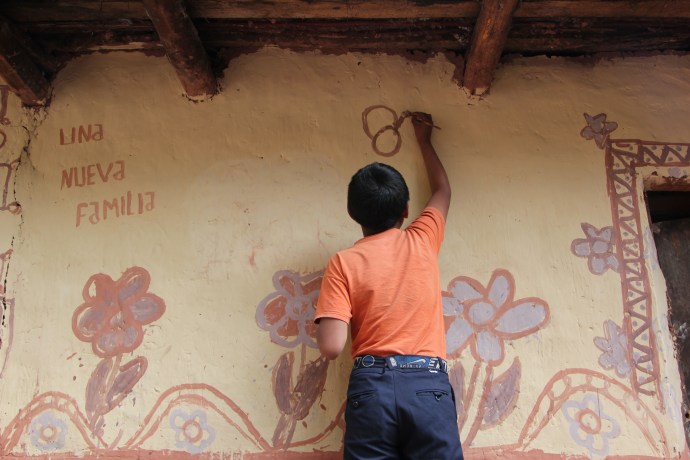
The family planted fruit trees.  They learned how to use local clay to plaster (and beautifully decorate) their house, instead of buying expensive materials they couldn’t afford. And in the guinea pig shed, they covered the walls in clay (with happy drawings), built compartments to separate males, females and babies, grew better forage to feed them, and began keeping breeding records to control reproduction and improve genetics.

What a happy guinea pig house!

The Huillcas followed David’s teachings and put ashes in the entrance of the house to kill bacteria, used meds to treat sick animals, and bred the gift of new Heifer guinea pigs with the local stock to double the weight of their piggies. One year later, they’ve both doubled the number of their pigs, and the price they get per cuy at market. (And both their daughters are attending college!)

3 pregnancies a year, that's fertility!

David is such an ardent believer in the potential of guinea pigs, he contends that profits will begin to repay Heifer’s investment in 2-3 months (including passing on the gift). And his math works. Guinea pigs are ridiculously fertile; females can have 3 pregnancies a year, and the better the feed, the quicker the baby comes. What David has taught his farmers is that if they take care of their guinea pigs— guinea pigs will pay off– big time– for the whole family.

Cuy is served in almost every restaurant in Peru, from sidewalk cafes to the swankiest eateries, so the demand is virtually unlimited. Its meat is high protein, low cholesterol and supposedly truly delicious (that’s right, I wimped out).

A gentle man, Felipe Ayachu.

And unlike bigger animals that demand grazing and herding, guinea pigs can be raised on small plots of land, and handled by older beneficiaries like Felipe Ayachu, who is trying to keep his farm running despite an illness, with only his devoted daughter to help him.

David’s also inspired enthusiastic spark-plugs like Dolores Delgado – whose sterling example of taking the guinea pig ball and running with it has been so inspiring, she’s moved her community’s Heifer involvement from 3 families to 35 (out of 40!)… built a whole new guinea pig barn and organic garden, and doubled the price of the town’s pigs! It’s what she promised Heifer President Pierre Ferrari she would do when he visited Puchyara last year, a meeting she remembered with overflowing tears and copious hugging.

Dolores' experimental, hydroponic, awesome new GP house!

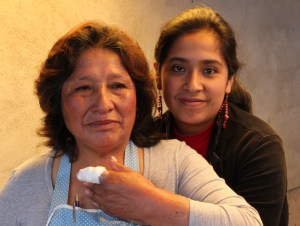
Beautiful Dolores & daughter.

In fact, it’s the example of Heifer beneficiaries like Dolores, Felipe, and Sebastian who start showing up with big, fat guinea pigs for sale, their homes shining with fresh clean designs, and their gardens bursting with produce, that catches neighbors’ attention and spurs participation in the project. These early adopters have become Heifer/IMAGEN promoters, their communities have organized, and now David has the success stories and community backing to intercede with municipal authorities to continue to invest in the materials, seeds and structures that will make Puchyara Pigs the toast of nearby Cusco.

Writing a whole new future for families in Puchyara...

A succulent cuy may never pass my lips, but I predict that before long, David’s dream will be a yummy roasted reality.

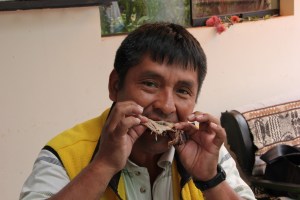
Heifer's Carlitos loving his cuy.

Categories: Agriculture, Animals, Heifer International, Peru, Photography, Travel | Tags: , , , , , , , , , , , , , | 37 Comments

A Fiber Primer for Yarnheads.

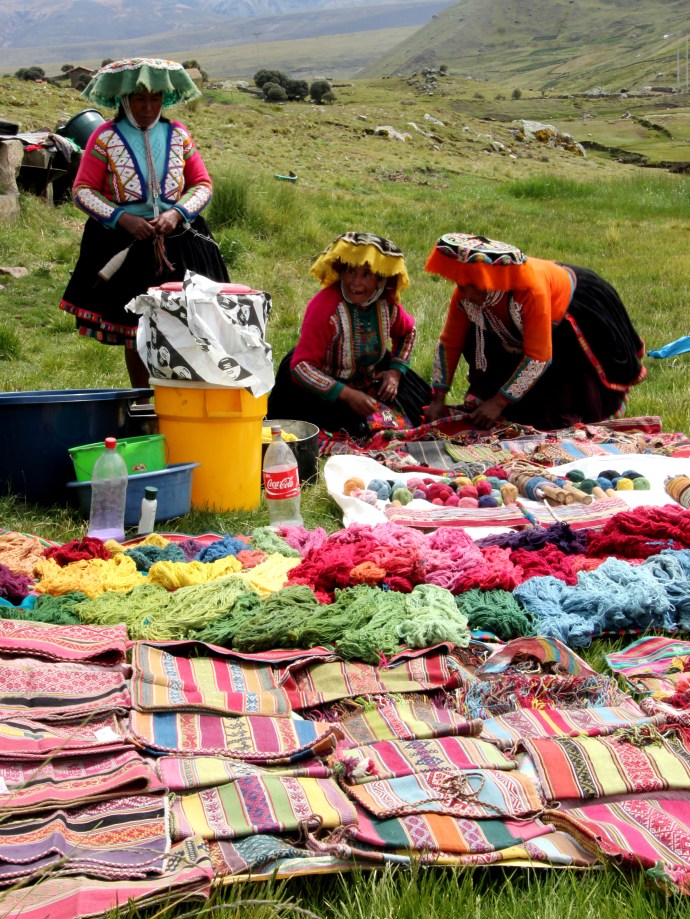
Although I used to embroider and do crewelwork in a past life, I have never been known to Stitch without Bitching, and nobody has ever accused me of having any real talent in fiber handicrafts. However, I do know art when I see it, and the day I spent with Heifer at Ocongate, Peru in the presence of the Six Stars of Bacchanta weavers was nothing short of magical (quite possibly because there was a lot of shopping involved).

The Six Stars setting in the Ausangate Andean Range... not bad, right?

This Heifer/AEDES project is part of Heifer’s Cusco umbrella project to help 4,333 families in 22 Highlands communities close the value chain of breeding alpacas: raising, shearing, spinning, and weaving the precious fiber… then going all the way to the final step of producing knit goods that will maximize their income. After all, when the Highland families do all the hard work of producing the fiber, wouldn’t it be great if they got the major income that comes from making stuff from that fiber??

Master weaver Francisco

To that end, Heifer and its local NGO partner AEDES are helping the 120-member Six Stars organization, with the super-charismatic Francisco at the helm, to learn advanced methods to clean, dye, categorize, create and execute uniformly beautiful designs that can then be sold in local and regional markets (like in nearby, tourist-laden Cusco) at a highly profitable price point.

The women demonstrated “phusca” (Quechua for spinning), which the Highlands women do incessantly, walking around with balls of alpaca fluff that they relentlessly twist and refine to convert fleece into thread.

There are 31 different categorizations of alpaca fiber, from thickest to most desirable thinnest (31) and with Heifer trainings, Six Stars participants have become adept at both breeding their animals to produce fibers of a higher category, and learning to knit with these super-fine fibers.

Up close & personal with an alpaca's fleece --unbelievably thick & luscious!

Butterscotch beauty

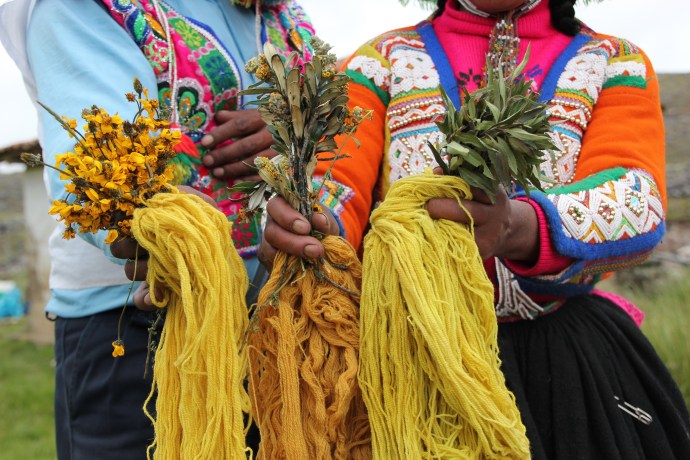
Natural alpaca fiber in all hues, particularly blacks and browns, are hugely in vogue –particularly the darker colors (and Heifer is providing those alpacas for breeding). But for the sheep’s wool that is used in many other handicrafts, natural dyes are all the rage. Victoria showed us the flowers and herbs that produce the yellows, purples and blues for their wool weavings, as well as the scales from insects who live in cactus (!!) and produce a rich,vibrant red.

Alpaca fieltros..cute!

Felting (rolling tight little balls made from the short neck hairs of the hirsute alpaca) makes use of every bit of the precious fiber, and is used in necklaces, earrings and bracelets with a modern whimsical twist. But one of Francisco’s favorite claims is that Six Stars is bringing back ancient and forgotten Incan designs, with its plethora of birds, spiders, chicanas (the Incan cross) and condors that revere the past.

In the future, however, it’s all about these trainings empowering the Highlands people to stand up for their own food sovereignty, land security, and the right to the profits from their incredible hard work. One of the oddities of Peruvian commerce is that every organization needs to be legally registered with the government in order to be recognized, enabled to work with other organizations, and to sell its wares. Heifer has helped Six Stars to register (a lengthy and expensive process) so now the group can work with the Ministry of Tourism, export its beautiful fibers, and participate in the trade economy.

Softer than soft ...super-premium baby alpaca fur is the most valuable of all.

What can I say but … coming soon, to a store near you!

Categories: Agriculture, Animals, Heifer International, Peru, Photography, Travel | Tags: , , , , , , , , , , , , , , , , , | 36 Comments

Feeling the love in Yanacancha.

Spending the night with somebody new is always kind of tricky, what with the awkward getting-to-know-you bits. So the day we Heifer folks went to Yanacancha (an hour from Marcopata, Peru) to spend the night in the community, we were lucky to kick things off with a guaranteed ice-breaker: an alpaca mating session at the home of Juan Yanac and Santusa Mamami.

Boy, howdy that did the trick! Despite ensuing cold, wind and rain, nothing could dampen our enthusiasm for this seductively adorable town and its inhabitants.

Our exploration of Heifer’s Alpaca Bio-Diversity Project in High Andean Communities began with this X-rated “empadre” that represents a spectacular leap forward in a real life-and-death matter: the health and well-being of the Alpaca of Yanacancha.

Mr. Commitment: Claudio Pacco.

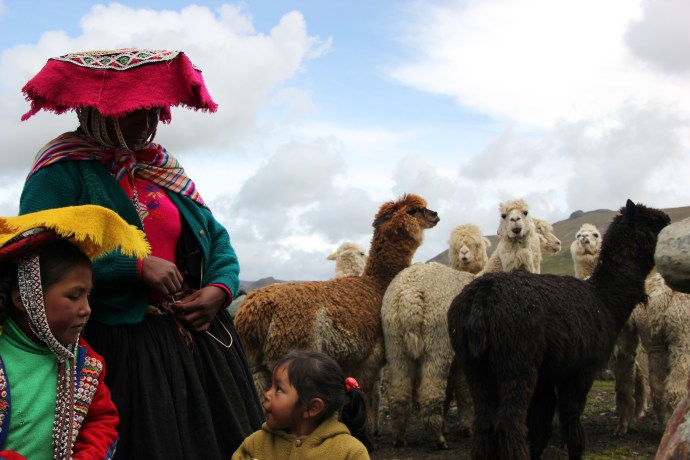
At an altitude of 14,000+ feet, alpacas are the one and only lifeline of high Andean communities; nothing but a few varieties of potatoes grow here, and precious few animals can survive the cold, wet, wild weather and raggedy thin air. But alpacas, members of the camelid family, can survive and even thrive here, given the right attention – and that guarantees food and income-producing fiber for families that live on the razor’s edge of poverty and malnutrition.

And that is where Claudio Pacco, the Heifer/AMADARES vet/tech comes in. During the first year of this Heifer project, Claudio has visited every one of the 22 communities involved, identifying alpacas house by house, and beginning monthly Heifer workshops to share better breeding and husbandry methods with the breeders.

It’s a complex process, raising good alpacas. The end goal is a healthy animal that will produce fiber that is insanely thick, incredibly fine, and of a uniform color. After years of purging non-white animals from their stock, breeders are using 22 gorgeous Heifer stallions here to bring back black, brown, golden, and butterscotch hues to their herds. But the challenges go far beyond color.

Baby alpacas are born in January in the wet season, so they can easily find pasture, but the next three months are marked by extreme cold, constant wet, and vicious hail. The babies are fragile and can easily develop bacterial diarrhea that will spread through a herd in days and wipe out an entire generation. So much is at risk that from December (before the babies are born) until March, Claudio teaches the breeders to maintain daily contact with the grazing mothers and babies, making sure they are in good health, or quickly receive antibiotics before they can infect others.

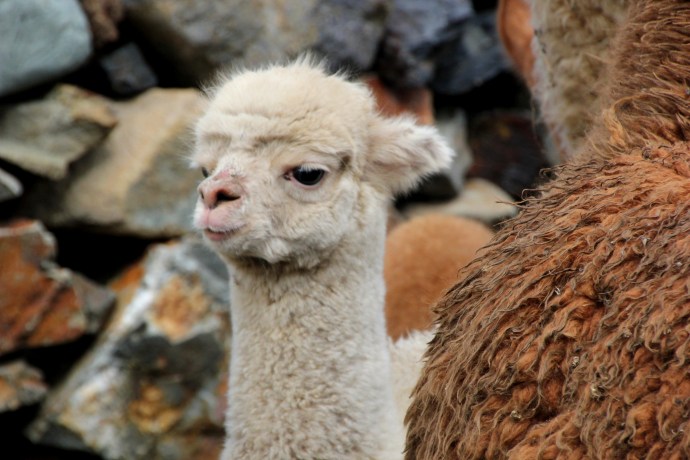
Baby dearest...

In the intensive Heifer workshops, breeders are given vet kits with meds; sturdy 6-foot high nets that keep the babies safe from foxes and puma; a variety of good, nutritious seeds to cultivate fertile pastures; and trainings to harvest rainwater and bring water from the glaciers so the alpaca will never go thirsty.

Virginia Huaman, 17, promoter & aspiring vet.

The result? Last January, 60 alpaca babies in this community died (the equivalent of a $60,000 loss). This year, just twelve months into the Heifer program, only 15 died—a 75% reduction. And next year, Claudio believes the losses will be far less – with the help of 18 “promoters” like Virginia and Gabrielle, who are being trained to spread the trainings and mentor others. These unpaid volunteers, 8 of them women, follow Claudio around on his individual visits, learn everything they can from him, and then pass the knowledge on to other breeders in the community.

Gabrielle Quispe and her family (notice the bare feet in 40 degree rain)!

Gabrielle and Remauldo Quispe have so enthusiastically adopted the Heifer trainings that in their herd of 80 alpaca, Gabrielle didn’t lose a single baby this year. With only a third-grade education, Gabrielle is intent upon her children becoming professionals and wants to use her thriving alpaca herd and her beautiful handicrafts (where does she find the time??) to support their education. (I’m still hacked off that I didn’t buy her gorgeous work.)

Why didn't I buy this??

Soup's on ...

By the time dusk fell, we were so cold, wet and altitude-challenged, (while all the villagers were walking around unfazed, in bare sandaled feet) we piled into the kitchen to warm up. Chef Johnny worked his magic in the kitchen with local women and made a gorgeous soup, while we drank tea and showed the children photos of themselves, which delighted them to no end.

After a singing/storytelling/dance fest, we went off to bed in the house of one of the villagers and I wore every piece of clothing I had on: 4 shirts, 2 pairs of pants and leggings, 3 pairs of socks, a down vest, hat and scarf–and I was still cold under about 20 pounds of wool blankets. But miraculously, I slept… only to wake at 5:30 a.m. to dogs barking, roosters crowing, alpacas being led out to pasture, and the smell of fires started for breakfast.

There is nothing that makes you realize how removed most Americans are from the earth, animals, plants, and weather than to spend 2 days in a village in a developing country. You walk away with a whole new level of respect for the dignity, creativity, and incredible work ethic of these people– and for the luxuries of  hot water, flush toilets and yes, heat.

(And this is with nothing to drink....)

But the truth is, I’ll never forget that beautiful night. And the truth that our Yanacancha was never, ever lacking in warmth.

Categories: Animals, Heifer International, Peru, Photography, Travel | Tags: , , , , , , , , , , , , , | 34 Comments

What I ate in Peru.

Serving size may vary.

I feel like a bit of a fraud writing any kind of travel food post, since I am anything but an adventurous eater (my favorite foods as a child were hot dogs and baked beans, to give you a brief synopsis of my limitations). But I’ll try to cover all the bases with an enthusiastic description of what I loved to eat, and lots of photos of what I didn’t eat, with full apologies to Anthony Bourdain for my timid palate.

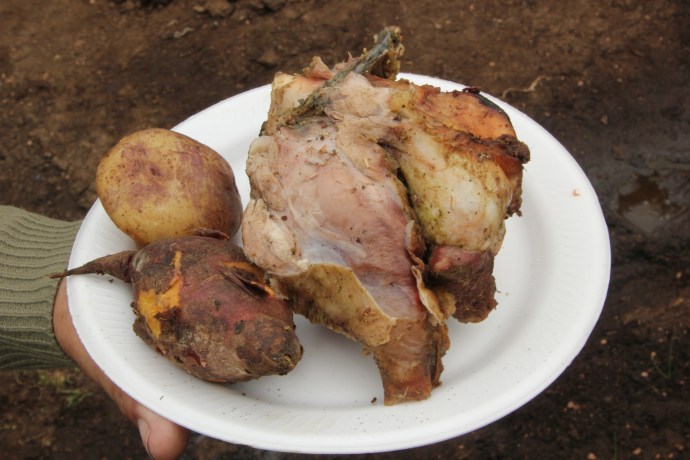
Pachamanca: slow, stone-roasted potatoes & llama, which I actually tasted & liked! Kinda…

Peruvian cuisine is based around native animals (alpaca, llama, beef, fish and cuy.. yep, it’s guinea pig) & potatoes. Peruvians love their starch, and since potatoes originated here (not in my beloved Ireland, mates) and there are 3000 varieties in every conceivable flavor, texture and color, I was totally at home on the veg side of the table. Beautiful fava beans, carrots, cauliflower, beets, green beans, creamy avocado, and/or some type of yummy slaw were usually served alongside the potatoes and so, no matter what the “main” course, I was in hog-less heaven.

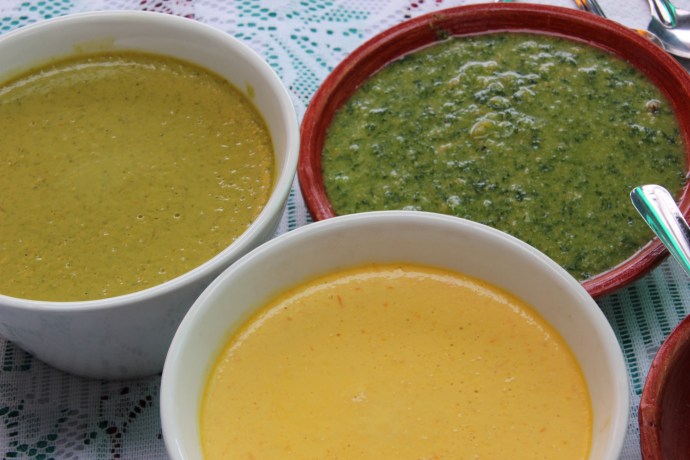
Oh, and just to make the potato/veg thing really sing, Peruvians make the most luscious sauces to dip/slather on your potatoes: green herb, racy red radish, guacamole, and my fave: a golden mustardy/mayo concoction that I wanted to pour over my entire plate.

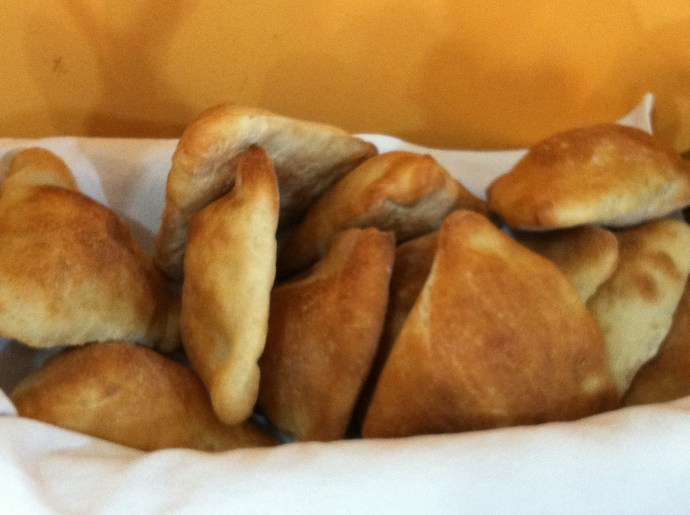
The last time I was in Peru, my friend Judith fell in love with lomo saltado – a Peruvian stir-fry featuring chicken or beef, peppers, tomatoes, rice and French fries, and I was dying to have a platter of carbs in her honor. But since we were mostly at really high altitudes, where your appetite evaporates even faster than your breath, we ate a lot of soup. Delicious chicken soup, pasta soup, noodle soup and vegetable soup ..which luckily is my favorite food ever, particularly when paired with their airy, triangular bread.Some of the traditional dishes that I didn’t exactly eat (but tasted!!) were pachamanca shown above (and that sweet potato was the best I’ve ever had) and the dreaded cuy. Cuy is low-cholesterol, high protein and quite nutritious–and Peruvians adore it– but I couldn’t get past the little paws on the plate. Sorry …

Instead, I usually opted for the trucha frite — fried trout — which is ubiquitous in Peru, from roadside stands to upscale restaurants. Ceviche (lime-marinated raw seafood that is amazing) is also hugely popular but since we spent almost no time on the coast, we didn’t see a lot of it.

The acid test for any cuisine, in my humble opinion, is the coffee and in Peru (as in most coffee-producing countries), it wasn’t too hot. Literally. They brew the coffee really, really strong, then set it out in a pitcher and suggest you add hot water from a thermos.  I like my coffee scalding, so I only achieved partial coffee satisfaction. As for alcoholic beverages, the pisco sour is quite tasty, made from Peru’s own unique pisco liqueur (don’t confuse it with the Chileans’ copycat version or they will get really crabby). Cusquena, my beer of choice, was delicious – but the bottles were a big commitment. Like 42 ounces. And that’s a Big Gulp.

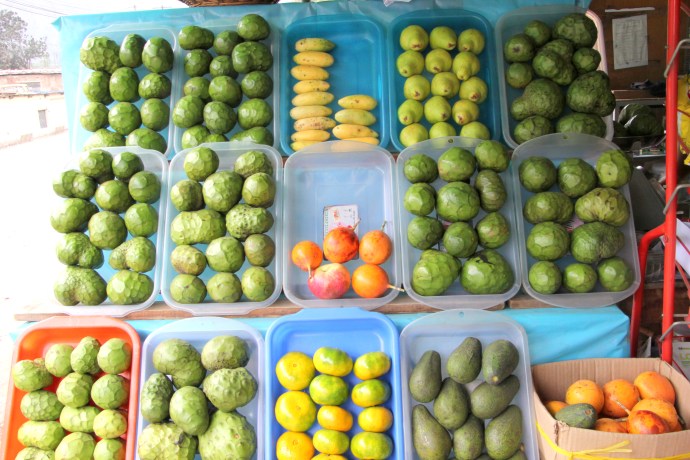
My big surprise was the fruits. Sure, the usual suspects: cantaloupe, pineapple, mango, watermelon were fine, but I really loved the granadia, tumbo, and chirimoya which we bought at roadside stands and devoured in the car — totally unique in their sour, sweet and musty tastes and fun to eat, too.

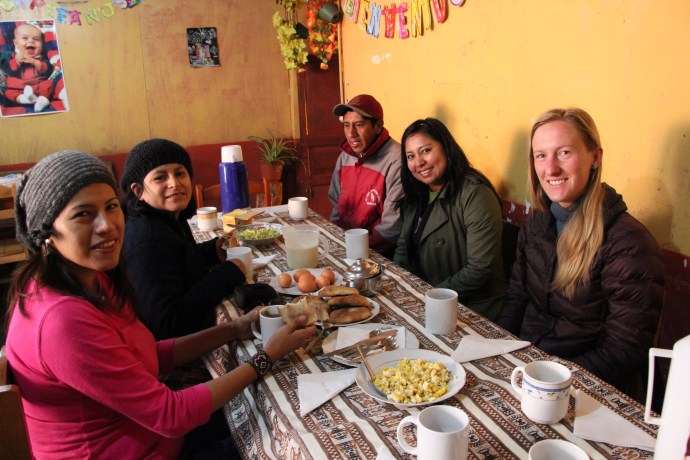
Breakfast of Heifer champions: Rosaluz, Madeline, Claudio, Lidia & Kristen.

So what do I miss the most? The sauces! And the way everybody always sat down at meals together and shared the food with grace and gusto. That was really delicious.

Categories: Food, Heifer International, Peru, Photography, Travel | Tags: , , , , , , , , , , , , | 34 Comments

Blog at WordPress.com.