Monthly Archives: November 2012

The life of rice.

If you want to understand Asia, you need to understand rice. But I realized that as many lusciously green rice fields as I’ve seen this year, I know nothing of how it’s grown. So I asked Heifer’s own Mr. Tham for a rice tutorial.

First, a little background: Rice is a cereal grain, the world’s 2nd largest staple crop, 12,000 years old, and responsible for providing 1/5 of the world’s calories. It’s a labor intensive crop (to say the least) and demands high rainfall, as fields are flooded to reduce pests and weeds, while or after young seedings are “set.”
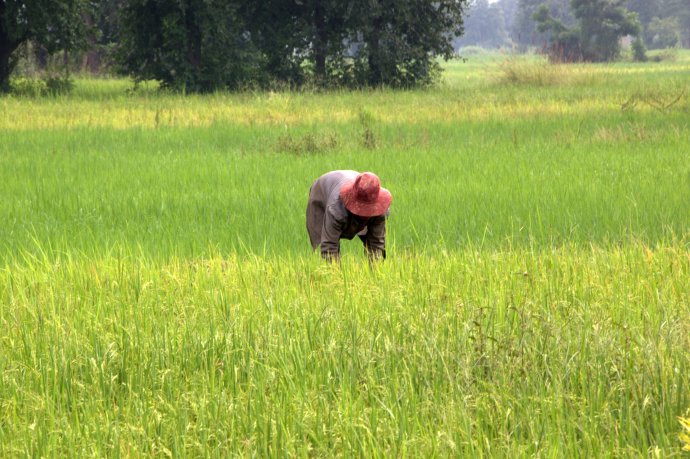
Rice planting starts with letting the seed rest –as Tham put it, “at least 2 weeks of sleep after drying.” Then the seed can be planted either by throwing it directly onto the soil; or soaking it in water for 24 hours, rinsing and placing in a container to germinate in bulk for 48 hours, then casting the tiny young sprouts in the rice field and letting them grow for 20 days before transplanting. I have to say that I didn’t quite understand the transplanting deal, but when a rice plant is fully submerged, apparently you have to dig it up and transplant it to deeper fields. Which is really an insane amount of work.

Transferring seedlings.

As the seedling grows up, the very important arching protective leaf becomes mature, and the stalk develops many flowers inside. 30 days later the flowers blossom and male pollen fertilizes the flowers with the help of wind pollination. Every flower becomes a seed, and these rice kernels grow to fill the husk, become mature, turn golden yellow, and then the rice is ripe and ready to harvest.

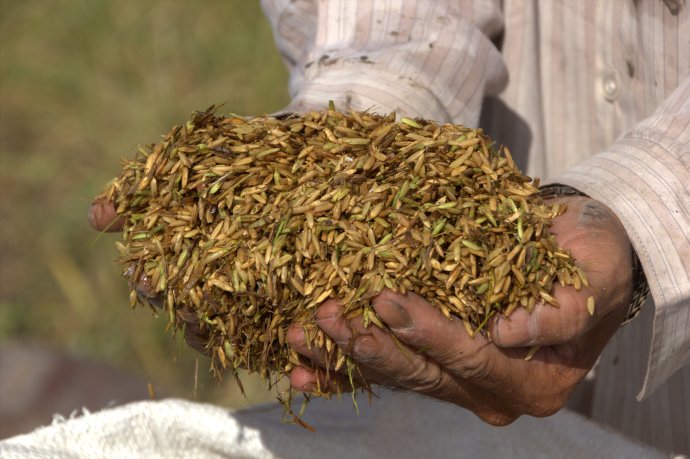
Leaf, bud, full kernel.

At this point the rice is cut and bound into 10 kilo bundles, stacked and threshed.

Threshing rice by the side of the road.

The rice straw is blown out into big piles (we’ll get back to that later) and the empty seed husks collected, while the brown rice kernels are placed in big 50-kilo bags.
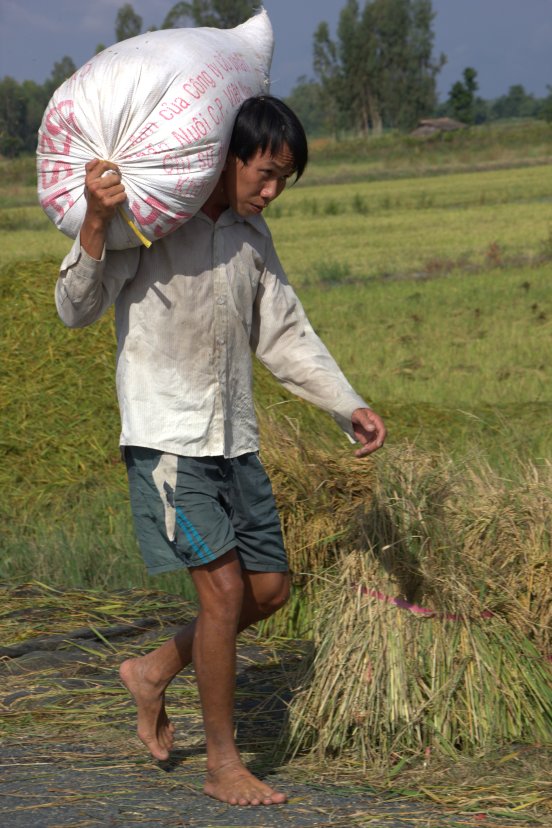
That’s a heavy load.

This unmilled rice, or paddy, is dried until it only has about 12% humidity (a farmer can tell when it’s ready by cracking it with his teeth), then either taken to a polishing mill where the germ and remaining chaff are removed, or stored for home use (or put down for a little nap and replanted). Polished white rice lasts longer than brown rice, but the brown is more nutritious, as I’ve told my unpersuaded children for years.
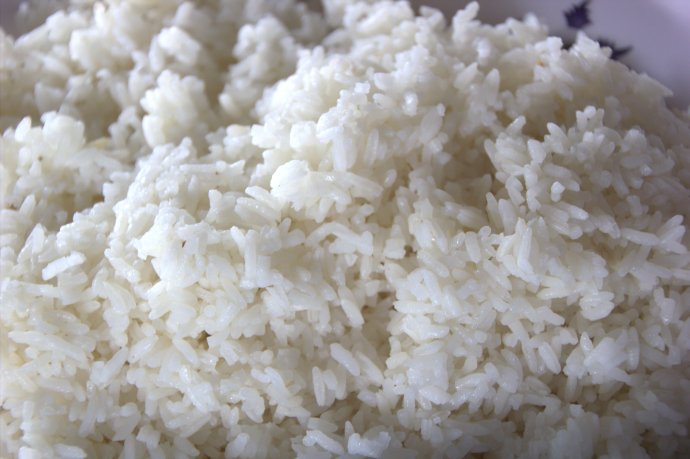
White is nice, but brown is better. (You’ll never win this argument in Cambodia or Vietnam.. or my house).

Because people in developing countries are masters of using every single thing for good, the rice by-products are never thrown away. Rice straw is used to raise mushrooms, feed cattle, cook with, make thatched roofs or dusters, mixed with mud for stucco, for handicrafts and paper, as bedding for poultry, and to mulch fields.

Green gold – rice straw.

Rice husks are used as fuel, in ash as potassium fertilizer, as a medium to raise mung bean shoots, to make artificial wood, or mixed with sand and cement to make roads. And just to complete the righteous recycling circle, when people aren’t using their rice fields to raise a crop, they use them to raise fish and ducks.
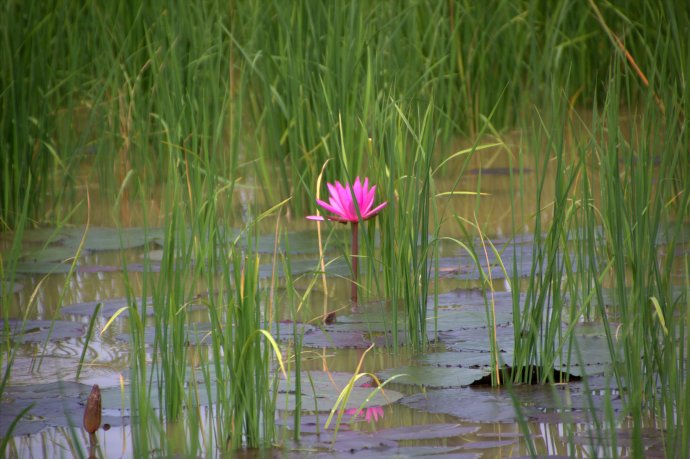
Lotus, fish, ducks – in the off-season, a rice paddy is a versatile thing!

So the next time you tuck into a big bowl of rice (Wild Rice Thanksgiving stuffing??), think of all these beautiful people around the world, working so hard to raise it.

And enjoy!!!

My tutor, Heifer’s Mr. Tham, loves his rice.


Categories: Agriculture, Farming, Food, Photography, Travel, Vietnam | Tags: , , , , , , , | 30 Comments

Jumbo Shrimp … and no, that’s not an oxymoron.

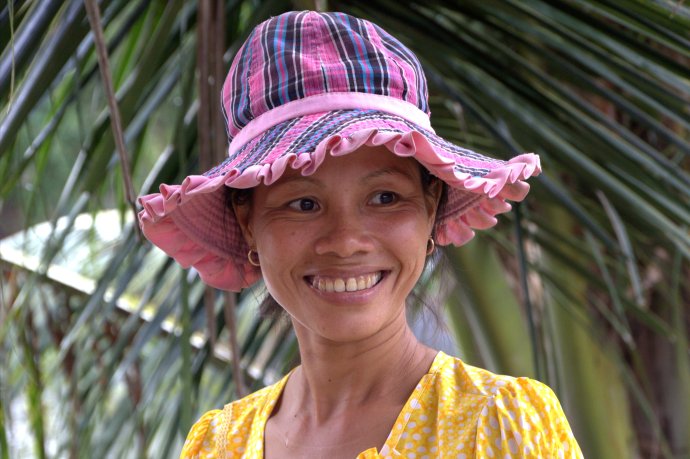
 Duang Thi Anh Tuyet is a tiny slip of a woman—beautiful like a butterfly but in constant motion like a bumblebee.

The mother of two boys she has severe stomach problems and can’t work, but like most moms “not working” in developing countries, (or developed ones, for that matter) she does more before breakfast than most folks do all day.

Mrs. Tuyet at the edge of her shrimp pond.

Tuyet is part of a Self-Help Group that Heifer started in 2008 in her small village of Duc Tan in the Mekong Delta … and she’s made the very most of every opportunity presented to her. She got her first cow four years ago, and in record time had her first calf, passed it on to another needy family, then had another female calf.

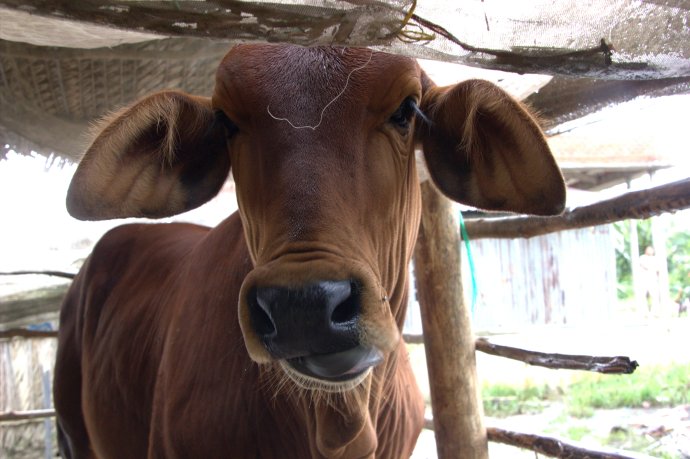
Tuyet’s very photogenic (and curious) calf.

With the $100 in revolving loans that Heifer offers each family, she then bought 7 Muscovy ducks, 20 chickens, and a sow that is about a week away from having her third litter (and the piglets sell for $50/each). She repaid that loan, too.

An embarrassment of riches: the third litter is due in 10 days!

Not content with all that fecundity, Tuyet and her husband (who works in a rice-polishing factory for $4 – $6/day), dug a pond on their single acre of land and bought 50,000 black tiger shrimp larvae to raise in the dry season, when the salt water rises up from the sea through the Mekong River and floods their pond. The shrimp will feed for four months on plankton left behind by their saline-resistant rice crop, get bulked up for a few weeks with commercial feed, and then sell for about $3,300 – or $400 net profit.

Checking the size of her Black Tiger shrimp.

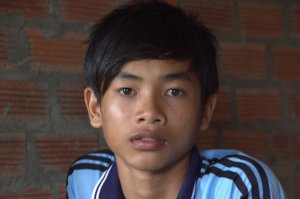
Tuyet’s beautiful 17-year old son.

With all the work she does with her animals, don’t think for a minute Tuyet is overlooking her sons. Her 17-year old is looking at universities and her 6th grader is tops in his class and earning a full scholarship – despite the fact that the family’s thatched roof house collapsed a year ago, and was only rebuilt to its current concrete sturdiness with a hand from Heifer’s Self-Help Group and its friends in government agencies.

Unfortunately, in Duc Tan, the majority of Heifer beneficiaries who got cows have sold them for easier-to-raise pigs and chickens (a faster way of earning income but subject to greater price fluctuations in the market, and diseases) but Tuyet wisely hedged her bets and raises all the above: cows, pigs, chickens and shrimp.

The final product … yummmm!

When I asked her group leader, Nguyen Van Hong, what Tuyet was doing that made her so successful with all her animals, he said, “Tuyet works very hard, harder than others. She takes care of her animals very well and knows exactly what they eat and what they need – from the good food she raises, to the vaccines she gives at the right time. She’s very precise.”

One precisely beautiful farmer

When I asked Tuyet the secret to her success, she replied, “I believe that if you try really hard, have good trainings, and are motivated, you can pull yourself out of poverty. That’s my goal.”

Tuyet is small… but she is mighty. I hope all her big dreams come true.

Categories: Animals, Farming, Heifer International, Inspiration, Photography, Travel, Vietnam, Women | Tags: , , , , , , , , , , | 27 Comments

Good morning, Vietnam!!

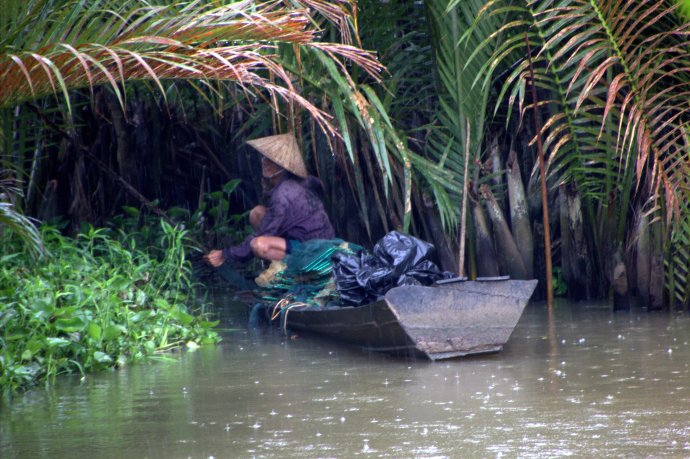
It’s impossible for someone of my (advanced) age to visit Vietnam without being overwhelmed with memories of the Vietnam War. I visited Hanoi and the North in 2005 and found myself blindsided by flashbacks, looking out over iridescent green rice paddies dotted with women bent over working in their nón lá  hats.

Forty years later, in the countryside, it still looks exactly the way it did on television in the late 60s, when we were first given a real look at modern warfare in this graceful land.

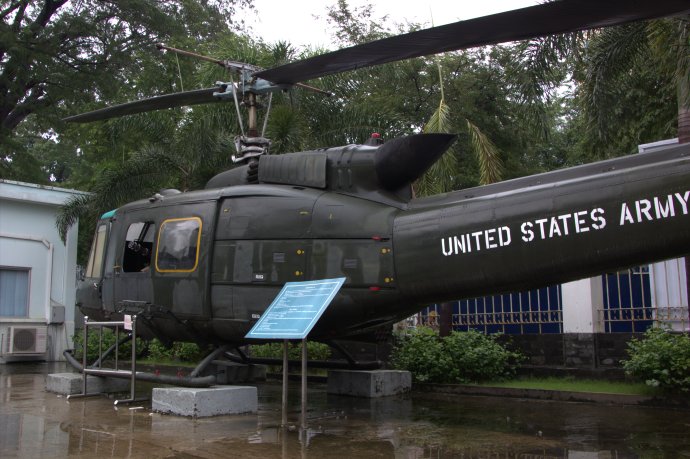
The day I arrived in Ho Chi Minh City (the former Saigon) this time, I was gazing out the balcony window of my hotel when I suddenly realized I was looking at a U.S. Army helicopter. Across the street was the War Remnants Museum and since I had a few hours free, I paid my $1 and wandered in. Two hours later, I was staggering through the “Tiger Cages” exhibit, War Atrocities hall, and the Agent Orange gallery, feeling like killing myself, when the museum closed and I was free to leave.

The next day I traveled to the village of Duc Tan in the Mekong Delta and met the group leader of Heifer’s project, Nguyen Van Hong. He’s 70 years old and a great local organizer. But in his youth, he spent 14 years, from 1962 until 1974, fighting as a guerrilla – including 1 1/2 years spent in one of the infamous prisons I’d read about in the museum. In other words, he was Viet Cong and our enemy.

Nguyen weighs about 100 pounds and is frail as can be, but despite United States Air Force Chief of Staff Curtis LeMay’s promise that “we’re going to bomb them back into the Stone Age,” the people of Vietnam had been fighting for independence for thirty years before we arrived, and I can only imagine the tenacity and fierceness with which they battled.

Today, Vietnam is still a communist country and has been since 1975 when Saigon fell. (Which is ironic, since the Vietnamese are phenomenal entrepreneurs and terrific business people.) Every project that Heifer runs here has to include the government, so that’s a bit complicated, but when compared to “free” Cambodia next door, Vietnam looks like a model of transparency and efficiency.

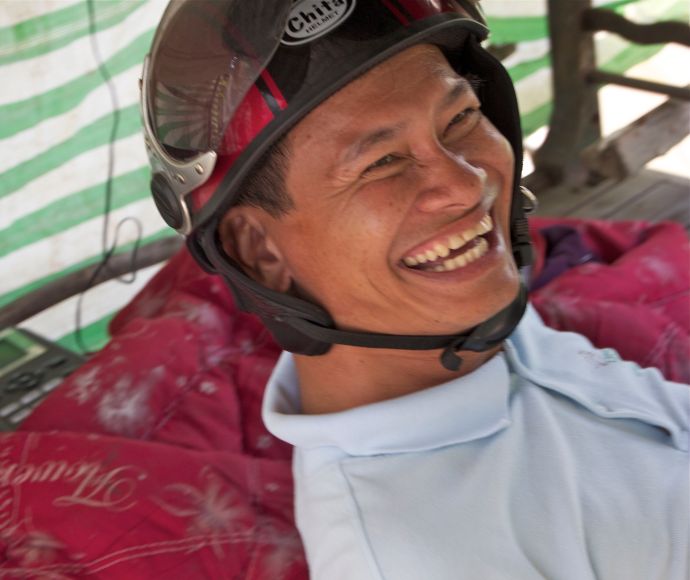
The Vietnamese are elegant, graceful and lovely – particularly the women who seem to float down the street on their bicycles and look effortlessly chic, even in the fields. The men especially are also a little bit wacky. I never heard as much laughing as I did when I was in Vietnam; the people love to cut up, joke and laugh almost as much as they love to eat – and that’s saying something.

It’s a beautiful country; and even though I hear that as Americans, we’re never supposed to apologize (thanks, Mitt) here’s a statistic that should give you some pause: Between 1961 and 1967, the U.S. Air Force sprayed 20 million gallons of concentrated herbicides over 6 million acres of crops and trees. As of 2006, the Vietnamese government estimates that there are over 4 million victims of dioxin poisoning (the U.S. denies a causal link).

As you watch this peaceful video below, consider this: More than 3 million Americans served in the Vietnam War. By war’s end, 58,220 American soldiers had been killed, more than 150,000 had been wounded, and at least 21,000 had been permanently disabled.The average age of U.S. troops killed in Vietnam was 23 years.

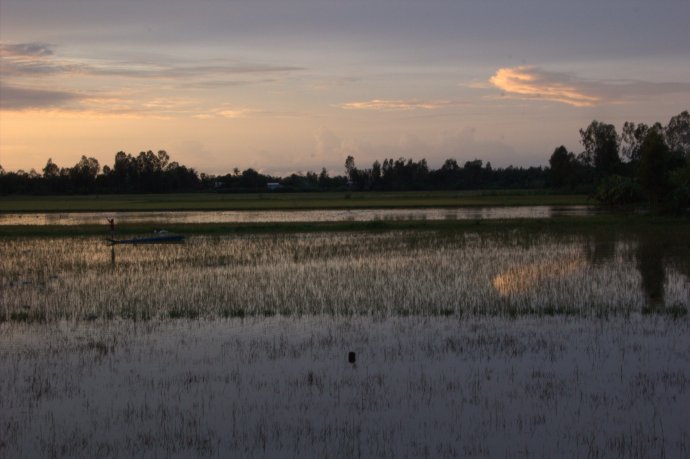
A Vietnamese graveyard in a rice field.

Vietnam lost over 1.5 million.

Peace, y’all.

Categories: Heifer International, Hunger, Inspiration, Photography, Travel, Vietnam | Tags: , , , , , , , , , , , | 33 Comments

What I ate in Cambodia & Vietnam.

Just a little something they whipped up for dinner…

If you’re a fake vegetarian like me, there’s no better place to eat than Southeast Asia.

Because the people of Cambodia & Vietnam are primarily Buddhist, they’ve developed a rich cuisine around the freshest of vegetables and rice. 

And because they are poor, they eat what’s readily abundant in the fields and waters that surround them.

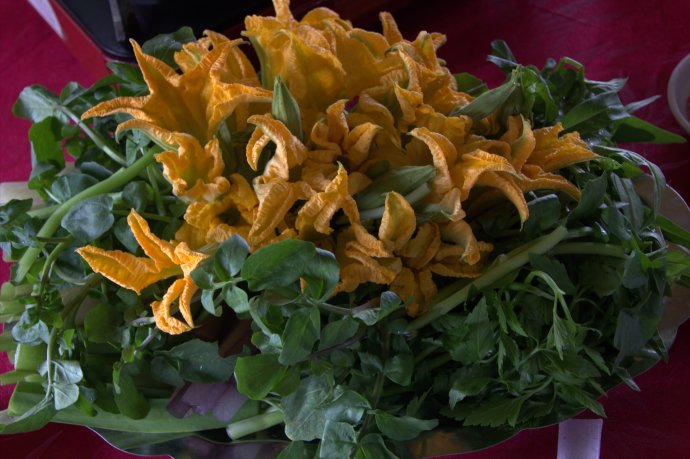
Pumpkin blossoms, meant for a hot pot extravaganza….

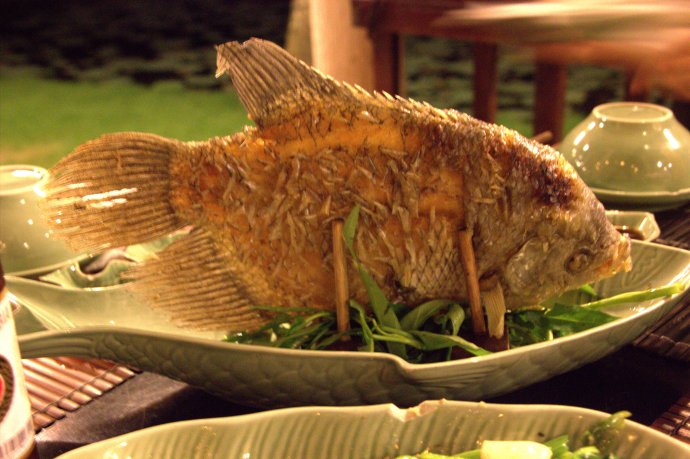
….Meaning fish is nearly always on the menu.

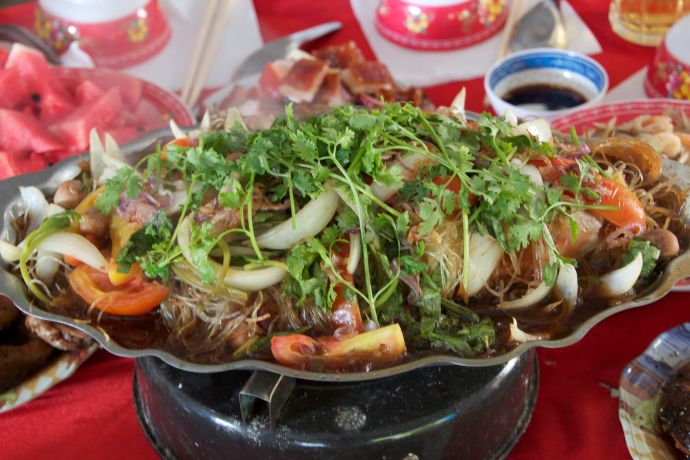
Red tilapia and rice noodles, mushrooms, onions and tomatoes.

Now that’s fresh fish…like about 20 minutes from the water.

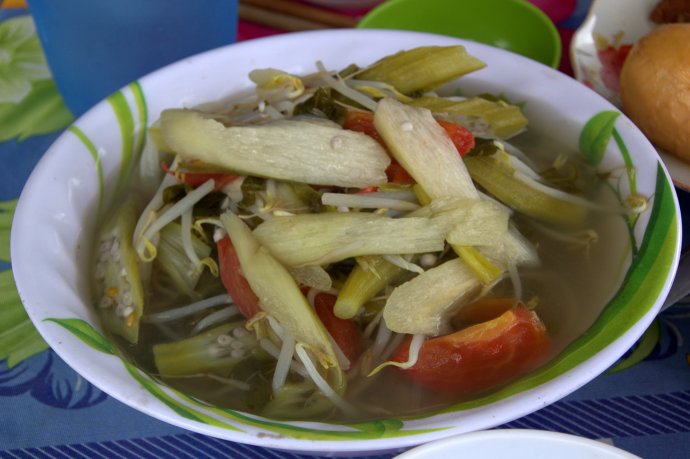
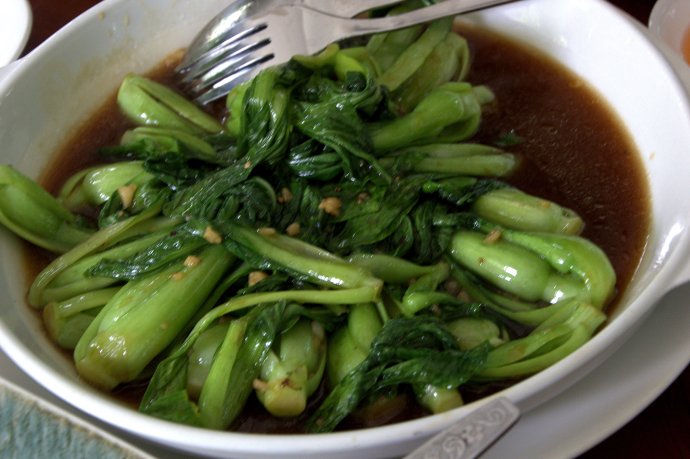
Plus lotus root, morning glory stems — and all kinds of gorgeous greens.

Shrimp & delicious lotus root.

Pumpkin and cassava leaves … so SO good!

I’m sure I’ll insult both countries by conflating their cuisines (this is my graceful segue between writing about Cambodia and Vietnam, if you haven’t guessed) but they DO have a lot of the same dishes. It’s just that the Vietnamese have an overlay of Frenchified luxe —

The sticky rice ball was just … amazing!

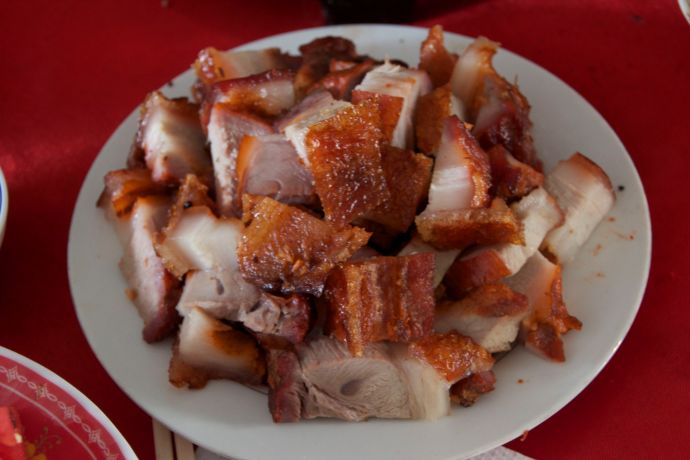
Simple & simply delicious pork (perfect for a fake vegetarian)!

… and their fish sauces, dipping sauces and accoutrements are really… oooh, la la.

Even something as elemental as lime and seasoned salt is beyond delicious.

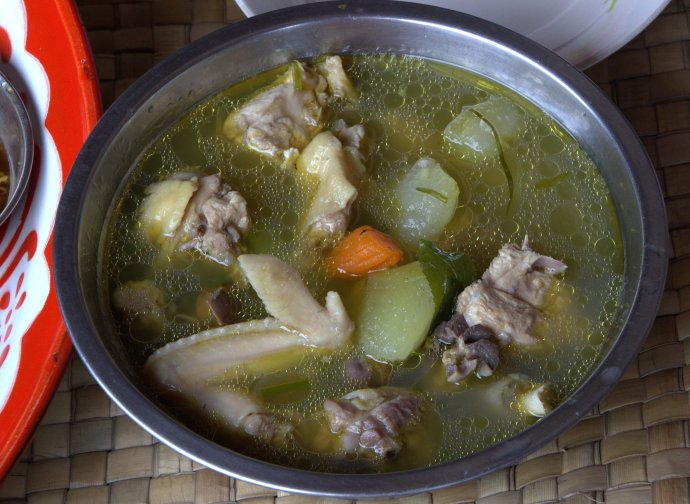
Needless to say, I was delighted in BOTH countries with every single meal — from soup….

…to nuts…

Fresh cooked cassava (tastes just like potatoes!) and peanuts.

and everything in between.

A typical breakfast….

A fancy Cambodian  lunch…

And beautiful dinner!

And guess what?

What’s life without a little fruit dessert of longon & the crazy sexy rambutan?

They even said I was awesome with my chopsticks!

When you can eat banana flower salad with chopsticks, you’re IN.

Score!!!

Categories: Cambodia, Food, Heifer International, Photography, Travel, Vietnam | Tags: , , , , , , , , , , , , , , , , , , , , | 37 Comments

Blog at WordPress.com.