Animals

A new Namaste.

In my farewell post for Nepal, I thought I’d bow to the adage that actions speak louder than words. And the most common action in Nepal is the lovely Namaste (described in a whole bunch of words below).

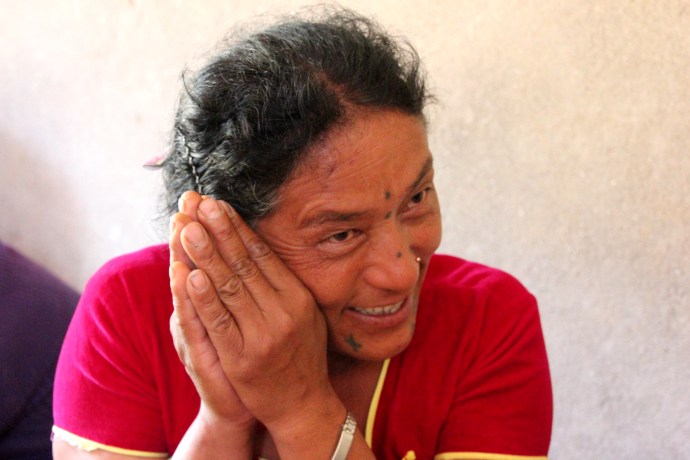
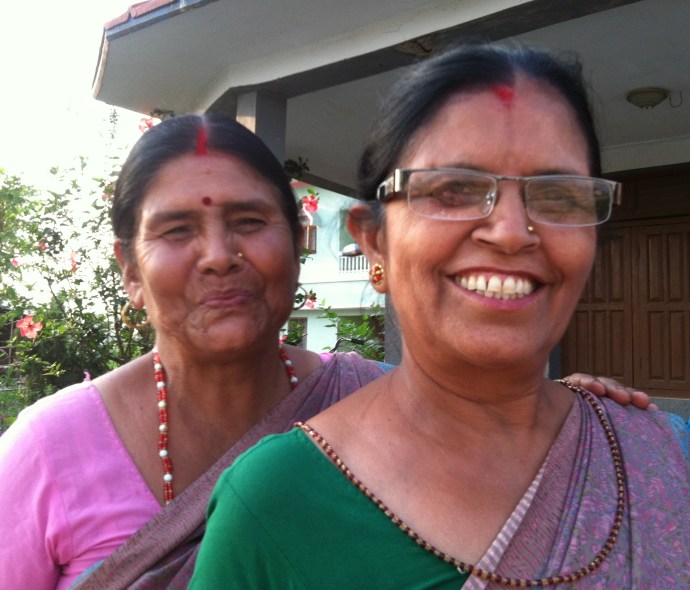
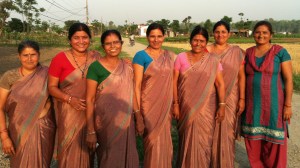
When I was visiting the amazing women in Lamatol Village, Chitwan, President Nani Maiya Lama of the Self Help Women’s Group & Cooperative cut to the heart of the matter by describing what the Heifer trainings and animals had done for her.

“I used to be so shy and afraid to talk, I couldn’t even look at someone when I’d Namaste,” Nani said.

“But now that I can read a book, sign my name and earn my own income, I’ve got a new Namaste.”

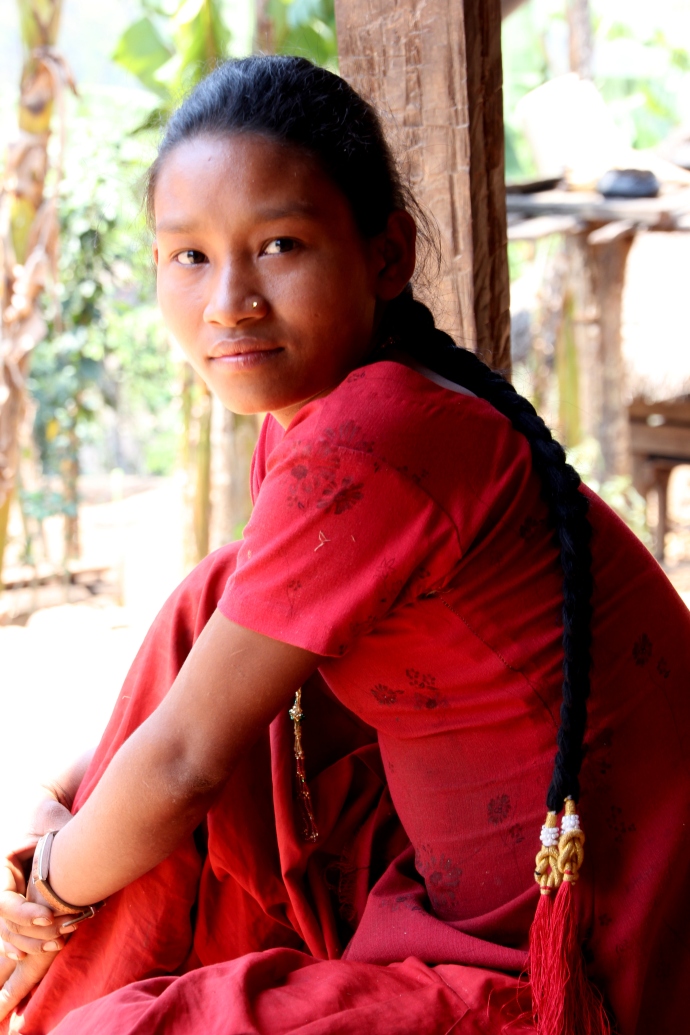
For all the beautiful women (and men) of Nepal, here’s one final Namaste.

Categories: Animals, Heifer International, Hunger, Nepal, Photography, Poverty, Travel, Women | Tags: , , , , , | 11 Comments

She works hard for the money-less*

Goma Bhattarai is my kind of hero.

In 1991, she and a few other poor women in the small village of Gitanagar in Chitwan District, Nepal decided they wanted to start a women’s economic group, like men were forming. In those days, women couldn’t step outside their homes alone or talk to any man but their husband, they owned no property, and they were utterly dependent on their husbands for money – even to buy the tika red dye they wear on their foreheads.
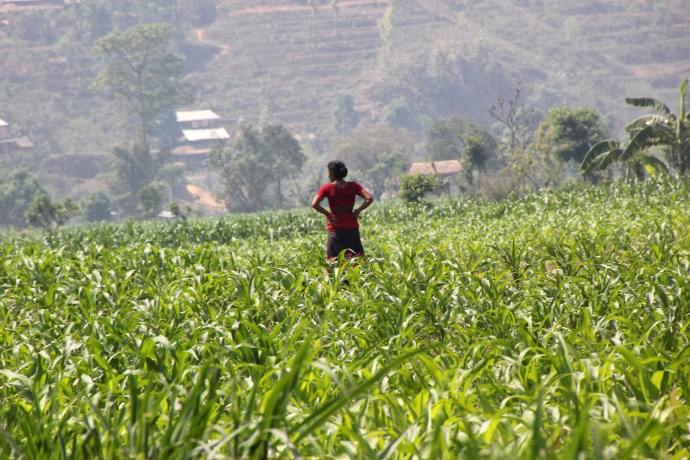
When the women timidly approached the Ministry of Agriculture in the village to ask for a loan, they were told they had no assets and should come back with their husbands. Instead of that rejection crushing them, as Goma says, “It only fueled our determination.” Despite opposition from their husbands, 15 women joined together in secret meetings, each saving 25 rupees a month (that’s 30 cents). From that fund, every two months, they would buy 2 goats for a member, then start saving all over again.
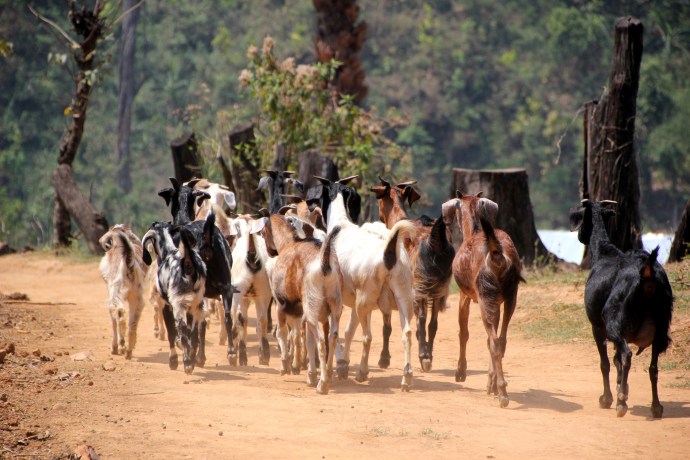
Goma’s liberation army…

Give a girl a goat & she’ll thrive.

Goats were something the women knew how to raise, and it was acceptable women’s work in the village. Girls at marriage often bring livestock with them when they move to their husband’s house, and those are considered their possession (often their only possession). But saving up for two goats in two months was taking too long…

After a year, the women went to the District Livestock Office to try to register their group and met officer Mahendra Lohani – who happened to be in talks with Heifer to start programs in Nepal. After hearing the women talk about their struggle, their experiences and what they wanted to accomplish, Mahendra convinced Heifer to back the women, and in 1993 the Baruwa Goat Raising Project became Heifer’s first project in Nepal (and Mahendra quit his job and went to work for Heifer, where he’s now Vice President of Asia & South Pacific).
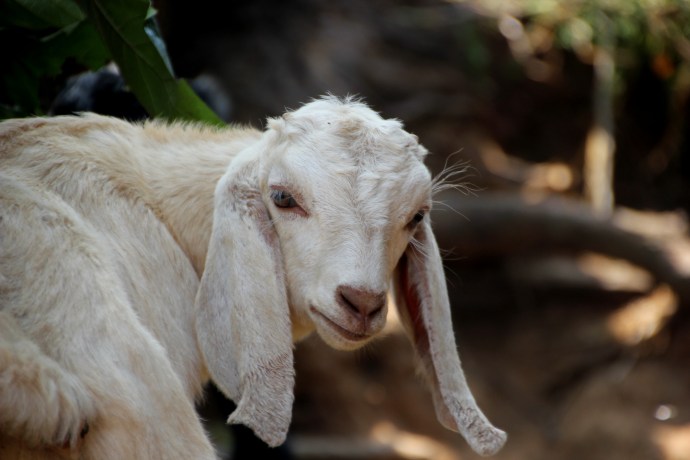
The women received 25 goats, and their visible success in raising and breeding the goats quickly convinced other village women to jump on board (and convinced most husbands that women earning an income was a good thing).  Soon 23 groups of women had formed, and in 5 years, 5 generations of goats from the original Heifer gift were passed on to families in need – but that wasn’t enough progress for Goma and her crew. It was taking too long for every women’s group to get goats; they wanted faster change.
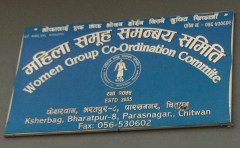
In 1997 the women decided to form an NGO that could ramp up the pace of things. The Women’s Group Coordination Committee was born and in 14 years they’ve managed 13 projects for Heifer, formed 275 women’s groups, helped 7,622 families rise out of poverty, and started a 373-member women’s cooperative.

Goma & Saraswoti Mishra, president of WGCC

But here’s where it gets really interesting. Last year, WGCC had a conversation with Pierre Ferrari, the new CEO of Heifer saying, “Things are going too slow. We need faster change.” (Are you noticing a pattern here?)
The indefatigable WGCC Team

So now they’re working with the government, Heifer and other co-ops on an $18 million initiative to develop a value chain that will supply 30% of the 500,000 goats that Kathmandu consumes every year (now mostly imported from India) with cleaner, healthier, Nepalese-raised goats that will profit Nepalese rural families and enable them to feed their country. Genius!!

As a person who’s never stayed at the same task for long, I’m in awe of the steadfast 21-year commitment and creativity that Goma and her compatriots have shown, fighting an endless battle to liberate Nepalese women from poverty and helplessness.

Who they’re fighting for…

“Tolerance and patience are the key to achieving anything,” Goma says cheerfully – meaning I’m in deep, deep trouble. “We face the same resistance in every village, but we are pioneers. Women look at us and know we’ve been exactly  where they are and changed… and they can, too.”

Sisterhood is powerful.


* With love & R-E-S-P-E-C-T for Donna Summer, Eternal Queen of Disco.

Categories: Animals, Heifer International, Nepal, Photography, Poverty, Travel, Women | Tags: , , , , , , , , , , , , | 21 Comments

Caste-ing a stone against prejudice.

Funny, she doesn’t look like an untouchable…

If you are horrified by discrimination in America (or wherever you live), the caste system in Nepal will drive you mental. As in many Hindu countries, Nepal has centuries of history where the caste you were born into not only determined your social position but also your rights, your profession, whom you could marry, and where you could live.

Neither does he…

The lower castes couldn’t enter the temple, the homes of the upper caste, use the same water tap, or even make eye-contact with a high-caste person. Even though new laws prohibit this kind of discrimination, culture and hundreds of years of history often overrides that.

Which is what makes a project like Heifer’s in Agingare village in Chitwan feel so monumental. The Chepang people living here are jungle dwellers who were forced from the forest last generation by the Conservation Act, and they are considered an untouchable caste. They are small people and very beautiful, reminding me of Cambodians or the Hmong, yet with no experience in farming, raising animals or living in houses, they struggled to survive outside the jungle, and were shunned by nearby villages and isolated in ignorance.

Nor does she ….

The cheerful Rajinama…

But Rajinama Chepang, his wife Shreemaya and 7 children pretty much repudiate every prejudice commonly held about the Chepang people. Thought to be “carefree and careless,” they steadfastly worked their way through the Heifer teachings and passed on the gift of animals to other needy families in a rapid 18 months.

…and Shreemaya, mother of 7??!

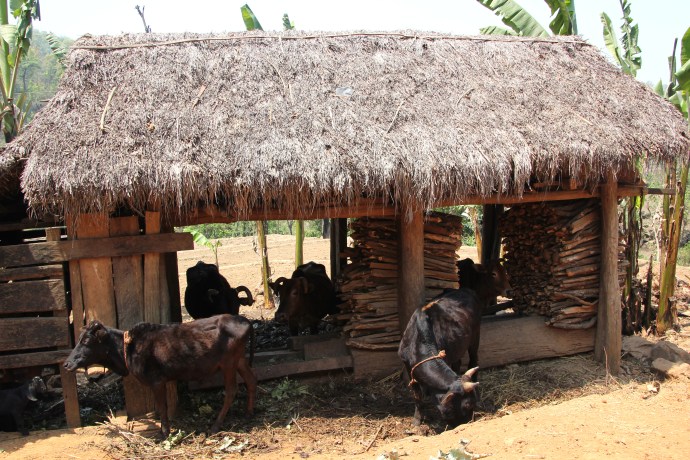
Considered by other villagers to be dirty and slovenly, these Chepangs keep their farm neat as a pin (is a pin neat??).  And though Chepang people were never thought to be good with livestock, Raji and Shreemaya’s 18 goats, 10 chickens, 3 cows, and 4 oxen look in the pink of health – and their children are polite and adorable– and all in school. Most impressive, they’ve shared the trainings of keeping a Healthy Household and good animal husbandry with other Chepang families, uplifting the whole community.

The tidy homestead (look at the woodstacks!) of Raji & Shreemaya Chepang.

Shiva Lal Chepang, teacher extraordinaire.

The Chepang people in Agingare were led in the Heifer project by Shiva Lal Chepang, the only caste member in the village to have any education at all. He’d only gone through 5thgrade (which would normally not qualify him to teach), but Heifer made him a teacher, trained him and paid him to teach literacy and the 12 Cornerstones to his neighbors.

Now he is the President of the Chepang group and has steered them into a 373-member co-op with neighboring villages that has built a Goat Collection Center to aggregate goats for sale directly to wholesalers (doubling their income), and a Vegetable Collection Center to do the same. The Chepangs are also part of the area’s Forest Users Group, with one member of each family volunteering with other villages to guard the forest from illegal logging, poaching and slash & burn agriculture. In short, they’ve become part of the community that once shunned them.

The beautiful family of Rajinama & Shreemaya Chepang (a few other kids sneaked in!)

The Chepang people in Agingare have not only proven their competency, they’ve given animals to nearby villages of a higher caste, further breaking down barriers of prejudice and separation. In fact, the Heifer implementer of the Agingare project is Sunita Regmi, from the highest Brahmin caste – and she is as proud of the Chepangs’ progress as a parent.

Sunita & the co-op’s new collection centers for goats & vegetables.

Me, too!

Categories: Agriculture, Animals, Nepal, Photography, Travel | Tags: , , , , , , , , , , , , | 28 Comments

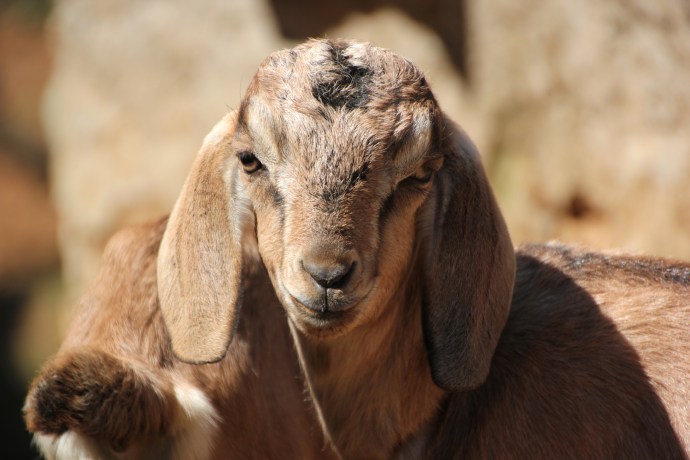
Goat-ed into greatness.

 My first visit to a Heifer Nepal project took me way up into the hills surrounding Kathmandu – where immediately the air got sweeter and the views became more and more spectacular, with the Himalayas shimmering like a mirage in the distance.

My Heifer guide, the lovely Puja, told me that when Tibet invaded Nepal, the cavalry stayed on the hilltops as lookouts and they eventually settled there, which helps explains the Tibetan look of the Tamang people here (and my immediate attraction).

Our destination was Ramkot Village where a Heifer project had been started in 2008 through a local partner group: Women’s Feeling Unity Forum, with the adorable acronym WFUF. In Nepal, Heifer always partners with a local NGO (non-government organization) that has organized the community through a Women’s Self Help Group, proven the participants are committed and motivated, and then applied to Heifer for animals and training. Once approved, WFUF’s staff was trained and paid by Heifer to be the hands-on managers of the project in Ramkot and three other villages — and their hard work with Heifer has paid off. Even though this Ramkot Heifer project is complete (projects are active for 3 years, then go into a reporting stage for another 2), the group continues on, thanks to the efforts of some very compelling women.

Vice President Tirtha Tamang (everyone’s last name is his or her caste group) is 38, married to a farmer, with 2 sons and 1 daughter. Like two-thirds of women in Nepal, Tirtha is illiterate – but in the Heifer program, she learned to read slowly, write her name, and do basic arithmetic. From the original Heifer gift of 2 does, Tirtha has raised, bred, fed and sold dozens of goats to pay for her children’s education; now two are in college and one is entering high school.

Think of that! Instead of passing along illiteracy, she has totally rewritten the future for her children, turning goats into college degrees. And that’s not half of what Heifer has helped this community accomplish for itself!

Madame President Mithu Tamang

Under the leadership of President Mithu Tamang, Ramkot women started a group savings account in 2008 (each member contributing 100 rupees – about $1.20/month), enabling the members to borrow money for seeds, medicine, school fees, or family emergencies–like food– at minimal interest. When you’re living on $2/day income, easy access to money means a lot… and the repayment rate is 100%. The women have built a new, cement community center to host their meetings and other village events, as well as two beautiful new bamboo greenhouses for starting seeds. In fact, with the manure from their animals and Heifer trainings in raising organic produce, the women grow enough vegetables to feed their families and sell in the market. It’s a 3-hour walk to the market (each way) and they carry their produce on their backs, leaving at 2 a.m. twice a week during harvest months — but on a good day they can make 500 rupees ($7) in sales.

Tirtha & Mithu with the women’s group water harvesting cistern, new greenhouses below, and hills of pumpkins.

OR… if they sell a young male goat about 4 months old, the women can earn 12-15,000 rupees (over $100). A female goat can start having babies at 6 months, have 3 kids every pregnancy, and up to 2 pregnancies a year.

So –don’t you love Heifer math that adds up the multiplying effect of the single gift of a goat?? (And of course, all the women have passed on the gift of offspring and trainings to other village families in need.)

Heifer has been working in Nepal with women’s groups since 1993, and in less than 20 years has helped more than 60,000 families like those in Ramkot with the gift of livestock and training. That’s a great story. But as we were bouncing back down the road to Kathmandu, Puja started telling me about how Nepalese women’s groups are joining forces, forming larger cooperatives and instituting change on a whole new scale – like the $60,000 water project all the villages around Ramkot are working to build, that will allow them to double their production.

Why Women’s Self Help Groups (and co-ops) are a great idea.

That concept (and the beautiful smiles of the Tamang people) took my breath away. More on co-ops tomorrow!

Never underestimate the power of a Nepalese woman!

Categories: Agriculture, Animals, Heifer International, Nepal, Photography, Travel, Women | Tags: , , , , , , , , , | 22 Comments

Farewell, my lovely …

The new breed … smarter, better, prettier!

My last two days in China were spent visiting Heifer International projects in Jingu and Fuxing Village … towns that were hit hard by the disastrous 7.8 earthquake that tore a path of destruction 500 kilometers through the heart of Sichuan province on May 12, 2008. These rural communities raised livestock and fruit, but inside the collapsing barns and houses most of the livestock were killed – along with 68,000 people.

The rebuilding of the Earthquake- Affected area by the Chinese government has been intense, but the Lizhou Poverty Alleviation Bureau chose to work with Heifer for livestock replacement because of its reputation for long-term results. (Or as the Heifer China staff humbly told me, “Our strict standards, high expectations of our farmers, and precise reporting of results make us challenging to work with. But I think we got chosen because we have a reputation for changing people, communities, and the government entities we work with for good.”)

Yang Shengxue, a master breeder & his wife Wuchang Lian in their newly renovated pig barn in Jingu.

The project started in March 2010  in the two villages (and six neighboring communities) with the establishment of 26 Self Help Groups consisting of about 20 families each. They met weekly to begin trainings in animal husbandry; breeding; group savings; animal barn improvement; Heifer concepts like the 12 Cornerstones in cooperation, sharing and gender equality; and value chain marketing.

Only then—after six months’ work – did the 505 families in Lizhou receive their animals. Some chose chickens, some pigs – depending on the land they had to raise crops and the labor required. But by the end of 2011, those original 505 families had recruited 505 more families to form new SHGs, passed on their trainings, and are getting ready to pass on the gift of animals in June of this year.

A captivating local pig!

And what a gift!! The pigs, in particular, are beauties.

The new breed of sows provided by Heifer are more shapely than the local stock (these are the words of the villagers, but I’m not taking sides as I kind of got attached to the local babe on your left), they grow heavier faster with more meat and less fat, and when they do reproduce, the sows have 13-16 babies in a litter. Unfortunately, there have been some fertility issues with the new breed and Heifer vet techs are working to encourage the farmers to feed the sows carefully with only raw food, give vaccinations, and keep their barns clean and hygienic to promote pregnancy.

Oh, Mama!

One of the indomitable ladies of Fuxing.

In Fuxing I met with the only all-women’s Self Help Group, as most of the men have left to work in the city, their teenagers are away at boarding school, and the women have been left behind to farm and raise animals.

Organic forage is best.

Communally, the women can support one another, meeting once a week to share their stories, discuss animal problems (for instance, when a pig develops a weak hind leg, you don’t just wait for it to die, you treat it with meds and stop feeding it so much protein and no cooked food…good to know!!). The women also work together to maintain the new road into town, clean the village, and build reservoirs to harvest water to get them through the 2-month drought period when they used to have to carry water up to the fields in buckets.

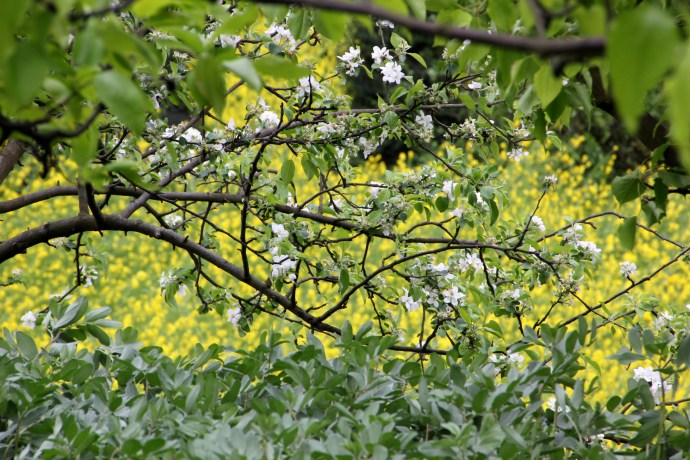
The villages are beautiful – blanketed with yellow fields of rapeseed (for oil), orchards, and neat fields, but the women have despaired of their children moving back here. “Emotionally we want them to come back, but financially, we know they can’t survive here. Our children can’t get used to the hard farm work we do or handle the risk of a failed crop or lost animals.”

“They’ll have an easier, better life in the city,” another mother says.

… I’ll be waiting …

I ask the mothers if they want to move to the city and they laugh and say in unison, “Never. It’s hard here but we can’t get used to the air and the noise in the city. Maybe things will get better someday and our children will come back to the farm.”

I’ll leave you with this haunting song from the women of Fuxing (sorry it’s dark but we were inside by a fire)!

Next stop… Nepal!!

Categories: Agriculture, Animals, China, Farming, Heifer International, Photography, Travel, Women | Tags: , , , , , , , , , , , | 10 Comments

Blog at WordPress.com.