Animals

My admittedly tardy International Women’s Day Post! (Haiti Version 2.0)

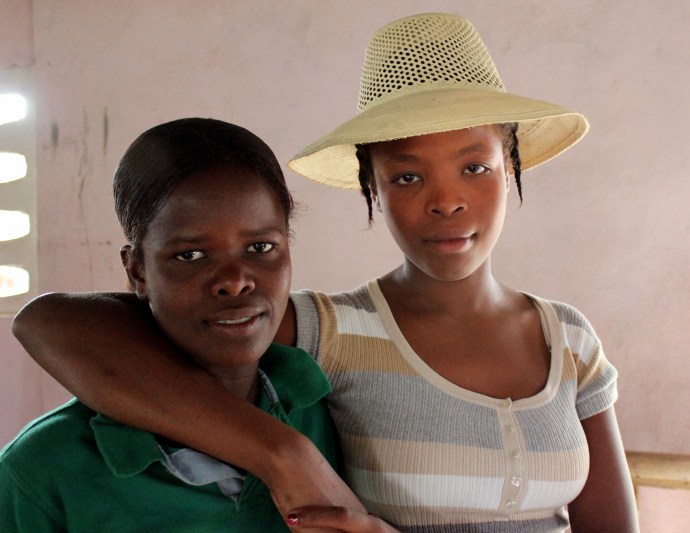
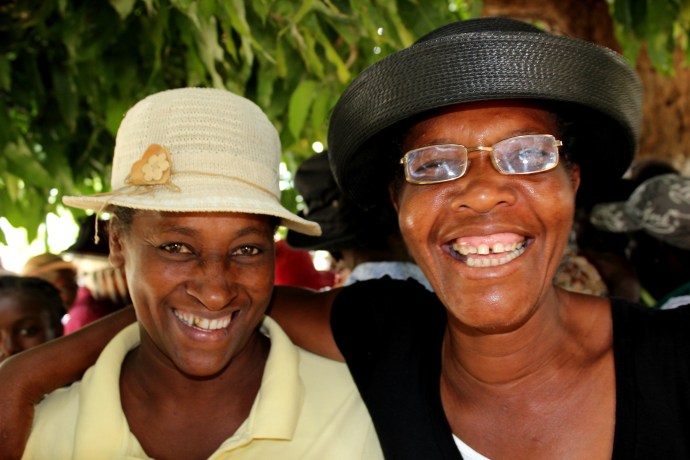
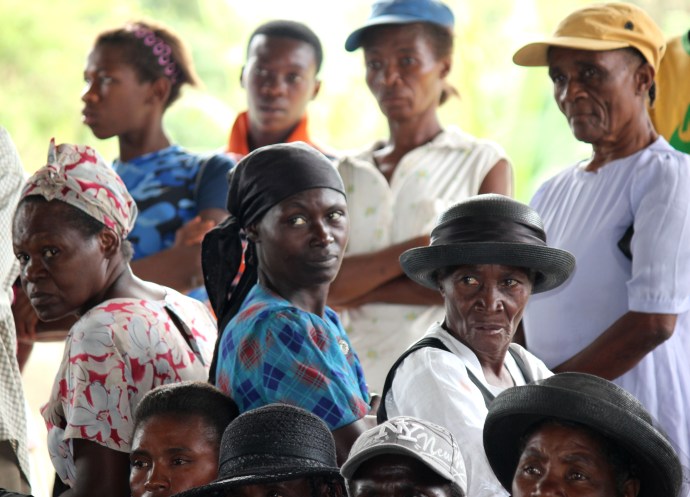
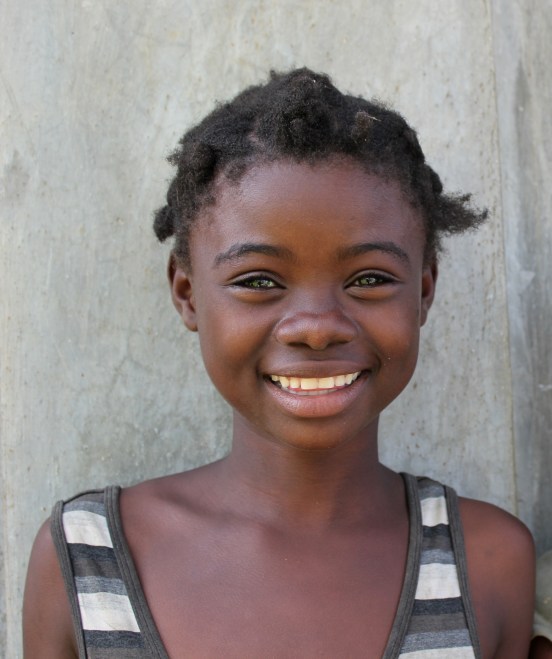
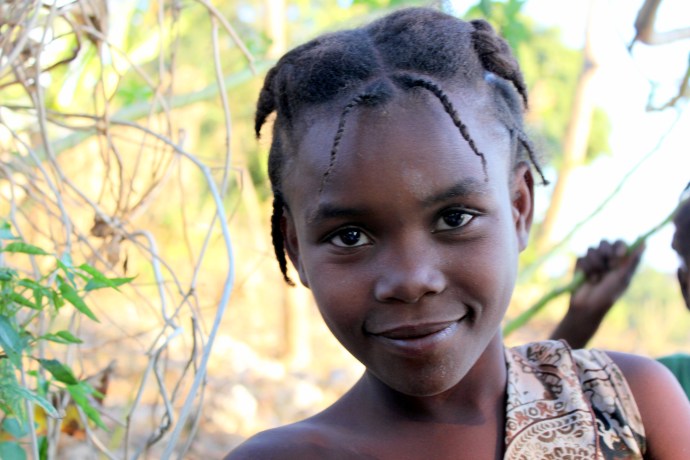
I completely missed International Women’s Day on March 8th this year, and I’m feeling a little guilty about that. So I’m going to do one post at the end of each one of my trips, comprised of photos of the beautiful women I met in that country.

The women of Haiti were a constant source of inspiration to me: strong, brave, incredibly hard-working, and courageous in ways I cannot fathom. And despite their hard lives, full of joy.

But to be honest, I’m blown away by the women in every country I visit. On this planet there are 650 million smallholder farmers who produce 70% of all the food we eat. And the majority of those farmers are women.

When we help women farmers, we’re simply being smart –because with tools, training and technology, they will do what women always do: they’ll feed us, take care of us, and provide.

If I loved Heifer International for nothing else, it would be for its tireless, inventive, and unwavering commitment to empowering women farmers around the world to grow more, earn more, learn more, and achieve security for themselves and their families.

I’m seriously tickled pink to be a tiny part of this important work, and I can’t believe that I have the privilege of introducing you to these remarkable women (and there’s a story behind each one of these photos).

Happy International Women’s Day!! (let’s pretend it’s today).

And yes, I am in Peru now, and to prove it, here’s a little taste of things to come (it’s a female so it fits the theme).

Categories: Agriculture, Animals, Haiti, Heifer International, Peru, Women | Tags: , , , , , , | 26 Comments

A Mother in Haiti.

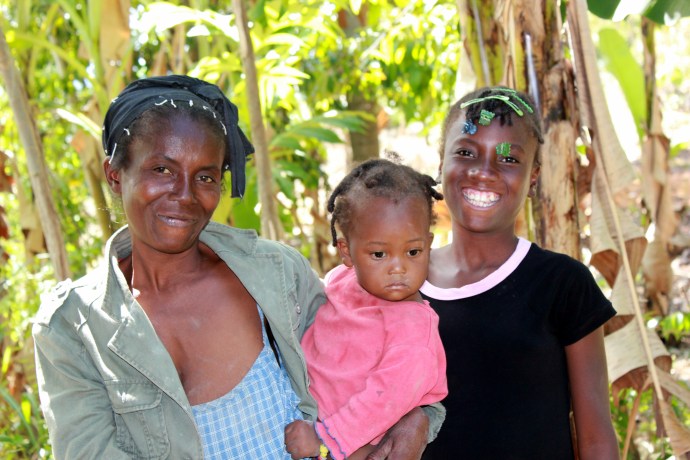
Madame Elliasain Wilson, Andrener & Cynthia

The first time I met the Wilson family of Degand, Haiti I was in a kind of rapture. We’d just seen the new Goat Breeding Center that Heifer International had built to help the town support its school, and met some gorgeous people living on small farms in this town overlooking the infinite blue sea. Madame Wilson’s daughter Cynthia dragged me by the hand to see their new goats, given by Heifer, who were all happily pregnant, and I took this photo of a family that seemed to have a good future ahead.

The Wilson family: Robinson, Madame Wilson, Cynthia, Andrener, Davidson & Monsieur Wilson (Makinley is hiding)

When I went back a week later to talk and visit at length, the truth of their difficult circumstances made me squirm, to think I’d been so oblivious to their real situation.

Elliasain and her husband have five children: Robinson, 23; Cynthia, 12; Davidson, 11; Makinley, 3; and Andrener, 1. In the terrible earthquake of January 12, 2010 (that Haitians called bagay la “that thing!”), their big stone house collapsed, trapping Makinley inside and crushing all their earthly goods: beds, clothes, dishes, cookware. Miraculously, when they were able to pull the heavy stones away, baby Makinley was without a scratch – just scared to pieces.

Where the Wilson home used to stand.

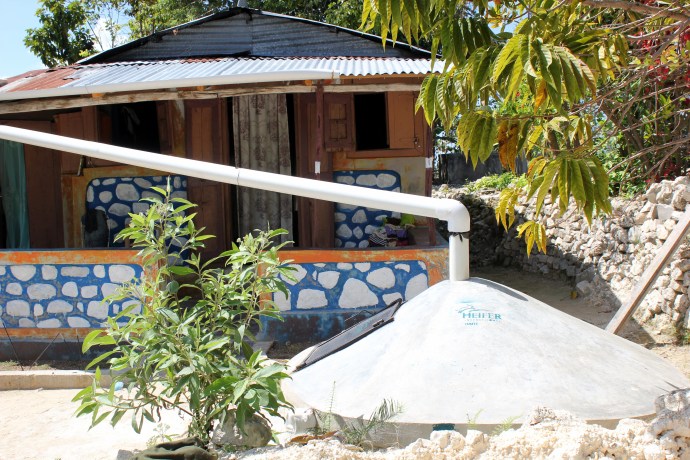
Despite that joy, the Wilsons’ loss was immense: also crushed were their pigs, goats and chickens – which is money in the bank to rural farm families – and their cistern, in this town where the nearest water is 4 kilometers away. Luckily, Heifer built a new cistern almost next door for four families, including the Wilsons.

The Heifer cistern that the Wilsons share at a nearby house painted with Georgia O'Keefe clouds.

But surrounded by banana, mango, coconut, cherry, avocado and jackfruit trees, the Wilson family often does not have enough to eat because the trees haven’t produced much fruit after the four hurricanes of 2008 and the quake of 2010.

The first day I met Elliasain, her eyes were bright and she was buoyed by her husband’s enthusiasm, the goats, and her children. The day I went back, she seemed exhausted, hungry and dull-eyed. I cursed myself for having left my protein bars in the hotel, and wondered how she could possibly breast-feed little Andrener, being so clearly hungry herself. And I thought how exhausting it must be to have to work so hard to merely survive.

Madame Wilson, Andrener & Makinley, the lucky survivor.

Then I thought about all the women across Haiti, trying to make a life for themselves and their children. If only they were able to practice birth control (80% of Haitians are Catholic – like me — so yeah, thanks, Pope Benedict, for the holy ban on contraceptives in this country the size of Vermont that has more than 10 times Vermont’s population.) If only the homeless families were given the materials to rebuild and once again live in a proper home. If only women in Haiti weren’t so overworked and undereducated (most girls receive only two years’ schooling), perhaps they’d have a chance to secure a better future for themselves and their families.

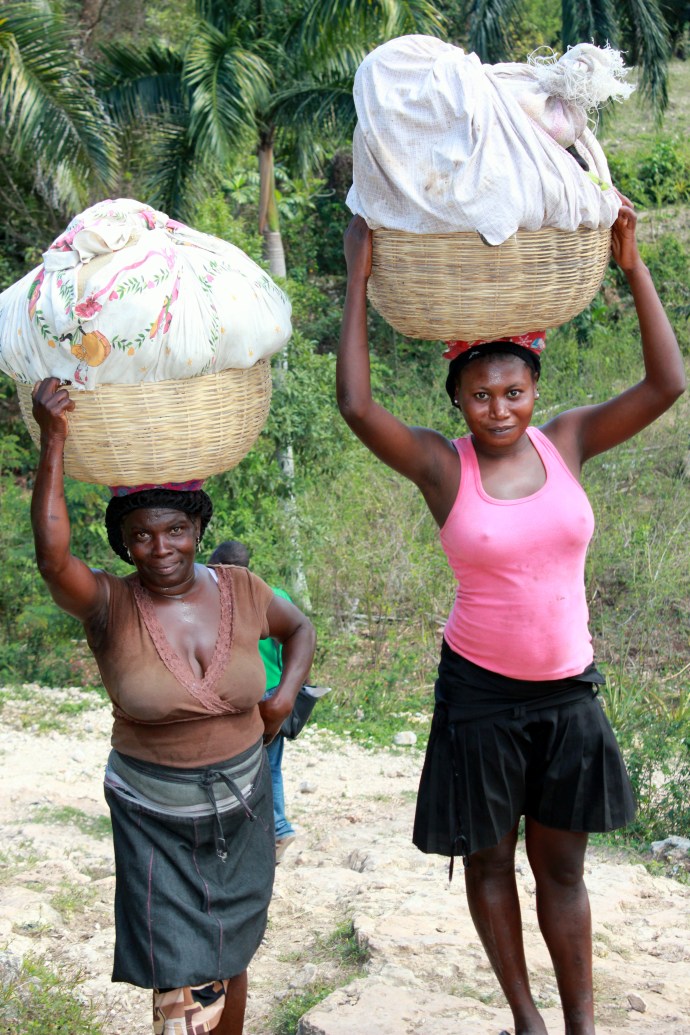
An uphill climb (with a load of bananas) is an everyday affair for the women of Degand.

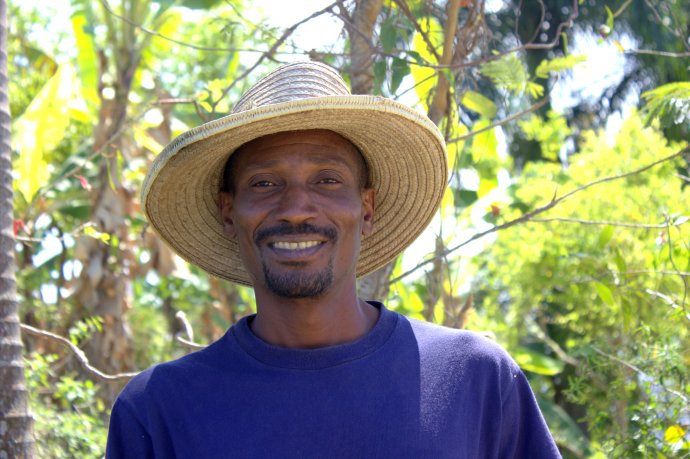
I was feeling pretty low when I left the Wilson’s residence, but then I met Monsieur Wilson on the road back to the village.

I showed him the photos I’d taken of his wife and children and he was so excited, proud and happy, I could see he was anything but beaten. He had Heifer goats that were having babies. He had wood to build a new house, and his village had the Heifer Goat Breeding Center to support a school. He was standing tall.

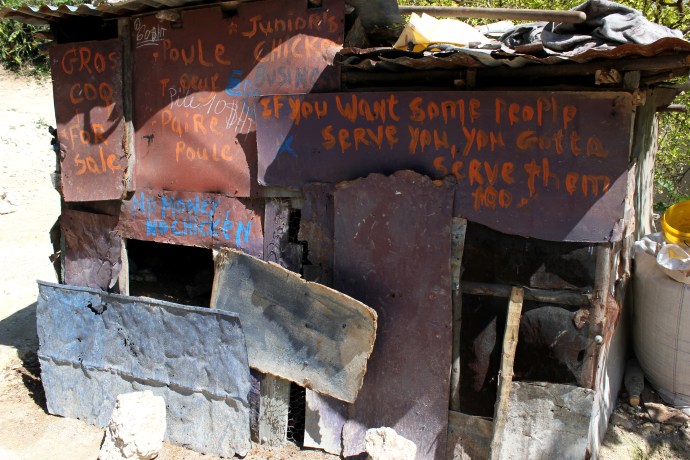
And that made me remember this beautiful sign at the house painted with clouds that expresses the fierce independence, sense of community and astonishing spirit of the Haitian people, especially its women.

If you want some people serve you, you gotta serve them too.

The people of Haiti will survive. And if we serve, they may even thrive.


Categories: Animals, Food, Haiti, Heifer International, Hunger, Women | Tags: , , , , , , , , | 31 Comments

The price of a chair.

The day we drove up from the overwhelming crush and chaos of Port au Prince to the town of Degand Haiti, it was like taking blissful step back in time — except that life isn’t quite so blissful for the people living here. Just 10 kilometers from Haiti’s capital of 1.2 million people, Degand is another world — a poor farming community with breathtaking ocean views, crisp clean air, and people who are spirited and hard-working.

The town seems idyllic and avocados grow in abundance here but the land is dry and rocky, and water is 4 to 5 kilometers away–which means girls usually walk about 3 hours a day hauling water. Degand was also hard-hit by the earthquake, with many families losing their homes, and many others taking in relatives from the city who were now homeless, too.

The long walk for water (this is just the beginning).

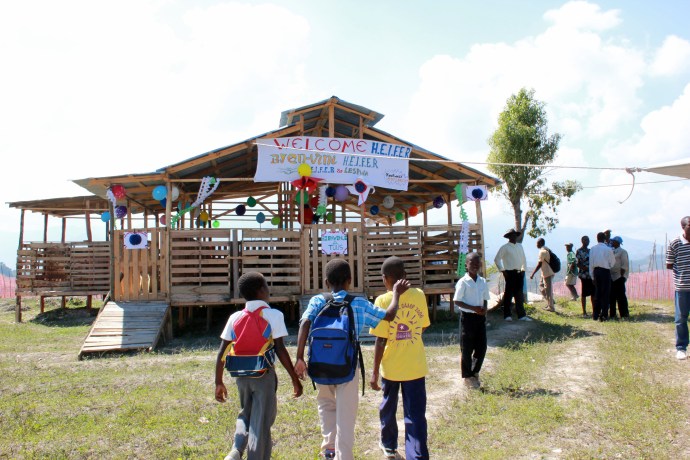
We were in Degand to celebrate the opening of the new Goat-Breeding Center built by Heifer International, in partnership with the community organizers of MOPLANDA — and it was a big day for the town.

My favorite part? The balloons read: "It's a boy!"(probably because all the "It's a goat!" balloons were sold out).

Heifer has been working in Degand since May of last year, starting with the gift of 25 goats to the neediest families, and the construction of 20 cisterns that are shared by 4-5 families each. The cisterns are expensive ($1500/apiece) but they have a transformative effect on the community. For one thing, girls can stop walking for water and start walking to school — and in Haiti, education is prized above all else. Families will sacrifice almost anything to get their children in school.The problem in Degand was that even with the gift of goats to a few families, the town had no way to pay its 6 schoolteachers their stipend of $40/month to teach. (Obviously, the government provides very little assistance with education, and 80% of Haitian schools are privately funded.) So Heifer helped the community build this commercial Goat Breeding Center as a community enterprise that will eventually house 60 goats, with proceeds of the sale of the animals going to support the school. It’s a different model for Heifer — a bigger investment, but with a far deeper impact on the overall economic viability of the community.

Degand's precious school

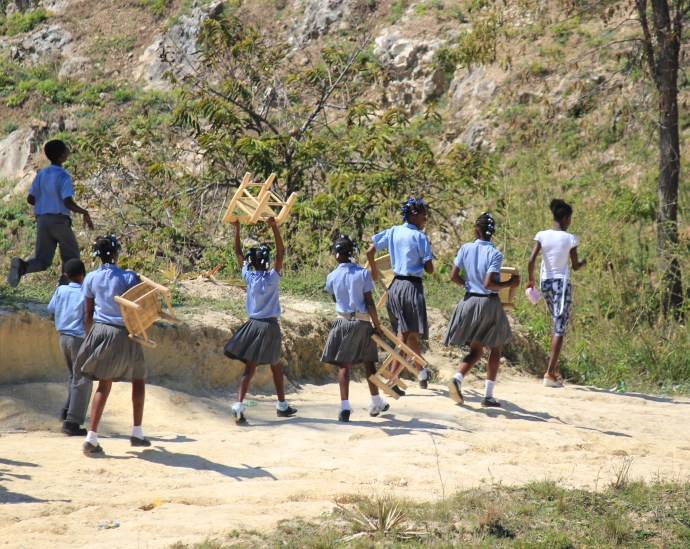
For the price of $5,000 to build the breeding center; 2 robust Boer bucks at $350/apiece; and 25 female goats at $60/apiece, Heifer has invested a total of about $7,200 in a quest to geometrically improve the quality of Degand’s goat stock, and enable the community to support its own school– as well as other projects it decides to undertake (like a Tool Bank where farmers can get loans to buy new tools). And with the sale of the school goats, Degand can pay its teachers …and even buy chairs for the children.

You know you’re in a different world when a simple school chair is a matter of  precious delight.

We loved visiting beautiful Degand and its people so much, we went back a week later and had a totally different but equally moving experience. But that’s tomorrow’s story…

Categories: Animals, Education, Haiti, Heifer International | Tags: , , , , , , , , , , | 39 Comments

Cows, fudge & women in Haiti.

Our Heifer International trip to Petit Goave got off to a petit late start, because we overstayed at the town of Degand. Which meant by the time we pulled into the lush rural community of Petit Goave, the sun was getting low in the sky and we faced one last hurdle: a watery crossing.

Heave-ho!

Sona Chambers, ace Atlanta fundraiser and bon vivant, was in the front seat and cautioned Hervil Cherubin, Haiti Country Manger/driver extraordinaire, that the four-wheel drive wasn’t in gear. Dave Anderson, crackerjack international photographer and videographer, and I were in the back, minding our own business but secretly hoping for some action. We got our wish, as the minute we plowed hub-deep into the mud, it was pretty clear we were stuck solid. Pierre Ferrari, Heifer CEO in the car behind us, plunged in to the rescue and we were expeditiously pushed out by six farmers with a lot of muscle.

Dirty, muddy and happy, we traipsed into lovely Petit Goave where the community awaited us.  By now the light was seriously fading and the Heifer folks wanted to get us back on the road before nightfall. But since we were the late ones, we unanimously decided that all the beneficiaries should have a chance to speak, just as planned. And so they did.

Petit Goave is a beautiful place, blessed with plentiful water reminding me, once again, that water means life. This corner of Haiti, with its tradition of dairy cows, is also famous for the fudge (douce macoss in Creole) that I wrote about in my last post.With a candy industry nearby, the more milk Petit Goave farmers can produce, the more income they can generate from fudge-makers.

To take advantage of that opportunity, over the years, Heifer has given this community the gift of 50 cows & 2 bulls; 5,000 plantain plants; 600 buckets of bean seeds; 150 buckets of corn seed and 12,000 forage plants to feed the animals—as well as emergency food supplies after the earthquake. These gifts, which have been passed on to other families and thus multiplied, have made a profound difference in the life of the community, as we were reminded of by the people who stood to greet us.
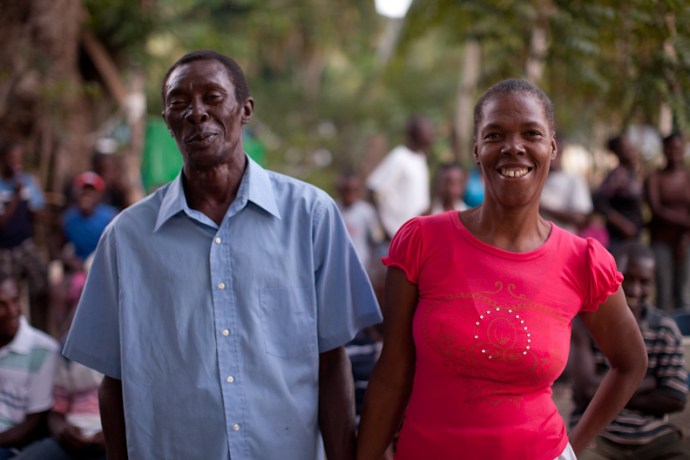
How great does Emmanuel Jean's wife Jacque look after 9 children? (Dave Anderson photo)

Eddy Exantus, with 6 children, was able to send all of his kids  (not just the boys) to school with income from selling milk. Francois Revel, a bachelor, used his milk income to finish high school, then was trained by Heifer as a vet agent – giving him additional income while he keeps the community animals healthy. Emmanuel Jean has 9 children and been able to send them all to school, thanks to the milk money earned with his Heifer cow. And finally, a woman stepped up: Margareth Doscar, President of the Petit Goave Women’s Group and a single mother of 4.
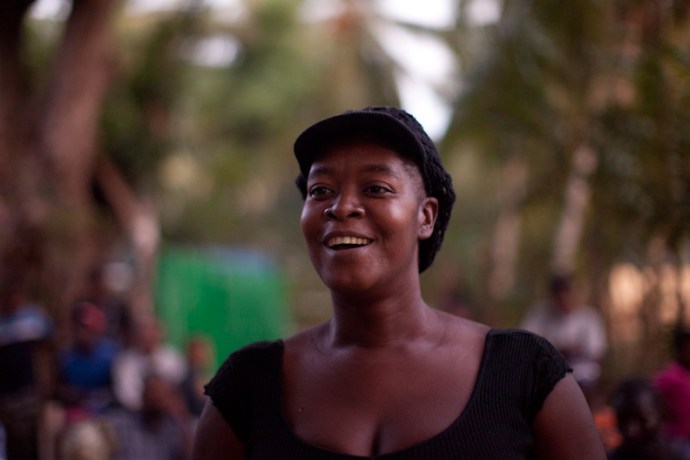
Margareth Doscar photo by Dave Anderson.

Kimberly and I snapped to attention as she thanked us and wished us courage, then asked for more training in food processing and micro-loans to finance small businesses of the 45 women entrepreneurs in Petit Goave.

Kimberly, by Dave Anderson

As the light of female solidarity dawned on us (and the sun set for real) Kimberly asked for the wives of the men who’d spoken to come up & be recognized….and before you could say “Gloria Steinem,” there was huge laughter, people excitedly pushing shy wives and mothers to the front, and tales of romance, kids, and 30-year marriages in the air.

I struggled to take notes in the pitch-black and people held up cell phones to illuminate faces, while Pierre talked Kimberly (also shy) into addressing the women, who crowded around her in quiet thoughtfulness.

Petit Goave women. (Dave Anderson photo)

“Women have always been the backbone of society, and we know how hard you are working, and how difficult these times have been for you,” she said, as Hervil translated into Creole. “I want you to know that the women in America and all over the world care about you, we support you, and we haven’t forgotten you and your families.”

In the dark we could hear lowing and bellowing of the 50 beautiful cows that had been tied up in the clearing. A quarter moon rose over the horizon. As we walked back to the trucks, surrounded by the talking, laughing people of Petit Goave, it was a Heifer moment. One you’d never forget.

Categories: Agriculture, Animals, Haiti, Heifer International, Photography, Travel, Women | Tags: , , , , , , , , , , , , , , | 18 Comments

“This is SO not a road…”

The second half of our first day in Haiti, we drove from Montrouis to the remote town of Ivoire, where Heifer International has a project rebuilding homes destroyed in the 2010 earthquake. Now if you’ve been following my blog for more than a day, you know the confluence of the words “drove” and “remote” is cause for some alarm.

Kimberly safe at the top & reunited with Pierre!

And to be sure, the road to Ivoire (as you can see) was a tortuously steep, cratered-out path that clung feebly to the side of a mountainside for 20 or 30 kilometers, with six of us crammed in a Toyota Land Cruiser bouncing around like popcorn kernels on a hot stove. Poor Kimberly, wife of Heifer CEO Pierre Ferrari, was sure we were going to tumble over the cliff at any second, and unfortunately she was on the side of the truck to get a bird’s eye view of that distinct possibility.

Way up here in Ivoire.

Whenever I’m in a situation like this, I try to take the long view: we probably won’t be hurled to our deaths, we’ll eventually get to the town, and unlike the inhabitants of Ivoire, we’re damn lucky not to have to walk up the hill. And of course, the trip up there was more than worth it – the people of Ivoire are spectacular!

The celebration that greeted us in Ivoire!

Heifer has been working in Ivoire since 2002 – helping the people living here in remote poverty reforest the land with new trees, conserve soil, harvest rainwater with cisterns, get trainings in how to raise healthy animals, and receive new goats, chickens and cows to improve their livestock. But when the earthquake hit, over 270 homes—or 1 in every 10 — in this small community were destroyed. (In Haiti overall, an estimated 250,000 homes and 30,000 commercial buildings were leveled – as well as half the primary and secondary schools and the three main universities.)

Old stone houses came tumbling down...

Towns like Ivoire are way, way down on the list to receive aid (“We were ignored,” said the community leaders bluntly)– and given the condition of the road, that’s not hard to imagine. But Heifer made the decision to facilitate the rebuilding of 110 homes here because it knew the people, and how organized and dedicated the community was.

“When we saw that people were willing to walk 3 hours carrying tin for roofs of houses, and haul bags of sand and cement up on motorcycles, we knew Heifer had to help,” Ewaldy Estil, the Heifer Northern Regional Coordinator, told the packed congregation that had gathered to sing, dance, and ceremoniously present us with heaping baskets of grapefruit, cabbages and sugar cane.

“When I am here, I forget all about the road conditions, because you inspire me with your community, your solidarity and your faith!” Ewaldy went on – which was entirely true. There was no way you could not be happy you were there…and not wish you could do more to help these people who are so intent upon helping themselves.

The face of resilience

Everyone in Ivoire gets involved!

Even as I write this, Pierre Ferrari, Heifer’s CEO, is scrambling to convince donors to invest the materials (and transportation!) to rebuild 160 more homes in Ivoire. Each house requires 28 bags of cement and 28 metal sheets, and beyond that, Heifer pays four categories of contractors to ensure quality of construction: brickbuilders ($22); mason ($89); carpenter ($38) and welder ($8), for a total cost of $900 for a 250-square foot house. From there, the homeowner and neighbors finish all the other work.

Once you see Ivoire and meet the people who somehow remain joyous and hopeful despite the strife, setbacks and isolation, it’s impossible to forget them. And the road down? It was a breeze.

Categories: Agriculture, Animals, Haiti, Heifer International, Photography, Travel | Tags: , , , , , , , , , | 28 Comments

Blog at WordPress.com.