Hunger

What I ate in Haiti.

Fresh whole fried tilapia from Lake Peligre .. caught that morning!

Actually, maybe we should start with what I drank in Haiti because that’s certainly where I always start (and end). I’m not even sure it’s appropriate to talk about food & drink on a blog about ending hunger and poverty with Heifer International but enough people seem to be curious about what I’m consuming that I’m indulging myself in this post. (Please feel free to tell me you think I’m a shallow bore if you feel like it.)

Alcohol is not hard to find in Haiti but it is expensive (really expensive – like $12 for a gin & tonic at a hotel). Ordering wine is a total crapshoot– tried it once and it was SO not worth it– so you’re probably well-advised to stick to beer.

The real Real Thing.

Prestige was yummy (and I don’t even like beer) at a mere $3/bottle (as opposed to the exorbitant $4.50 they were charging for Coca-Cola). However, the Coke was fantastic because it’s made with cane sugar syrup instead of the high-fructose corn stuff … and believe me, it makes a difference.

Coffee was thick, black & superb everywhere (my personal heaven). Fruit juices were equally amazing … absolutely fresh, and in flavors like mango, watermelon, papaya and grapefruit (to which Haitians add heaping spoonfuls of sugar, but I liked it tart enough to make you pucker).

Haitian grapefruit

If you like the food you are served on your first day in Haiti, you’re a lucky duck – because you’re likely to get that same dish at least once a day for the rest of your stay.

Here’s what it will consist of: a meat or fish (leg and thigh of chicken, beef, lambi– or conch, goat, or a whole tilapia fried with its head and tail still on) ; plantains fried in whatever; a few tomato slices that are no better than our grocery store models; and local rice (if you’re unlucky) with black beans.

Yeah, it's local.

Rice is ubiquitous in Haiti –which makes it all the more sad that we’ve just about killed off the rice industry  in the country with dirt-cheap imports from Arkansas that cost about ½ what the Haitian farmers can produce it for in their own fields. Unfortunately, local rice, even though I was trying super hard to like it, is not nearly as delicious as the imported kind  – (and I’ve never found a starch I didn’t like).

The creole sauce that is served on virtually everything is delicious; and the faux-kimchee ferociously hot cabbage slaw is similarly gorgeous – crunchy, fresh and so piquant I’m pretty sure no bacteria could survive in there so I ate a lot of it.
Every once in a while when I got desperate for something different, I’d opt for spaghetti bolognese which was always on the menu, but I was ashamed of myself in the morning.

Cashews and nuts are everywhere in the north; and in the south you can find fudge, just like at the Jersey Shore … but no, Snooki, it’s actually totally different.
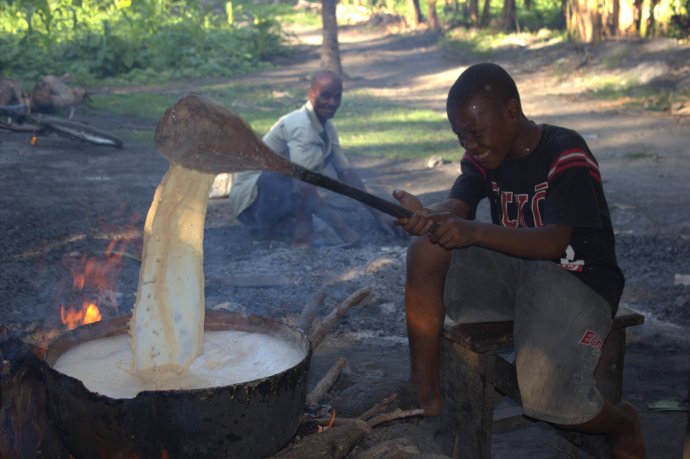
Making douce macoss fudge
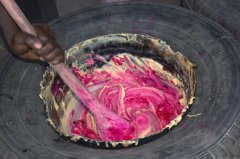
Making fudge (Note the tire/holder!)

Haitian fudge is striped with pink, like taffy, and made with what I am sure is child labor — but it tastes more like halvah in that sandy/sweet way than the chocolatey-buttery fudge of my childhood.

Speaking of sweets, there aren’t many in Haiti. The only chocolate fix I got was hitting my M&M stash hidden in my suitcase. Desserts were completely resistible, because I’m lactose-intolerant and can’t have ice cream, so that made it easy to say no.

Most importantly, despite the fact that Haitians have the lowest caloric intake in the Americas and 25-40% of Haitian children suffer from chronic malnutrition, we were never served a single meal but with total graciousness and generosity.
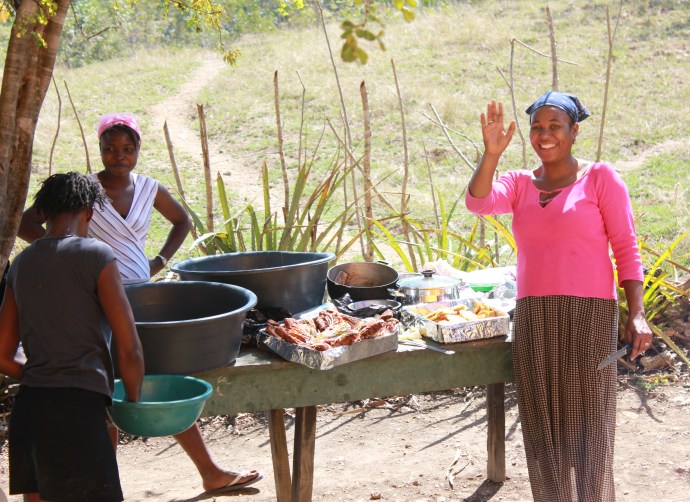
Making our gorgeous fish lunch in Lake Peligre.

By the time I left Haiti, I was sad to go but ready for a giant salad, a frosty cocktail, and a bar of chocolate.

Which oddly enough, didn’t taste as good as I thought they would.

I kinda missed Prestige.

Categories: Food, Haiti, Heifer International, Hunger, Photography, Travel | Tags: , , , , , , , , , , , , , , , , , | 54 Comments

The paradox of Haiti.

To be honest, I was a little nervous about going to Haiti, Month #2 in my 12-trips-in-12-months visiting Heifer International sites.  Not because I was scared something bad might happen to me, but because I was afraid I wouldn’t find anything good to say about the country.

Well, like most worrying, that was a waste of brain space.

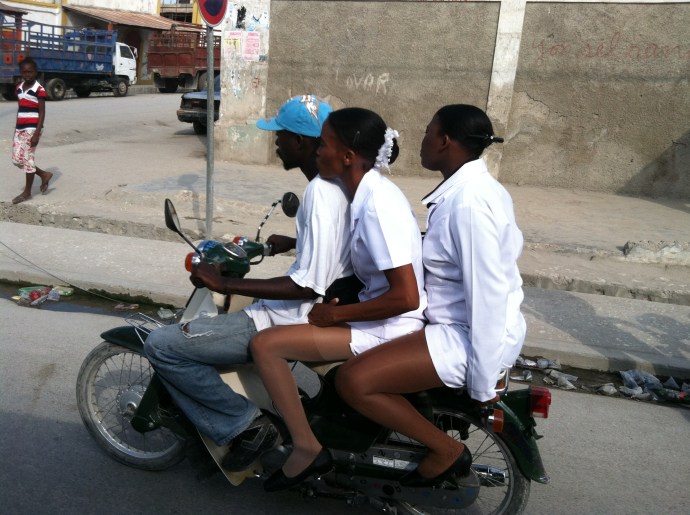
3 big things to like about Haiti... girls going to school!

Despite Haiti’s mind-boggling set of challenges and truly appalling lack of infrastructure–which was the case even before the earthquake of January 12, 2010– the country is beautiful (really!) the people are irresistibly gregarious, gorgeous and dignified, and there’s more life packed in one square mile of this country than in some entire states of the USA (you know who you are).

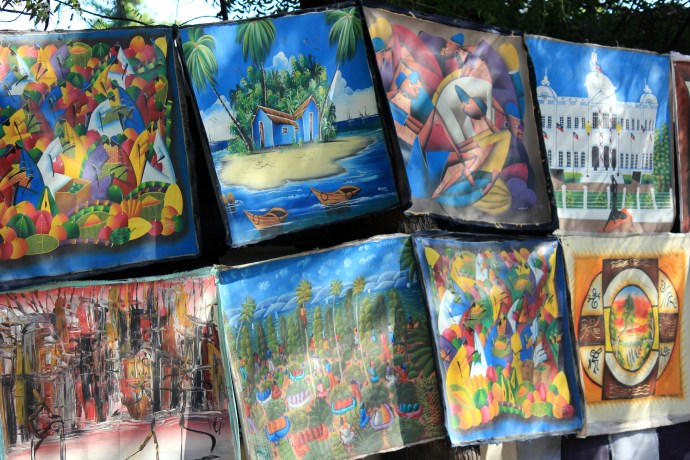
Art in the wind in Port au Prince

Plus, the projects Heifer is undertaking in Haiti are amazing and on a scale that the organization has never undertaken before…which I seriously can’t wait to tell you about.

But I’m not going to be too Pollyanna here. Some of the things I saw here made me ashamed to witness them.

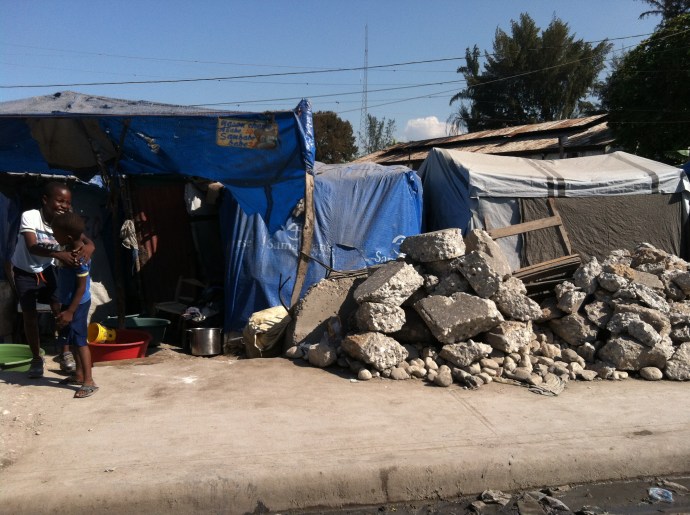
Tent children

When I was taking a photo of a huge pile of trash randomly on fire by the side of a garbage-choked watery culvert running through one of PAP’s more notorious slums, a Haitian man sternly shook his head, as if to rebuke me for trying to capture the utter desolation of that scene. I didn’t take the photo – but the odd thing was, what I really wanted to show was that walking right beside the blazing garbage, beautiful women in clean, ironed dresses passed men in dress shirts and neat trousers– all going to work, going to market, carrying on.That refusal to bow to the indignity of living in conditions that should be crippling is incredibly inspiring. The tap-taps of Haiti alone stole my heart, with names like “Patience” “Eternal Capable” and the slightly unnerving “Blood of Jesus.”Tiny children toting big gallons of water up steep hillsides stop to smile and wave. In villages where people scarcely have enough to eat, you’ll hear songs of praise wafting up from an unseen church. And everywhere – everywhere! – people are working incessantly to improve themselves and their country—which makes you want to do anything you can to empower them to write a better script for their future.

Unfortunately, “doing anything you can” is not a prescriptive or particularly helpful instinct in Haiti. Or as Paul Farmer of Partners in Health put it succinctly, “Doing good is never simple.” While over 50% of American households –and the rest of the world–donated $1.2 billion to relief organizations after the earthquake, 2 years later debris still clogs the streets of PAP, tent cities of unimaginable squalor still house more than 250,000 homeless (but it was 1.5 million 12 months ago!), and the unemployment rate is well over 50%.What Haiti needs now are a decent infrastructure, functioning government, income-generating jobs, and the ability to feed itself (like it was starting to do 20 years ago, before a flood of cheap American imports crushed the life out of Haiti’s smallholder farmers).Heifer’s powerful new projects in Haiti are all about addressing the last two imperatives of jobs & agriculture with integrity and vision.  But… I have to write about that tomorrow.

Today, after 7 straight days of bone-crushing rides smushed in the back of a Land Cruiser, I’m taking the afternoon off– although that is a relative term, as we still have 5 hours to Cap Haitien and somehow the resolutely cheerful Ewaldy has convinced me we should take the bad back road so I can see more of the “bon paysage.”

Eternal Capable – that’s Haiti (and hopefully me)!

Categories: Agriculture, Haiti, Heifer International, Hunger, Photography, Poverty, Travel | Tags: , , , , , , , , , | 49 Comments

Seeding the future.

I’m feeling pretty global tonight, writing about a small town in Guatemala while I sit here in Atlanta, thinking that by the time you read this I’ll be in another small village in Haiti where Heifer International is planting more seeds of change.Speaking of seeds, here are a few kernels of truth. In our abundant American lives, we’re supremely divorced from the reality of where our food comes from, who grows it and how, and what would ever happen if we couldn’t go to the supermarket and buy gobs of whatever we want. But when you go to a developing country, you get enlightened pretty quickly.

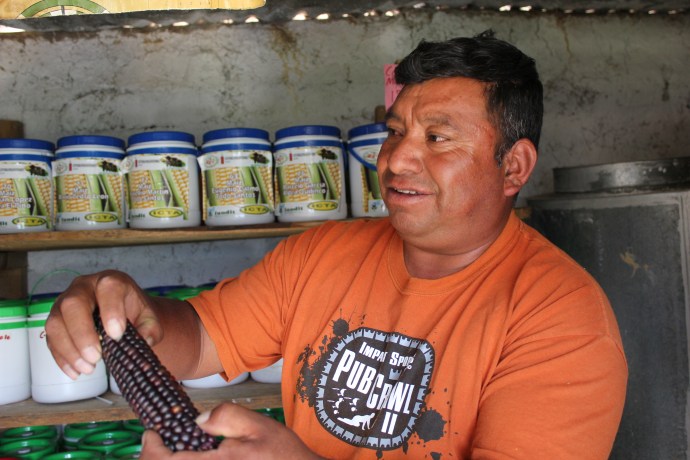
Maize Negro (Ek Jal)

The thin veil between hunger and the food we need to survive is seeds .. pure and simple.

Isabel Lopez, the Patriarch

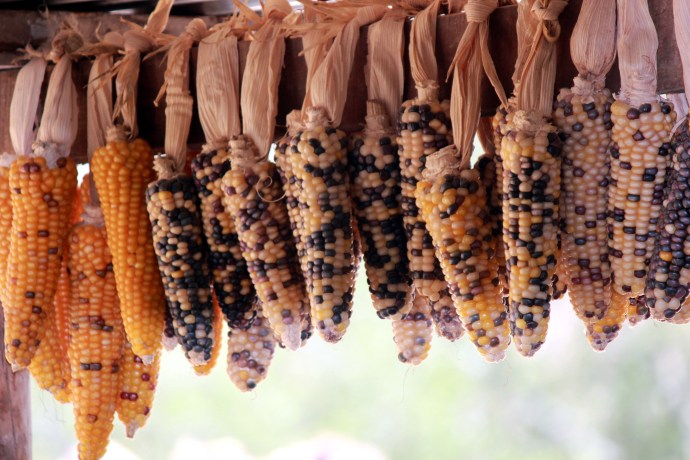
So it’s good to know that in the quiet little village of Quilinco outside Huehuetenango, three generations of the Lopez family have been working for years to preserve our food future. In 1999, Isabel Lopez began saving the seeds from the 150-year old criollo native corn his grandfather grew. Backed by FAO (a Norwegian company whose name nobody can pronounce), he and his son Juan (and now his son Jose) began a methodical campaign to preserve seeds that were endangered, rare, or deemed genetically worthy of preservation.

Isabel and Juan persuaded their fellow farmers to follow the trainings, and soon 100 farmers were working to plant, fertilize, harvest and preserve the seeds in a carefully scientific way – choosing the kernels of corn from cobs that have straight lines, 12 rows in diameter, and 25 kernels from the middle. Each group of seeds is kept in its own jar, labeled, cataloged and carefully protected in steel silo drums that are designed to outlast an emergencia, tormenta (hurricane) or earthquake.

Heifer's Guillermo & Carlos in the field (as always)

The field technicians of Heifer (like 20+ year veterans Carlos Hernandez & Guillermo Santizo) worked with the Lopez family to earn this contract and keep it active in Quilinco over the past decades. Why? Because The Seed Bank is a valuable source of income for the village farmers, but also because it is preserving these beautiful jewels of agricultural possibility:

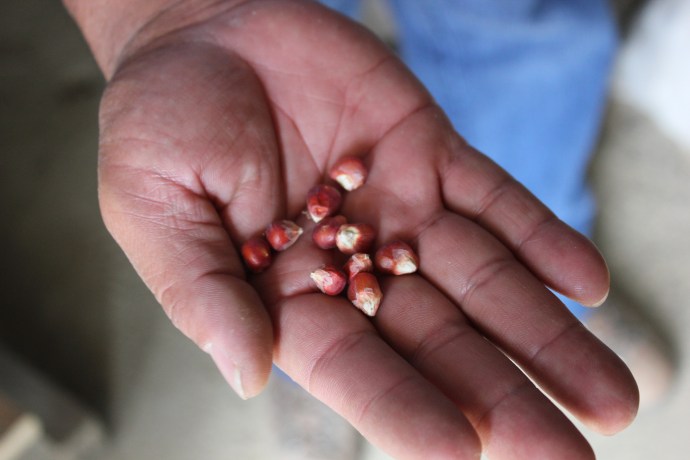
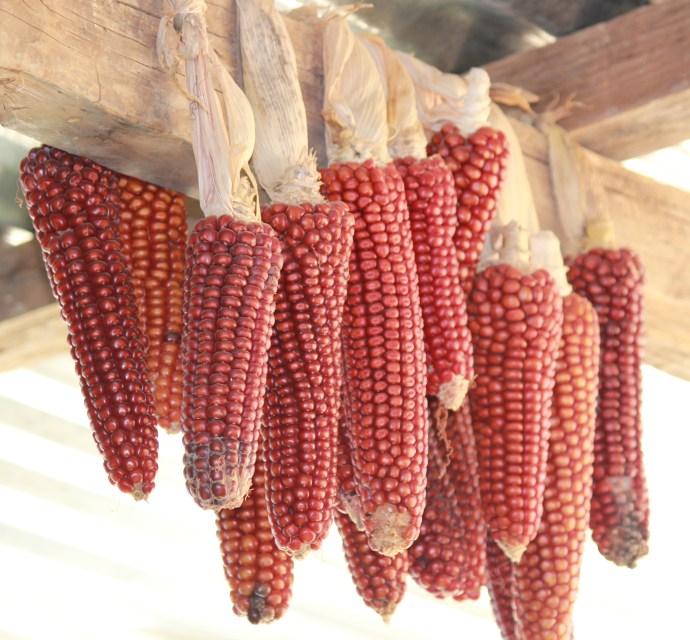
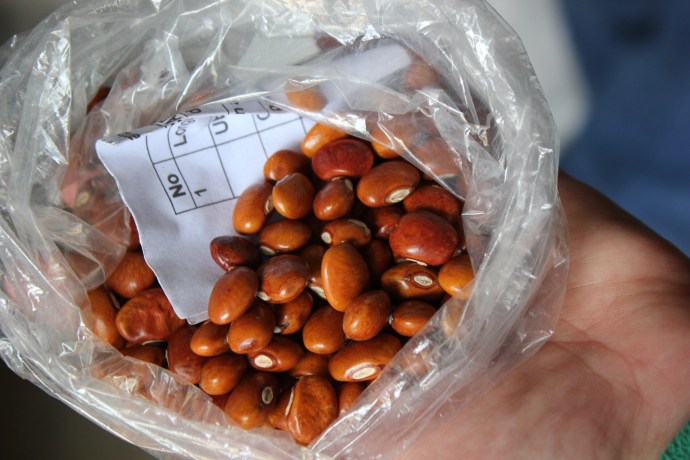
Rare Sangre de Christo red corn.

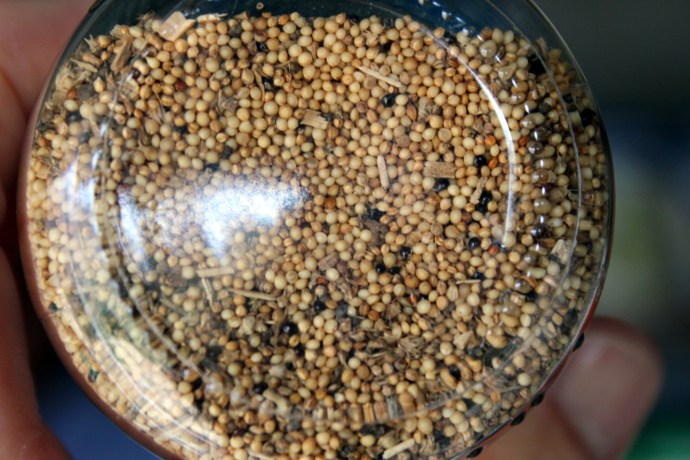
Frijol Piloy Amarillo beans that are on the border of extinction.Valuable seeds from the bledo-blanco (amaranth) plant that is so packed with minerals, protein, and gluten-free Vitamin C, it’s accompanied astronauts into space.And in small jars, the seeds of countless flowers and plants that only grow in this region. When I first heard about the bank, I thought it might be kind of … boring. But I loved this project so much I couldn’t believe it! There I was in a small village in Western Guatemala, standing in a veritable Fort Knox of Seeds, supported by a bunch of distant Norwegians, surrounded by rare genetic caches of ancient seeds collected by three generations of Mayan farmers, that may hold the key to our bio-diverse agricultural future.

Juan Lopez & his seeds

Quel global amaizement!

Categories: Agriculture, Guatemala, Heifer International, Hunger, Photography, Travel | Tags: , , , , , , , , , , , , , , , | 34 Comments

A few tender words about pigs…

I don’t know jack about raising animals – and I don’t think I’m alone. In fact, it can be said (and yes, dozens of people have said, in various terms of disparagement) that I am not an animal person at all.

You're serving WHAT for dinner?

But the great thing about visiting a Heifer International project is that you learn a boatload about animal husbandry, even if you don’t want to. And while that still may not make you feel swoony about cows, pigs, chickens and goats, it certainly gives you new respect for them. It also makes you realize how utterly removed that we westerners are from any and all sources of our food, despite our utter dependence on animals for life itself. In the developing world, you see on a daily basis how important animals are to communities and how closely people live with their animals. The symbiotic relationship between man and beast is tangible and immediate: we simply can’t live without each other.

Jocelyn gazing at her beautiful pig.

But let’s get back to the pork…In Uganda, pigs are valued for their meat, their manure, and their ability to produce other pigs – and lots of them. The mommy pig is a sow; the daddy pig is a boar – and piglets can become parents at an astonishing six months of age. Pretty much as soon as they’re weaned, they’re ready to roll. The gestation period for a pig is apparently as precise as a Rolex –and their litters are huge: a sow will often produce 10-15 piglets in one furrow. And they’ll produce at least five farrows in a lifetime. That’s some serious fertility.Almost as precious as piglets is pig poop …which can be used to fertilize banana plants, maize, coffee, potatoes, cassava, and all kinds of fruit trees. When you’re raising everything you eat, and there are no stores in the event you run out of Hot Pockets, a better crop isn’t just a luxury, it’s a lifeline. And poop makes a huge difference.

Heifer trainings teach farmers how to compost in six trenches: plant and food scraps are turned over and moved from one trench to the other over the course of weeks, until the sixth one produces beautiful composted soil, ready to be mixed with manure & used as fertilizer.

Now that's some fine pig-chow!

To produce this glorious rot, pigs eat banana peels, napia grass, elephant grass, food scraps and peels. The farmers must learn to plant and grow the food the pigs need to eat – which is another Heifer training. And farmers need to carefully cross-breed the pigs, so the pig stock remains strong and there isn’t an issue of in-breeding. The Heifer extension workers carefully chart the breeding and bring in boars from surrounding communities to protect the genetic integrity of the animals.

Beautiful pig-pen

It’s a complicated thing, raising pigs. Particularly when you have to do every single part of it yourself: build the shed, raise the plants to feed the animal, breed it, milk it, sell it, slaughter it, and use its poop to grow more food for your family (and for your animals).

Bringing home the bacon is both remarkably complex and utterly essential.

Even to my eyes, a pig is a beautiful thing.

Categories: Animals, Heifer International, Hunger, Photography, Travel, Uganda | Tags: , , , , , , , | 32 Comments

Blog at WordPress.com.