Inspiration

Bon bons, lots of mud, and the Lotus position.

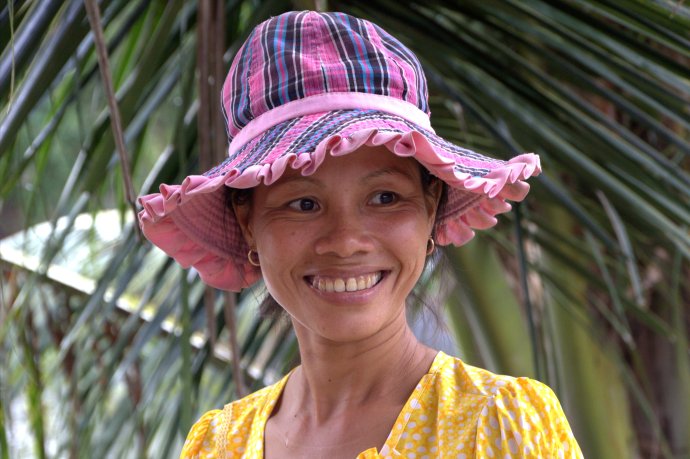
I hate to pick favorites (my favorite country is always the last one I’ve been to). But in every country I visit with Heifer, there will be (at least) one person that I can’t get out of my mind. A person that I know I’ll be thinking about and worrying about for years to come. In Vietnam, that person was Thach Thi Sa Phinh of Koko Village.

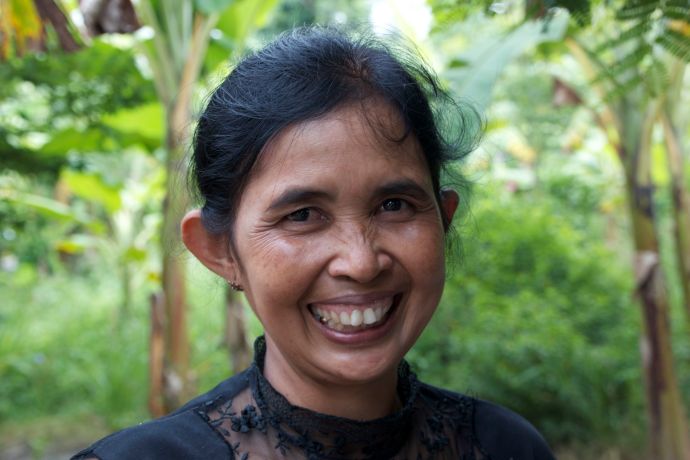
Whatever she’s selling, I’m buying – what a cheerful face!!

Pretty Koko town, population 718, in Suc Thong province lies in the heart of the Mekong Delta and is primarily a Khmer community. The Khmer ethnic group, originally from Cambodia, seems to be regarded by the hard-working Vietnamese as an obstinately poor group that gets an inordinate amount of help from the government– but from what I saw in Phinh’s household, that stereotype is miles from reality.
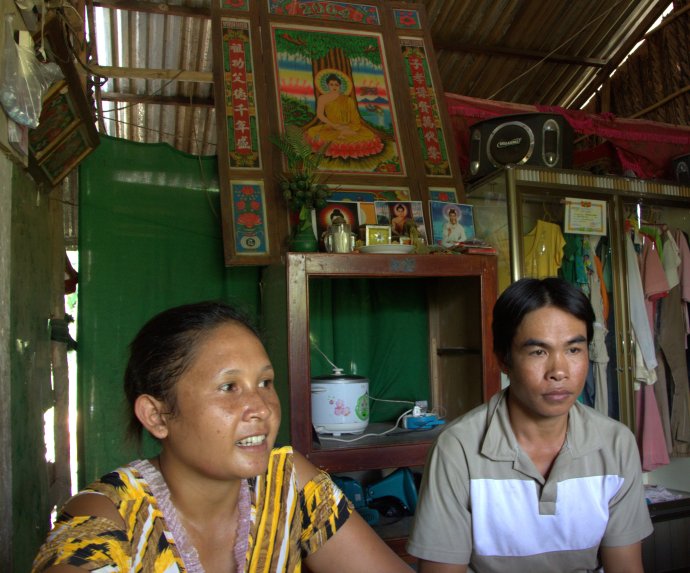
Phinh & Quy, quietly talking business under the gaze of the Buddha.

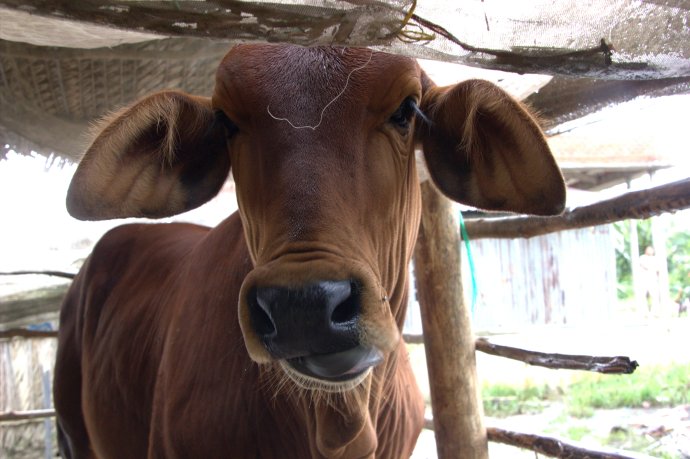
Phinh and her husband Kim Sa Quy are in their early 30s with three children. They joined Heifer’s Self-Help Group in 2010 and received a heifer in August that year. (That cow is now blessedly pregnant.)
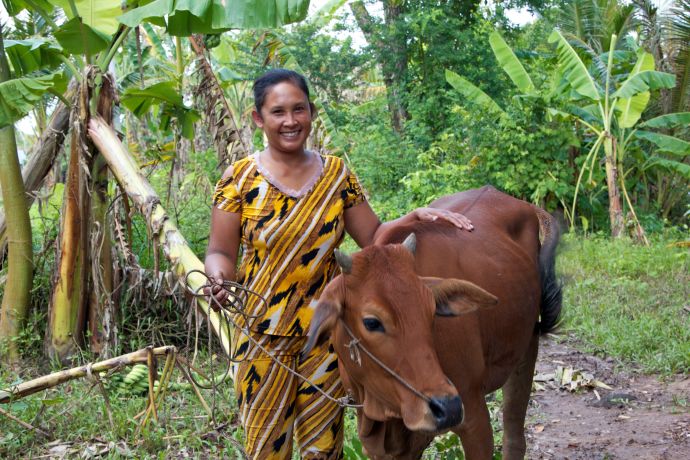
Phinh is gentle and tender with everything — even her heifer.

Then, with a $100 revolving loan from Heifer, Phinh opened a small business stall in her house, selling necessities like tea, seasonings, cookies, sugar, flour, and oil. Every day she and her husband get up at 3 a.m. and drive their motorscooter to a big market an hour away, buy and load up 15 kilograms of fish, pork and vegetables, and bring it all home to sell, opening their store at 6 a.m. when people stream to Phinh’s house to buy food they can quickly cook and take with them to the fields where they’ll spend the day working.

Phinh grew up very poor and can’t read or write but she’s taught herself to do numbers; her 12-year old daughter helps write the customers’ names and keep the books. Because no one in Koko has much money, everyone buys from Phinh on credit and she is repaid at harvest time, without fail.
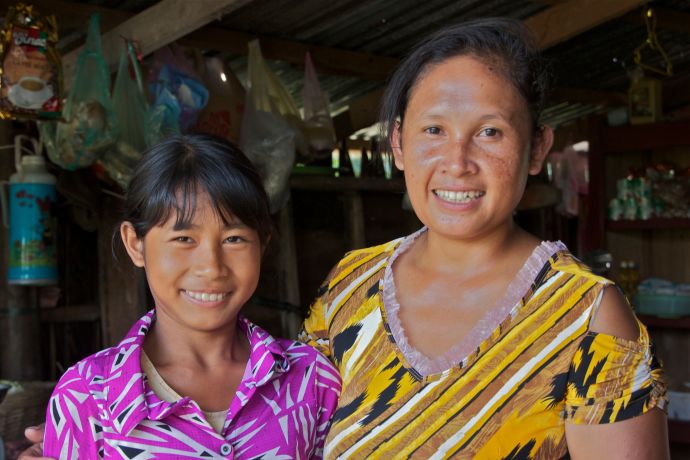
A good team… Phinh runs the store, her daughter keeps the books.

After the shopping surge ends at about 8 a.m., Phinh goes to tend her 2,000 square-meter lotus field that’s a bit of a walk from the house. She and her husband, who works day labor, saved $1,500 and then bought another 3,000 square meters, which they are devoting to growing grass for their cow, a little rice, and bon-bons (I couldn’t find a translation but stubbornly kept visualizing a field of gorgeous chocolates).

These are the real bon-bons and yes, that is Phinh’s very sharp knife.

Of course, I was dying to see both fields, so we trekked out through the mud and sat admiring the lotus plants that will earn Phinh $20 every 3 days. She learned how to grow lotus from her grandfather and knows how to pick each root at just the right time – individually plucking each plant from its watery home. Twice a week she harvests 20 kilos of lotus root (it’s SO delicious!) and sells it for $1/kilo at her store.

The original lotus position.

Phinh’s bonbons in her new field looked like baby leeks but tasted sort of sweet. Those vegetables are collected once a month and sell for about 55 cents/kilo (75 cents) during the lunar festival. Her new field will produce 300 kilograms in a year’s time, which means that all her wading through thigh-deep water and bending over harvesting each root will yield about $150.

As we were sitting with our toes in the water, talking about my life and hers, Phinh said poignantly, half in jest, “Our life here is so hard. Why don’t you take me back to the United States with you?”

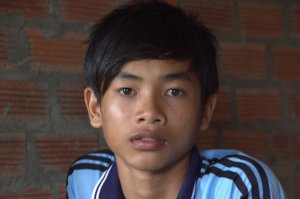
It was so pretty in that field, I couldn’t imagine wanting to leave, but then, I also could see the incomprehensible difficulty of  life here. And I knew Phinh was worried about her oldest daughter, who had just quit school after Grade 5 so she could stay home and help out with the younger kids (5 and 3) while her parents are working so hard in the fields and store.

Such a smart, beautiful girl .. I hate that she’s not in school!

Phinh and Quy have bought her a bicycle to try to persuade her to go back to school, but she feels it’s more important to help her parents with all their work. And that’s kind of breaking Phinh’s heart, although she is deeply touched by her daughter’s sense of devotion. I was torn by my undying belief that education is the key to a better future, and my feeling that I couldn’t possibly understand the complexity of what this family is going through.

Saying goodbye is hard to do.

But what I knew for sure was that whatever happened in the immediate future, Phinh’s family was moving forward. I wished I could bring some of America’s great abundance to this beautiful little family, but I also know Heifer already has. Now it’s up to you & me (and Phinh and Quy) to keep it going.

Godspeed, Phinh … you’re in my heart!

Categories: Agriculture, Heifer International, Inspiration, Mothers, Photography, Travel, Vietnam, Women | Tags: , , , , , , , , , , , | 17 Comments

Jumbo Shrimp … and no, that’s not an oxymoron.

 Duang Thi Anh Tuyet is a tiny slip of a woman—beautiful like a butterfly but in constant motion like a bumblebee.

The mother of two boys she has severe stomach problems and can’t work, but like most moms “not working” in developing countries, (or developed ones, for that matter) she does more before breakfast than most folks do all day.

Mrs. Tuyet at the edge of her shrimp pond.

Tuyet is part of a Self-Help Group that Heifer started in 2008 in her small village of Duc Tan in the Mekong Delta … and she’s made the very most of every opportunity presented to her. She got her first cow four years ago, and in record time had her first calf, passed it on to another needy family, then had another female calf.

Tuyet’s very photogenic (and curious) calf.

With the $100 in revolving loans that Heifer offers each family, she then bought 7 Muscovy ducks, 20 chickens, and a sow that is about a week away from having her third litter (and the piglets sell for $50/each). She repaid that loan, too.

An embarrassment of riches: the third litter is due in 10 days!

Not content with all that fecundity, Tuyet and her husband (who works in a rice-polishing factory for $4 – $6/day), dug a pond on their single acre of land and bought 50,000 black tiger shrimp larvae to raise in the dry season, when the salt water rises up from the sea through the Mekong River and floods their pond. The shrimp will feed for four months on plankton left behind by their saline-resistant rice crop, get bulked up for a few weeks with commercial feed, and then sell for about $3,300 – or $400 net profit.

Checking the size of her Black Tiger shrimp.

Tuyet’s beautiful 17-year old son.

With all the work she does with her animals, don’t think for a minute Tuyet is overlooking her sons. Her 17-year old is looking at universities and her 6th grader is tops in his class and earning a full scholarship – despite the fact that the family’s thatched roof house collapsed a year ago, and was only rebuilt to its current concrete sturdiness with a hand from Heifer’s Self-Help Group and its friends in government agencies.

Unfortunately, in Duc Tan, the majority of Heifer beneficiaries who got cows have sold them for easier-to-raise pigs and chickens (a faster way of earning income but subject to greater price fluctuations in the market, and diseases) but Tuyet wisely hedged her bets and raises all the above: cows, pigs, chickens and shrimp.

The final product … yummmm!

When I asked her group leader, Nguyen Van Hong, what Tuyet was doing that made her so successful with all her animals, he said, “Tuyet works very hard, harder than others. She takes care of her animals very well and knows exactly what they eat and what they need – from the good food she raises, to the vaccines she gives at the right time. She’s very precise.”

One precisely beautiful farmer

When I asked Tuyet the secret to her success, she replied, “I believe that if you try really hard, have good trainings, and are motivated, you can pull yourself out of poverty. That’s my goal.”

Tuyet is small… but she is mighty. I hope all her big dreams come true.

Categories: Animals, Farming, Heifer International, Inspiration, Photography, Travel, Vietnam, Women | Tags: , , , , , , , , , , | 27 Comments

Good morning, Vietnam!!

It’s impossible for someone of my (advanced) age to visit Vietnam without being overwhelmed with memories of the Vietnam War. I visited Hanoi and the North in 2005 and found myself blindsided by flashbacks, looking out over iridescent green rice paddies dotted with women bent over working in their nón lá  hats.

Forty years later, in the countryside, it still looks exactly the way it did on television in the late 60s, when we were first given a real look at modern warfare in this graceful land.

The day I arrived in Ho Chi Minh City (the former Saigon) this time, I was gazing out the balcony window of my hotel when I suddenly realized I was looking at a U.S. Army helicopter. Across the street was the War Remnants Museum and since I had a few hours free, I paid my $1 and wandered in. Two hours later, I was staggering through the “Tiger Cages” exhibit, War Atrocities hall, and the Agent Orange gallery, feeling like killing myself, when the museum closed and I was free to leave.

The next day I traveled to the village of Duc Tan in the Mekong Delta and met the group leader of Heifer’s project, Nguyen Van Hong. He’s 70 years old and a great local organizer. But in his youth, he spent 14 years, from 1962 until 1974, fighting as a guerrilla – including 1 1/2 years spent in one of the infamous prisons I’d read about in the museum. In other words, he was Viet Cong and our enemy.

Nguyen weighs about 100 pounds and is frail as can be, but despite United States Air Force Chief of Staff Curtis LeMay’s promise that “we’re going to bomb them back into the Stone Age,” the people of Vietnam had been fighting for independence for thirty years before we arrived, and I can only imagine the tenacity and fierceness with which they battled.

Today, Vietnam is still a communist country and has been since 1975 when Saigon fell. (Which is ironic, since the Vietnamese are phenomenal entrepreneurs and terrific business people.) Every project that Heifer runs here has to include the government, so that’s a bit complicated, but when compared to “free” Cambodia next door, Vietnam looks like a model of transparency and efficiency.

The Vietnamese are elegant, graceful and lovely – particularly the women who seem to float down the street on their bicycles and look effortlessly chic, even in the fields. The men especially are also a little bit wacky. I never heard as much laughing as I did when I was in Vietnam; the people love to cut up, joke and laugh almost as much as they love to eat – and that’s saying something.

It’s a beautiful country; and even though I hear that as Americans, we’re never supposed to apologize (thanks, Mitt) here’s a statistic that should give you some pause: Between 1961 and 1967, the U.S. Air Force sprayed 20 million gallons of concentrated herbicides over 6 million acres of crops and trees. As of 2006, the Vietnamese government estimates that there are over 4 million victims of dioxin poisoning (the U.S. denies a causal link).

As you watch this peaceful video below, consider this: More than 3 million Americans served in the Vietnam War. By war’s end, 58,220 American soldiers had been killed, more than 150,000 had been wounded, and at least 21,000 had been permanently disabled.The average age of U.S. troops killed in Vietnam was 23 years.

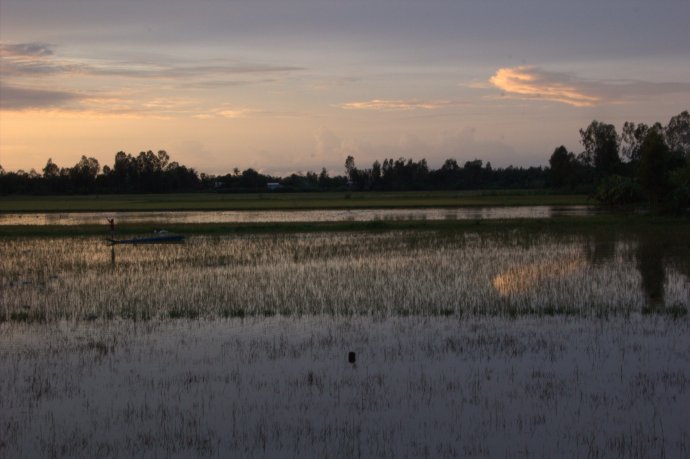
A Vietnamese graveyard in a rice field.

Vietnam lost over 1.5 million.

Peace, y’all.

Categories: Heifer International, Hunger, Inspiration, Photography, Travel, Vietnam | Tags: , , , , , , , , , , , | 33 Comments

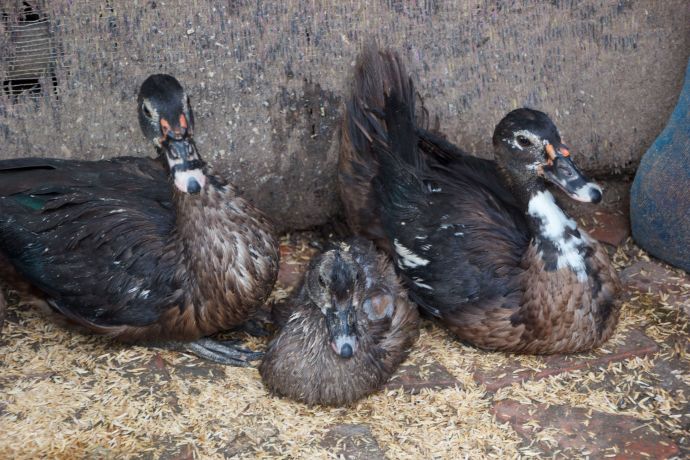
Ducking the big issues.

On my first day in Cambodia, we traveled to Battambang Province (loved saying that word) in the northwest region of the country. Except for the low bottom land that was almost entirely under water, everything in Battambang was high: poverty, illiteracy, HIV/AIDS, domestic violence, child malnutrition – as well as somehow, miraculously, the spirits of the women in Roka Village.

Heifer started a project here in October, 2009 with 9 self-help groups for women, and these ladies got right down to business. In a mere two years, they received 175 pigs, 1503 poultry, 5100 fingerling fish and 710 trees. They formed a project management committee and began saving funds ($5,641 to date.) And they inspired 8 more Self Help Groups to form in the community, passed on two generations of animals to other women, and increased women’s average income from 7000 R/day (less than $2) to 12,000 (that’s a whopping 70% bump).

2 chubby Roka pigs, waiting to be Passed On to another needy family.

Along the way, Heifer’s Roka project gave women like Chou Sarom a whole new lease on life – and that’s not mere quackery. In the neat house she shares with another family, in the shadow of a pagoda, Chou and her husband and four children (ages 24, 22, 21 and 10) have become duck raisers extraordinaire. Two years ago, Chou joined the group and received 12 ducks from a Self Help Group in another village. She’d never raised ducks (it’s more of a Vietnamese custom) but was determined to learn.

“I wanted to develop myself and become more independent,” Chou says, “so I went to all the trainings with our Community Animal Health Worker – and brought my whole family with me. “(Heifer trains four CAHW, one from each village to teach animal husbandry to the participants.)

Chou and her children quickly learned the tricks of the duck trade: how to bring males and females quickly together–then separate them for optimal egg-laying. How to make a nice clean nest with rice husks. What ducks love to eat.. banana skins and rice bran. And how to keep the ducks nice, fat and clean, as Chou put it.

“I’m so happy that my ducks are really healthy, I sometimes just stand there and admire them,” Chou laughs. “My young son doesn’t even want to sell our ducks, they’re so cute – and if somebody buys them and doesn’t take care of them, he’ll go to their houses and tell them how to take better care of them.”

From her original gift of 12 ducks, Chou has passed on 12, sold thousands of eggs, and raised hundreds of ducks, chickens and guinea fowl – which she’s delighted to report lay 40 eggs after mating. The ducklings can be raised as fattening ducks (a 4-kilo male will bring $2.50) or the eggs can be sold for about 12 cents each, and Chou sells almost 200 eggs a month. (“I make income almost every day!” she says proudly.) Her husband, who also helps raise the ducks, wants to expand the business so right now they are building a bigger home for their duck brood.

Chou and her brood.

To say Chou is happy and proud of her capabilities is a serious understatement. She’s taken all the trainings to heart, and loves to talk about her achievements, tugging us into her home garden to admire her organic produce and fruit trees (she’s done a market analysis and is planting the most desirable mango), telling us that her son has followed her saving example and learned to save from the small allowance she’s given him – but he saves twice as much as she suggested so his nest egg has really grown. And most importantly, how hopeful she is for the future.

“I used to worry that there was no future here – but now I have one child who has finished university, I know I can make money, and I see all the neighbors working together.”

I saw that, too.

It looks small but it feels huge!

As we were leaving Roka, we stopped at the new women’s cooperative that the Self-Help Groups have built with their own savings. Here, members can buy seeds and fertilizer at far lower prices, aggregate their buying/selling power, and practice solidarity with other women farmers. The women were building the whole structure themselves but still had to raise $100 to finish the concrete floor. KK, Heifer’s country director, and I donated $50 – and their joy was so great, you would have thought we’d given a million.

The beautiful face of determination: lovely Son Sinath of the Roka Agricultural Women’s Cooperative.*

If you could have seen the enthusiasm, hope and triumph on their faces as we drove away, it was almost as if we had.

* You can read more about Son Sinath’s inspiring story by clicking here.

Categories: Animals, Cambodia, Farming, Food, Heifer International, Inspiration, Photography, Poverty, Travel, Women | Tags: , , , , , , , , , , , | 29 Comments

Smells like teen spirit.

The first day after I arrive in a country, I’m pretty much in a semi-delirious jet-fog. So when my trusty  Heifer Armenia guide/guru Vahe told me we would be driving two miles north of the capital city of Yerevan to visit a bunch of teenagers, I was … speechless.

Inside Hairavank Monastery at Lake Sevan

We started at beautiful Lake Sevan – Armenia’s largest lake that is surrounded by lovely dun hills and ancient monasteries. These rural communities are challenged by high levels of unemployment and poverty, aging Soviet technology, low agricultural productivity, and for teens: the absolute lack of anything to do.After 70 years under Soviet rule, Armenia is still shaking itself awake from the soporific habit of socialist dependence. In 2002, Heifer’s dynamic country leader Anahit Ghazanchyan decided to kickstart that change with a clarion call to those most likely to respond: the youth of Armenia who are open to new ideas, full of fearless energy, and eager to flex their entrepreneurial muscles.

Change agents extraordinaire.

Heifer’s youth project, called YANOA– Young Agriculturalists Network of Armenia– is a huge undertaking, touching the lives of 4000 youth in 29 rural communities. In Lake Sevan alone, YANOA has produced 3 generations of kids who have been through a rigorous after-school program that teaches kids practical life skills in any one of 7 Directions: Animal Husbandry, Business Development & Management, Ecology, Health Education, Civic Education, Public Relations & Journalism, and Logical Thinking. It engages them in their communities doing everything from publishing newsletters to fixing holes in the street; debating gender issues to influencing town policies, starting small businesses to raising animals.

The sweet faces of the future of Armenia

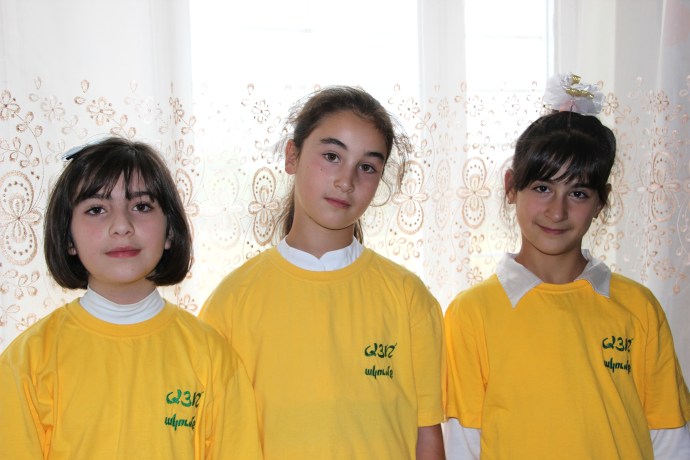
YANOA is taught and managed by community volunteers like Osana Sahakyan who follow an established Heifer curriculum with the kids for three years and take them through a remarkably sophisticated and hands-on learning process that ultimately earns them the gift of cows, fruit trees, worms, seeds, or seed money from a $22,000 revolving business loan fund. Armenian kids respond to the opportunity like thirsty plants soaking up water; I saw the results in Metaqsya Matevosyan and the adorable entrepreneurs of New Original Beautiful.

Beekeeper Metaqsya and her YANOA mentor, Osana Sahakya

Metaqysa’s father is an accomplished beekeeper, and she chose the Business Direction because she wanted to focus on producing her own honey. After studying the market, competition, and developing a business plan, she qualified for a $100 loan from Heifer that she used for two fully-equipped hives with about 80,000 bees each. With favorable weather those hives will produce 20-25 kilograms of honey that she can sell at $6 to $7 a kilo.

Metaqsya and her hives

Metaqsya has branded her honey A+A for “Work Advantage” (in Armenian) produced great labels, and is selling in direct competition with her dad, which he loves. She’s on fire to get more hives and once she passes on the $100 loan to another budding entrepreneur in December, she is going to ramp up her business and really get going.

Where the New Original Beautiful magic happens – around the sewing machine, of course!

The five 15-year old friends who have formed the textile collaborative New Original Beautiful are equally articulate, confident and enthusiastic about their business potential. They’ve enlisted David’s mom, a skilled tailor, to help them understand fabric, sewing techniques and experience, but the creativity comes from the fab five. Ani is the best sewer. Mariam likes to write commercials and do marketing. Vahan is the distribution guy. And David & the other Mariam make sure work gets done on time, savings are put away to pass on the gift of their $100 Heifer loan, and their pricing is right.

Picking the fabrics is Ani’s specialty (with David’s mom’s help).

Recently, they realized that the bed linens they were producing were not profitable enough, so they’ve moved into producing tablecloths, which are very profitable.

Their slogan: “We work during the day so you can rest at night” has proven to be very popular .. and even though they’re all just 15, they feel they are an unbeatable team and plan to have their own factory one day .. and sell tons of stuff in America.

Mariam loves writing& recording commercials, and New Original Beautiful was her name creation

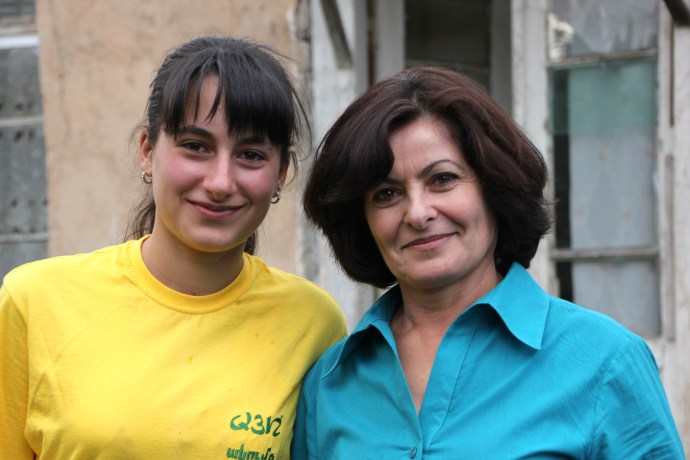
What makes this particularly moving to me is the unvarnished excitement and full engagement of the kids. They can’t wait to talk about their big plans and what they’ve learned so far. Like teens everywhere, they’ve also had a trickle-up impact on the adults that work with them — like Osana, their YANOA mentor, who has evolved from a quiet housewife into a committed civic leader as she’s helped these kids develop enormous new confidence, vocabulary, ideas and perspective—and learned from them the feeling that anything is possible.

Armine and her son Ishkhan, 16, who wants to become a farmer and extend the family lands.

Instead of thinking they need to migrate or marry to have a promising future, these Armenian teens are learning they can develop a business in Armenia, be successful, and  control their own destiny. Says 16 year-old Ishkhan of Chkalovka, “Before we were counting on the state. Now we count on ourselves.”

How New Original & Beautiful!

~~~~~~~~~~~~~~~~

(And to read more about MY beautiful Classy Weekend, click here...)

Categories: Armenia, Children, Heifer International, Inspiration, Photography, Travel | Tags: , , , , , , , , , | 12 Comments

Blog at WordPress.com.