Photography

Bienvenidos a Peru!

Heading across Lake Titicaca

First, a bit of a disclaimer: this is your unapologetically turistica introduction to the beautiful land of Peru!

Right now I don’t quite have the perspective or internet bandwidth to post about all the deeply moving stories I’ve experienced so far in this amazing country. So I’m just going to give you the view from 15,000 feet .. which is approximately how high I am today in Pasco City, the highest city in Peru. (And yes, that is the sound of my heart pounding, trying to pump oxygen to my brain.)
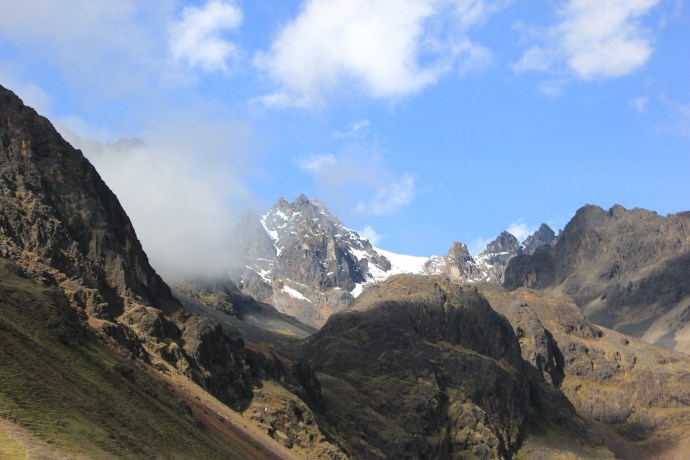
Peru is severely beautiful .. with miles of ocean shoreline and the Andes (sierra) and the jungle (selva). It’s bordered by Ecuador, Colombia, Brazil, Bolivia, and Chile and is packed with silver, gold, copper and zinc – making it well-nigh irresistible to mining interests that never saw a mountain they didn’t want to level.

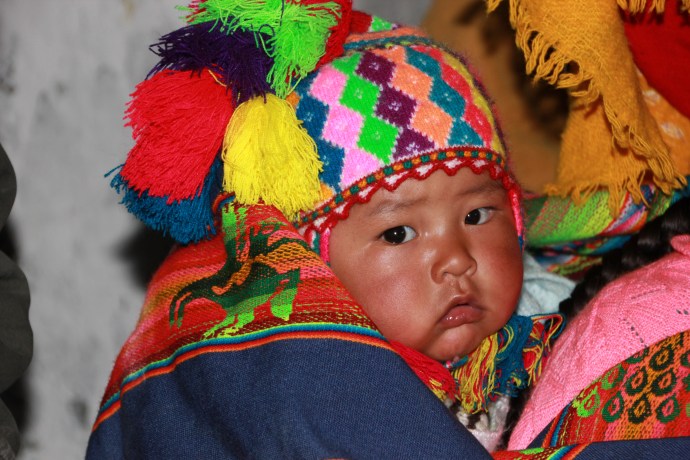
Although the country’s economy has improved dramatically over the past decade, the indigenous people in the Highlands (where Heifer does most of its work) are still overwhelmingly poor, ferociously independent, and definitely know how to rock a hat.  

In the center of Marcopata, we saw a statue that pretty much captures the Highland spirit. The bull represents the Spaniards who colonized Peru. The condor tied to its back is the indigenous people, who claw and fight to be released from bondage – literally drawing blood.
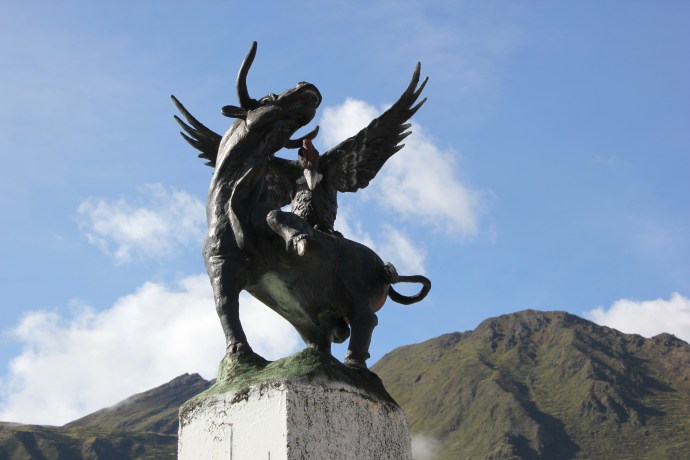
These proud descendants of the Inca Empire are going to need every shred of that irrepressible spirit today to resist the triple threat of mining companies, urbanization, and climate change. Almost one-third of the country’s 30 million inhabitants now lives in Lima, yet you know it must kill something inside these proud people to leave their mountains and ancient traditions to descend to the arid pull of the city.

Heifer’s projects are mostly in the high central plateau, where it is developing programs that support the Highlanders’ traditional pursuits of raising alpaca and llama, growing potatoes, and making handicrafts – working with communities to make these pursuits economically viable, entrepreneurial, and sustainable.

Which means that more children can grow up with a future in the countryside they love, and preserve the land and traditions that are under siege. 
I can’t wait to share those stories… just as soon as I can breathe properly again. It’s gonna be epic!

Categories: Agriculture, Animals, Heifer International, Hunger, Peru, Photography, Poverty, Travel | Tags: , , , , , , , , , , , , , , | 20 Comments

A rough draft of my last day in Haiti…

My last day in the countryside of Haiti was one of the best, because I spent the whole day in the company of Ewaldy. (Well, to be honest, the start of the day was a bit rocky when we had to use a twisted wire hanger & a wad of Ewaldy’s bubblegum to pry open the car door after I cleverly locked the keys in the Heifer truck.)

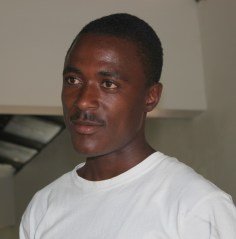
Ewaldy Estil is the Northern Regional Coordinator and has been working for Heifer International since June 2000. As he puts it, it’s not a job, it’s his life mission. When he’s not running Heifer projects (and even when he is) he belts out gospel and reggae music (you should hear his awesome original “Passing on the Gift” song!) and despite the fact that he travels nonstop and keeps ridiculously long hours, he never stops smiling.

Ewaldy and I were driving from the town of Hinche in the Central Plateau up to Cap Haitien through some beautiful farmland, on the way to the small town of Milot where I was going to watch a Heifer training session in action.

Paul Dieudem, Heifer trainer

When we drove into Milot, the men of the village were under a tree listening to Paul Dieulem, a farmer from nearby DonDon that Heifer has trained and hired to take Milot farmers through the arduous process of turning a team of 2 cows into draft animals. It’s a 20-day course that covers everything from raising forage crops for feed to making yokes; learning to tie the animals together; teaching the animals to move in tandem and follow commands; training them to carry a load by dragging a big log behind them; and perfecting the strenuous work of plowing with that team. (I felt like I was re-reading Little House on the Prairie!)

At the end of 20 days, each farmer will have a team of cattle that can do the work of 20 men –and part of the income they raise plowing other people’s fields will repay the cost of the cattle (about $1000 per cow) to pass on the gift to other farmers in the community. I watched them practice yoking, and I can tell you, it’s no small endeavor to tie two 800-pound animals together! When one farmer asked why they had to repay the gift of cows, Ewaldy had a spirited conversation about Heifer’s philosophy of no free hand-outs & community responsibility that had the whole group laughing and arguing and shouting the other farmer down. (I was secretly waiting for Ewaldy to break into song.)

Heifer has also been working in Milot to train women in food processing, so they can earn an income making jelly and liqueurs from the passion fruit, grapefruit and sour oranges that grow in abundance here. At first I was slightly shocked that making liqueur would qualify as an enterprise, until I remembered that Denver’s favorite mayor and now Governor of Colorado John Hickenlooper started as a microbrewer of artisanal beer, so I’m thinking this is just the first step on the road to women taking political office in Haiti!

Madame Laurent Pauline has been one of the most successful small entrepreneurs, and she now sells about 30 small bottles of liqueur every week for 50 Haitian gourds (@$1.22) apiece. (Passion fruit is the most popular flavor because it’s considered a bit of an aphrodisiac, as Pauline laughingly relates.) This income helps her send her five children to school, while her husband is learning to work with the draft animals to earn more money.

Nothing left for me!

Twenty women of Milot were trained by Heifer and have built a network of licensed food processors who are planning to establish a revolving fund for micro-loans to help other women get the trainings and start their own businesses. I’m sure that there is a lot of potential for growth as Pauline definitely has the gift of salesmanship and plans to make her own labels, expand her line to include coffee & cacao liqueurs, and sell, sell, sell. I was dying to taste her product, but as it was Carnaval celebration week, she was plumb sold-out. (By the way, Haitians do not drink frequently, and at the size and potency of the bottles Pauline sells, there’s not much chance of serious inebriation.)

By the time we reached Cap Haitien that night, I was eager to sleep in a real hotel (our Hinche hotel had left a bit to be desired) and to release Ewaldy from the chore of driving me around so he could get back to his wife and two little children. I was flying back to Port-au-Prince the next day, and then heading home to Atlanta, and I was feeling sad to be leaving Haiti.

All these beautiful people and places – how could I stop wondering what would happen to them?

Micheraina from Maniche is on my mind...

Then I realized that they were in good hands with Ewaldy and crew. And I would be coming back (I will, no matter what!). And that as much as I’ve loved Haiti, I’ll probably love Peru just as dearly. (I’m leaving tonight!)

So.. the journey continues. I hope you’ll come along!

The oddly placed bathroom cabinet in one of the more interesting hotels we stayed in... always an adventure!

Categories: Haiti, Heifer International, Hunger, Photography, Travel, Women | Tags: , , , , , , , , , , , , | 22 Comments

A fishful of dollars.

Every last tilapia is precious.

Valentin Abe

What you don’t know about tilapia could fill a hatchery. Trust me on this.

When I went to Valentin Abe’s new, solar-powered, mega-cool Caribbean Harvest hatchery in the Central Plateau of Haiti, I was taking notes as fast as my fat little digits could write, and I still only got half of everything this awesome guy from the Ivory Coast (and Fulbright scholar at Auburn University… and one of Time‘s 100 most influential people in the world) told us about how farm fishing can transform the lives of the poor.

Brooders brooding.

Tilapia farming starts with a bunch of brooders (doesn’t everything??) – whose genetic lineage can be traced back to the Nile. With oxygen pumped through the water that is sourced from the nearby river (filtered and cleansed), the brooders can breed at 4 months and will reproduce every six weeks (as long as you remove the baby fish so the mommies aren’t distracted).  The female lays her eggs, the male fertilizes them, then mom incubates the eggs in her mouth (up to 2000 of them) for 4 days, then releases them, although they are still transparent and can’t be seen.

Little ones (tens of thousands of 'em)

Tilapia like togetherness: 600/cubic meter.

At 7 days of age, however, the babies become visible and instinctively head for the sides of the tank – where they can be removed with a fine mesh net in the cool of the early morning or late afternoon. The babies will then be transferred to separate tanks that hold 20,000 fish each, where they are fed, oxygenated and grown to 1/2″ long in about a month. At this point, the “fingerlings” are transferred in oxygenated plastic bags to nearby Lake Peligre where they are kept in cages owned by individual fishermen who will feed them three times a day for about 4 months.

When these babies get to be a pound apiece, each fishermen can sell his crop of 2000 tilapia for $2.40/pound (with $1.10 of that going to  expenses) — for a profit of about $2500 per harvest. And that, my friend, is the beautiful rainbow at the end of this long tilapia road.  It’s why Clinton Global Initiative has invested hundreds of thousands of dollars in the hatchery, Partners in Health is ordering all the tilapia for its brand-new hospital in Mirebalais from Caribbean Harvest farmers, Solar Electric Light Fund has installed the beautifully reliable, sophisticated solar system, and Heifer International is donating the $450 cages to Peligre fishermen.

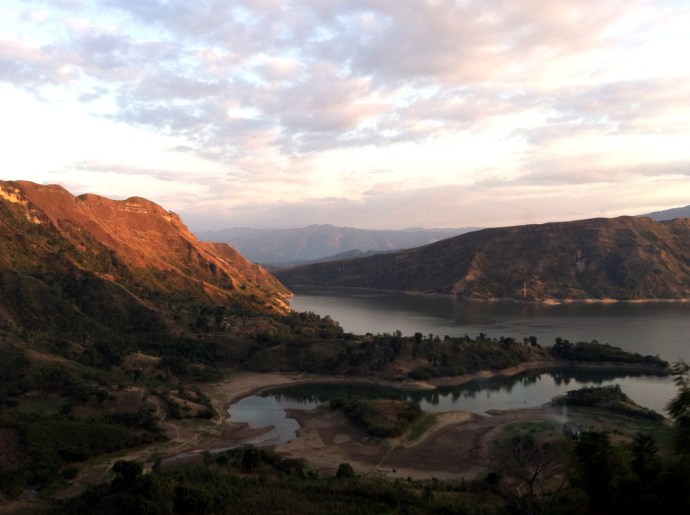
Beautiful Lake Peligre

Because once this operation gets up and running (it just came on line last month), it has the potential to produce 40,000 fingerlings a month —  which would be a game-changer for the poor communities around Lake Peligre and the surrounding Central Plateau.Despite the fact that this is an island, Haitians eat only 4.4 pounds of fish a year (contrasted to the global average of 35 pounds) and the country imports $26 million of cod annually from Taiwan. The beauty of farming tilapia locally is that while it improves the protein-starved diet of Haitians, it also provides an income to farmers and fisherman living around the lake — and supports the schools in villages like Sylguerre that we were lucky enough to visit with Valentin Abe to see the school and witness tilapia farming in action.

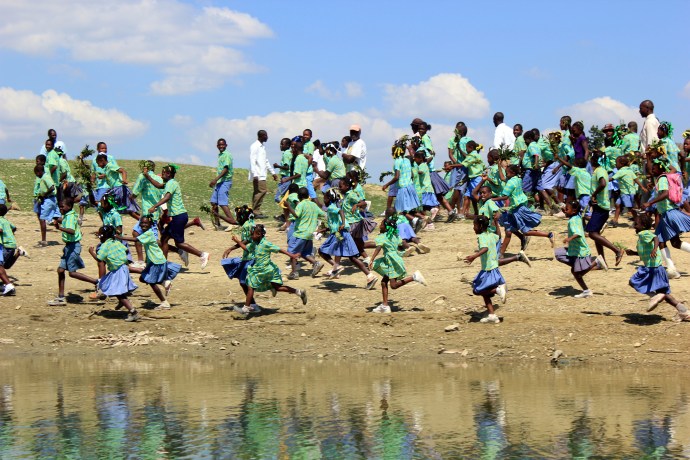
The schoolchildren were all waiting for us to dock ..over there.

Quick ... over here!

We can beat that stupid boat...

And we're all over here now .. Welcome!

Around the lake, 8 destitute schools with no government support are struggling to survive –with the help of Partners in Health and two teachers leading the Community Action for Education and Development around Lake Peligre(ACEDLP). Tilapia farming is an idea that can be scaled up quickly, produce sustainable profits, and enable the people to support their schools and get their children a good education.

"Now I don't have to choose which of my children I send to school."

The plan is for each fisherman to receive one free gift of 2000 tilapia fingerlings from Caribbean Harvest (and its sponsors) and a cage from Heifer International. After harvest, he will reinvest part of his proceeds in another crop of fingerlings, and then on the third harvest, put aside money to pass along the gift of a new cage to another farmer (Valentin estimates each farmer can harvest 3 crops of tilapia a year.)

There are still some kinks to be worked out: Abe found that 1/2″ tilapia babies survive better than the 2″ older ones during transfer, and the farmers have to perfect their feeding and distribution to prevent the fingerlings from perishing and get them to market while they’re fresh. But the potential is totally there for a sea change in the fishing industry of Haiti … with the beautiful Lake Peligre children on the line.

I’m in!

Categories: Haiti, Heifer International, Hunger, Photography, Poverty, Travel | Tags: , , , , , , , , , , | 37 Comments

Cows, fudge & women in Haiti.

Our Heifer International trip to Petit Goave got off to a petit late start, because we overstayed at the town of Degand. Which meant by the time we pulled into the lush rural community of Petit Goave, the sun was getting low in the sky and we faced one last hurdle: a watery crossing.

Heave-ho!

Sona Chambers, ace Atlanta fundraiser and bon vivant, was in the front seat and cautioned Hervil Cherubin, Haiti Country Manger/driver extraordinaire, that the four-wheel drive wasn’t in gear. Dave Anderson, crackerjack international photographer and videographer, and I were in the back, minding our own business but secretly hoping for some action. We got our wish, as the minute we plowed hub-deep into the mud, it was pretty clear we were stuck solid. Pierre Ferrari, Heifer CEO in the car behind us, plunged in to the rescue and we were expeditiously pushed out by six farmers with a lot of muscle.

Dirty, muddy and happy, we traipsed into lovely Petit Goave where the community awaited us.  By now the light was seriously fading and the Heifer folks wanted to get us back on the road before nightfall. But since we were the late ones, we unanimously decided that all the beneficiaries should have a chance to speak, just as planned. And so they did.

Petit Goave is a beautiful place, blessed with plentiful water reminding me, once again, that water means life. This corner of Haiti, with its tradition of dairy cows, is also famous for the fudge (douce macoss in Creole) that I wrote about in my last post.With a candy industry nearby, the more milk Petit Goave farmers can produce, the more income they can generate from fudge-makers.

To take advantage of that opportunity, over the years, Heifer has given this community the gift of 50 cows & 2 bulls; 5,000 plantain plants; 600 buckets of bean seeds; 150 buckets of corn seed and 12,000 forage plants to feed the animals—as well as emergency food supplies after the earthquake. These gifts, which have been passed on to other families and thus multiplied, have made a profound difference in the life of the community, as we were reminded of by the people who stood to greet us.

How great does Emmanuel Jean's wife Jacque look after 9 children? (Dave Anderson photo)

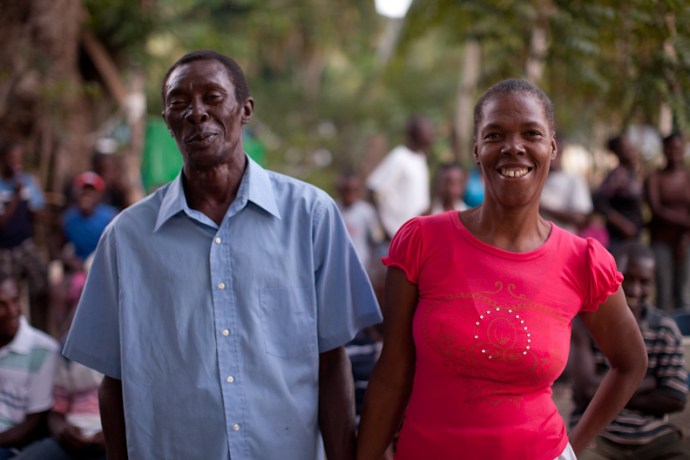
Eddy Exantus, with 6 children, was able to send all of his kids  (not just the boys) to school with income from selling milk. Francois Revel, a bachelor, used his milk income to finish high school, then was trained by Heifer as a vet agent – giving him additional income while he keeps the community animals healthy. Emmanuel Jean has 9 children and been able to send them all to school, thanks to the milk money earned with his Heifer cow. And finally, a woman stepped up: Margareth Doscar, President of the Petit Goave Women’s Group and a single mother of 4.

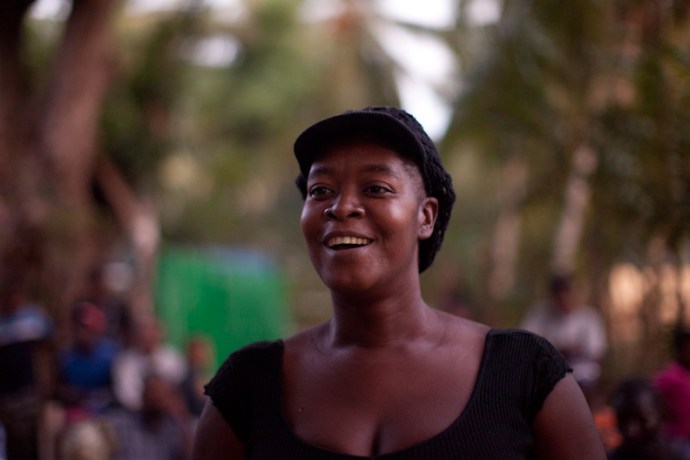
Margareth Doscar photo by Dave Anderson.

Kimberly and I snapped to attention as she thanked us and wished us courage, then asked for more training in food processing and micro-loans to finance small businesses of the 45 women entrepreneurs in Petit Goave.

Kimberly, by Dave Anderson

As the light of female solidarity dawned on us (and the sun set for real) Kimberly asked for the wives of the men who’d spoken to come up & be recognized….and before you could say “Gloria Steinem,” there was huge laughter, people excitedly pushing shy wives and mothers to the front, and tales of romance, kids, and 30-year marriages in the air.

I struggled to take notes in the pitch-black and people held up cell phones to illuminate faces, while Pierre talked Kimberly (also shy) into addressing the women, who crowded around her in quiet thoughtfulness.

Petit Goave women. (Dave Anderson photo)

“Women have always been the backbone of society, and we know how hard you are working, and how difficult these times have been for you,” she said, as Hervil translated into Creole. “I want you to know that the women in America and all over the world care about you, we support you, and we haven’t forgotten you and your families.”

In the dark we could hear lowing and bellowing of the 50 beautiful cows that had been tied up in the clearing. A quarter moon rose over the horizon. As we walked back to the trucks, surrounded by the talking, laughing people of Petit Goave, it was a Heifer moment. One you’d never forget.

Categories: Agriculture, Animals, Haiti, Heifer International, Photography, Travel, Women | Tags: , , , , , , , , , , , , , , | 18 Comments

What I ate in Haiti.

Fresh whole fried tilapia from Lake Peligre .. caught that morning!

Actually, maybe we should start with what I drank in Haiti because that’s certainly where I always start (and end). I’m not even sure it’s appropriate to talk about food & drink on a blog about ending hunger and poverty with Heifer International but enough people seem to be curious about what I’m consuming that I’m indulging myself in this post. (Please feel free to tell me you think I’m a shallow bore if you feel like it.)

Alcohol is not hard to find in Haiti but it is expensive (really expensive – like $12 for a gin & tonic at a hotel). Ordering wine is a total crapshoot– tried it once and it was SO not worth it– so you’re probably well-advised to stick to beer.

The real Real Thing.

Prestige was yummy (and I don’t even like beer) at a mere $3/bottle (as opposed to the exorbitant $4.50 they were charging for Coca-Cola). However, the Coke was fantastic because it’s made with cane sugar syrup instead of the high-fructose corn stuff … and believe me, it makes a difference.

Coffee was thick, black & superb everywhere (my personal heaven). Fruit juices were equally amazing … absolutely fresh, and in flavors like mango, watermelon, papaya and grapefruit (to which Haitians add heaping spoonfuls of sugar, but I liked it tart enough to make you pucker).

Haitian grapefruit

If you like the food you are served on your first day in Haiti, you’re a lucky duck – because you’re likely to get that same dish at least once a day for the rest of your stay.

Here’s what it will consist of: a meat or fish (leg and thigh of chicken, beef, lambi– or conch, goat, or a whole tilapia fried with its head and tail still on) ; plantains fried in whatever; a few tomato slices that are no better than our grocery store models; and local rice (if you’re unlucky) with black beans.

Yeah, it's local.

Rice is ubiquitous in Haiti –which makes it all the more sad that we’ve just about killed off the rice industry  in the country with dirt-cheap imports from Arkansas that cost about ½ what the Haitian farmers can produce it for in their own fields. Unfortunately, local rice, even though I was trying super hard to like it, is not nearly as delicious as the imported kind  – (and I’ve never found a starch I didn’t like).

The creole sauce that is served on virtually everything is delicious; and the faux-kimchee ferociously hot cabbage slaw is similarly gorgeous – crunchy, fresh and so piquant I’m pretty sure no bacteria could survive in there so I ate a lot of it.

Every once in a while when I got desperate for something different, I’d opt for spaghetti bolognese which was always on the menu, but I was ashamed of myself in the morning.

Cashews and nuts are everywhere in the north; and in the south you can find fudge, just like at the Jersey Shore … but no, Snooki, it’s actually totally different.

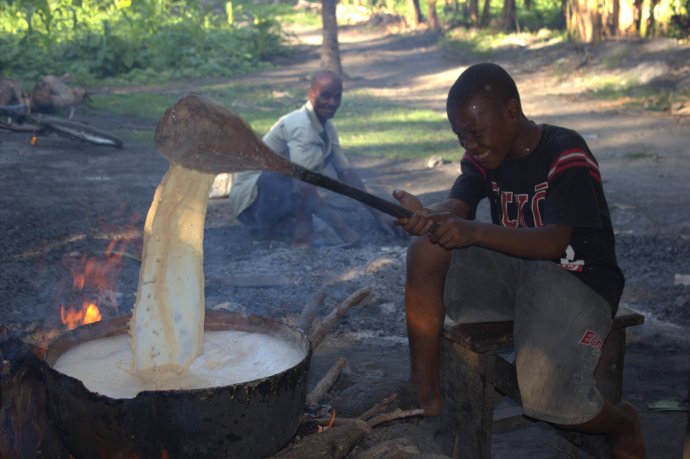
Making douce macoss fudge

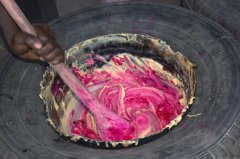
Making fudge (Note the tire/holder!)

Haitian fudge is striped with pink, like taffy, and made with what I am sure is child labor — but it tastes more like halvah in that sandy/sweet way than the chocolatey-buttery fudge of my childhood.

Speaking of sweets, there aren’t many in Haiti. The only chocolate fix I got was hitting my M&M stash hidden in my suitcase. Desserts were completely resistible, because I’m lactose-intolerant and can’t have ice cream, so that made it easy to say no.

Most importantly, despite the fact that Haitians have the lowest caloric intake in the Americas and 25-40% of Haitian children suffer from chronic malnutrition, we were never served a single meal but with total graciousness and generosity.

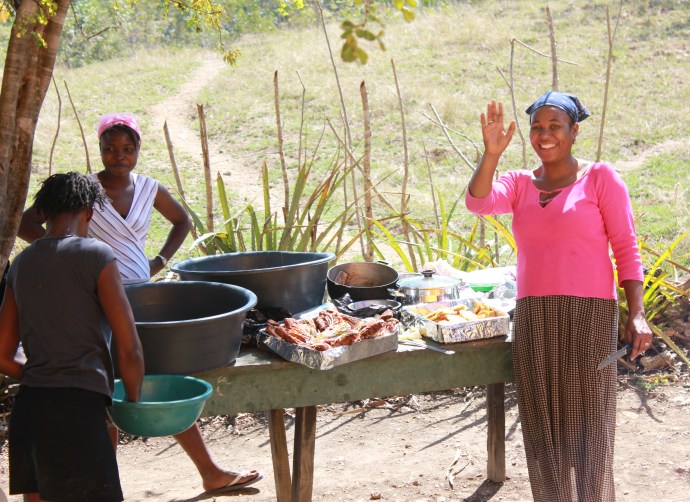
Making our gorgeous fish lunch in Lake Peligre.

By the time I left Haiti, I was sad to go but ready for a giant salad, a frosty cocktail, and a bar of chocolate.

Which oddly enough, didn’t taste as good as I thought they would.

I kinda missed Prestige.

Categories: Food, Haiti, Heifer International, Hunger, Photography, Travel | Tags: , , , , , , , , , , , , , , , , , | 54 Comments

Blog at WordPress.com.