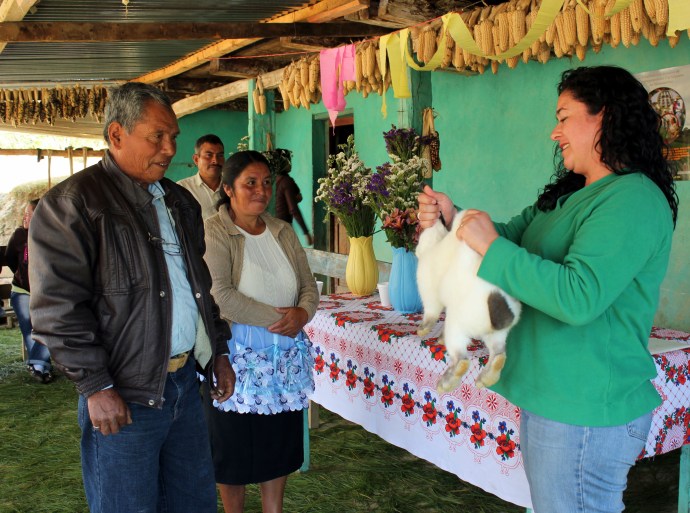
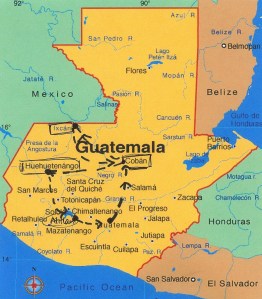
Staring at goats.

On my first day in Haiti, I made the not-so-brilliant deduction that traveling with Heifer CEO Pierre Ferrari and his adorable wife Kimberly Youngblood; Heifer VP/Director of the Americas Oscar Castaneda; and Heifer Haiti Country Manager Hervil Cherubin, put me in a whole new league.
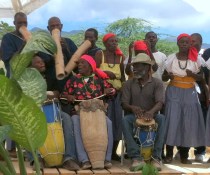
A band? Just for me??

Instead of sidling into town relatively unnoticed (except for being blindingly white), I was now part of fancy celebrations and major attention. Like our first stop: the opening of Heifer’s big new Goat Breeding Center in Montrouis (pronounced Mont-wee) on the beautiful northern coast of Haiti, which represents the first step in Heifer’s $18.7 million plan to ignite Haiti’s rural economic recovery.

When you’re trying to make some developmental headway in the confounding conundrum that is Haiti, the prospect can be so daunting, it’s hard to know where to start. But often, the most obvious place is staring you right in the face.And that is exactly where Heifer International is putting its stake in the ground: with the basic development tools of animals, food, and farms through its new REACH program (Rural Entrepreneurs for Agricultural Cooperation in Haiti). When you look at the numbers, it makes all the sense in the world. Out of about one million small farms in Haiti, 85% raise poultry, 65% have goats, 55% cattle, and 35% pigs. Yet, those efforts are not coordinated, the stock is poor, and markets are far-flung and inaccessible to farmers.

MST, Tet Kole & Heifer -- Heads Together!

So Heifer partnered with Tèt Kole Ti Peyizan Ayisyen (Heads Together Small Producers of Haiti), the oldest peasant group in Haiti born covertly in 1970 during the Duvalier dictatorship, and with MST Landless Workers’ Movement of Brazil, to build this 270- square meter, 180-goat breeding center and 10,000-chick poultry center, along with a water-capturing system from a source 5.5 kilometers away.

The Neutra House/Chicken Breeding Center

The centers are beautiful (built with recycled pallets!) but the really gorgeous thing is what they represent for the future: A better breed of goats and chickens that can incrementally improve livestock bloodlines. The coordinated training of Community Animal Health workers who can teach other farmers to grow forage crops, fruit trees, compost, and breed their animals in the healthiest, most productive way. And the development of value chains to bring farmers together to establish new markets and increase their incomes by 100%.

Heifer’s ambitious plan is to select the most successful and entrepreneurial farmers (at least 30% of them women) from these training programs and provide them with the animals and business acumen to start 100 goat and 50 pig breeding centers throughout Haiti, with an ultimate reach of improving the lives of 20,250 farming households. Now that’s reproduction at its finest!Still, there’s a long way to go before Haiti comes anywhere close to being able to feed itself. Even before the  $31 million of agricultural damage in the 2010 quake, and the 70% loss of its crops in the 2008 hurricane season, Haiti was importing 51% of its food, at a crushing expense to its 9 million people. Heifer needs to raise $13 million to make this program a reality, and then there are five years of hard rowing ahead.
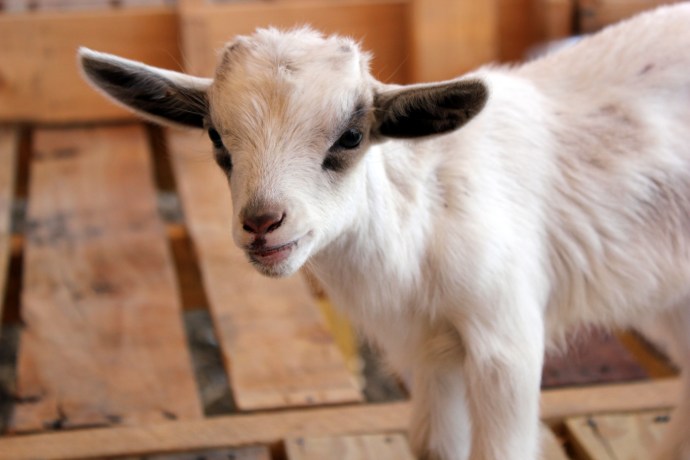
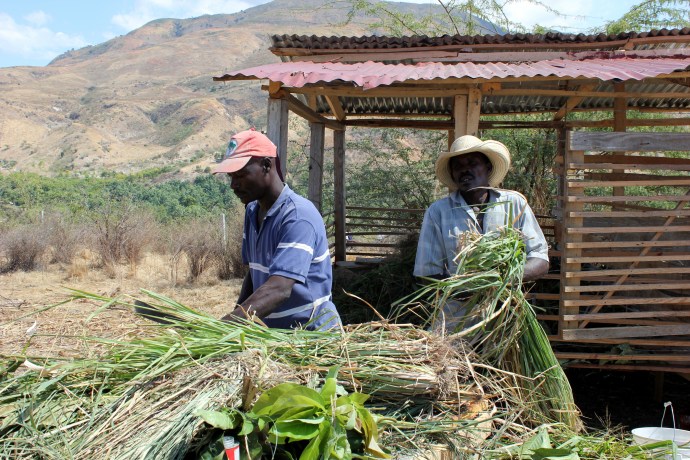
Even feeding animals is a challenge in Haiti.

But to paraphrase Robert Frost & the Nine Inch Nails, the only way out is through.

As I was standing on the top of the Montrouis cliff overlooking the ocean, listening to the wind and hearing the bleating of goats, imagining the magic of water soon transforming dry grasses into crops, that prospect didn’t seem so bleak.

Women from Montrouis

Not really bleak at all.
Categories: Agriculture, Animals, Haiti, Photography, Travel | Tags: , , , , , , , , , , , , , , , , , , , | 27 Comments

The paradox of Haiti.

To be honest, I was a little nervous about going to Haiti, Month #2 in my 12-trips-in-12-months visiting Heifer International sites.  Not because I was scared something bad might happen to me, but because I was afraid I wouldn’t find anything good to say about the country.

Well, like most worrying, that was a waste of brain space.

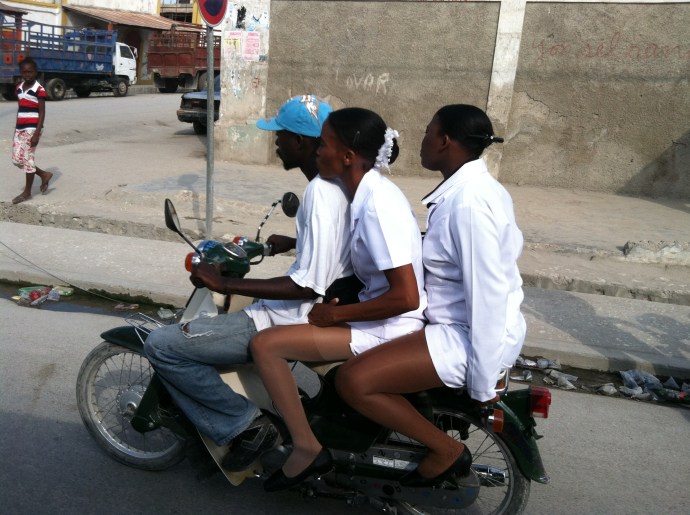
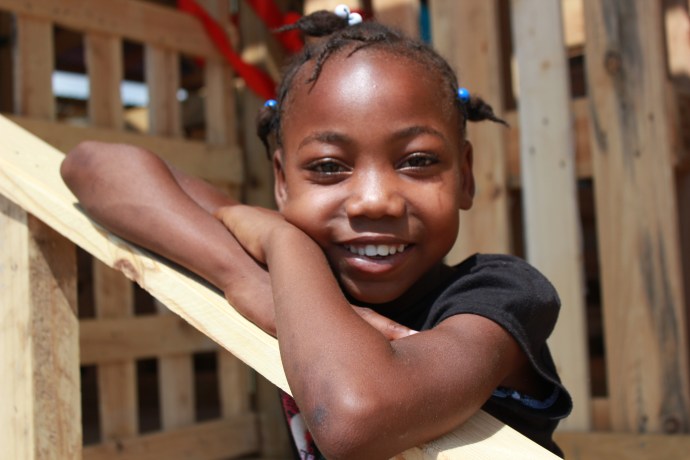
3 big things to like about Haiti... girls going to school!

Despite Haiti’s mind-boggling set of challenges and truly appalling lack of infrastructure–which was the case even before the earthquake of January 12, 2010– the country is beautiful (really!) the people are irresistibly gregarious, gorgeous and dignified, and there’s more life packed in one square mile of this country than in some entire states of the USA (you know who you are).

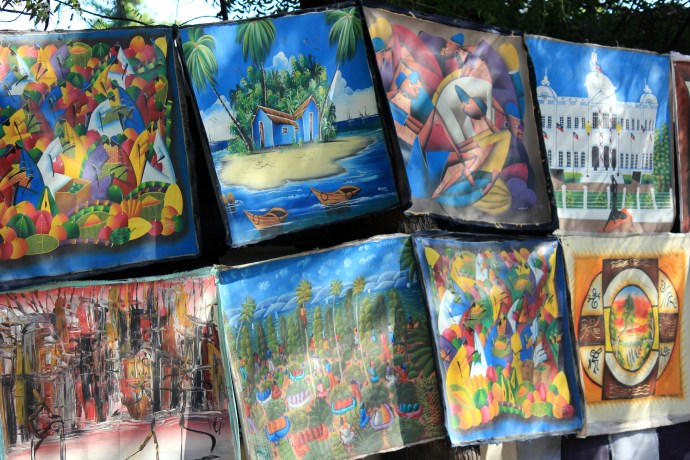
Art in the wind in Port au Prince

Plus, the projects Heifer is undertaking in Haiti are amazing and on a scale that the organization has never undertaken before…which I seriously can’t wait to tell you about.

But I’m not going to be too Pollyanna here. Some of the things I saw here made me ashamed to witness them.

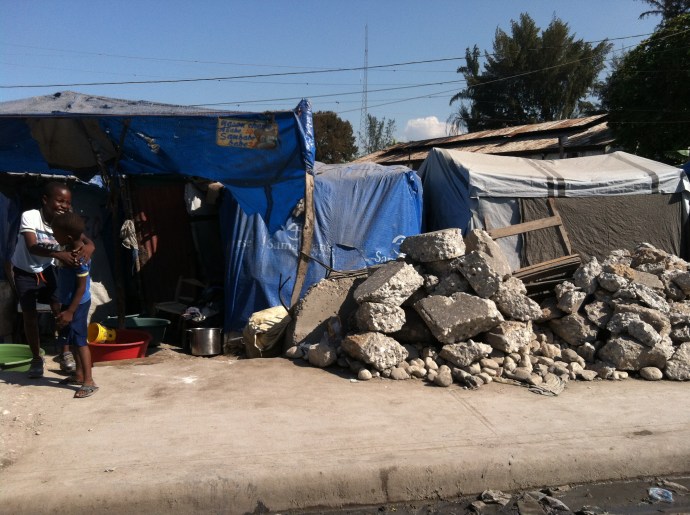
Tent children

When I was taking a photo of a huge pile of trash randomly on fire by the side of a garbage-choked watery culvert running through one of PAP’s more notorious slums, a Haitian man sternly shook his head, as if to rebuke me for trying to capture the utter desolation of that scene. I didn’t take the photo – but the odd thing was, what I really wanted to show was that walking right beside the blazing garbage, beautiful women in clean, ironed dresses passed men in dress shirts and neat trousers– all going to work, going to market, carrying on.That refusal to bow to the indignity of living in conditions that should be crippling is incredibly inspiring. The tap-taps of Haiti alone stole my heart, with names like “Patience” “Eternal Capable” and the slightly unnerving “Blood of Jesus.”Tiny children toting big gallons of water up steep hillsides stop to smile and wave. In villages where people scarcely have enough to eat, you’ll hear songs of praise wafting up from an unseen church. And everywhere – everywhere! – people are working incessantly to improve themselves and their country—which makes you want to do anything you can to empower them to write a better script for their future.

Unfortunately, “doing anything you can” is not a prescriptive or particularly helpful instinct in Haiti. Or as Paul Farmer of Partners in Health put it succinctly, “Doing good is never simple.” While over 50% of American households –and the rest of the world–donated $1.2 billion to relief organizations after the earthquake, 2 years later debris still clogs the streets of PAP, tent cities of unimaginable squalor still house more than 250,000 homeless (but it was 1.5 million 12 months ago!), and the unemployment rate is well over 50%.What Haiti needs now are a decent infrastructure, functioning government, income-generating jobs, and the ability to feed itself (like it was starting to do 20 years ago, before a flood of cheap American imports crushed the life out of Haiti’s smallholder farmers).Heifer’s powerful new projects in Haiti are all about addressing the last two imperatives of jobs & agriculture with integrity and vision.  But… I have to write about that tomorrow.

Today, after 7 straight days of bone-crushing rides smushed in the back of a Land Cruiser, I’m taking the afternoon off– although that is a relative term, as we still have 5 hours to Cap Haitien and somehow the resolutely cheerful Ewaldy has convinced me we should take the bad back road so I can see more of the “bon paysage.”

Eternal Capable – that’s Haiti (and hopefully me)!

Categories: Agriculture, Haiti, Heifer International, Hunger, Photography, Poverty, Travel | Tags: , , , , , , , , , | 49 Comments

Short Stories from Guatemala.

Okay, I’m in Haiti now with Heifer International, on Month #2 of my 12-countries-in-12-months journey, and I know I have to let go and stop writing about Guatemala, my Month #1 country. (I’m pretty sure I’m going to have this same separation anxiety as I stop writing about each one of these countries, so I’m apologizing in advance for the emotional foot-dragging.)

To make this a proper goodbye, here are some of my favorite images of Guatemala– and the story behind each one of them.  This cool gent was walking down the road in Cunen, a small farming town outside Coban, Guatemala. His shirt was immaculately white, his hat was worn at a rakish angle, his bag was jaunty, and he wore his pants so elegantly, I think he’d give Andre 3000 a run for his money, sartorially speaking. (But he was missing his two front teeth.)

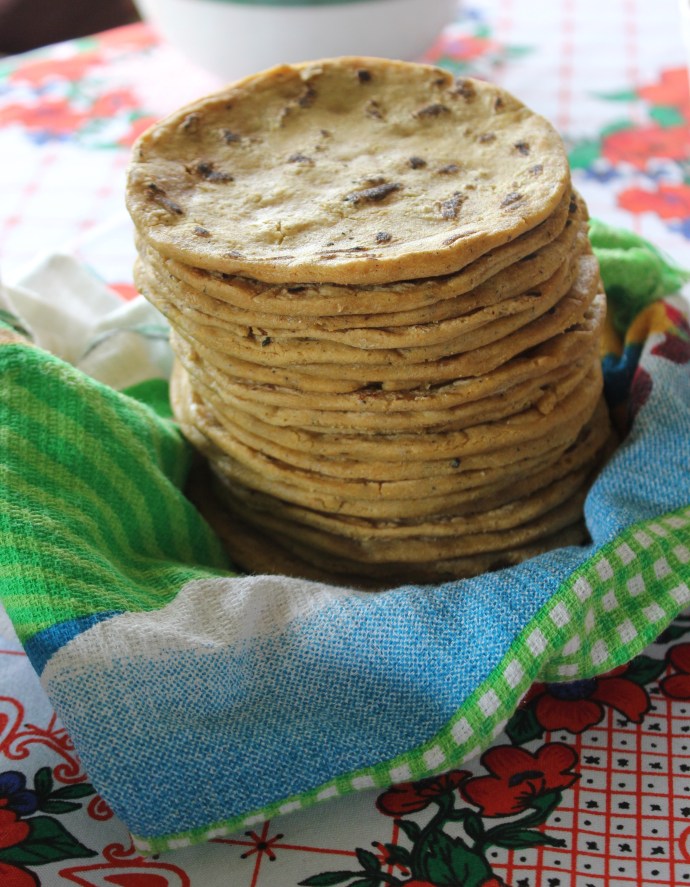
We were in the high mountain village of Quilinco and turned the corner to see Escolastica Lache up to her elbows in a washbasin, scrubbing away — while directly in front of her were two gigantic cable TV dishes. She had a beautiful smile that knew nothing of irony – and of course, who can resist somebody who dresses up this fancy to do the laundry?Tortillas, tortillas everywhere … at every meal. In every basket. Guatemalans eat them morning, noon and night. They’re brought in to the table, warm and fragrant, in gigantic stacks that go so far beyond carb loading, it’s ridiculous.

Toyota really needs to make a commercial featuring Heifer’s use of their trucks. We drove up the steepest hill you can imagine with 20 people (and a sheep) in the vehicle. Now that’s a payload.

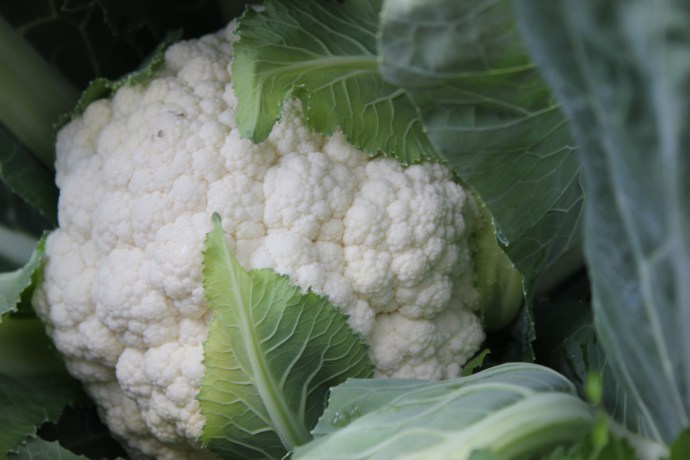
The ceiba is the tree of Guatemala, and it is grand. We saw it growing in Ixcan amidst an empty corn field and you can see it for miles, its trunk stitched straight as a seam against the sky.In Quilinco, Heifer beneficiaries Juan & Anastasia grow 2000 cauliflower plants on their land. They make about $800 on the whole crop, because they sell it before it’s planted to a Canadian distributor who gives them the seed and fertilizer and guarantees their price. In the field, Juan unwrapped the green tendrils around the almost-ripe cauliflower to show it to me, then carefully wrapped the leaves back up in a big protective bow.

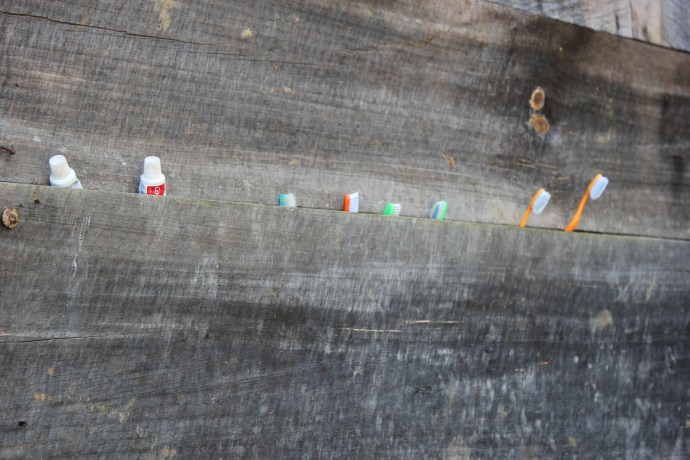
Sometimes you are standing in a place you’ve never been, and your eye falls on something that just delights you beyond expression…. like this bed, bath & beyond in the cloud forests of Alta Verapaz. And of course, in every nook and cranny of the world, ninos siempre ninos.

Hasta luego, Guatemala!

Categories: Agriculture, Guatemala, Heifer International, Photography, Travel | Tags: , , , , , , , , , , , | 24 Comments

Seeding the future.

I’m feeling pretty global tonight, writing about a small town in Guatemala while I sit here in Atlanta, thinking that by the time you read this I’ll be in another small village in Haiti where Heifer International is planting more seeds of change.Speaking of seeds, here are a few kernels of truth. In our abundant American lives, we’re supremely divorced from the reality of where our food comes from, who grows it and how, and what would ever happen if we couldn’t go to the supermarket and buy gobs of whatever we want. But when you go to a developing country, you get enlightened pretty quickly.

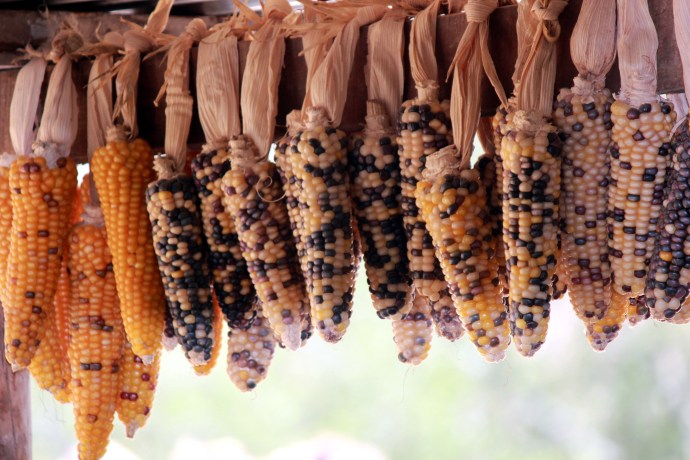
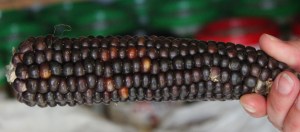
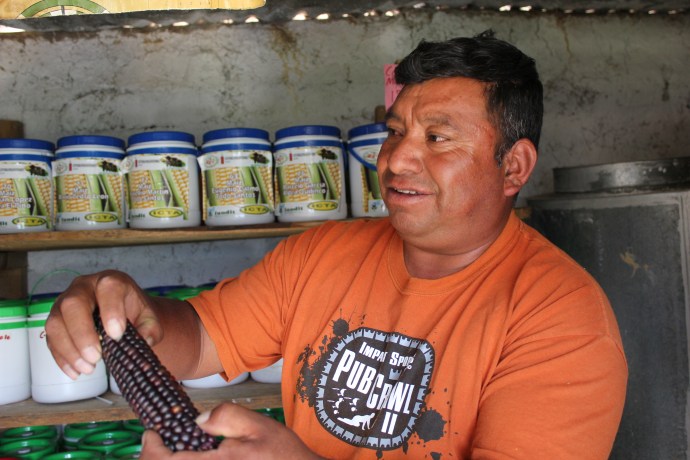
Maize Negro (Ek Jal)

The thin veil between hunger and the food we need to survive is seeds .. pure and simple.

Isabel Lopez, the Patriarch

So it’s good to know that in the quiet little village of Quilinco outside Huehuetenango, three generations of the Lopez family have been working for years to preserve our food future. In 1999, Isabel Lopez began saving the seeds from the 150-year old criollo native corn his grandfather grew. Backed by FAO (a Norwegian company whose name nobody can pronounce), he and his son Juan (and now his son Jose) began a methodical campaign to preserve seeds that were endangered, rare, or deemed genetically worthy of preservation.

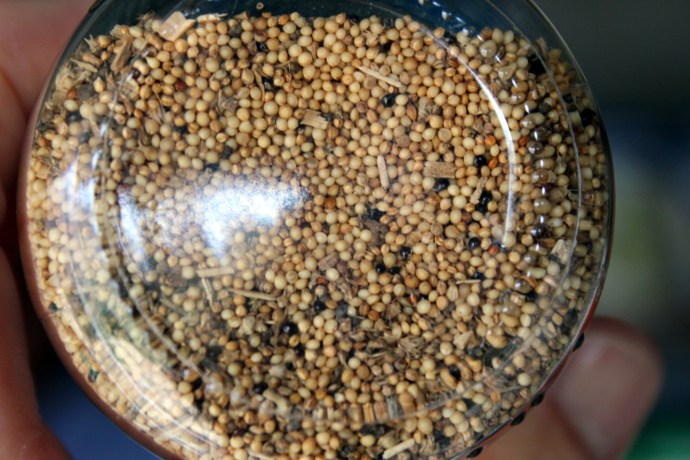
Isabel and Juan persuaded their fellow farmers to follow the trainings, and soon 100 farmers were working to plant, fertilize, harvest and preserve the seeds in a carefully scientific way – choosing the kernels of corn from cobs that have straight lines, 12 rows in diameter, and 25 kernels from the middle. Each group of seeds is kept in its own jar, labeled, cataloged and carefully protected in steel silo drums that are designed to outlast an emergencia, tormenta (hurricane) or earthquake.

Heifer's Guillermo & Carlos in the field (as always)

The field technicians of Heifer (like 20+ year veterans Carlos Hernandez & Guillermo Santizo) worked with the Lopez family to earn this contract and keep it active in Quilinco over the past decades. Why? Because The Seed Bank is a valuable source of income for the village farmers, but also because it is preserving these beautiful jewels of agricultural possibility:

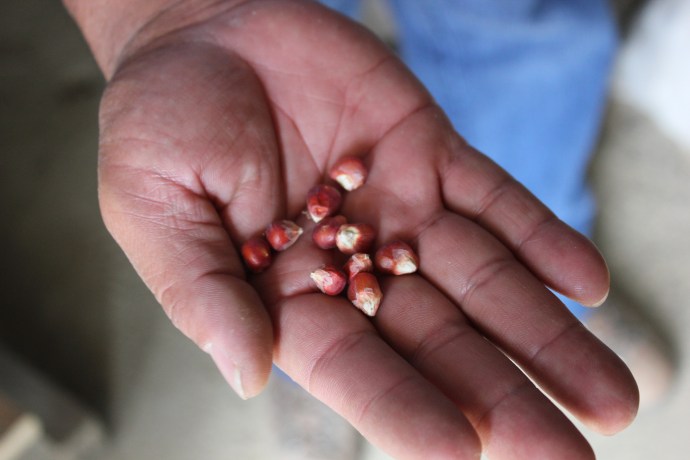
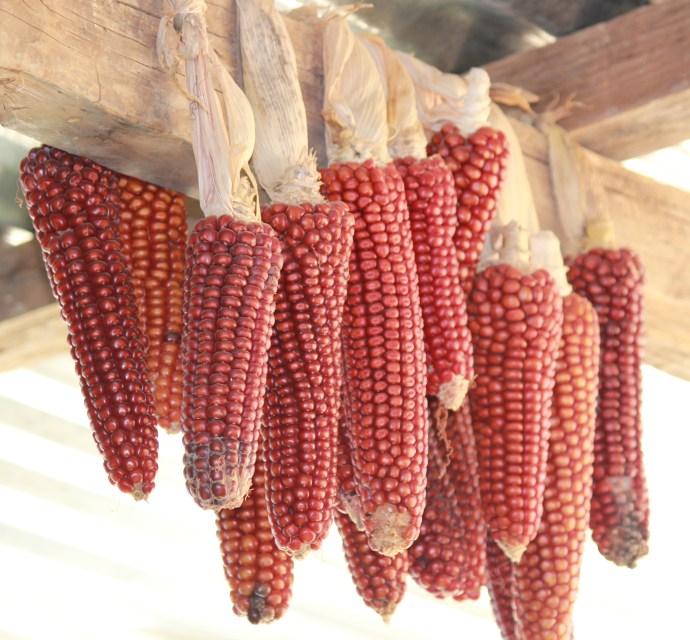
Rare Sangre de Christo red corn.

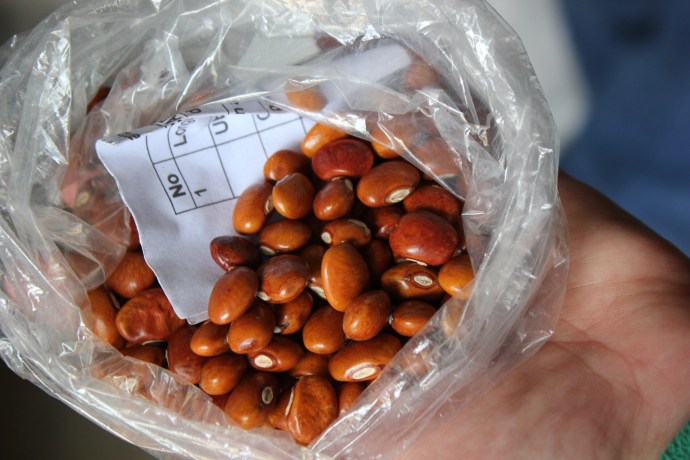
Frijol Piloy Amarillo beans that are on the border of extinction.Valuable seeds from the bledo-blanco (amaranth) plant that is so packed with minerals, protein, and gluten-free Vitamin C, it’s accompanied astronauts into space.And in small jars, the seeds of countless flowers and plants that only grow in this region. When I first heard about the bank, I thought it might be kind of … boring. But I loved this project so much I couldn’t believe it! There I was in a small village in Western Guatemala, standing in a veritable Fort Knox of Seeds, supported by a bunch of distant Norwegians, surrounded by rare genetic caches of ancient seeds collected by three generations of Mayan farmers, that may hold the key to our bio-diverse agricultural future.

Juan Lopez & his seeds

Quel global amaizement!

Categories: Agriculture, Guatemala, Heifer International, Hunger, Photography, Travel | Tags: , , , , , , , , , , , , , , , | 34 Comments

Re-Gifting, Heifer style.

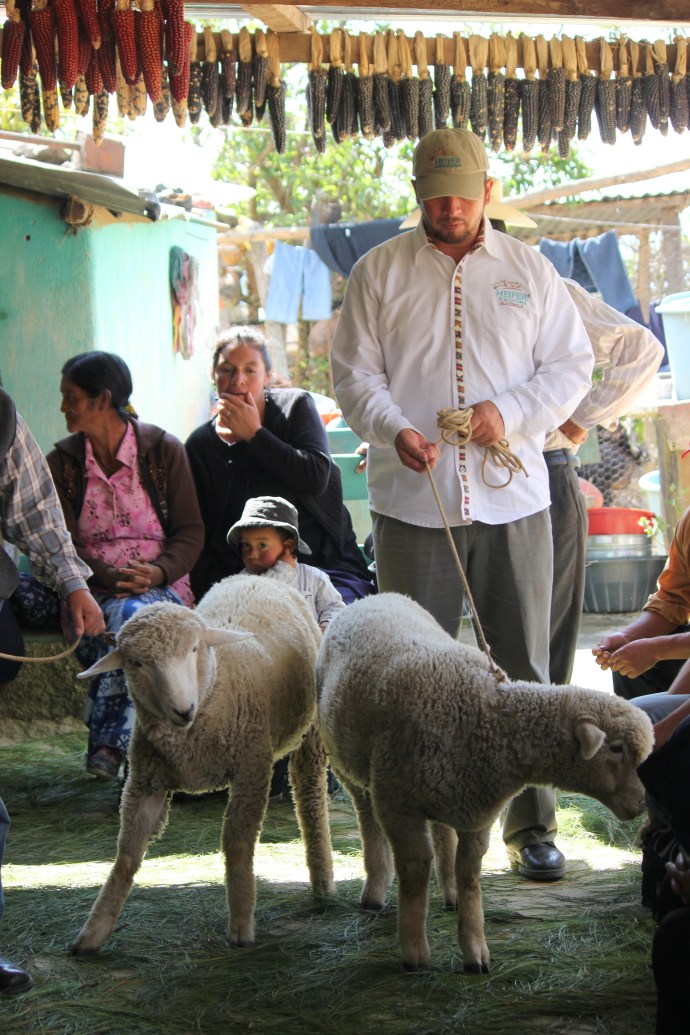
As Heifer‘s Byron Lopez, Vivian Martinez and I pulled into the beautiful village of Quilinco near Huehuetenango*, Guatemala, I realized we were late. For once, it wasn’t my fault (blame breakfast and a whole bunch of bad potholes) but I was horrified to see 30 gorgeously-attired mothers & children and weather-beaten farmers in immaculate white hats patiently waiting for us in the beautiful turquoise central meeting place that was cheerfully festooned with flowers, hanging stalks of braided corn, and a pine-needle strewn floor.

Future farmer of Quilinco

This was my first HeiferPassing on the Gift” ceremony and I was late. Dang it!

Passing on the Gift is the most Cornerstone-y of the 12 Heifer Cornerstones – and the thing that truly sets Heifer apart from other “giveaway” charities. When a poor family receives a Heifer animal (any animal – be it chick, goat, sheep, cow, water buffalo or bee), the first female offspring of that animal must be passed on to another needy family. This not only builds community solidarity, it ensures that the gift keeps on giving to more and more families – while it engenders self-respect, dignity, and a sense of responsibility to others (Oh, that we had a little more of that in the USA!)

This community of Quilincohas had a relationship with Heifer since 1984 – and remarkably, the Passing On tradition is still being Passed On. From 80 original families, Heifer gifts are now benefiting over 500 families…with no direct supervision for 8 years (although Heifer still provides some veterinary support, new animals to improve the stock, and community counsel).

Jesus

Today, we were witnessing THREE Passing On gifts. First was the gift of two stallions (I was envisioning Black Beauty – but no, these were sheep) from 4-time Award-Winning Sheep Breeder Jesus Garcia.  These two males would be shared by four families in two neighboring towns and used to impregnate the local mares.

Heifer's Byron Lopez prepares to pass on Jesus's prize sheep.

The second gift was a valuable Italian female rabbit that was robust, fat and juicy and would likewise be used judiciously to improve the local stock, given by Paula to Isabel.

Vivian passes on Julia's gift to Isabel.

The third gift was a campesino-to-campesino gift of a goat that would hopefully have at least 5 babies, improve the local stock (the price of prize stock is 5 times that of the local sheep) and enrich the lives and diets of the receiving family.

22 days old and already looking good!

The speeches preceeding the gifts recalled decades of community efforts to encourage people to contribute funds (sounds like any civic association anyplace on the planet), work together, and find common goals and common ground. With Heifer’s encouragement, Quilinco’s Mayan Mujeres had pooled their money and begun micro-lending programs to enable other women to buy animals and pass their offspring on. Their history of “working together with solidarity – the way you taught us — and not by ourselves” as Alberta Garcia recalled, has served them well.

The land of Quilinco is steep, foreboding, and back-breaking to farm, but the people there are determined to grow their own food, feed their own children, and prosper. Heifer’s great gift has been to give them the small help they need to succeed in that endeavor.

Celso & his dad, Juan Artemio

** I’M OFF TO HAITI TOMORROW … BUT STILL HAVE A FEW MORE SCINTILLATING POSTS FROM GUATEMALA… STAY TUNED!!

My Guatemalan walkabout.

Categories: Animals, Guatemala, Heifer International, Photography, Travel | Tags: , , , , , , , , , , , , , , , | 26 Comments

Blog at WordPress.com.