Heifer International

Goat-ed into greatness.

 My first visit to a Heifer Nepal project took me way up into the hills surrounding Kathmandu – where immediately the air got sweeter and the views became more and more spectacular, with the Himalayas shimmering like a mirage in the distance.

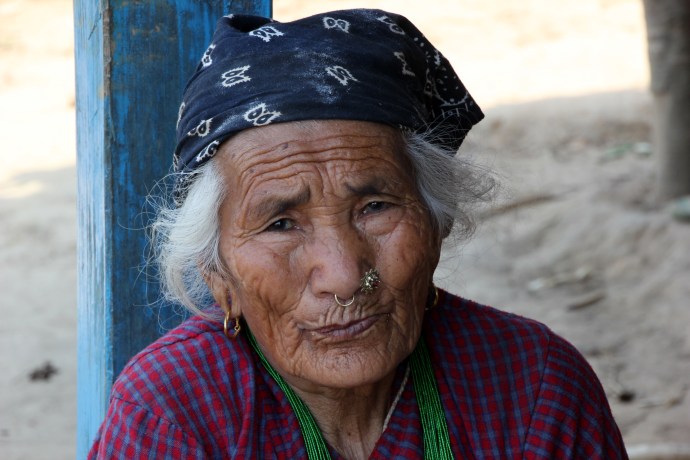
My Heifer guide, the lovely Puja, told me that when Tibet invaded Nepal, the cavalry stayed on the hilltops as lookouts and they eventually settled there, which helps explains the Tibetan look of the Tamang people here (and my immediate attraction).
Our destination was Ramkot Village where a Heifer project had been started in 2008 through a local partner group: Women’s Feeling Unity Forum, with the adorable acronym WFUF. In Nepal, Heifer always partners with a local NGO (non-government organization) that has organized the community through a Women’s Self Help Group, proven the participants are committed and motivated, and then applied to Heifer for animals and training. Once approved, WFUF’s staff was trained and paid by Heifer to be the hands-on managers of the project in Ramkot and three other villages — and their hard work with Heifer has paid off. Even though this Ramkot Heifer project is complete (projects are active for 3 years, then go into a reporting stage for another 2), the group continues on, thanks to the efforts of some very compelling women.

Vice President Tirtha Tamang (everyone’s last name is his or her caste group) is 38, married to a farmer, with 2 sons and 1 daughter. Like two-thirds of women in Nepal, Tirtha is illiterate – but in the Heifer program, she learned to read slowly, write her name, and do basic arithmetic. From the original Heifer gift of 2 does, Tirtha has raised, bred, fed and sold dozens of goats to pay for her children’s education; now two are in college and one is entering high school.

Think of that! Instead of passing along illiteracy, she has totally rewritten the future for her children, turning goats into college degrees. And that’s not half of what Heifer has helped this community accomplish for itself!

Madame President Mithu Tamang

Under the leadership of President Mithu Tamang, Ramkot women started a group savings account in 2008 (each member contributing 100 rupees – about $1.20/month), enabling the members to borrow money for seeds, medicine, school fees, or family emergencies–like food– at minimal interest. When you’re living on $2/day income, easy access to money means a lot… and the repayment rate is 100%. The women have built a new, cement community center to host their meetings and other village events, as well as two beautiful new bamboo greenhouses for starting seeds. In fact, with the manure from their animals and Heifer trainings in raising organic produce, the women grow enough vegetables to feed their families and sell in the market. It’s a 3-hour walk to the market (each way) and they carry their produce on their backs, leaving at 2 a.m. twice a week during harvest months — but on a good day they can make 500 rupees ($7) in sales.

Tirtha & Mithu with the women’s group water harvesting cistern, new greenhouses below, and hills of pumpkins.

OR… if they sell a young male goat about 4 months old, the women can earn 12-15,000 rupees (over $100). A female goat can start having babies at 6 months, have 3 kids every pregnancy, and up to 2 pregnancies a year.
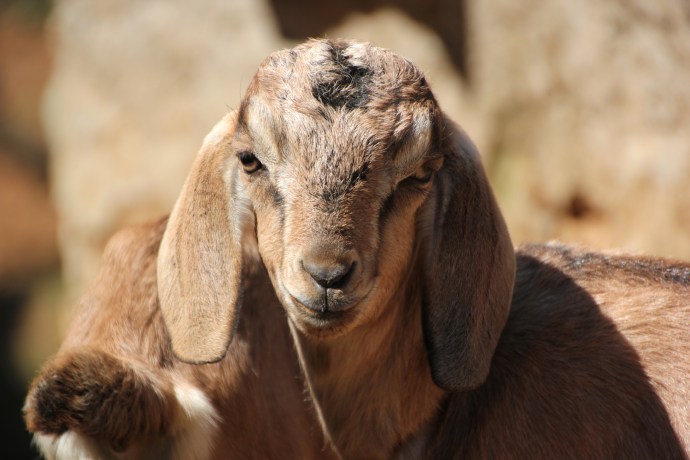
So –don’t you love Heifer math that adds up the multiplying effect of the single gift of a goat?? (And of course, all the women have passed on the gift of offspring and trainings to other village families in need.)

Heifer has been working in Nepal with women’s groups since 1993, and in less than 20 years has helped more than 60,000 families like those in Ramkot with the gift of livestock and training. That’s a great story. But as we were bouncing back down the road to Kathmandu, Puja started telling me about how Nepalese women’s groups are joining forces, forming larger cooperatives and instituting change on a whole new scale – like the $60,000 water project all the villages around Ramkot are working to build, that will allow them to double their production.

Why Women’s Self Help Groups (and co-ops) are a great idea.

That concept (and the beautiful smiles of the Tamang people) took my breath away. More on co-ops tomorrow!

Never underestimate the power of a Nepalese woman!

Categories: Agriculture, Animals, Heifer International, Nepal, Photography, Travel, Women | Tags: , , , , , , , , , | 22 Comments

Divine peaks & intransigent Maoists… or “Welcome to Nepal!”

As I was flying from Chengdu, China to Kathmandu, Nepal – over the most spectacular vistas you will ever see from the window of a plane (8 of the 10 highest peaks in the world are in Nepal and they’re on glorious display), you might have thought I would be in a paroxysm of delight. And I was … sort of.

The only Tibetan I met.

But I was also plenty cranky because we were flying over Tibet – where I was supposed to be going for three spectacular days, if my visa had not been rejected by the Chinese government. Yes, after I’d spend $200 to assure that my passport, Chinese visa, 30-day in advance Tibet visa application, confirmed flights, carefully crafted bio (in which I assiduously tried to avoid using the word “writer”) and thorough retinue of places I wished to travel was in order, China flipped me the bird.

Now, the fact that you even need a separate visa to go to Tibet, which China is obsessive about referring to as its own territory, adds salt to the wound of having to pay $500+ for a stupid Chinese visa … it’s like paying an arm and a leg for a USA visa, then having to pay extra to visit Montana (which would be totally worth it, btw). In any case, I was bitter about my aborted visit to Tibet when I could SEE IT from the plane… in fact, we landed in Lhasa and spent an hour in its militaristic little terminal.

The Lhasa Airport (all I saw of Tibet)

To make my bitterness even more acute, my adjusted plans to visit additional Heifer projects in Nepal (after my last-minute rejection in Tibet) were jettisoned by threatened Maoist strikes throughout that country. So yeah, I was experiencing a little Global PMS (Post-Maoist Sh#$%t).

But then I got to Kathmandu and the sheer, delightful energy of the place blew my crankiness straight away.

This dusty, frenetic city of 1 million people is wall-to-wall shopping, drinking, eating, building, bargains, music, stupas, shrines, westernized food, trekkers, scarily fit Europeans, aging hippies, buskers, players, monks and prayer wheels.

The eyes of the Buddha are upon you.

Nepal was a surprise to me on many levels – probably because I assumed I knew quite a bit about the country (so many people I know have been there) but in truth, I was clueless.

I thought Nepal was mostly Buddhist; it’s actually 90% Hindu, with an ingrained caste system that is rigid and unforgiving, particularly for women.

I also thought Nepal was a monarchy; but the King and his family were assassinated in 2001, and a Maoist revolution succeeded in 2006 (hence the strikes that truncated my project visits). This small landlocked country, sandwiched between the titans of India and China, is the only Asian nation never to be colonized and knows well how to walk the delicate line between diplomacy and independence.

Nepal’s 3 regions: Terai lowlands, Hill Country & Mountains — and what mountains!
Not to sound too tourist guide-y, but Nepal is a land of contrasts, from the rice paddies of Chitwan to the nosebleed peaks of Annapurna and Everest– and a country of constant surprises.

The swastika is a Hindu symbol for prosperity, and the Star of David stands for knowledge – but what a juxtaposition to see on a home’s entrance gate!

I knew Nepal’s 26 million people were poor, but I didn’t realize that 40% of children under five are underweight and likely to be stunted in growth.

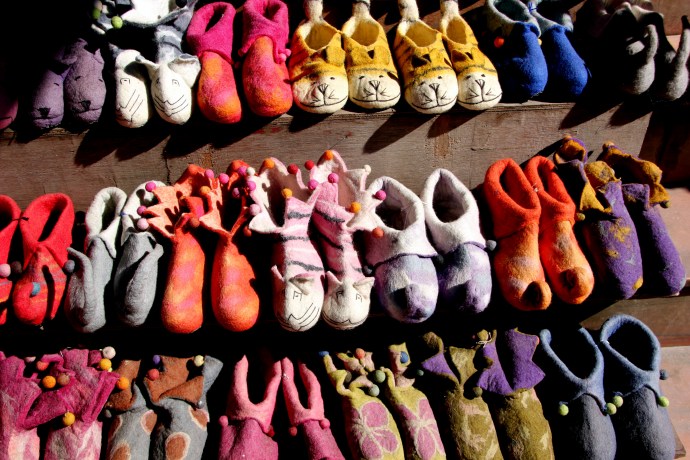
And I didn’t realize there would be so many adorable things to buy, but for once I’d have no appetite for shopping.

I was happy to be in Nepal, and a bit sad to be alone in my sweet room at Kathmandu Guest House.But mostly, I just needed to go see some Heifer projects and people… the cure for all crankiness.

(But that’s tomorrow’s story.)

Categories: Children, Heifer International, Hunger, Nepal, Photography, Poverty, Travel, Women | Tags: , , , , , , , , , , , , , | 28 Comments

Farewell, my lovely …

The new breed … smarter, better, prettier!

My last two days in China were spent visiting Heifer International projects in Jingu and Fuxing Village … towns that were hit hard by the disastrous 7.8 earthquake that tore a path of destruction 500 kilometers through the heart of Sichuan province on May 12, 2008. These rural communities raised livestock and fruit, but inside the collapsing barns and houses most of the livestock were killed – along with 68,000 people.

The rebuilding of the Earthquake- Affected area by the Chinese government has been intense, but the Lizhou Poverty Alleviation Bureau chose to work with Heifer for livestock replacement because of its reputation for long-term results. (Or as the Heifer China staff humbly told me, “Our strict standards, high expectations of our farmers, and precise reporting of results make us challenging to work with. But I think we got chosen because we have a reputation for changing people, communities, and the government entities we work with for good.”)

Yang Shengxue, a master breeder & his wife Wuchang Lian in their newly renovated pig barn in Jingu.

The project started in March 2010  in the two villages (and six neighboring communities) with the establishment of 26 Self Help Groups consisting of about 20 families each. They met weekly to begin trainings in animal husbandry; breeding; group savings; animal barn improvement; Heifer concepts like the 12 Cornerstones in cooperation, sharing and gender equality; and value chain marketing.

Only then—after six months’ work – did the 505 families in Lizhou receive their animals. Some chose chickens, some pigs – depending on the land they had to raise crops and the labor required. But by the end of 2011, those original 505 families had recruited 505 more families to form new SHGs, passed on their trainings, and are getting ready to pass on the gift of animals in June of this year.

A captivating local pig!

And what a gift!! The pigs, in particular, are beauties.

The new breed of sows provided by Heifer are more shapely than the local stock (these are the words of the villagers, but I’m not taking sides as I kind of got attached to the local babe on your left), they grow heavier faster with more meat and less fat, and when they do reproduce, the sows have 13-16 babies in a litter. Unfortunately, there have been some fertility issues with the new breed and Heifer vet techs are working to encourage the farmers to feed the sows carefully with only raw food, give vaccinations, and keep their barns clean and hygienic to promote pregnancy.

Oh, Mama!

One of the indomitable ladies of Fuxing.

In Fuxing I met with the only all-women’s Self Help Group, as most of the men have left to work in the city, their teenagers are away at boarding school, and the women have been left behind to farm and raise animals.

Organic forage is best.

Communally, the women can support one another, meeting once a week to share their stories, discuss animal problems (for instance, when a pig develops a weak hind leg, you don’t just wait for it to die, you treat it with meds and stop feeding it so much protein and no cooked food…good to know!!). The women also work together to maintain the new road into town, clean the village, and build reservoirs to harvest water to get them through the 2-month drought period when they used to have to carry water up to the fields in buckets.

The villages are beautiful – blanketed with yellow fields of rapeseed (for oil), orchards, and neat fields, but the women have despaired of their children moving back here. “Emotionally we want them to come back, but financially, we know they can’t survive here. Our children can’t get used to the hard farm work we do or handle the risk of a failed crop or lost animals.”

“They’ll have an easier, better life in the city,” another mother says.

… I’ll be waiting …

I ask the mothers if they want to move to the city and they laugh and say in unison, “Never. It’s hard here but we can’t get used to the air and the noise in the city. Maybe things will get better someday and our children will come back to the farm.”

I’ll leave you with this haunting song from the women of Fuxing (sorry it’s dark but we were inside by a fire)!

Next stop… Nepal!!

Categories: Agriculture, Animals, China, Farming, Heifer International, Photography, Travel, Women | Tags: , , , , , , , , , , , | 10 Comments

A little bon-bon for Mother’s Day

(With thanks/apologies to Cyndi Lauper for borrowing her beautiful song! And of course, you can click here to support Heifer and the moms it is helping all over the world!)

Categories: Children, Heifer International, Mothers, Photography, Travel, Women | Tags: , , | 19 Comments

A scaredy-cat taste of China.

Fish-head soup

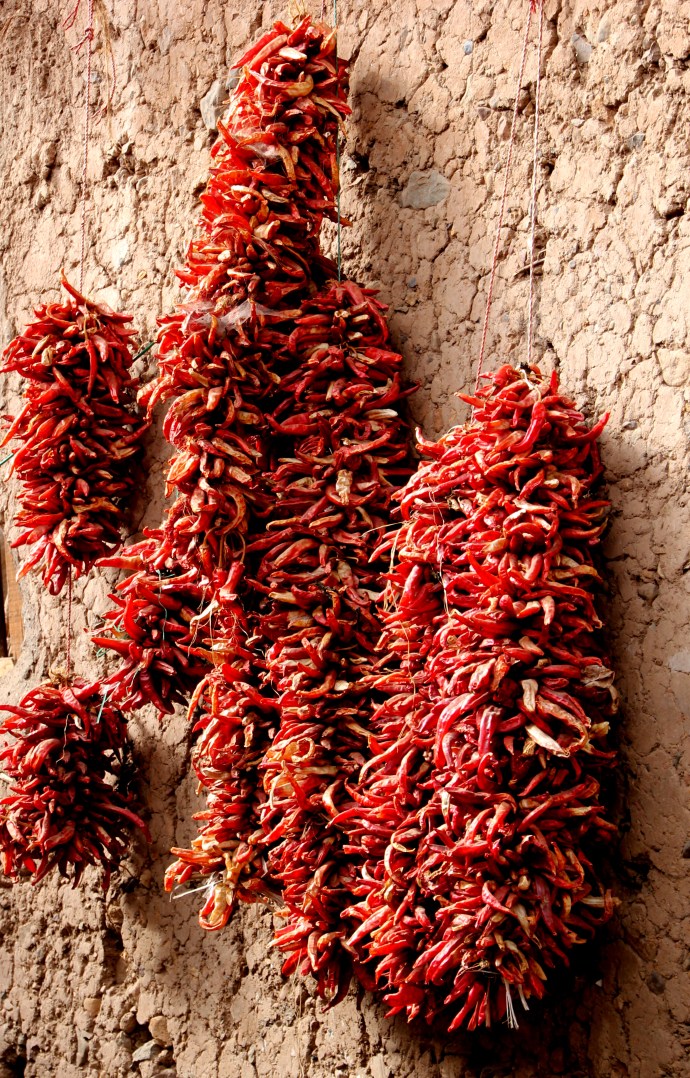
I was a tiny bit afraid of eating in China (because I’m a food wimp) but since I was going to Sichuan, China’s spiciest province, I knew at least my vegetables and tofu would be full of flavor and kick. And boy oh boy, was that an understatement. The Sichuanese douse just about everything in a devilish, oily-red brew of onions, garlic, chiles and pepper, and when it comes to eating, they bring the heat.

Pork fat with vegetables

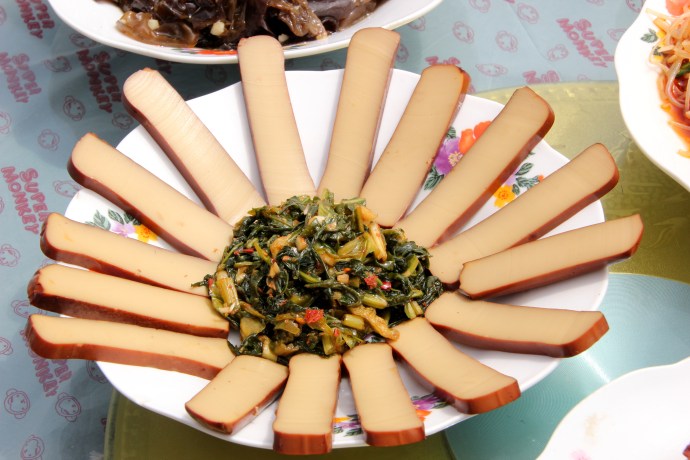
Now, I’m not claiming that I ate everything you’ll see here … not even close. But what I have to say is that despite my deep loathing for most Chinese food in the States (all that greasy, MSG-infused, takeout grossness), the food in China was the most elegant, beautiful, serious, creative, fresh, lovely and inspired cuisine I’ve experienced anywhere.

Duck tongue (no, it’s not a metaphor and yes, I agree — they’re disguising it quite beautifully).

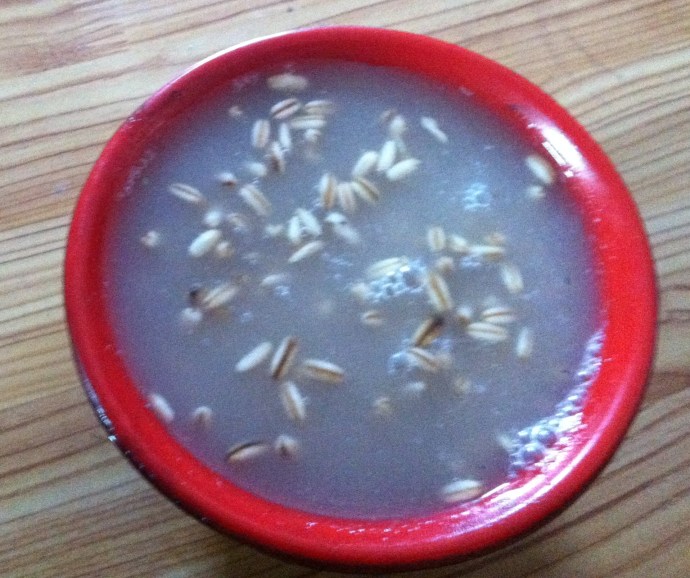
Even when the Chinese were serving alcohol, they managed to offer something I’d never seen or heard of: a big, heaping BOWL of fermented oats (I did try this, but not more than one courageous gulp).In fact, everything was so beautiful and looked so seductively innocent, I had to always ask my Heifer China hosts what the dish was, so I didn’t mistakenly tuck into some brain marrow and beans, or soft intestines and greens.

Intestines (I think)… but aren’t they pretty?

People who eat a lot of tofu are considered a joke in China, so I was happy I could entertain my hosts so easily. I was also complimented on my agile use of chopsticks — and no, I’m not kidding. The only thing I found really hard to pick up were the big wedges of cucumber and the individual roasted nuts.

One nut at a time … but SO worth it!

This tofu was beautiful and boring, but man, that center green salad packed a punch!

My only real challenge was breakfast. And here’s why:

Even at lunch, almost every time we sat down, somebody was offering us a room temperature beer the size of a wine bottle (750 ml) — and even though I like Tsingtao, a little beer goes a long way with me. I found myself longing passionately for a glass of Diet Coke, or more accurately, a gin & tonic, but that was a dim dream. As was any hope of getting a cup of coffee that wasn’t concocted of powdered Nescafe and hot water.

All the effort in China goes into tea – like this chrysanthemum version that was superb (but still not coffee, alas).

Dessert was also not happening — but the Sichuanese served a lot of dishes that were so gorgeous, I couldn’t believe they weren’t sweet — even after I tasted them. What a fake-out!

It’s just plain pumpkin.

Buckwheat “cake” that tasted a lot like sawdust.

The real Chinese idea of dessert … up to $180/pack for the most VIP brands.

In short, eating in China was an adventure — and like any adventure, sometimes you’re totally in, and sometimes you sit on the sidelines– or get dragged, kicking and screaming, into the game.

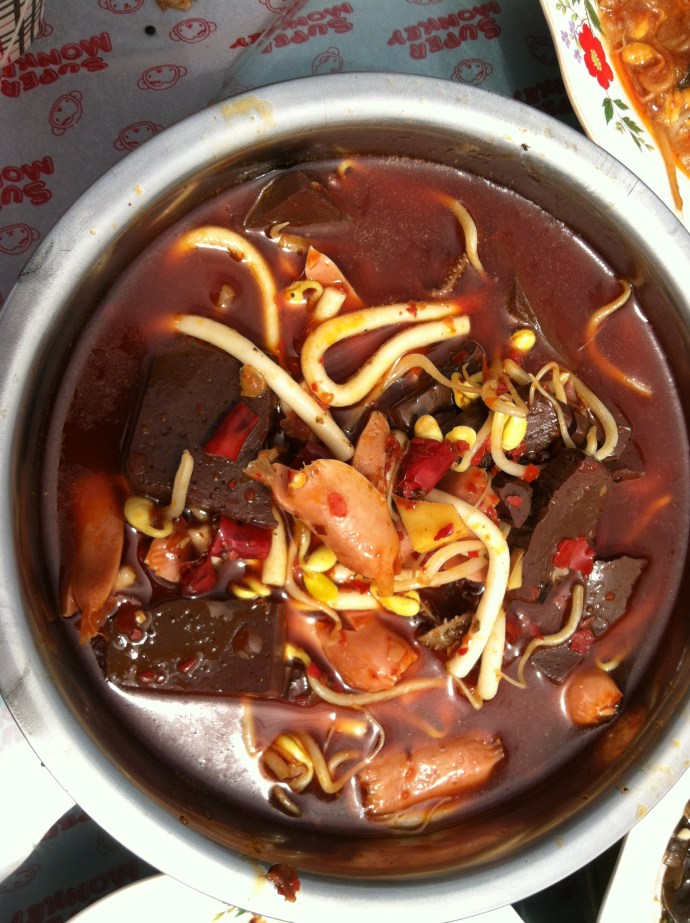
Blood soup….seriously.

My Chinese hosts were always very sweetly protective of me and my vegetarian habits, although they kept offering me big slabs of meat, so I guess they either knew I wasn’t a true vegetarian (an “opportunistic vegetarian” is how I like to think of myself) or they just couldn’t grasp the concept of not wanting to chow down on a tasty hunk of chicken’s feet. Either way, I made it through and just hope I didn’t insult anybody too badly.

Hmmm … who could resist?

And by the time I got to Nepal, I really did kinda miss having noodles for breakfast. With chile, of course!

Breakfast of champions

Bon appetit!!

Categories: China, Food, Heifer International, Photography, Travel | Tags: , , , , , , , , , , , , , , , | 45 Comments

Blog at WordPress.com.