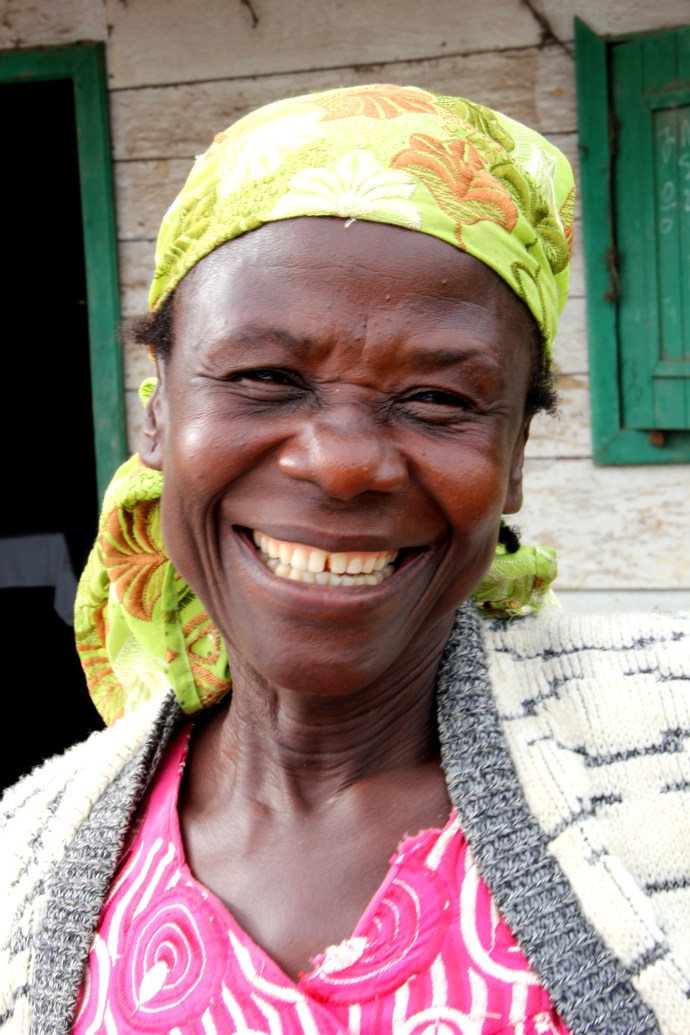
Travel

Bienvenue Cameroon!

When I was heading off to Cameroon the most common question I was asked was: “Ummm, where is that?” Cleverly, I’d logged on to Wikipedia where I found this helpful diagram… so now you know!

Cameroon is not a place many people have been, but that doesn’t make it any less fascinating (and to my mind, more so). In fact, this country of 20 million people in a landmass the size of California is a kind of mini-Africa, with every climate represented within its borders: coast, desert, mountains, rainforest and savanna– as well as pretty much all the problems and challenges that beset the continent (and that we Westerners had a big hand in creating).
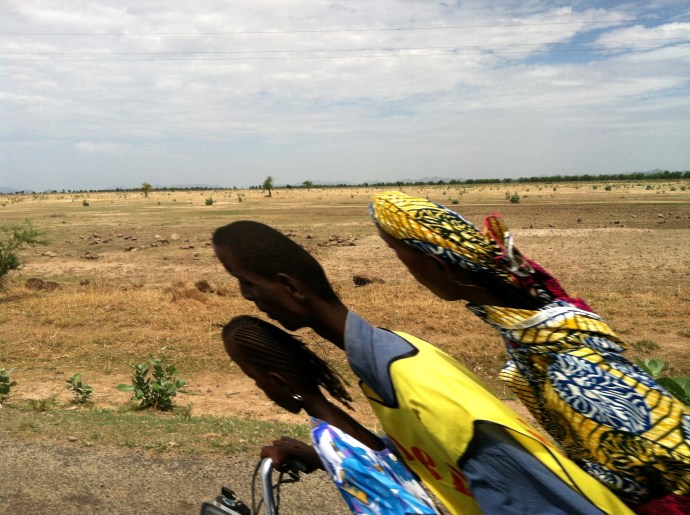
The extremely dry, extremely beautiful Nord.

In the Far North (or “L’extreme Nord” as the French poetically put it) the land is in the Sahel, the 100- to 600-mile wide swath that stretches across Africa and lies between the Sahara to the north, and the savanna grasslands to the south. This is the poorest part of Cameroon, the least educated, the hottest, the driest and oddly, the most populous, with a population that’s exploded 37% in the last 12 years.

In the south, the land is wet, fertile, and home to equatorial rainforests, rich plantations of timber, bananas, cocoa and rubber, coastal ports, and Cameroon’s biggest trade center in Douala and the capital city of Yaounde. Though the South is primarily Christian and the North has many Muslims, there is religious harmony in Cameroon and a long (though repressive and corrupt) history of political stability since Cameroon gained independence, after 45 years of colonialism, from France and Britain in 1961 – a year I actually remember.
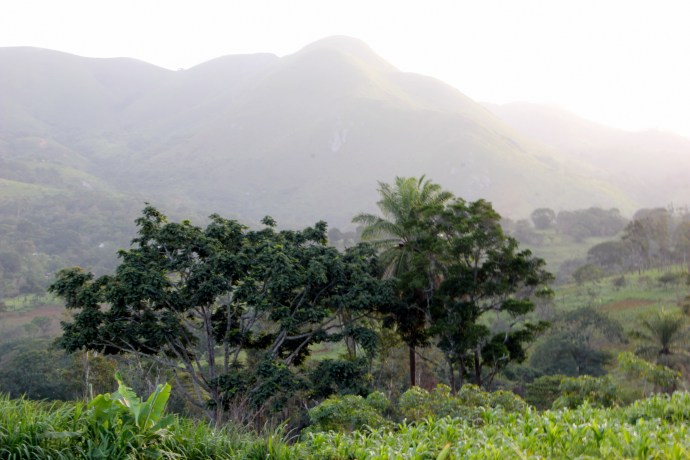
It’s a young country, and although the poverty index is heart-breakingly high (the average income is $538/year – but only $220 in the Far North), the people are filled with energy and purpose. At 6 a.m., the streets are packed with folks of all ages going to work and school, and the place is jumping – no matter where you are.
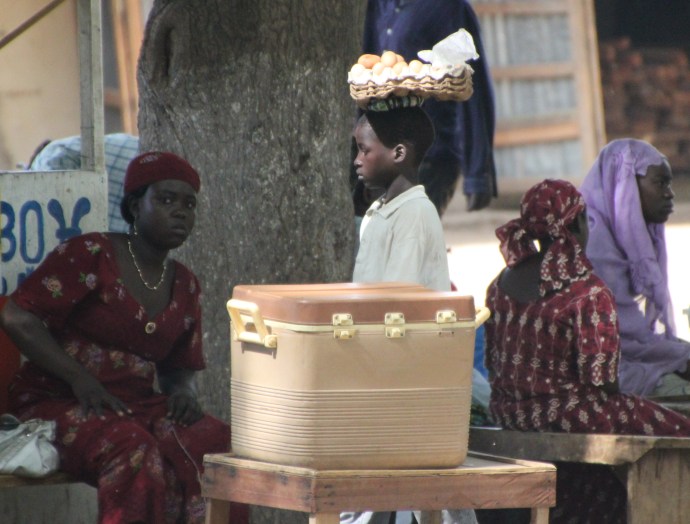
And naturally, the people of Cameroon are gorgeous.

I wasn’t expecting to love Cameroon – or to get to see so much of it, but luckily we missed our plane the first day (totally not my fault), and so I ended up seeing far more of the country than was originally planned. I found myself mesmerized by both the lush South and the sere Far North, grieved by the wretched poverty I witnessed, and captivated by some of the strangest Heifer livestock projects I’ve ever seen.

It was a beautiful, wild ride – can’t wait to take you there!  
Oh … and I’m a little bit tired of doing all the work on this blog (tee hee!) so here’s my latest offer: You write me one question that you really want answered about Cameroon (or about my biggest travel challenge, or my shoe size, or my worst hotel experience) and I’ll do a whole Readers’ Twenty Questions post with all my responses. Game on!

Categories: Africa, Cameroon, Heifer International, Hunger, Photography, Poverty, Travel | Tags: , , , , , , , , , , | 48 Comments

A new Namaste.

In my farewell post for Nepal, I thought I’d bow to the adage that actions speak louder than words. And the most common action in Nepal is the lovely Namaste (described in a whole bunch of words below).

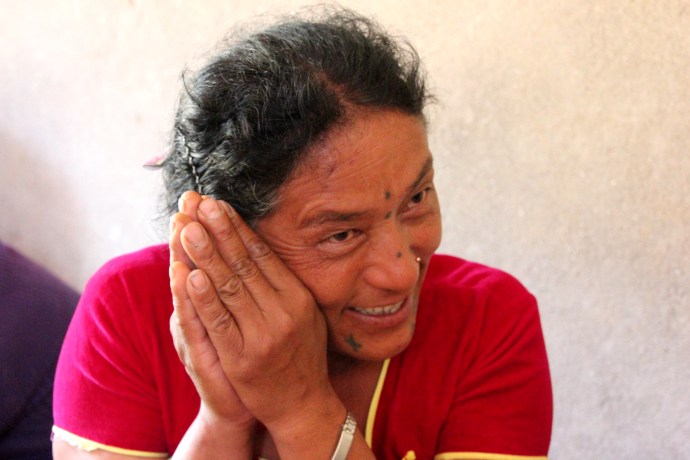
When I was visiting the amazing women in Lamatol Village, Chitwan, President Nani Maiya Lama of the Self Help Women’s Group & Cooperative cut to the heart of the matter by describing what the Heifer trainings and animals had done for her.

“I used to be so shy and afraid to talk, I couldn’t even look at someone when I’d Namaste,” Nani said.

“But now that I can read a book, sign my name and earn my own income, I’ve got a new Namaste.”

For all the beautiful women (and men) of Nepal, here’s one final Namaste.

Categories: Animals, Heifer International, Hunger, Nepal, Photography, Poverty, Travel, Women | Tags: , , , , , | 11 Comments

What I ate in Nepal.

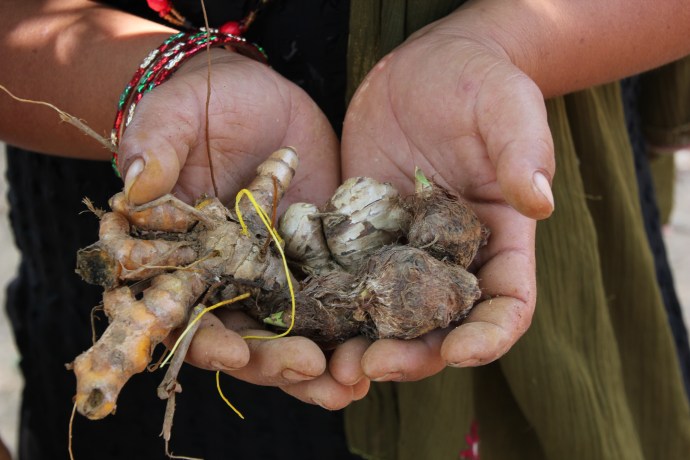
Ginger, Tumeric and Cassava … yum!

After (not) eating all the exotic food in China, arriving in Nepal was like coming back to Normalsville.

In crazy, touristy Kathmandu you could find every possible iteration of American food, including cinnamon rolls and pastries galore. (Obviously the trekkers are carb-loading.)

It was fun to see identifiable fruit and the tiny baby bananas.

Vegetarian chili and Everest beer was my boring but satisfying transitional meal for a day or two.

Then it was onto a beautiful dal plate of curry, rice and lentils, which is a staple of real Nepalese food.

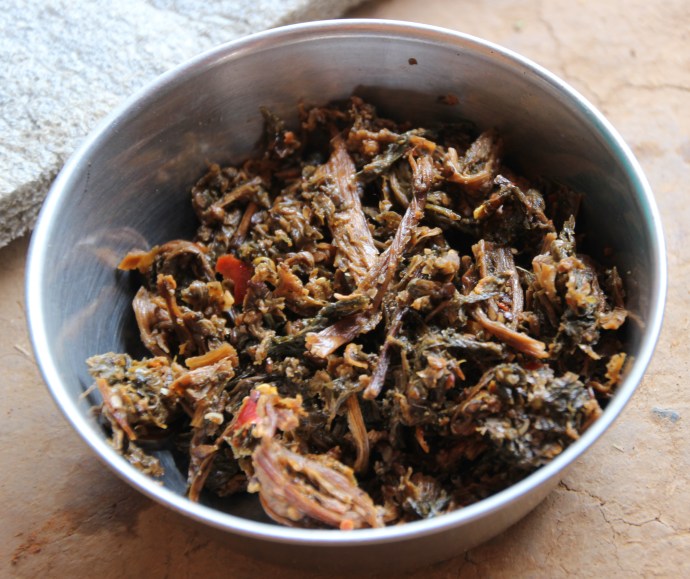
And some super yummy corn & bitter greens we ate for lunch on the porch with the women of Devitar Village.

But my favorite taste treat was in Shaktikhor, Chitwan in a snack shop where the owner whipped up a concoction of peas, potatoes, spices, and corn served on a piece of paper with a cardboard “spoon.”

I loved that the paper “plate” had writing on it. Now that’s recycling!

For 5 rupees (about 8 cents) it was spicy, hot, tangy, salty perfection. He sells about 100 a day and if I were in town his sales would probably double.

The last day we visited the Heifer Dairy Cooperative in Haraiya and met the women bringing in liters of water buffalo milk.

From there we went straight to pure yogurt heaven.

Namaste, folks… next food stop, Cameroon!!

Free range yogurt.

Categories: Food, Heifer International, Nepal, Photography, Travel | Tags: , , , , , , , , , , , | 17 Comments

She works hard for the money-less*

Goma Bhattarai is my kind of hero.

In 1991, she and a few other poor women in the small village of Gitanagar in Chitwan District, Nepal decided they wanted to start a women’s economic group, like men were forming. In those days, women couldn’t step outside their homes alone or talk to any man but their husband, they owned no property, and they were utterly dependent on their husbands for money – even to buy the tika red dye they wear on their foreheads.

When the women timidly approached the Ministry of Agriculture in the village to ask for a loan, they were told they had no assets and should come back with their husbands. Instead of that rejection crushing them, as Goma says, “It only fueled our determination.” Despite opposition from their husbands, 15 women joined together in secret meetings, each saving 25 rupees a month (that’s 30 cents). From that fund, every two months, they would buy 2 goats for a member, then start saving all over again.

Goma’s liberation army…

Give a girl a goat & she’ll thrive.

Goats were something the women knew how to raise, and it was acceptable women’s work in the village. Girls at marriage often bring livestock with them when they move to their husband’s house, and those are considered their possession (often their only possession). But saving up for two goats in two months was taking too long…

After a year, the women went to the District Livestock Office to try to register their group and met officer Mahendra Lohani – who happened to be in talks with Heifer to start programs in Nepal. After hearing the women talk about their struggle, their experiences and what they wanted to accomplish, Mahendra convinced Heifer to back the women, and in 1993 the Baruwa Goat Raising Project became Heifer’s first project in Nepal (and Mahendra quit his job and went to work for Heifer, where he’s now Vice President of Asia & South Pacific).

The women received 25 goats, and their visible success in raising and breeding the goats quickly convinced other village women to jump on board (and convinced most husbands that women earning an income was a good thing).  Soon 23 groups of women had formed, and in 5 years, 5 generations of goats from the original Heifer gift were passed on to families in need – but that wasn’t enough progress for Goma and her crew. It was taking too long for every women’s group to get goats; they wanted faster change.

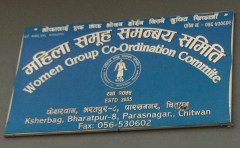
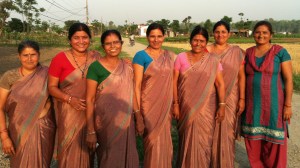
In 1997 the women decided to form an NGO that could ramp up the pace of things. The Women’s Group Coordination Committee was born and in 14 years they’ve managed 13 projects for Heifer, formed 275 women’s groups, helped 7,622 families rise out of poverty, and started a 373-member women’s cooperative.

Goma & Saraswoti Mishra, president of WGCC

But here’s where it gets really interesting. Last year, WGCC had a conversation with Pierre Ferrari, the new CEO of Heifer saying, “Things are going too slow. We need faster change.” (Are you noticing a pattern here?)

The indefatigable WGCC Team

So now they’re working with the government, Heifer and other co-ops on an $18 million initiative to develop a value chain that will supply 30% of the 500,000 goats that Kathmandu consumes every year (now mostly imported from India) with cleaner, healthier, Nepalese-raised goats that will profit Nepalese rural families and enable them to feed their country. Genius!!

As a person who’s never stayed at the same task for long, I’m in awe of the steadfast 21-year commitment and creativity that Goma and her compatriots have shown, fighting an endless battle to liberate Nepalese women from poverty and helplessness.

Who they’re fighting for…

“Tolerance and patience are the key to achieving anything,” Goma says cheerfully – meaning I’m in deep, deep trouble. “We face the same resistance in every village, but we are pioneers. Women look at us and know we’ve been exactly  where they are and changed… and they can, too.”

Sisterhood is powerful.


* With love & R-E-S-P-E-C-T for Donna Summer, Eternal Queen of Disco.

Categories: Animals, Heifer International, Nepal, Photography, Poverty, Travel, Women | Tags: , , , , , , , , , , , , | 21 Comments

Caste-ing a stone against prejudice.

Funny, she doesn’t look like an untouchable…

If you are horrified by discrimination in America (or wherever you live), the caste system in Nepal will drive you mental. As in many Hindu countries, Nepal has centuries of history where the caste you were born into not only determined your social position but also your rights, your profession, whom you could marry, and where you could live.

Neither does he…

The lower castes couldn’t enter the temple, the homes of the upper caste, use the same water tap, or even make eye-contact with a high-caste person. Even though new laws prohibit this kind of discrimination, culture and hundreds of years of history often overrides that.

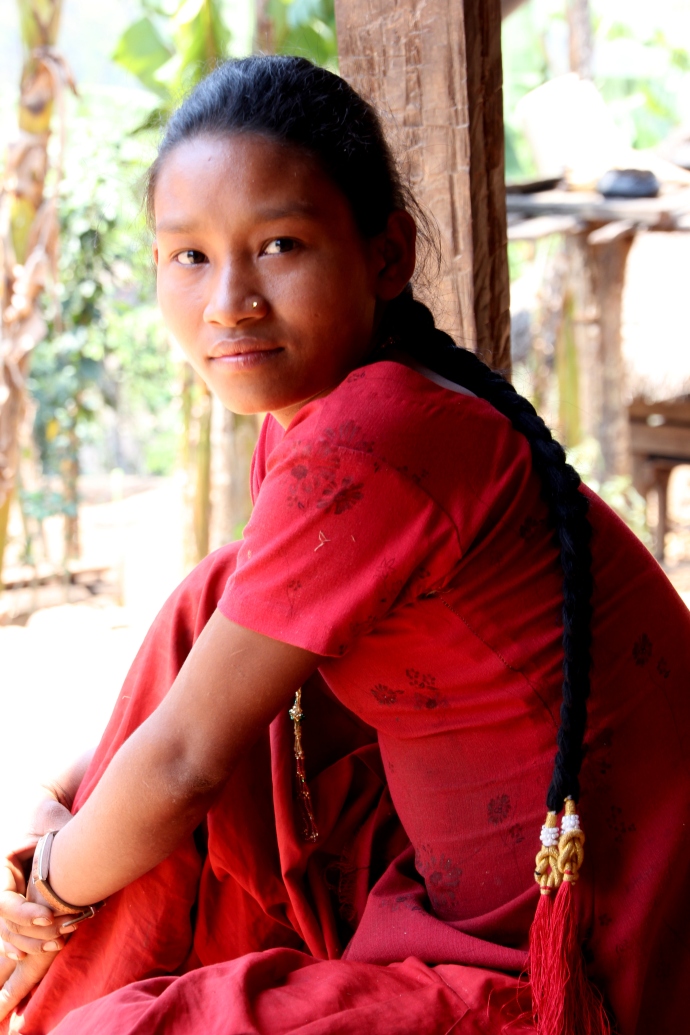
Which is what makes a project like Heifer’s in Agingare village in Chitwan feel so monumental. The Chepang people living here are jungle dwellers who were forced from the forest last generation by the Conservation Act, and they are considered an untouchable caste. They are small people and very beautiful, reminding me of Cambodians or the Hmong, yet with no experience in farming, raising animals or living in houses, they struggled to survive outside the jungle, and were shunned by nearby villages and isolated in ignorance.

Nor does she ….

The cheerful Rajinama…

But Rajinama Chepang, his wife Shreemaya and 7 children pretty much repudiate every prejudice commonly held about the Chepang people. Thought to be “carefree and careless,” they steadfastly worked their way through the Heifer teachings and passed on the gift of animals to other needy families in a rapid 18 months.

…and Shreemaya, mother of 7??!

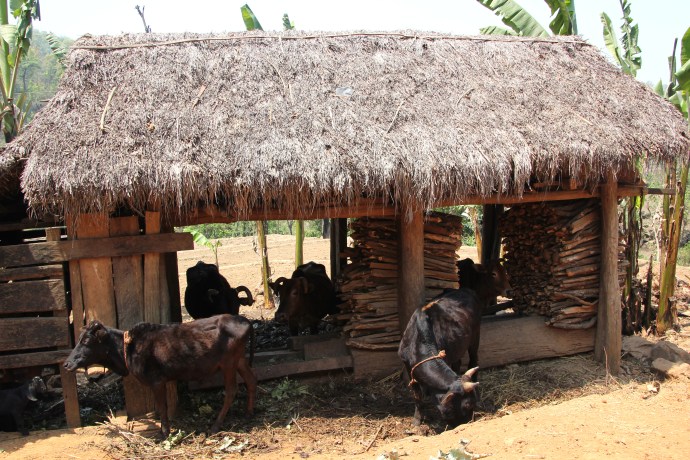
Considered by other villagers to be dirty and slovenly, these Chepangs keep their farm neat as a pin (is a pin neat??).  And though Chepang people were never thought to be good with livestock, Raji and Shreemaya’s 18 goats, 10 chickens, 3 cows, and 4 oxen look in the pink of health – and their children are polite and adorable– and all in school. Most impressive, they’ve shared the trainings of keeping a Healthy Household and good animal husbandry with other Chepang families, uplifting the whole community.

The tidy homestead (look at the woodstacks!) of Raji & Shreemaya Chepang.

Shiva Lal Chepang, teacher extraordinaire.

The Chepang people in Agingare were led in the Heifer project by Shiva Lal Chepang, the only caste member in the village to have any education at all. He’d only gone through 5thgrade (which would normally not qualify him to teach), but Heifer made him a teacher, trained him and paid him to teach literacy and the 12 Cornerstones to his neighbors.

Now he is the President of the Chepang group and has steered them into a 373-member co-op with neighboring villages that has built a Goat Collection Center to aggregate goats for sale directly to wholesalers (doubling their income), and a Vegetable Collection Center to do the same. The Chepangs are also part of the area’s Forest Users Group, with one member of each family volunteering with other villages to guard the forest from illegal logging, poaching and slash & burn agriculture. In short, they’ve become part of the community that once shunned them.

The beautiful family of Rajinama & Shreemaya Chepang (a few other kids sneaked in!)

The Chepang people in Agingare have not only proven their competency, they’ve given animals to nearby villages of a higher caste, further breaking down barriers of prejudice and separation. In fact, the Heifer implementer of the Agingare project is Sunita Regmi, from the highest Brahmin caste – and she is as proud of the Chepangs’ progress as a parent.

Sunita & the co-op’s new collection centers for goats & vegetables.

Me, too!

Categories: Agriculture, Animals, Nepal, Photography, Travel | Tags: , , , , , , , , , , , , | 28 Comments

Blog at WordPress.com.