

 I challenged y’all to come up with some questions for me — about Cameroon or my idiosyncratic travel habits. And just like the champions you are, you didn’t disappoint. (Sorry if the answers are too long — I felt like this was my Dear Abby moment & I couldn’t help myself!)
Jeffrey/Genie: What are the toilet facilities like in each of the countries to which you have traveled?
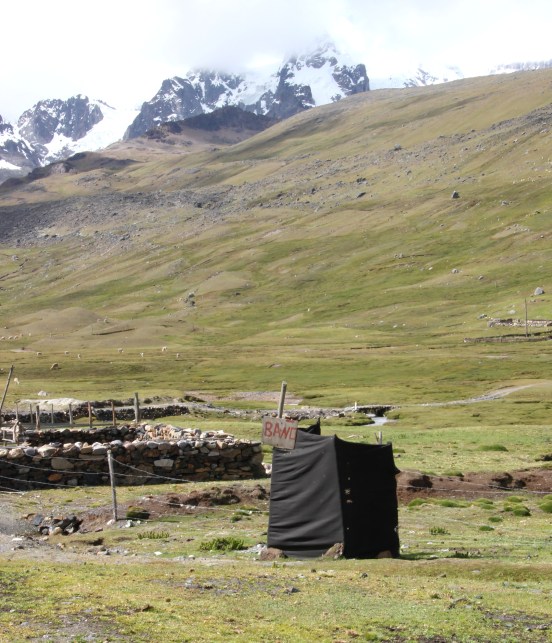
Way to start things off, Jeffrey/Genie! Toilets have been pretty consistently “challenging”… meaning something you would never accept in America, but can’t complain about when that’s the way people there live every day. In China and Nepal, toilets were usually a hole in the ground with two “footsteps” on either side – even in the airport. You learn to always, always carry toilet paper with you, but not to flush it as the sewers can’t handle it. In Haiti, a nightclub I went to had the weirdest toilet ever – it was four feet down in a dark tiled room with water running continuously all over the floor. In the Andes, our toilet was a simple hole in the ground and the “walls” only came up to your waist, but you were overlooking this magnificent mountain range and beautiful fields. Hard to object to that! In Cameroon, we almost never went to the bathroom in the villages but it was so hot, I could go all day without one… a real first! The one time I did have to go by the side of the road, I was so flummoxed (I couldn’t hide anywhere and I was so afraid the people in the house 50 yards away would see me and be really insulted), I went really fast and ending up peeing all over my skirt. TMI???
Pattie: How are you changing, in even the tiniest of ways, and what is one thing you wish you knew years ago about yourself/about the world?
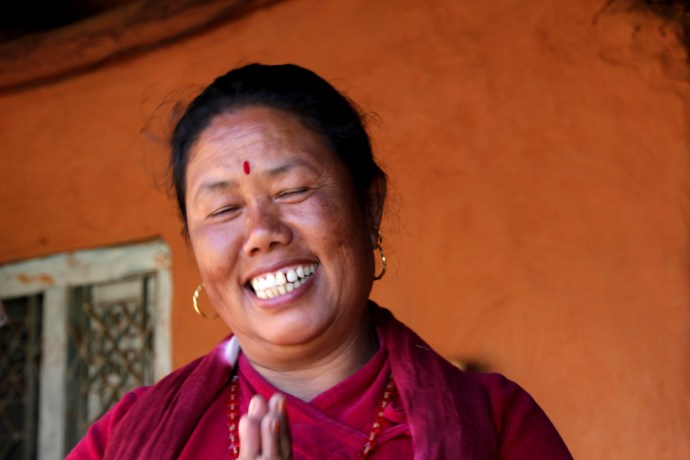
Acceptance is beautiful.
I am now very aware when I’m being demanding and obnoxious, which doesn’t sound like monumental progress but it totally is. Ask my husband. I wish I knew years ago, on a deep visceral level, that when all your plans go out the window, there is usually a reason for it, and it’ll all turn out not just okay, but better. In other words – be flexible and trust the process (which translates into – don’t flip out and get demanding and obnoxious). It’s a beautiful circuitous thing.
EarthSkyOceanRedux: How many of the 200+ languages in Cameroon have you heard? The signs in one photo you posted look like what they call Camfranglais!

I love the signs in every country … priceless!
I heard about 9-10 languages in Cameroon and in your photo I suppose it is Camfranglais, a completely unintelligible form of pidgin English they speak in the South. It’s a mish-mash of tribal language, English and French – so you think you know what you’re hearing and then get left totally in the dust (where I spend most my time).
Ember:I would like to know what you think the hardest part of your Heifer travels has been so far. battling bureaucracy for visas? being a food wimp? leaving people behind?

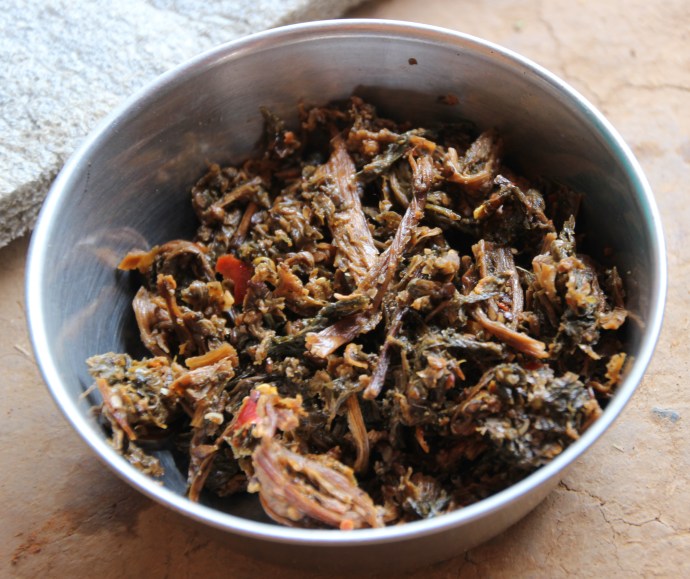
Every once in a while I get adventurous: this was delicious bitter vegetable soup!
Being a food wimp isn’t hard; it’s who I am. It is hard to always be leaving somebody behind… whether it’s my very patient husband or darling daughter, or the people in the villages that I can’t bear to think I’ll never see again. 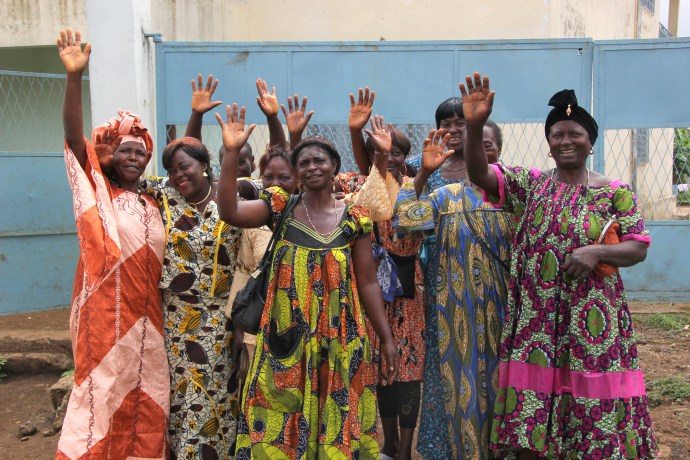
The Tibet visa debacle in China got me pretty unhinged, but most trips go pretty smoothly, so I can’t say that’s too stressful. And sometimes I feel like I just can’t face another 18 hour plane ride – but then I do, and it’s fine. It’s the price of entry to all these amazing places…. Really, the hardest part is feeling like I’m not doing enough to promote the blog & repay Heifer’s investment in my travel, because that’s money that could have gone into programs. But trying to promote a blog is an endless quest, and there’s never enough you can do, so I have to just do my best and let it go.
Martha: What is something you didn’t pack early on, but wished you had, and now never forget? Also, what small thing have you brought as a gift for those special circumstances when you want to thank someone you’ve met on your travels?
I never forget Immodium (for obvious reasons). I first brought pens, candy and crayons for the kids, but as it turned out that’s not such a great idea and Heifer doesn’t support it, as it ends up singling out an individual or group for special treatment and that breeds resentment and envy. I have given money for Heifer staff to develop prints from the DVDs I burn so the people in the villages can have a photo of themselves…. very often their first. I love the idea of that!
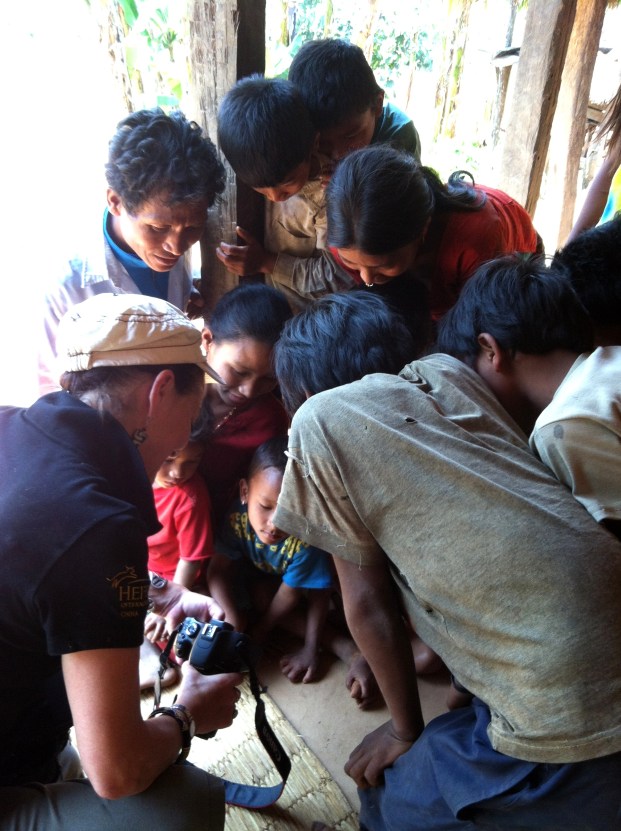
Sharing my shots in Agingare village, Nepal with the Chepang family.
Deb: I look at the barren north and look forward to hearing what plan was made. The fertile area appears to be great for farming. Do they send excess produce north to help feed the starving? Another bigger question, why is the north most populated?

The indomitable Tapita Bamiya and 3 of her 9 children in the Far North.
The Far North is largely Islamic and has a tradition of polygamous families (about 60-80%) and those families always have more children. It was completely typical in my visit for women to have 7-9 children; it’s their culture and the farm communities need lots of hands to do the work. They grow cassava, maize, and cotton in the Far North but since the dry seasons are getting longer, those stored crops have to last a loooong time. Heifer is working with communities on creating better storage facilities, but as far as I know, there is very little transfer of food from South to North –basically because the people in the Far North have no income with which to buy the food. (The average income is $220/year– that’s what they mean by “subsistence.”)
Kathryn: I find the heat hard to bear. Especially when there is no AC or sometimes even electricity. In those cases, what have you done to stay cool? And one more–what kind of “tool kit” do you travel with–if any–i.e. flashlight, medicines, comfort foods, batteries? In other words, what do you travel with “just in case?”
Luckily, most of the places we stay have AC, even though it intermittently goes out and/or creates a huge racket (see the video above). My emergency rations include ibuprofen, cough drops, vitamins, Advil PM (essential when you’ve GOT to get some sleep and you’re in a weird place), little baggies of dark M&Ms for sweet attacks, and sometimes a bottle of bourbon or gin from duty-free “just in case” I need a cocktail at the end of a long day. And I always have my headlamp so I can read without depending on that scourge of humanity: the dim, horrid compact fluorescent light.
Susan: What’s the single strangest thing you’ve seen either in Cameroon or on the whole voyage – either of the edible, or allegedly edible, variety, or anything else that you were taken aback by?
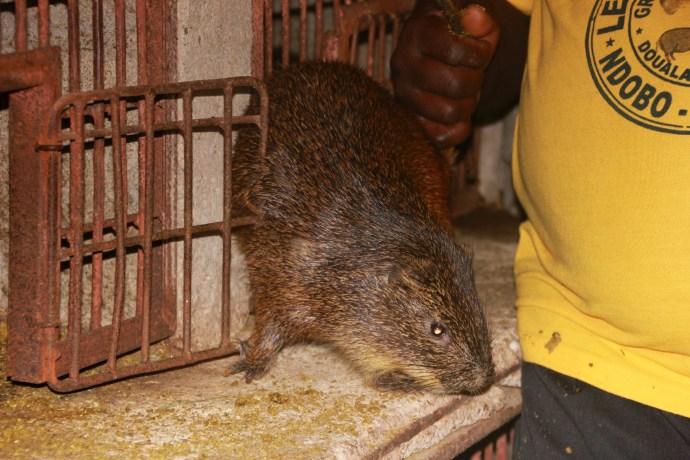 The Cane Rats (I always thought they were saying “king rats”) that they raise, sell, and eat in Cameroon … and believe me, I will be telling you a lot more about them. Rodents are my single greatest fear, so seeing this project was the most courageous thing I’ve made myself do this year.
Denise: How do you address the enormous inequality that you witness?

Profile of malnutrition.
I try to bear witness to it and not to feel ashamed of my enormous privilege and abundance (because what good does that do anybody?) In the villages, I try really hard to communicate my respect, compassion and desire to understand their world and their circumstances – and my intention to take that knowledge back and share it with others. Sometimes the poverty is overwhelming and terribly difficult to see, but if the people living in it have faith and hope, how can I have anything less?
Kim: Do they have any semblance of states or nation over there working together to build a united area? Trade, monies, supplies, etc.?
I’m not sure if your question is about Africa or Cameroon, but there are many pan-African organizations that are working to try to develop strategies to combat desertification, deforestation, climate change, hunger and poverty … but as you know, there is a lot of tension and conflict between African nations (like Western ones) and it’s not easy to work together, particularly when resources are so very limited.
Meredith: My question is; you are being well received, but how welcome are ‘foreign’ ideas in these various countries? Part of the cause of the poverty that ‘requires’ Heifer to be active is due to foreign interference, isn’t it? I am most certainly not downing the Heifer programs, which seem to be very tailored to the local needs, just wonder if eventually Heifer sees itself ‘out of a job’?
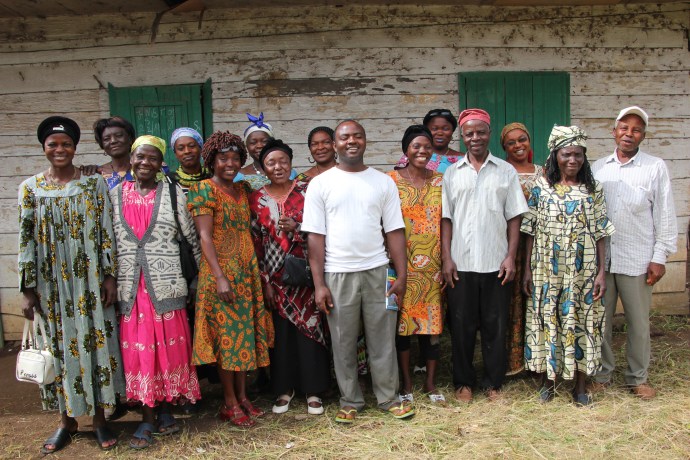
A local Groupe d’Initiative Commune (GIC) from Melong, Cameroon, organized since 2001.
You are totally right, Meredith, the legacy of colonialism and rapacious foreign companies are irrefutably part of the cause of global poverty. Yet most developing countries realize full well they need help and are eager for it; the problem is one of hierarchy and process. One of the beautiful things about Heifer is that it’s not a top-down organization but always works with organized local communities – and its programs come out of needs those communities expressly request. Even the animals given are not delegated; the communities themselves decide what livestock they want to raise. Also, Heifer staff around the world is about 98% native to the country – and the programs are further localized and run in collaboration with neighborhood groups (which in Cameroon mean the local tribes) and government offices. In truth, the biggest drawback Heifer faces is that while some NGOs give away everything (and then leave), Heifer requires people to participate in their own development, and that is a much higher bar. But of course, the ultimate dream for an anti-poverty organization is to put itself out of a job… we should be so lucky!
Emile: I am Cameroonian, and as you know the country has been poorly managed by the politicians, so what can the local people do to improve their lot? Heifer and KIVA are good initiatives and God knows we need all the help we can get but there must be something local that can be improved upon to alleviate poverty.
Whenever I think about the kids in Cameroon, I hope and pray like crazy that things will change faster so they’ll have a chance for a better future. Heifer’s programs in Cameroon (and everywhere) are very much on the local level, but there’s a new focus on scaling up, coordinating programs and creating cooperatives that will have a bigger impact. If we could double the productivity of the 678 million smallholder farmers around the world, they could feed the world.. and that is certainly Heifer’s goal. I hope you are inspired by the stories of the programs, coming right up!
Brenda: I’m a big believer that educating girls and helping women have productive employment is a key to ending poverty. Where have you seen significant efforts being made to engage women and girls as equal stakeholders and conversely, where does more focus need to be put on women’s involvement?

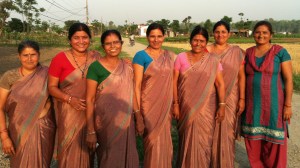
Women’s meeting, Mordok, Cameroon
Brenda, Heifer always focuses on women’s empowerment (many programs are 90% women) — because that’s the fastest way to lift a community, and women and children are the most vulnerable economically. In Nepal and Peru, I was particularly struck by the dynamic attitude of the women and how hard they were working for change. I’m always kind of horrified by the size of families in poor areas because it puts so much more pressure on the families’ resources, but statistics do show that the minute girls are educated and given opportunity, birth rates plummet…so the answer is to give the families the financial means to educate girls and in a generation, everything can change. Also, Heifer’s Gender Equality trainings (part of every project) are really transformative in getting men to share decision-making and work with their wives — and that’s a giant leap forward for womankind.
Sybil: What are the effects of climate change in Cameroon?

Queue for the water borehole at Barza Village in the Far North, Cameroon.
Just in case this picture doesn’t say a thousand words, I’ll be writing about beautiful, beleaguered Barza next week — it’s ground zero in climate change.
REALLY APPRECIATE YOUR QUESTIONS .. LET’S DO THIS AGAIN SOMETIME!















 Heifer 12 x 12