Photography

Good news/Bad news

BIG news, y’all — in the good and (only tiny bit) bad department!

First the good news: I’ve been selected as a Top 5 Finalist for Volunteer of the Year, Southern (Sweet Tea) Division in the 4th Annual CLASSY Awards, from a pool of 2,400 nominations for my work on this blog. The CLASSY Awards is the largest philanthropic awards ceremony in the country, celebrating the greatest charitable achievements by nonprofit organizations, socially conscious businesses, and individuals worldwide. (And yes, you are right: “Stay Classy, San Diego!” was Will Ferrell/Ron Burgundy’s snappy sign-off in Anchorman.) In 2011, nearly 2,000 organizations and volunteers were nominated for a CLASSY Award, and their collective efforts impacted the lives of more than 200,000,000 people in 71 countries worldwide. So that means I’m in very good/intimidating company!

The bad news? I’m obviously going to badger you to vote for me (hence this post) … but the GOOD news is, you only have to vote ONCE. If I’ve already badgered you on facebook, twitter, etc. I apologize profusely .. but this is a really big deal for Heifer and therefore, for all my beautiful Heifer peeps … so I gotta beg you to vote for me by July 26 (that’s this Thursday).

One of my beautiful Heifer peeps.

Click here http://www.stayclassy.org/classy-awards/vote to get to the site and follow the big, wonking (but actually simple) explanation below of how to vote (most important step is the FINAL one to log in to Facebook):

Thank you a million times over … I really appreciate your vote!!
*If you don’t have a Facebook account, click on the option to open a StayClassy account and use that!

Categories: Heifer International, Inspiration, Photography, Travel | Tags: , , , , , | 24 Comments

A hard rain’s gonna fall.

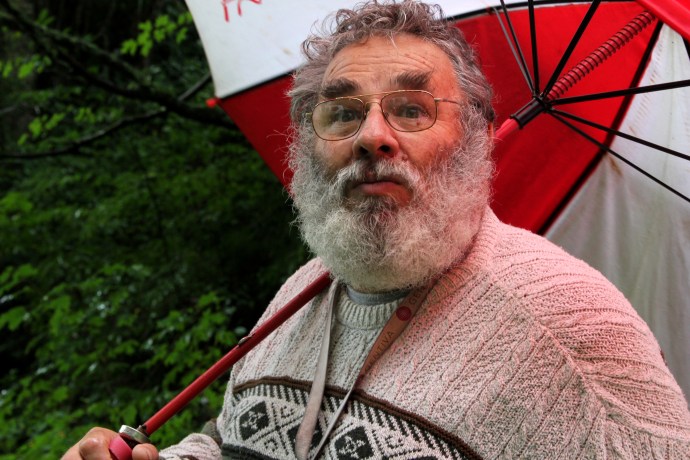
Bill has been unemployed for 2 years, sold his house in Florida at a loss, and now lives in tents with 5 family members.

I just got back from spending six rain-soaked days in Appalachia and the Arkansas Delta, viewing some of Heifer’s newest projects to reduce hunger and poverty here in America.It was a damp and eye-opening trip in which I got to meet some remarkable people, experience despair at the entrenched poverty I saw, and feel beams of hope in the creativity and passion of farmers, cheese-makers, biker pastors, entrepreneurs and dreamers in both regions.

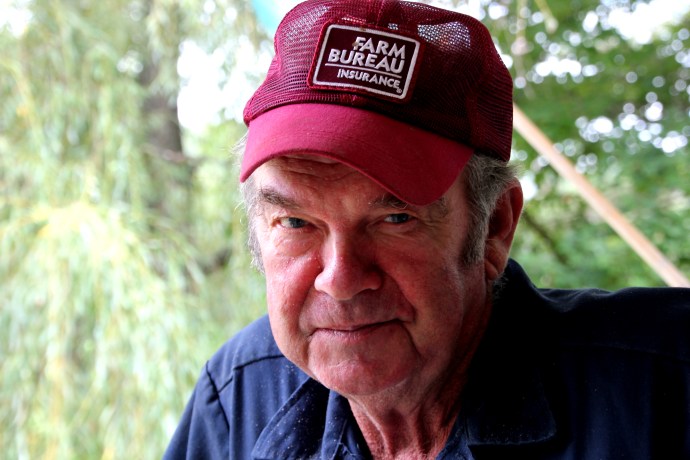
Charles Church, organic farmer.

American poverty is the great silent shame of our time. At $15 trillion dollars a year, the American economy is the largest in the world, producing ¼ of the planet’s entire gross domestic product. Yet one in seven people in America live below the poverty line of $22, 113 for a family of four. A person working full-time at the minimum wage earns about $14,500 a year – and 80% of single mothers heading a household work at least one job and still can’t provide the basic necessities for their children.

The largest demographic of poor people are children – with 44% of American children living in low-income working families. About half of all American children will receive Supplemental Nutrition Assistance Program benefits (food stamps) before the age of 20; for African-American children, that number is 90%. And the majority of all Americans will live in poverty at some point before reaching the age of 65.

Now that you’re in a coma of statistics and depression … let me tell you how beautiful Appalachia is. (I’ll get to the beautiful Delta later..)

I spent my first four days in Boone, North Carolina and the surrounding towns in far western North Carolina. Even in the relentless rain, the green of the fields and mountains, the tidy gardens of the small households, and the sweeping vistas you knew were huddled behind the dark clouds were glorious. But you can’t eat beauty. In Appalachia, the problem is not a lack of land but the lack of production of local food, organic produce, and provisions that are sought after and becoming ever more valuable in these tourist-driven communities. In the Delta, amidst huge agribusiness farms on endless swaths of land, the people have no acres to call their own, their local economy has dried up like the drought-stricken earth, and they are literally stranded in towns buffeted by crop dusters and blown past by anyone with wheels.

Poison raining down from above.

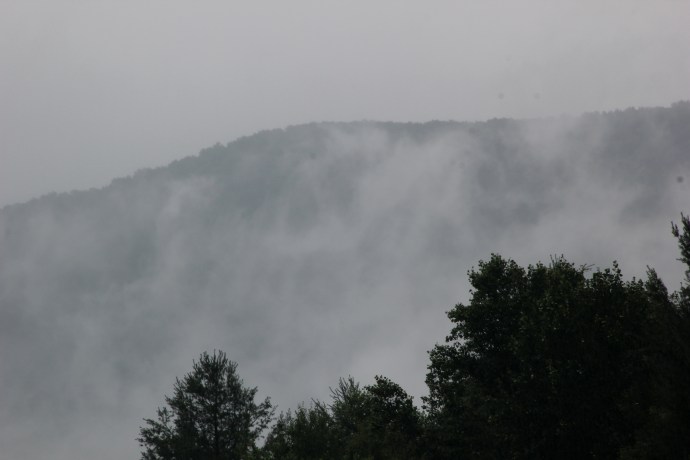
Somehow the land’s beauty in both places makes the hardscrabble lives of so many residents even harder to accept– along with the mining and manufacturing jobs that won’t be coming back, and the traditional ways of life evaporating like fog on the mountain. But Heifer and a bunch of other folks in these mountain and Delta communities are determined to draw a line in the sand and simply not allow that to happen.

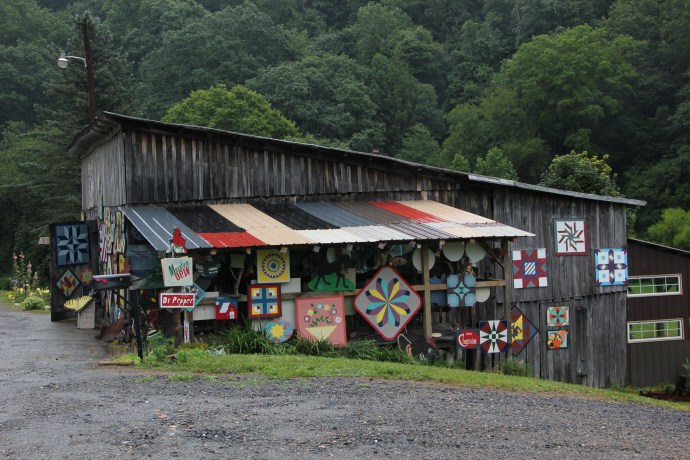
Mast General provisions .. yummm!

I’ll be telling you their stories over the next two weeks. In the meantime, here’s Bob Dylan to take you back to those days when we swore we’d never let something like this happen here.

Categories: Agriculture, Appalachia, Farming, Heifer International, Photography, Poverty, Travel | Tags: , , , , , , , , , , , , , , , , , , , , | 25 Comments

La Revedere, Romania!

Because I’m linguistically challenged, I managed to mangle quite a few Romanian words during my visit  there with Heifer. La revedere (or goodbye) was one of the worst, because invariably, I’d think I had a firm grasp on the word, only to lose my courage midway through and simply garble out something like “Lareverrrrrraaah.” So when I saw this sign as I was leaving the adorable town of Belin outside Brasov, I leapt at the chance to finally get the word right.

As this is my last post on Romania (I leave for Appalachia tomorrow), I’m feeling kind of sad — so I figured I’d bid you La Revedere with some of my favorite shots from this beautiful country.

The astonishing Turda Salt Mine, in operation since Roman times.

A Roma (or gypsy) family in a horse-drawn wagon.

Somewhat over-enthusiastic nursing.

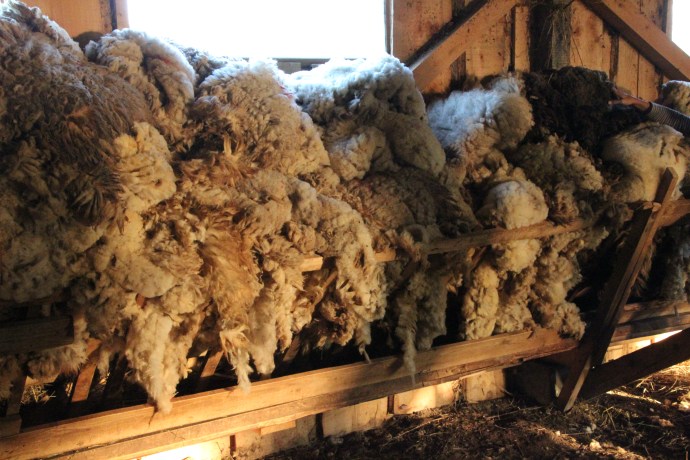
Sheep’s wool in the barn.

A handmade greenhouse from cast-off glass panels that reminded me of Frank Gehry’s buildings.

Sweet Belin family, waiting for their new heifer from Danone, a partner with Heifer.

Aschileu pastoral.

Inside the salt mine.

Getting to know you …

Making hay while the sun shines.

The roofs of Cluj-Napoca.

Laura Voisinet, my great travel companion, in the orchard.

Green walnuts (used in a favorite jam)

To all my friends in Romania, la revedere .. and Appalachia, here I come!

Categories: Heifer International, Photography, Romania, Travel | Tags: , , , , , , , , | 26 Comments

What’s the Buzz?

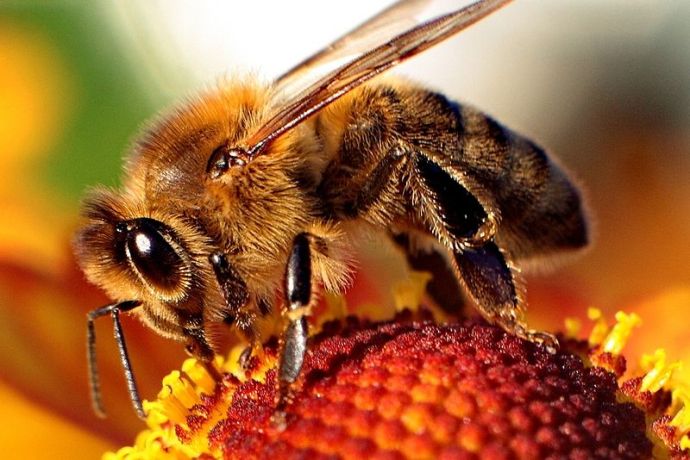
Photo used by permission from Maciej Czyzewski.

If I were a (queen) bee, I can tell you where I’d be hiving out: in the lush, green highlands around Vrancioaia, Romania.

Photo used by permission from Jon Sullivan

First of all, the place is packed with orchards of apples, plums, pears, huckleberries and wild cherries, flowers, acacia trees, and … yeah, pollen. Second, the people here know how to work with bees since there is a long rural tradition of beekeeping. And finally, since Heifer International has started a Sheep Bees & Trees Project to help support struggling farmers in the area, there’d be a million other bees around to adore me.

I love bees. Of all the animals that Heifer gives away, I’m probably most intrigued by these creatures, because they have the most complex social behavior of almost any species on earth (except the species that deep-fries Snickers, holds beauty pageants, and develops hedge funds).

So when we got the opportunity to visit bee charmer Claudia Vatra in Vrancioaia (see map), I was totally jazzed. Claudia started her hives with some intense training and 1,000 bees from Heifer, (supplemented by Google notes from her university-going daughters), and she now has 5 hives but is aiming to cultivate 30.

Each hive produces 15-25 liters of honey a year, depending on the weather (bees don’t like it too rainy, as it washes away all the good pollen), and she sells her honey locally for about $5 a liter. According to Claudia, once you’ve established the hive, it doesn’t take more than a few hours a day to check on the baby bees, smoke the hive to kill viruses if the bees are getting sick, and put in supplements to help the bees grow.
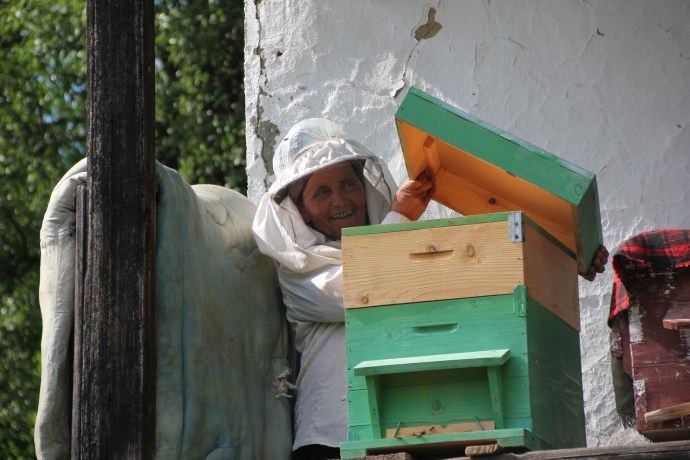
Claudia harvests her honey three times a year: once after the acacia trees bloom, once after the linden (lime) trees bloom, and the last after the flowers bloom. When I asked how bees make honey, things got a bit more complicated.
Apparently, the hive consists of 7 classifications of bees but generally they break down to queens, who produce eggs (2,000 a day, every spring) after having orgiastic sex with a passel of drones… drones who are males without stingers and who die after mating… and worker bees who are non-reproducing females that live a few short weeks and do all the real work.

For the first 10 days of their lives, the female worker bees clean the hive and feed the larvae. After this, they begin building comb cells. On days 16 through 20, a worker receives nectar and pollen from older workers and stores it. After the 20th day, a worker leaves the hive and spends the remainder of its life as a forager. The population of a healthy hive in mid-summer can average between 40,000 and 80,000 bees who go find the nectar, come back and dance vigorously to tell the other workers where the nectar is, collect the nectar and chew it up with an enzyme, then place the resulting honey in the comb.” (Wikipedia)

What they’re after …

Although there is only one queen per hive, new virgin queens develop in comb cells as a backup replacement, but Claudia told me the queen stings all her daughters to death before they can become a threat. Then when she gets too old, the whole hive stings her to death and crowns a new queen. Wow, makes Wall Street look like Mayberry!

Claudia instructing Laura in bee lore.

I was actually afraid to get too close to the hives and all that mother/daughter conflict, so Heifer’s trusty Laura Manciu crept in and took the close-ups. Claudia then took us inside her real house, treated us to some cherry bounce (I suspect alcohol is what gives it its bounce), and insisted we take home some of her gorgeous Romanian honey. No problemmo!

Claudia has already trained and passed along three hives full of bees to her neighbors, plans to learn how to harvest the lucrative bee pollen, and is collecting the beeswax for candles. At the age of 52, she is a font of energy and full of plans for her bees: exactly the outcome Heifer desired, since beekeeping is perfect for older farmers who can’t keep up with the physical demands of regular farming (although Claudia and Ion are still doing that as well).

The real queen bee!

And luckily, Vrancioaia will continue to be a sweet spot for honey-making. Heifer has donated 162,000 acacia trees (acacia honey is the gold standard) to 800 families for reforestation to mitigate the loss of moisture, soil erosion, and provide land stability in this earthquake-prone region. With all the Passing on the Gift requirements, this Sheep Bees & Trees Project will ultimately benefit 1,872 families in this poor rural area.
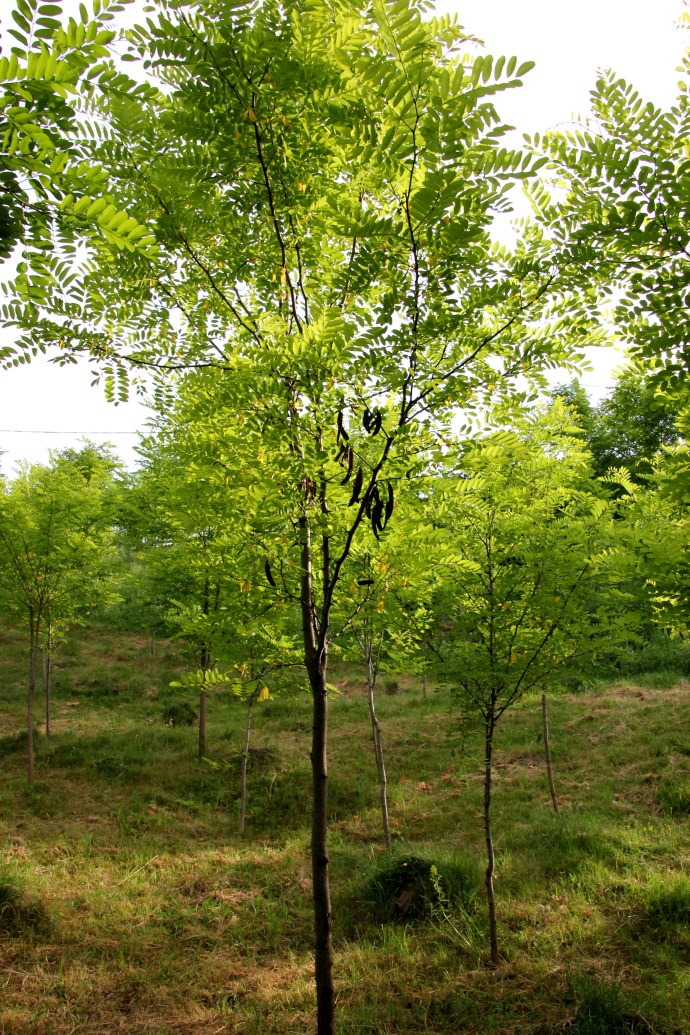
162,000 of these babies were planted on land donated by the local administration.

Having been unnerved by stories about bee colony-collapse and pollinators under peril, I was wildly happy to see this beekeeping project and be able to report back to all my Heifer friends who have bought bees! I’ve also safely hidden my private  stash of Claudia honey from my husband and children – so I don’t have to sting them to death.

Claudia’s (and her bees’) glorious honey.

Sweet!

Categories: Animals, Environment, Farming, Heifer International, Inspiration, Photography, Romania, Travel | Tags: , , , , , , , , , , , , , , , , , , , , , | 16 Comments

Kaboom!

Here’s to America the Beautiful…

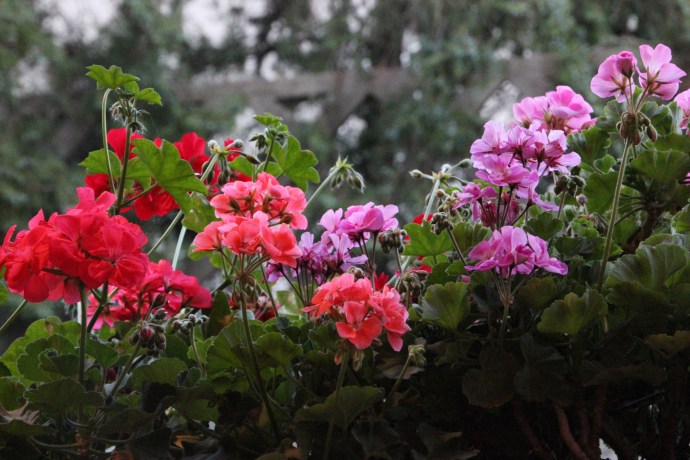
with a fireworks display of flowers…

from Edgartown, Martha’s Vineyard.

Three cheers for the Red, White & Blue!

Happy 4th of July, folks!

Categories: Appalachia, Photography, USA | Tags: , , , , , , , , | 31 Comments

Blog at WordPress.com.