Photography

Head in the clouds.

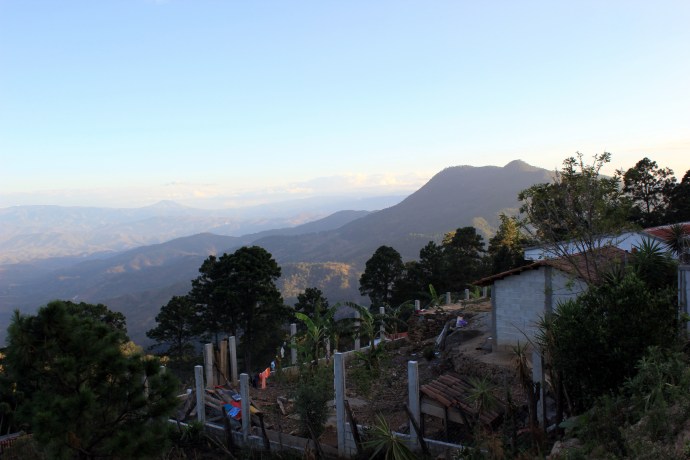
My first day visiting Heifer projects in Guatemala, we got high. Specifically, we drove up, up and up to the highlands of Alta Verapaz and into the cloud forest– which is the last refuge of Guatemala’s national bird, the resplendent quetzal, as well as hundreds of other bird species that are quickly disappearing from the earth.

Quetzal photo by Knut Eisermann.

Unfortunately, we didn’t quite get high enough to go to the 50+ villages past the end of the road that are served by Proeval Raxmu, Heifer’s partner project in Alta Verapaz, because, before I came, the folks were told, “A woman is coming from the North and she can’t walk.”

Hmmm – for the record, I can walk and love to – but I suspect the Heifer folks weren’t sure I was up for a 5-hour jaunt into the cloud forest. (I totally was.) But what I saw in Chicoj Village was more than enough to make me wish I could have spent days there.

Once it's gone, it's gone.

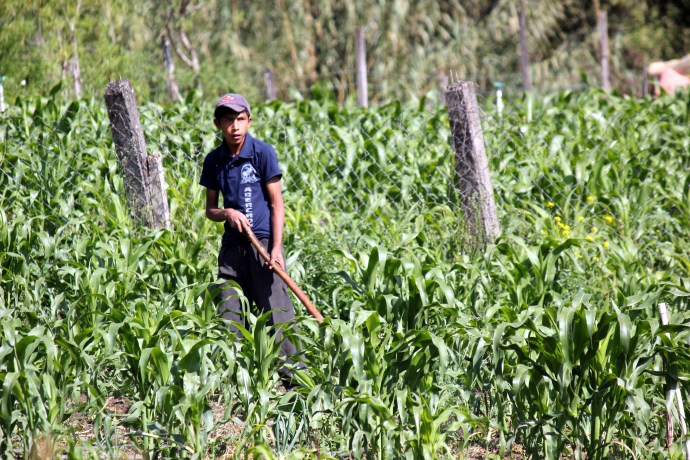
Despite the breathtaking beauty of the area, Alta Verapaz has a poverty rate of about 79%, and chronic malnutrition that affects about 52% of the poor farmers who live here. Deforestation of the cloud forest is happening at one of the highest rates in Latin America and is directly related to poverty. Trying to eke out a living on incredibly steep slopes at high altitude, farmers desperate for rich forest soil and firewood cut down the trees, burn off the rich forest mulch, and plant corn which further depletes the soil. What’s at risk is not just bird populations (Guatemala is home to about 700 bird species and millions of migratory birds from North America), but also life-giving water, since cutting down the trees also reduces rainfall. And that leads to fewer crops and less food.In response, this Heifer-supported program works to educate and motivate local farmers to farm more productively, grow more nutritious food, and protect their own forest. It’s a big, daunting job, but Proeval is totally up for it. Six years ago, they began working with 3 families in 1 village– and today they have passed along to more than 450 families the gift of turkeys, rabbits and sheep; red worms (for composting); fruit trees; forage crops (to feed the animals) and most importantly – campesino to campesino trainings in how to farm abundantly without damaging the cloud forest.

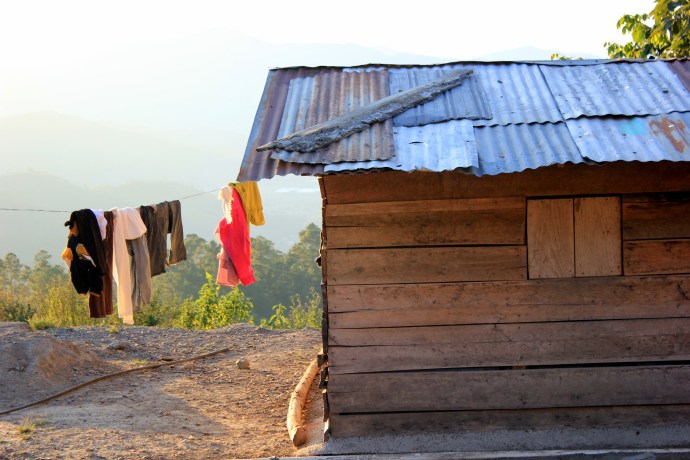
Going to a Proeval community meeting in Chicoj Village to see the project first-hand was like attending a big, wordy love-in. We met in Pedro’s simple, beautiful home where everybody–and I mean everybody–  had the chance to talk about what the project means to him or her.

Pedro's home, site of our community meeting.
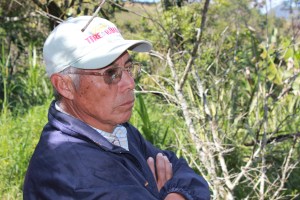
Rudy, the veritable Johnny Appleseed of Raxmu, has been helping local farmers to plant some 800 plum, nectarine, peach and apple orchards for a dozen years and is a tireless promoter of the nutritional and income-producing capacity of fruit trees. He’s carried the stakes of trees on his back for 5 hours to give to farmers in the remote villages, taught them how to graft, compost and use bees to pollinate the trees, and never stopped singing the praises of fruit.

Efraim, a biological monitor whose job entails getting up at 4:30 a.m. to hear, see and count birds in the cloud forest, lives a two-hour walk high up in the mountains with his beautiful wife Rosaria and 3 little girls. He  told us how happy he was to be chosen as one of 3 trained monitors out of 30 applicants — while his wife explained he was gifted because he gave his heart to the forest. Efraim has trained intensively, can identify over 250 birds by sight, and has worked with some of the world’s foremost ornithologists who come to Guatemala and rely on his research. Because I come from a family of birdwatchers (and am singularly oblivious when it comes to finding a single bird in a tree) I was in awe of his cool, calm demeanor and obvious talent for the work.

Robert & Tara, tireless principals of Proeval (she is from Holland and he is American), spoke in Q’eqchi’, Spanish and English of the methods they’re passing on: using living and dead barriers to prevent erosion on the steep hillsides; combining animal manure & red worms to build a beautiful compost instead of using expensive, damaging chemicals; conserving water and soil; keeping animals healthy, hygienic and fertile; and growing a nutritious blend of crops that will better feed both the children and animals of Chicoj Village.

Flowers grown in living barriers to erosion can also be sold for income.

Together with Heifer International and the project participants, Proeval Raxmu’s mission is to use a double passing-on-of-gifts (each beneficiary family gives at least twice what they have received in animals, forage crops, and trainings to 2 other families) to restore ecological, environmental and human harmony to the people of this region. In fact, the Q’eqchi’ word “Raxmu” means fresh and cloudy weather, indicating a change to come. I felt the distinct winds of change in that room, in the palpable community solidarity and dignity of the families that surrounded me — and I felt their hope for the future. It was nothing short of intoxicating.

In the next two years, Heifer will give 800 Atla Verapaz families 6,700 rabbits, 4,364 turkeys and 360 super-cute sheep.

(And next post, I’ll get to the amazing Alta Verapaz WOMEN involved!)

Categories: Animals, Guatemala, Heifer International, Photography, Poverty, Travel | Tags: , , , , , , , , , , , , , , , , , , , , | 178 Comments

Hola, amigos …Aqui estoy!

Wish you were here, too!

Guatemala is a beautiful country – incredibly mountainous, over 60% indigenous, and poor in everything but spirit.In the past three days, I’ve seen Heifer projects working to stop deforestation of the rainforest, find better ways of growing maize for these “people of the corn,” and seen the transformative power of animals in a community.

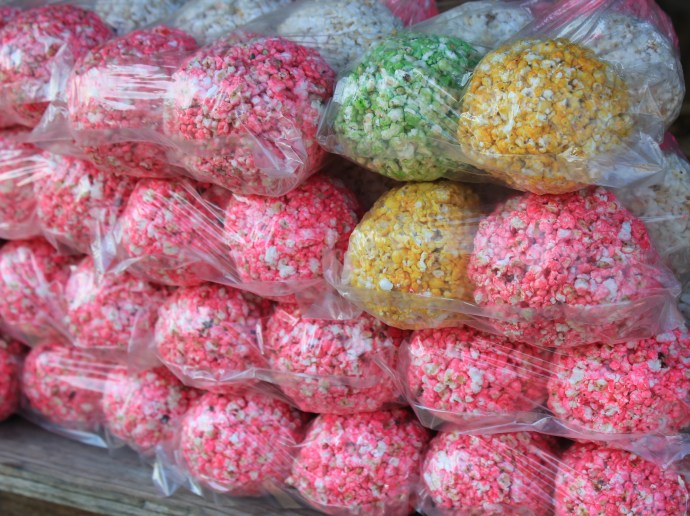
But since I’m working like a true Heifer person (or like the campesinos they work for), I’m on the road at 7 am and not back until about 10 p.m., and I haven’t had time to stop and write.Today I’m going to the countryside outside Huehuetenango, and spending the night with a family in a seed bank project… yippee!I’ll be writing my stories this weekend in the lake area of Atitlan.  Until then, here’s a small photographic taste of Guatemala.¡Buen apetito!

Categories: Guatemala, Heifer International, Photography, Travel | Tags: , , , , , , , , , , , | 12 Comments

Welcome to Guatemala!!

Travel is so exciting!

Can you see the P.M. mistake in this picture? Me neither.

For instance, this first trip of my Heifer 12 x 12 blog project started off the night before I left when (at 2 a.m. as I was still watering plants and folding laundry), I switched my husband’s i-phone alarm from 6 am to 6:40 so I could get a few more minutes of sleep. And then, when we woke up at 7:40 completely alarm-free , we had lots of exciting words between us before we even left for the airport for our 9:50 flight!

Exciting roads!

When we arrived in Guatemala City, we were met by the lovely Heifer Guatemala team of Vivian (who handles all logistics & communications and speaks beautiful English) and Byron, the country projects manager, who is an engaging, adorable guy and an admittedly cautious driver… which he proved on a 4-hour drive to Coban, a city in the mountains 120 miles from the airport.

Along the beautiful drive through Guatemala’s mountainous backbone, we stopped at an overlook behind a bar, so I could take a photo, and as I was snapping this very shot …

.. an overserved patron stepped out behind me and wasted copious amounts of hard-earned Gallo beer on the pavement about 2 inches from my feet. Precious memories…

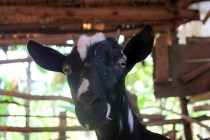
And when we finally stopped for lunch in a classy restaurant, from across the crowded room I found myself mesmerized by the gaze of a small, dark stranger –and that was really exciting.

I’m telling you, this inaugural trip is starting off just beautifully … can’t wait to tell you about the cloud forest, campesinos and compost we encountered yesterday!! Stay tuned…

Categories: Guatemala, Heifer International, Photography, Travel | Tags: , , , , , , | 28 Comments

A few tender words about pigs…

I don’t know jack about raising animals – and I don’t think I’m alone. In fact, it can be said (and yes, dozens of people have said, in various terms of disparagement) that I am not an animal person at all.

You're serving WHAT for dinner?

But the great thing about visiting a Heifer International project is that you learn a boatload about animal husbandry, even if you don’t want to. And while that still may not make you feel swoony about cows, pigs, chickens and goats, it certainly gives you new respect for them. It also makes you realize how utterly removed that we westerners are from any and all sources of our food, despite our utter dependence on animals for life itself. In the developing world, you see on a daily basis how important animals are to communities and how closely people live with their animals. The symbiotic relationship between man and beast is tangible and immediate: we simply can’t live without each other.

Jocelyn gazing at her beautiful pig.

But let’s get back to the pork…In Uganda, pigs are valued for their meat, their manure, and their ability to produce other pigs – and lots of them. The mommy pig is a sow; the daddy pig is a boar – and piglets can become parents at an astonishing six months of age. Pretty much as soon as they’re weaned, they’re ready to roll. The gestation period for a pig is apparently as precise as a Rolex –and their litters are huge: a sow will often produce 10-15 piglets in one furrow. And they’ll produce at least five farrows in a lifetime. That’s some serious fertility.Almost as precious as piglets is pig poop …which can be used to fertilize banana plants, maize, coffee, potatoes, cassava, and all kinds of fruit trees. When you’re raising everything you eat, and there are no stores in the event you run out of Hot Pockets, a better crop isn’t just a luxury, it’s a lifeline. And poop makes a huge difference.

Heifer trainings teach farmers how to compost in six trenches: plant and food scraps are turned over and moved from one trench to the other over the course of weeks, until the sixth one produces beautiful composted soil, ready to be mixed with manure & used as fertilizer.

Now that's some fine pig-chow!

To produce this glorious rot, pigs eat banana peels, napia grass, elephant grass, food scraps and peels. The farmers must learn to plant and grow the food the pigs need to eat – which is another Heifer training. And farmers need to carefully cross-breed the pigs, so the pig stock remains strong and there isn’t an issue of in-breeding. The Heifer extension workers carefully chart the breeding and bring in boars from surrounding communities to protect the genetic integrity of the animals.

Beautiful pig-pen

It’s a complicated thing, raising pigs. Particularly when you have to do every single part of it yourself: build the shed, raise the plants to feed the animal, breed it, milk it, sell it, slaughter it, and use its poop to grow more food for your family (and for your animals).

Bringing home the bacon is both remarkably complex and utterly essential.

Even to my eyes, a pig is a beautiful thing.

Categories: Animals, Heifer International, Hunger, Photography, Travel, Uganda | Tags: , , , , , , , | 32 Comments

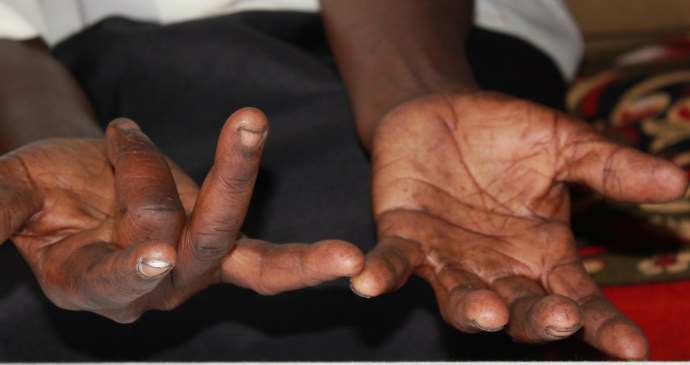
A widow’s hands.

Because I can’t WAIT to get started on this blog, even though my first official trip isn’t until January 22, when I leave for Guatemala, I’m writing this post from my Heifer Trial Run in Uganda, in November 2011 — which was spectacular!!)

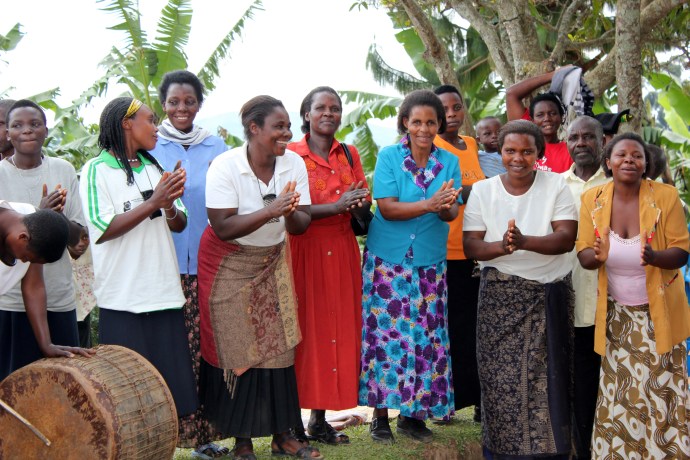
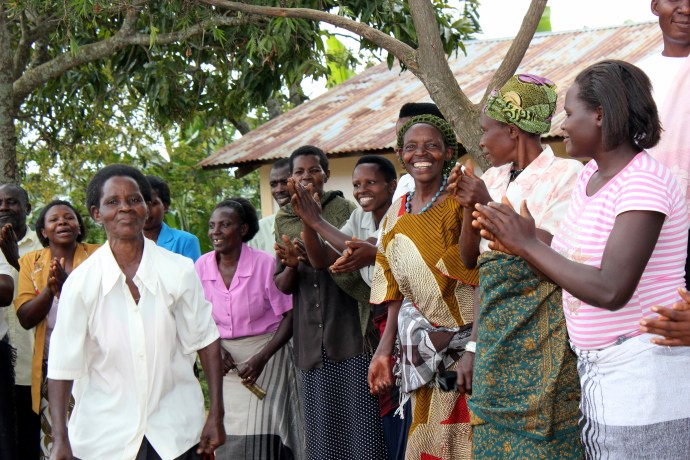
When I first was driven up to the Kinkizi Piggery Heifer International project in Rukungiri, Uganda, I expected to be met by a family or two. Instead, we pulled into a block party – 30 or so people, dressed to the nines, were singing dancing, drumming and clapping to welcome me. Whoa.

“Who do they think I am, Hillary Clinton without the pantsuit?” I wondered guiltily.

I sat attentively with George Asilmwe, the extension coordinator for Heifer Uganda, while the women launched into another song, “We are happy to meet you, welcome …” and I was delighted to hear the singers stretch “wel-eh-come” into a three-syllable word. The choir director was as exuberant as Leonard Bernstein, and I croakily sang along. Then we got down to business as I munched on my elaborately-served refreshments of bananas, peanuts and soda pop (a rare treat in the countryside).

The chairperson, members of the executive committee and zone leaders (all elected from the community, by the community) greeted me and thanked me for coming. They lauded the benefits they had gained from this Heifer project, which started in 2007 and includes 50 families (it’s now been “weaned” as they say in Heifer language). Then they asked me to speak – which was not something George had prepared me for. But gamely, I talked about my joy in being there and my desire to hear the families’ stories and to share them with my readers. (I didn’t mention a blog since I figured they would think it was some kind of water problem or rodent).

A clean pig is a happy pig!

Then off we went on the home visits. Everyone walks everywhere in Uganda, so as we walked (with 35 people clustered around me and children peeking shyly up at me from behind their mothers’ skirts), I asked the kind of stupid questions only a Westerner would. Were pigs better than cows? (Yes, for a small household. And sows are better than cows because they won’t mate again once they’re pregnant …good to know!) Why do you build a shed? (They used to tether their pigs but the Heifer trainings taught them to build a shed instead – so the pigs won’t root around and destroy their banana plantations and they can be kept clean, healthy and unsmelly.) Keeping the pigs in a shed also allows the farmers to collect the manure easily, and use it to fertilize crops, like coffee, corn and beans that can be planted under the banana trees and earn the families added income. In fact, the manure is almost as valuable as the animal itself.

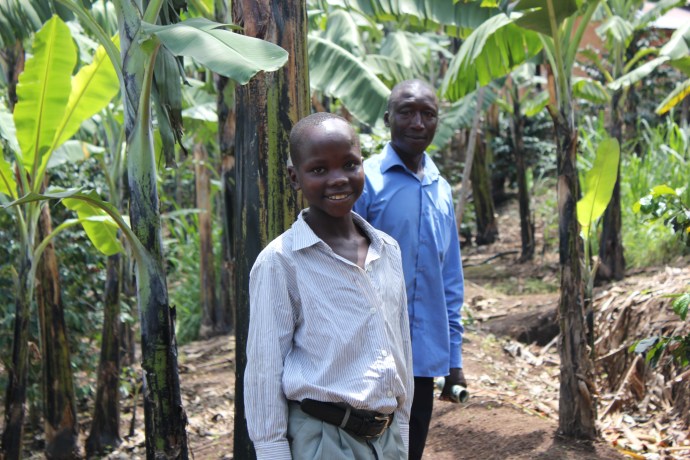
Sam's son on the family's flourishing banana plantation -- thanks, manure!!

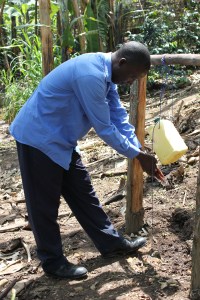
Before an animal is ever given away, Heifer trainings also encourage the families to build pit latrines, create a nearby “safe station” for hand-washing, and build a utensil rack to keep pots and pans off the ground. This radically cuts down on disease and germs.

Hands-free washing station - so clever!

Extension leaders also teach every household to build an energy cooking stove out of clay, that will use half as much wood (which also means half the hauling, chopping and deforestation), and cook faster as well. And then there are plentiful lessons in animal husbandry, teaching people when the pigs are ready to breed (at 3 months) the gestation period (3 months, 3 weeks and 3 days–now that’s precision birthing!), and when they can be separated from their mother and sold (1 ½ months). I was taking notes as fast as my chubby hands could write – but it wasn’t until we went to the second house that the transformative impact that Heifer has had on these families really sunk in.

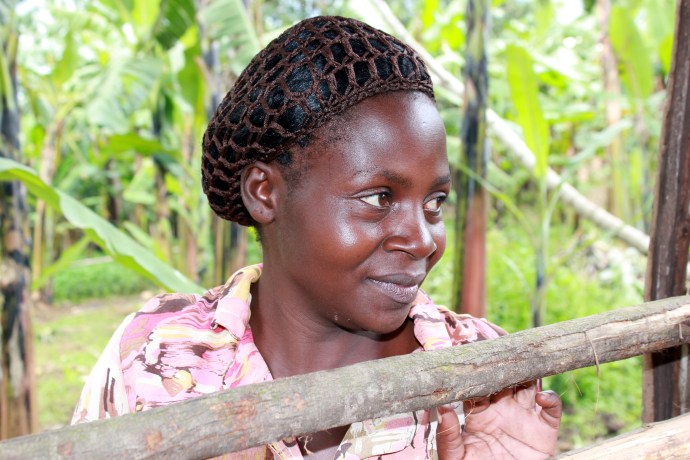
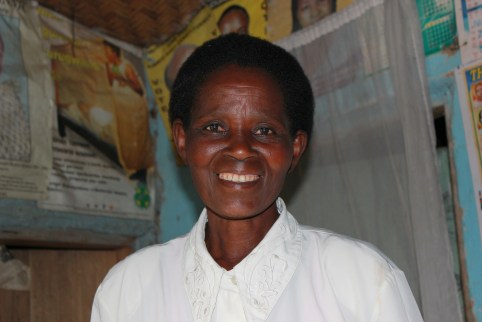
Ruth Kamugisha is a widow. A few years ago, she received one sow from a family who was Passing on the Gift and that pig had 11 piglets (one of whom she Passed Along to another poor family), then her pig had 12 more piglets, then 14 more piglets. With that abundance, Ruth was off and running. She sold most of the piglets, and using that money, she was able to pay the school fees for her children, the oldest of whom is now a teacher. Because of what she learned of animal husbandry from the Heifer training, Ruth was able to cross-breed her stock, and raise her animals in a healthy way – without them smelling or fouling her house. “I am very happy to have a clean home,” she says, and I look around to see that her house is plain but spotless indeed.

““Heifer redeemed us from poverty,” Ruth says, sitting ramrod straight in an immaculate white blouse and neat black skirt. “Because of Heifer’s gift, I have money to buy mattresses for my children to sleep on, and blankets to keep them warm. That was a dream for me,” Ruth says. “I bought these chairs, too,” she says proudly of the plain wooden seats beneath us, “and I am saving up to buy cushions.”

I can’t help thinking of Lulu’s pre-college trip to Bed Bath & Beyond where we dropped $200 in an hour on containers to hold the tons of stuff that we were lugging up to NYC … and contrasting that to Ruth’s painstaking labor to save enough shillings to buy a $3 cushion for her chair, in her tiny house with its new roof of tight iron sheets, that she also proudly bought with the money from her Heifer pigs.

“I am full of praises for Heifer,” she says with a big smile that fades into sorrow as she explains, “I lost my husband and that keeps me alone. But my other two daughters are finishing school,” she perks up, thinking of the future, “and the secret has been the piglet I was given by Heifer.”

As we walk to the next house, I want to give Ruth a hug – so I do. Of all the women dancing when our car pulled up, Ruth was the most extravagant, joyful dancer – whirling and turning and stomping her feet. She has a hard life but she is strong, capable and accomplished…and thanks to Heifer, she has hope for the future.

I’m full of her praises, too.

Categories: Animals, Heifer International, Photography, Poverty, Travel, Uganda | Tags: , , , , , , , | 41 Comments

Blog at WordPress.com.