Aw, shucks!

Behind the camera (where I belong).

I’m not really a joiner, or to be more accurate — I’m not exactly a rule-follower, particularly of scantily-clad pyramid blog schemes. But I’m SO touched to be honored by Sherry, author of the really wonderful, vivid and beautifully photographed Fabulous 50s , I guess I need to do what’s required of recipients of the Versatile Blogging Award:

  • Make a post with a list of 15 nominated blogs (I really am a HUGE fan of these folks)

Simple Life of a Country Man’s Wife

Earth, Ocean, Sky Redux

Mostly Bright Ideas

Cindy Dyer’s Blog

Wondering Rose

Life in the Boomer Lane

Accidental Stepmom

Lost Art of Hitchhiking

Everywhere Once

Mike is Happy. Relatively

Slam Dunk

My own Stormy Petrel (hey, it’s my husband … and I love the way he writes, among other things)

Notes from Africa

Foodshed Planet

Big Happy Nothing

  • Inform the nominees that they are nominated — please consider yourself informed.
  • Share seven items about yourself that readers don’t already know:

Everybody knows more than enough about me, except maybe: 1. I’m ferociously competitive 2. I love poetry 3. I am a closet loner 4. I bite my fingernails 5. I’m subject to road rage 6. I make awesome soup 7. I’m a neurotic mom (is there any other kind?)

  • Thank the blogger who gave you this award: Sherry, thank you SO much!! (don’t ever do this again)

AND CONGRATULATIONS TO the stupendously talented, adorable, ADELE who scooped up 6 Grammys!


Categories: Heifer International | 30 Comments

10 Small Reasons to Make Heifer your Valentine.

Flowers will die,

Chocolates can fatten,

But a gift to Heifer

Is never forgotten.

If you want to give your kids a fantastic Valentine — read this great article by Ellen Padnos about the art of giving children a Heifer gift.

Or..if you want to ask for (or give) your beloved something really special, just click here and pick a cow, pig, goat, rabbit, bees or water buffalo as a symbol of your undying affection!

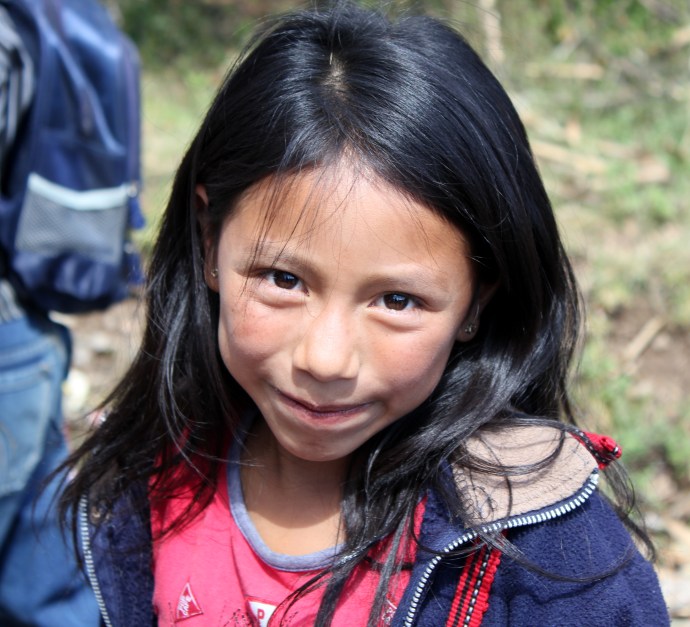
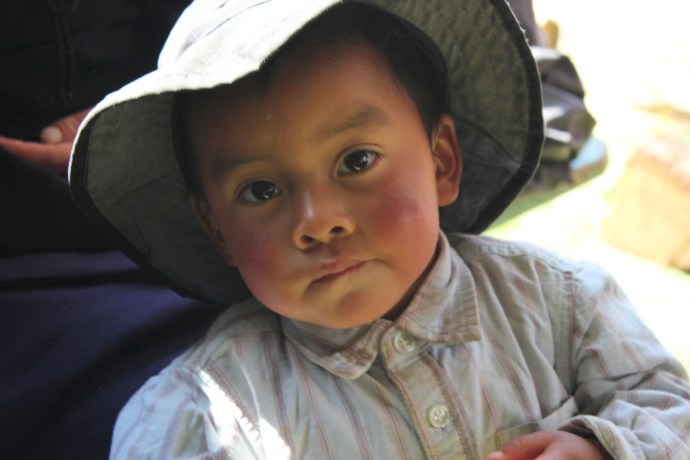
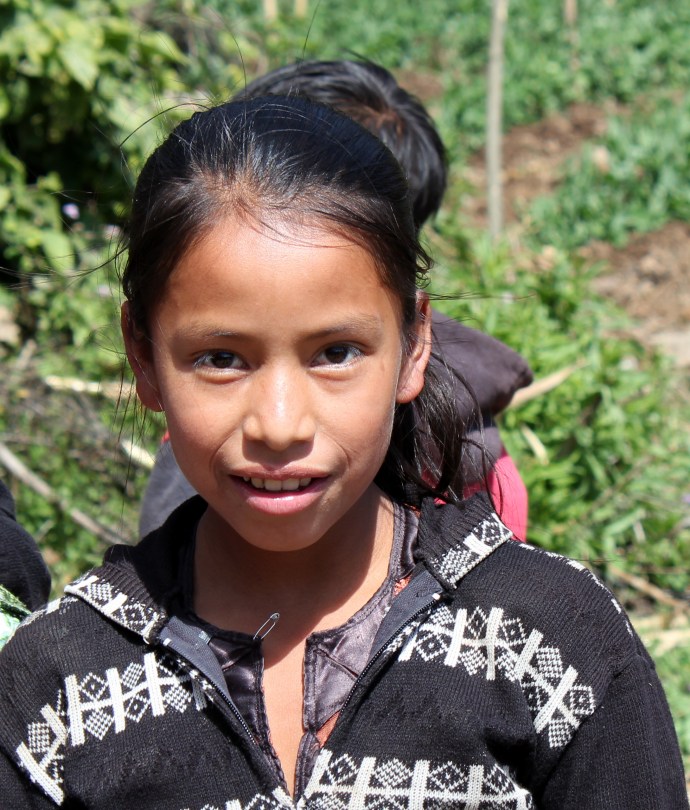
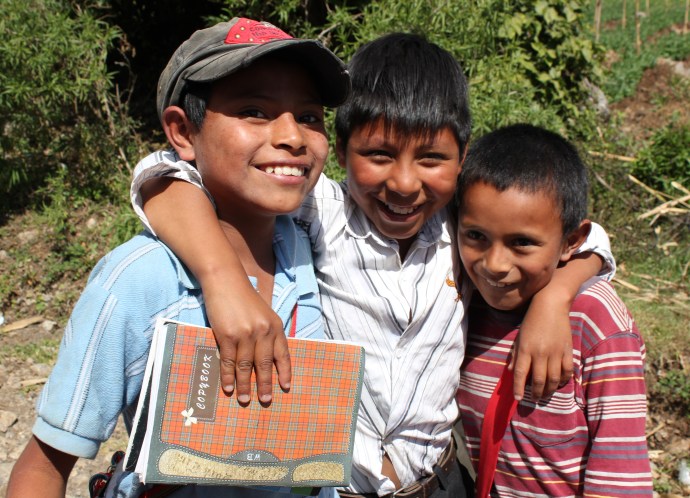
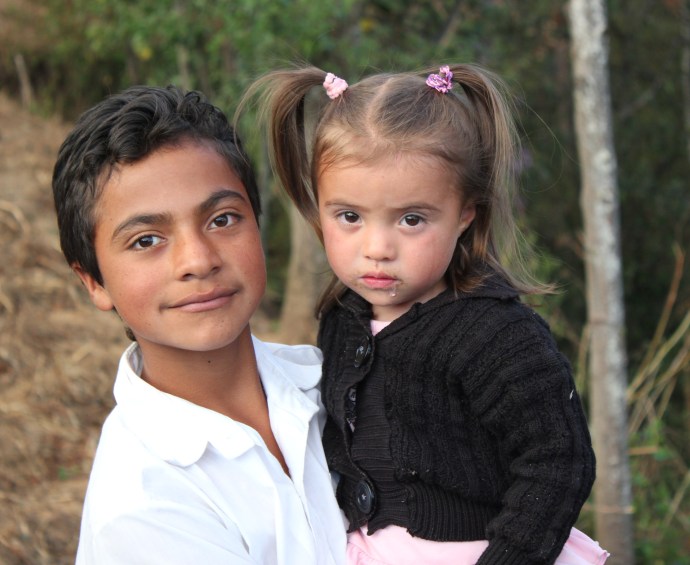
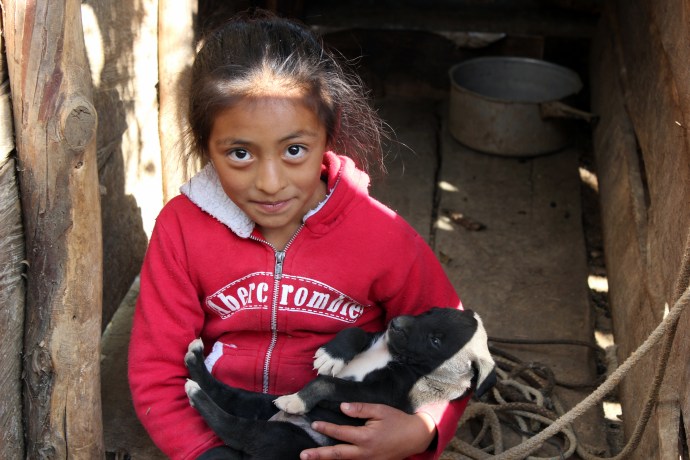
You can even download one of my photos and make the card yourself – to remember the real children you’re helping when you give to Heifer. (These darling ones are from Guatemala.)

With lots of love & thanks,

Betty

Categories: Children, Guatemala, Heifer International, Photography, Travel | Tags: , , , , , , , | 11 Comments

Animal magnetism in Happy Valley.

After the dust and dryness of Ixcan, it was pure pleasure to arrive in Cunen, a verdant valley in El Quiche, Guatemala where Heifer International has had a project since 2006. (Not only because Cunen is beautiful, but also because it meant we could get out of the car we’d been bouncing around in for 4 hours).

The inimitable, devoted Maria Cruz.

The Cunen project is the work of 3 local organizations with Heifer, and there to greet us was Maria Cruz, a lovely 36-year old Mayan woman who has been the Heifer technician, animal-whisperer, and trainer in this area for 10 years. Although the Cunen project has been “weaned” and is on a maintenance schedule, Maria still travels here once a month by bus to check on the animals, answer questions, and visit the homes of Heifer’s beneficiaries – of which there are 36 in this town (and over 500 in the project). In fact, she is so devoted to her work that when she was temporarily laid off due to a cutback in Heifer donations, as a result of our economic downturn (hint, hint), she still took day and night calls about animal fevers and diarrhea from the four villages she works in. Apparently, having animals is about as time-consuming and worrying as having children (except they’re more grateful and don’t talk back).

Don Serbando
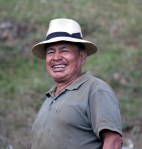
Don Manuel

In Cunen, even after the Heifer project has ended, the gift still keeps on giving. The cow above was received by Don Serbando Vasquez, director of the local association, and had a female baby that was passed on to Don Manuel Vasquez (whose 7 children grew up drinking its milk), and that female just gave birth to the cutie-pie new baby above. Cows live for 15-18 years and will have 5-7 offspring in their 13 years of fertility, so Cunen will see several more new generations of Heifer heifers—each of which will benefit a new family. As we walked from farm to farm, we jumped over creeks bubbling down from the surrounding mountains, bringing plentiful water to the fields that were everywhere springing to life with alfalfa, beans, snow peas, onions, oats, snap peas, corn, and napia grass. Lemon, orange, papaya, avocado and lime trees grew in orchards, and sheep and goats happily munched on forage crops in the tidy Heifer sheds Maria had taught the farmers to build.

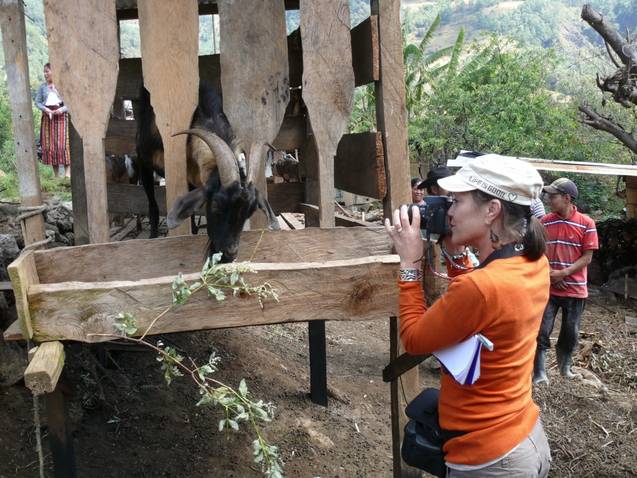
Under-goat sheds' poop & urine collector -- how clever!

These sheds allow the farmers to efficiently collect the animals’ manure and urine – so they can make rich compost for their fields. Heifer trainings promote organic farming to liberate farmers from having to buy expensive, often dangerous chemicals and to protect the environment. Basic composting is enhanced with the help of some crazy California red worms that eat through the manure like Pac-Men, reproduce like rabbits, and are also passed along with the gift of an animal to a new family.

Speaking of rabbits, the Cunen families we visited also had plentiful pens of rabbits. These bunnies, like all the animals from Heifer, were bigger, better breeds that are chosen to improve the local stock, generation after generation. And because rabbits have 5-7 babies each litter and can have 7 pregnancies a year (yep, that’s 50 babies annually!) … that’s a lot of improvement really fast.
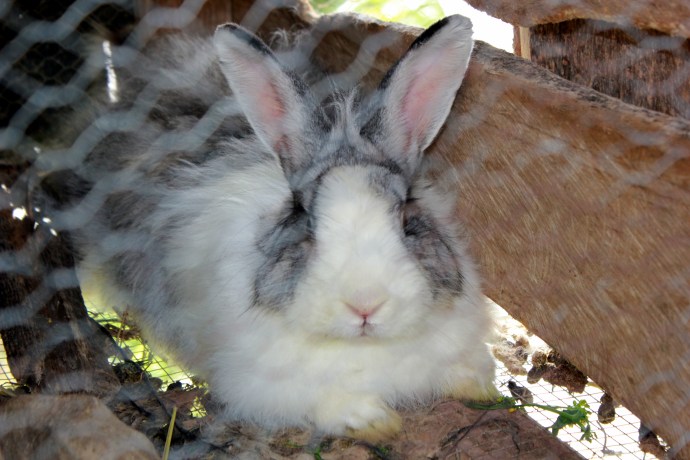
I'm fertile.. are you?

Andrea Canto-Camaha, Cunen farmer.

The people of Cunen were so likeable, friendly and eager to share their stories with us, it was hard to leave. Don Serbando gave us a parting speech, which he asked me to share with you:

We are very grateful to the Heifer donors. We know how much we have been helped and we don’t take it for granted. Because of the gifts you have given us, our children will grow up healthy and smart. We are living the Heifer dream.

It’s a dream that involves never-ending work and a boatload of struggle, but they have water. And animals. And hope.

It’s a happy valley.

Categories: Animals, Guatemala, Heifer International, Photography, Travel | Tags: , , , , , , , , , , , , , , | 21 Comments

Solid Gold Soul.

Yeah, that's the road down there.

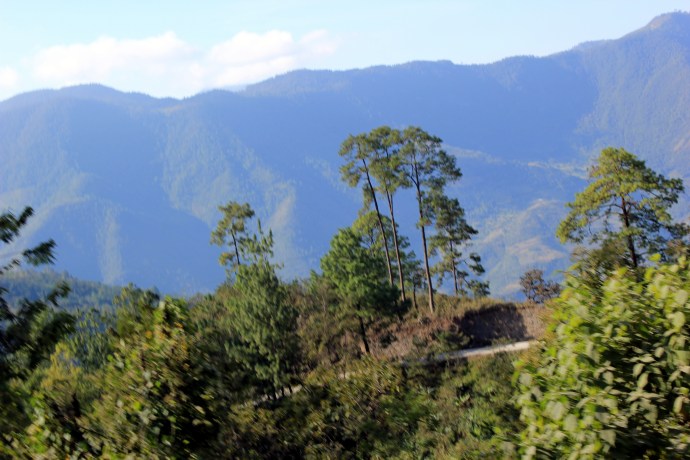
The day we left the cloud forests of Alta Verapaz, Guatemala, Vivian and Byron, our Heifer hosts, drove us five hours to the veritable border of Mexico and the dry, dusty town of Ixcan. To describe the road to Ixcan as “bad” is to sugarcoat it, but since the scenery was beautiful and we were listening to Bebel Gilberto on Vivian’s i-pod, I figured my kidneys would eventually recover from the pummeling. Besides, I was psyched to be heading to site of the esteemed Golden Talent awards.

Ixcan’s own Jose Salvatore Toc had been chosen as the most visionary beneficiary of Heifer Internationals projects in the country– and the minute I saw him walk into the room the next morning, I could see why. Salvatore is charismatic and clearly a leader. Not only does he wear a hat exceedingly well, his gentle manner and kind eyes belie a ferociously strong will. At 62, he has 12 children, 18 grandchildren and has spent years trying to bring greater productivity to the exhausted piece of land he bought in 1990– and share that knowledge with other farmers. Year after year, he had planted corn, used chemical fertilizers, planted beans, and tried everything he could think of to make his land more fertile. Then he heard about the guama tree from Honduras, a fast-growing brushy tree that the people at EcoLogic, Heifer’s partner since 2010, were touting as a promising way to save forests, farm without chemicals, and produce more corn. Salvatore was hooked.

In the shade of the guama

In 2008, Salvatore received guama seeds from EcoLogic and planted the feisty trees right in the middle of his cornfield. His neighbors thought he was crazy, planting trees where corn should be. His wife Marta feared he was in for another big disappointment. But in just two years, the trees ‘ branches were ready to be cut (giving Salvatore valuable firewood), and the trees’ heavy leaves had dropped, providing 20 cm. of thick mulchy insulation that not only prevented weeds from growing, it also held water in Ixcan’s dry soil. And most important, Salvatore’s corn crop — growing unconventionally under a scrim of trees– was 40% more abundant, producing 3 ears per stalk instead of one or two.

Salvatore was so eager to share the news (and plentiful guama seed pods) with his fellow farmers, he cut a 1/4 mile path from the road to his field to encourage everyone to come see the results of his shade-grown maize. 385 farmers are now a part of the project, a nursery of 5,000 guama plants has been established, and 8 other communities are implementing this promising new method.  Salvatore is a tireless advocate for adopting new agroforestry techniques like the guama tree that lessen dependence on expensive chemicals and destroying forests– as well as any other farming advance that will allow him “not to have to work so hard.”

Despite his Golden Talent monetary award, that doesn’t seem likely to happen anytime soon. Salvatore still works three jobs: as a woodworker, a night security guard, and farming his fields, a 45-minute walk from town. And let’s not even talk about the work that his wife Marta does, keeping house for the 4 children remaining at home. Salvatore and his wife Marta have been married for 40 years, and since he was 20 and she 14, they have never spent a night apart (kind of like me and my husband – ha!). They say the hardest thing hasn’t been feeding their brood, it’s the expense of sending them to school. But somehow, despite lung and foot problems, Marta and Salvatore have educated each child – and somehow, she still lights up whenever Salvatore smiles at her.For 18 years, EcoLogic has been asking rural communities what they want and need in development projects, and supporting leaders like Salvatore who are so committed to improving life for themselves and others, they “treat their land like their own children.” Now, in partnership with Heifer, they’re helping Guatemalan communities work towards less deforestation, cleaner water, healthier soil, a better harvest… and a better life for beautiful, hard-working families.

To me, that’s solid gold.

Categories: Environment, Guatemala, Heifer International, Photography, Travel | Tags: , , , , , , , , , | 22 Comments

Vamos, chicas!!

In my first trips for Heifer International to Uganda and Guatemala, I’ve learned two important things.  The first is how to say, gratefully and gracefully, “Thanks so much but I don’t eat goat/sheep/bunny…” realizing that your hosts have sacrificed to serve you their very best food and you’re probably a jerk for not eating it.

Sheep soup (I ate everything but the sheep)!

The second thing I’ve come to realize is that, as a global community, we really need to keep girls in school.

In the typical indigenous villages we visited in the Western Highlands of Guatemala served by Heifer International and its partner Community Cloud Forest Conservation, the average age when girls marry is about 16. When girls get married so young, they stop going to school. They have more children and are less likely and able to send those kids to school. And their chances of lifting themselves and their families out of poverty sharply diminish.

Clearly, keeping girls in school is one of the first steps to ending poverty. But how do you change a system that’s culturally entrenched and socially unchallenged? Well, you can start by following the example of Heifer & its partner CCFC and develop a system that virtually pays girls to stay in school. By identifying and supporting girl leaders who show a passion for learning and a willingness to challenge the status quo (and bringing their parents into the room, so they can witness the benefits of educating girls and become community advocates), you can really start to shake things up.Elvira and Patricia are two shining examples of what can happen when you empower girls –even in a tiny Guatemalan village off the grid. Twelve young women made up the original Community Cloud Forest Conservation group (there are now 75 girls in the group.. and boys, too!) They spend 5 weeks after the school year ends, learning about environmental protection, life skills, fruit tree grafting, bird watching, and deforestation. In return, they are given a scholarship that helps them pay for their next year of school – with the understanding that they will teach others what they have learned and do community service projects.

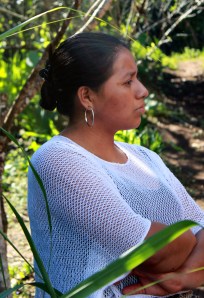
Quite frankly, I can’t think of two girls more worthy of investment. Elvira worked for seven years raising chickens to earn money to pay her own school fees, then went back to the 7th grade at the age of 19. Now 24,  she wants to become a teacher to lead other girls.  “As young women here, we need to learn what our parents didn’t know,” she says. “So our whole community can come back to life and our lives will be better tomorrow and the next day.”

Patricia, who is 17, has become an outspoken advocate for preserving the cloud forest. “When you are aware that our water comes from the forest—that the trees grab the clouds and give us rain – you know that we have to work together now to save it before it’s gone.”

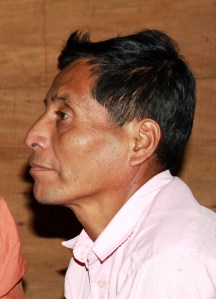
As Elvira was talking, I was watching her father in the group – the man who had forced her to drop out of school. I was half-thinking that maybe there would be some bitterness between Elvira and her dad, but I was wrong. When Elvira stopped talking, he slowly got to his feet and said, “It’s a great blessing from God that you helped my daughter to study, and I thank Heifer for that. But we have to stand up as a community and help all the girls. Young men can go and leave the village, but the girls have to stay here. They’re our future.”

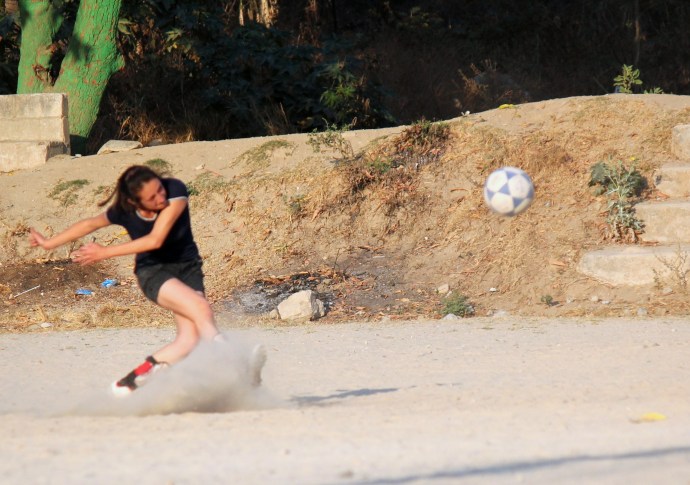
A few hours later, I was driving back from the village with Heifer’s Byron and Vivian (in Spanish it’s pronounced “Bibian” – and how adorable is that??)  when we saw four girls practicing their soccer kicks in a park in Sacapula in the late afternoon. They were seriously whaling that ball, cheering each other on, and were tremendously excited to be photographed doing it.I loved seeing that. I loved cheering with Bibian as she taught me to holler, “Vamos, chicas!” I loved everything I saw that day at Alta Verapaz.

Categories: Guatemala, Heifer International, Photography, Travel | Tags: , , , , , , , , , , , | 39 Comments

Blog at WordPress.com.