Posts Tagged With: Heifer International

Seeding the future.

I’m feeling pretty global tonight, writing about a small town in Guatemala while I sit here in Atlanta, thinking that by the time you read this I’ll be in another small village in Haiti where Heifer International is planting more seeds of change.Speaking of seeds, here are a few kernels of truth. In our abundant American lives, we’re supremely divorced from the reality of where our food comes from, who grows it and how, and what would ever happen if we couldn’t go to the supermarket and buy gobs of whatever we want. But when you go to a developing country, you get enlightened pretty quickly.
Maize Negro (Ek Jal)

The thin veil between hunger and the food we need to survive is seeds .. pure and simple.

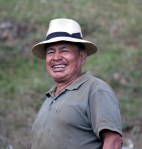
Isabel Lopez, the Patriarch

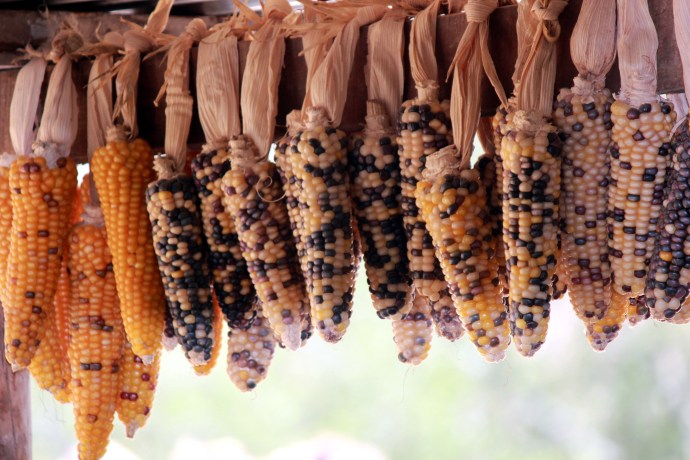
So it’s good to know that in the quiet little village of Quilinco outside Huehuetenango, three generations of the Lopez family have been working for years to preserve our food future. In 1999, Isabel Lopez began saving the seeds from the 150-year old criollo native corn his grandfather grew. Backed by FAO (a Norwegian company whose name nobody can pronounce), he and his son Juan (and now his son Jose) began a methodical campaign to preserve seeds that were endangered, rare, or deemed genetically worthy of preservation.

Isabel and Juan persuaded their fellow farmers to follow the trainings, and soon 100 farmers were working to plant, fertilize, harvest and preserve the seeds in a carefully scientific way – choosing the kernels of corn from cobs that have straight lines, 12 rows in diameter, and 25 kernels from the middle. Each group of seeds is kept in its own jar, labeled, cataloged and carefully protected in steel silo drums that are designed to outlast an emergencia, tormenta (hurricane) or earthquake.

Heifer's Guillermo & Carlos in the field (as always)

The field technicians of Heifer (like 20+ year veterans Carlos Hernandez & Guillermo Santizo) worked with the Lopez family to earn this contract and keep it active in Quilinco over the past decades. Why? Because The Seed Bank is a valuable source of income for the village farmers, but also because it is preserving these beautiful jewels of agricultural possibility:

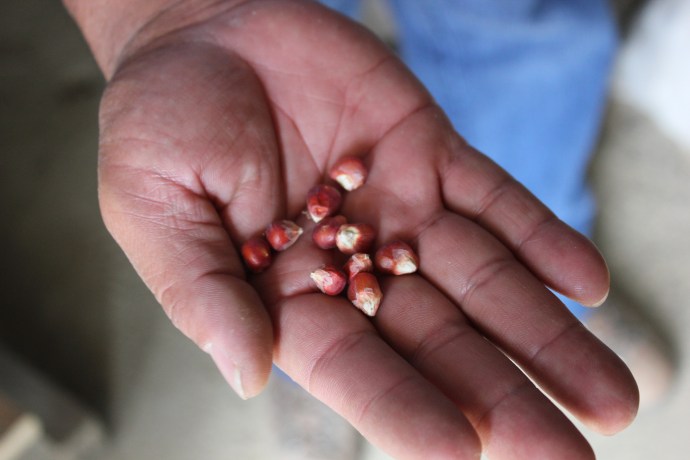
Rare Sangre de Christo red corn.
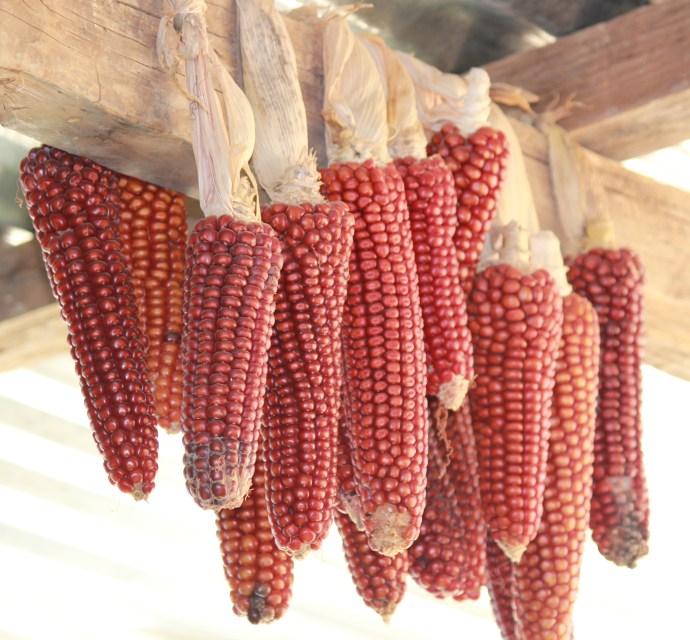
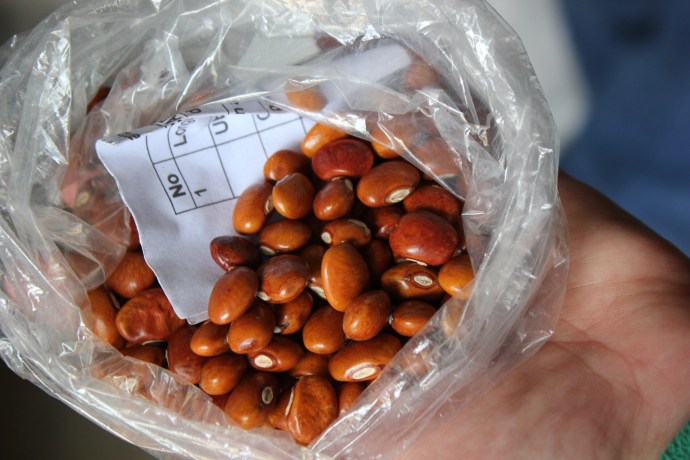
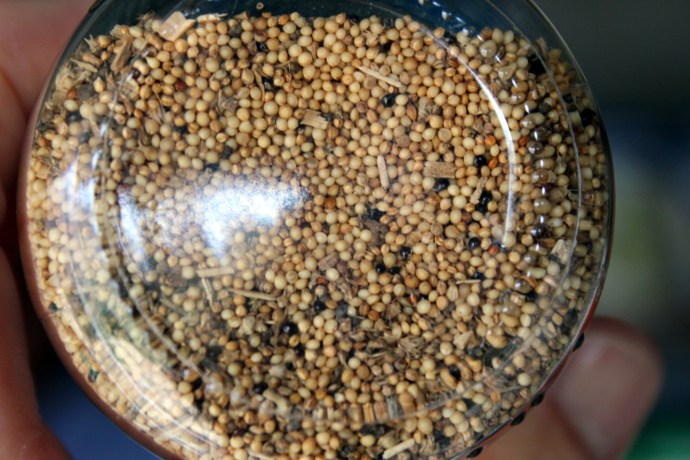
Frijol Piloy Amarillo beans that are on the border of extinction.Valuable seeds from the bledo-blanco (amaranth) plant that is so packed with minerals, protein, and gluten-free Vitamin C, it’s accompanied astronauts into space.And in small jars, the seeds of countless flowers and plants that only grow in this region. When I first heard about the bank, I thought it might be kind of … boring. But I loved this project so much I couldn’t believe it! There I was in a small village in Western Guatemala, standing in a veritable Fort Knox of Seeds, supported by a bunch of distant Norwegians, surrounded by rare genetic caches of ancient seeds collected by three generations of Mayan farmers, that may hold the key to our bio-diverse agricultural future.
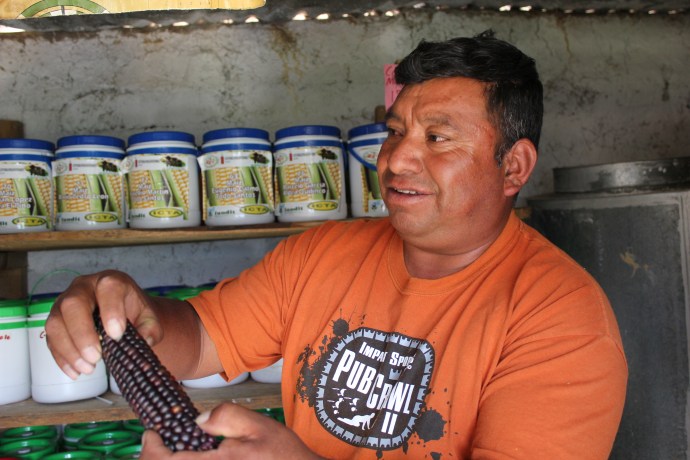
Juan Lopez & his seeds

Quel global amaizement!
Categories: Agriculture, Guatemala, Heifer International, Hunger, Photography, Travel | Tags: , , , , , , , , , , , , , , , | 34 Comments

10 Small Reasons to Make Heifer your Valentine.

Flowers will die,

Chocolates can fatten,

But a gift to Heifer

Is never forgotten.

If you want to give your kids a fantastic Valentine — read this great article by Ellen Padnos about the art of giving children a Heifer gift.

Or..if you want to ask for (or give) your beloved something really special, just click here and pick a cow, pig, goat, rabbit, bees or water buffalo as a symbol of your undying affection!

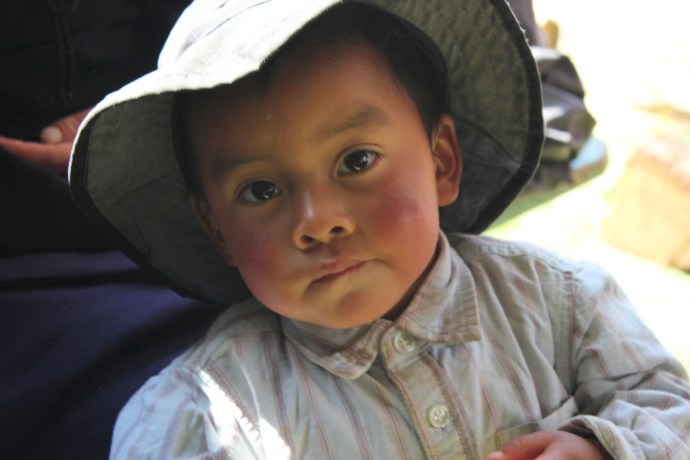
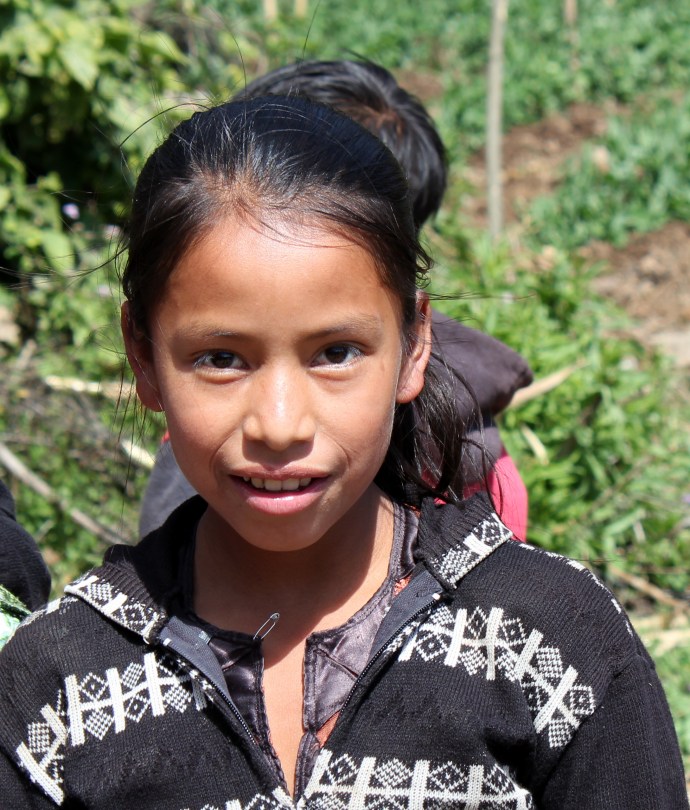
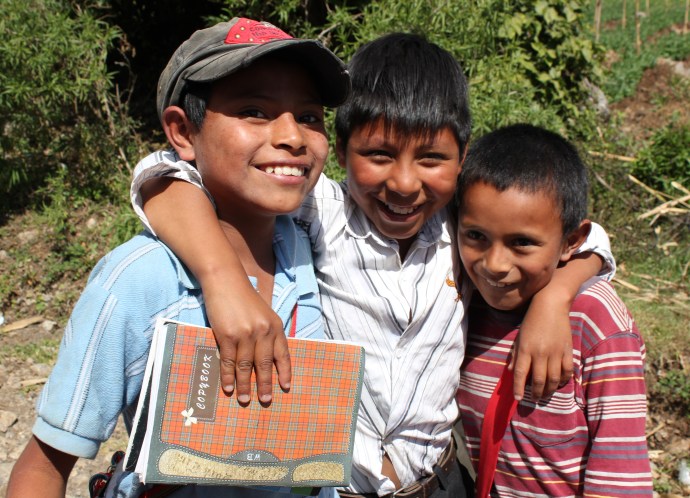
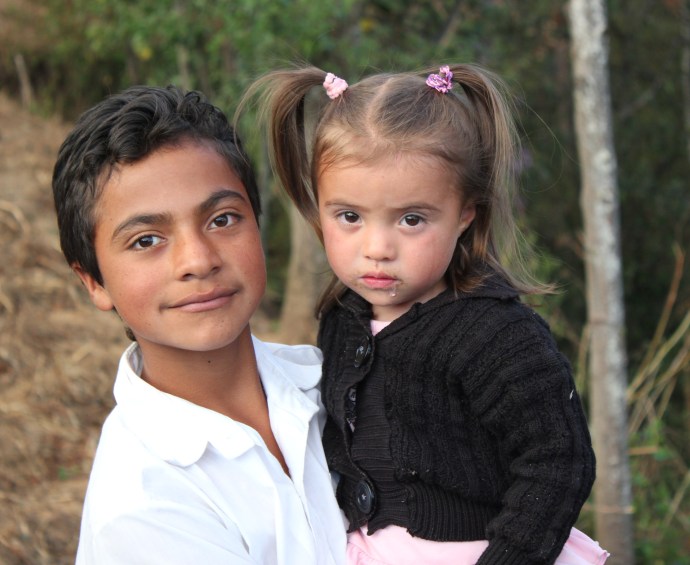
You can even download one of my photos and make the card yourself – to remember the real children you’re helping when you give to Heifer. (These darling ones are from Guatemala.)

With lots of love & thanks,

Betty

Categories: Children, Guatemala, Heifer International, Photography, Travel | Tags: , , , , , , , | 11 Comments

Animal magnetism in Happy Valley.

After the dust and dryness of Ixcan, it was pure pleasure to arrive in Cunen, a verdant valley in El Quiche, Guatemala where Heifer International has had a project since 2006. (Not only because Cunen is beautiful, but also because it meant we could get out of the car we’d been bouncing around in for 4 hours).

The inimitable, devoted Maria Cruz.

The Cunen project is the work of 3 local organizations with Heifer, and there to greet us was Maria Cruz, a lovely 36-year old Mayan woman who has been the Heifer technician, animal-whisperer, and trainer in this area for 10 years. Although the Cunen project has been “weaned” and is on a maintenance schedule, Maria still travels here once a month by bus to check on the animals, answer questions, and visit the homes of Heifer’s beneficiaries – of which there are 36 in this town (and over 500 in the project). In fact, she is so devoted to her work that when she was temporarily laid off due to a cutback in Heifer donations, as a result of our economic downturn (hint, hint), she still took day and night calls about animal fevers and diarrhea from the four villages she works in. Apparently, having animals is about as time-consuming and worrying as having children (except they’re more grateful and don’t talk back).

Don Serbando

Don Manuel

In Cunen, even after the Heifer project has ended, the gift still keeps on giving. The cow above was received by Don Serbando Vasquez, director of the local association, and had a female baby that was passed on to Don Manuel Vasquez (whose 7 children grew up drinking its milk), and that female just gave birth to the cutie-pie new baby above. Cows live for 15-18 years and will have 5-7 offspring in their 13 years of fertility, so Cunen will see several more new generations of Heifer heifers—each of which will benefit a new family. As we walked from farm to farm, we jumped over creeks bubbling down from the surrounding mountains, bringing plentiful water to the fields that were everywhere springing to life with alfalfa, beans, snow peas, onions, oats, snap peas, corn, and napia grass. Lemon, orange, papaya, avocado and lime trees grew in orchards, and sheep and goats happily munched on forage crops in the tidy Heifer sheds Maria had taught the farmers to build.

Under-goat sheds' poop & urine collector -- how clever!

These sheds allow the farmers to efficiently collect the animals’ manure and urine – so they can make rich compost for their fields. Heifer trainings promote organic farming to liberate farmers from having to buy expensive, often dangerous chemicals and to protect the environment. Basic composting is enhanced with the help of some crazy California red worms that eat through the manure like Pac-Men, reproduce like rabbits, and are also passed along with the gift of an animal to a new family.

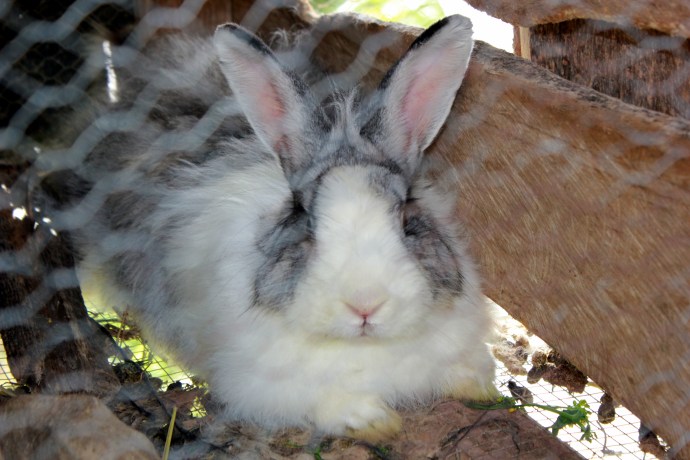
Speaking of rabbits, the Cunen families we visited also had plentiful pens of rabbits. These bunnies, like all the animals from Heifer, were bigger, better breeds that are chosen to improve the local stock, generation after generation. And because rabbits have 5-7 babies each litter and can have 7 pregnancies a year (yep, that’s 50 babies annually!) … that’s a lot of improvement really fast.

I'm fertile.. are you?

Andrea Canto-Camaha, Cunen farmer.

The people of Cunen were so likeable, friendly and eager to share their stories with us, it was hard to leave. Don Serbando gave us a parting speech, which he asked me to share with you:

We are very grateful to the Heifer donors. We know how much we have been helped and we don’t take it for granted. Because of the gifts you have given us, our children will grow up healthy and smart. We are living the Heifer dream.

It’s a dream that involves never-ending work and a boatload of struggle, but they have water. And animals. And hope.

It’s a happy valley.

Categories: Animals, Guatemala, Heifer International, Photography, Travel | Tags: , , , , , , , , , , , , , , | 21 Comments

Hola, amigos …Aqui estoy!

Wish you were here, too!

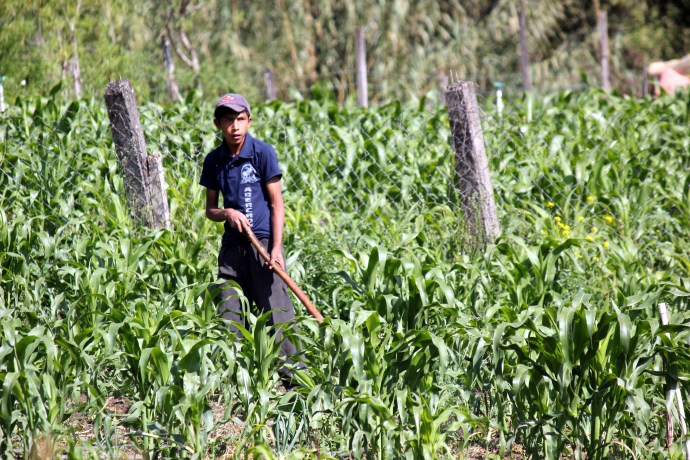
Guatemala is a beautiful country – incredibly mountainous, over 60% indigenous, and poor in everything but spirit.In the past three days, I’ve seen Heifer projects working to stop deforestation of the rainforest, find better ways of growing maize for these “people of the corn,” and seen the transformative power of animals in a community.

But since I’m working like a true Heifer person (or like the campesinos they work for), I’m on the road at 7 am and not back until about 10 p.m., and I haven’t had time to stop and write.Today I’m going to the countryside outside Huehuetenango, and spending the night with a family in a seed bank project… yippee!I’ll be writing my stories this weekend in the lake area of Atitlan.  Until then, here’s a small photographic taste of Guatemala.¡Buen apetito!

Categories: Guatemala, Heifer International, Photography, Travel | Tags: , , , , , , , , , , , | 12 Comments

Blog at WordPress.com.